

A year to murders of hostages by captors, family warns expanded war may kill others
Marking first anniversary since killings of ‘Beautiful Six’ in Rafah tunnel by Hamas, Carmel Gat’s cousin says best way to honor slain captives is to return those who are still there
 Add ToI as a Preferred Source on Google
Ariela Karmel is a political correspondent at The Times of Israel. She previously reported for Calcalist and Haaretz. She holds an MA in Middle Eastern and African History from Tel Aviv University and a BA in Political Science from the University of British Columbia.
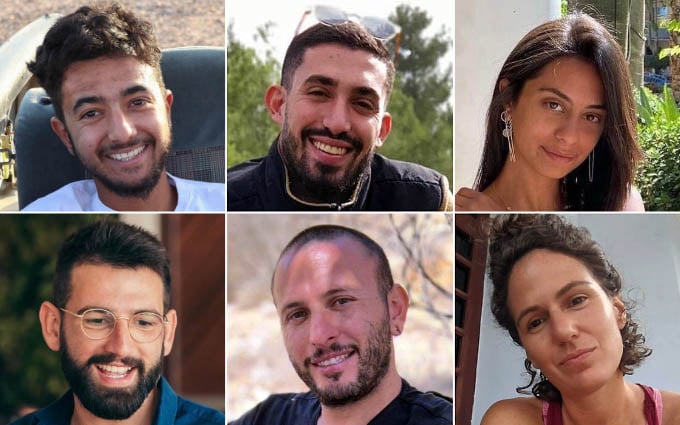
The families of the “Beautiful Six” hostages murdered by Hamas terrorists in Gaza on August 29, 2024, marked the first anniversary of their murders on Tuesday, according to the Hebrew calendar.
Hersh Goldberg-Polin, Carmel Gat, Eden Yerushalmi, Almog Sarusi, Or Danino and Alex Lubanov were killed by their captors after surviving horrifying conditions in captivity for close to a year.
Their bodies were retrieved by the IDF two days later from a tunnel in south Gaza, during fighting in Rafah.
A year later, the families are memorializing their loved ones in different ways: Goldberg-Polin’s family wrote in a post on Instagram Monday night asking that people mark Hersh’s yahrzeit by doing something “to make our complicated world a bit better.”
“It can be something big or small, quiet or loud, private or public. Do it in memory of the Beautiful Six, including our Hersh. May his memory be a revolution… for goodness,” they wrote.
Lubanov’s family is holding a memorial ceremony at their home in Ashkelon this evening, and earlier this morning, Yerushalmi’s family was joined by hundreds at the Yarkon Cemetery in Petah Tikva.
“Eden, my beautiful daughter, a year has passed, and I still cannot understand that you are not here,” said her mother. “The pain is unimaginable, only growing, and I miss you with every breath. Nothing is the same anymore.”
“For many long months, you were in captivity under unimaginable conditions, and you endured. You didn’t break — you fought. You were part of a strong group with five other heroes, and I believe you strengthened each other,” she continued.
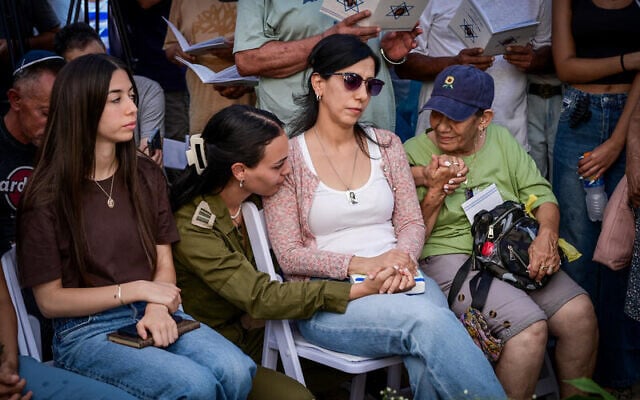
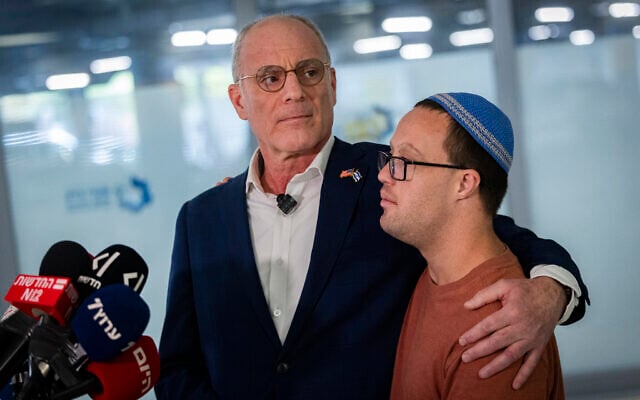
For Gil Dickmann, the cousin of Carmel Gat, “The best way to remember Carmel — to honor her — is to work for the return of the hostages,” he said.
Fighting for an end to the war and a deal to return the hostages, Dickmann said, is the best way to save those who are still there, to honor those who have been lost, and to make sure that there isn’t “even one more Carmel lost to us.”
Gat, a yoga teacher who taught yoga classes to fellow captives, along with Yerushalmi, Goldberg-Polin, and others, was set to be included in the first ceasefire deal reached in November 2023, before it collapsed in December. Had they survived, they would have been released in the same deal that brought other female and wounded hostages home during the January ceasefire reached earlier this year.
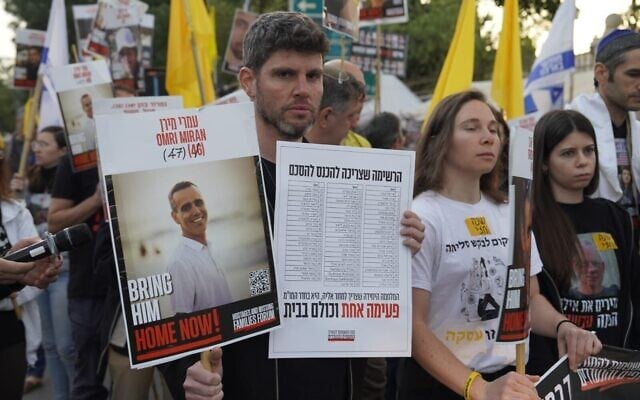
“Carmel is a symbol for me of a huge failure and great betrayal by our decision-makers,” he said. “She was supposed to return in the same deal as Romy [Gonen] and Emily [Damari]. I could see her coming back — it was so close.”
Repeating the same nightmare
The government voted earlier this month to conquer Gaza City, which Prime Minister Benjamin Netanyahu claims is Hamas’s “last true fortress.” The plan has sparked international outcry, renewed efforts at reaching a ceasefire, and mass protests in Israel, where hundreds of thousands of Israelis on Sunday held some of the largest demonstrations since the war began, urging a deal to end the fighting and free the remaining 50 hostages held by Hamas in Gaza since the terror group’s October 7, 2023, attack. At least 20 hostages are believed by Israel to be alive.
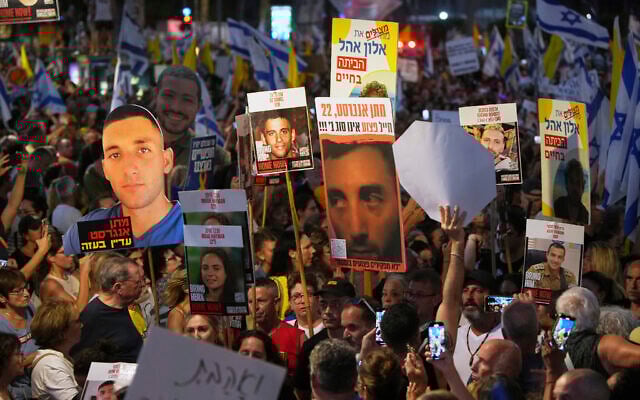
With Israel already holding 75 percent of Gaza, the IDF has warned that expanding the offensive could endanger the living hostages and draw troops into protracted and deadly guerrilla warfare.
For relatives of the six hostages who were murdered during the last IDF operation in an area where hostages were known to be held, this has triggered enormous fear.
“It feels like we haven’t learned anything,” said Dickmann. “The plan to occupy Gaza is to repeat the same nightmare of what happened to Carmel — it feels like a horrible flashback.”
An IDF investigation into the murder of the six hostages by Hamas terrorists shared with their families in December found that the military did not have any concrete or real-time intelligence on the hostages being held there in the weeks before they were killed, but had general indications that Israeli abductees could be in the area.
The IDF believes that after spotting Israeli forces approaching the area, the terrorists guarding the hostages decided to execute them.
At the time, the Hostages and Missing Families Forum said in response to the probe that it “once again proves that military pressure kills hostages.”
For Dickmann and other family members, the investigation left too many questions unanswered, including why the military was operating in an area where hostages were known to be held, why the government ignored the warnings and fears of hostage families, and why a potential deal that could have secured the hostages’ release was rejected.
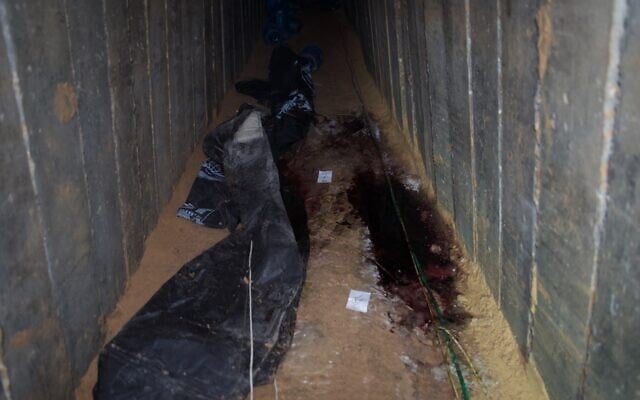
“We were told last time that Rafah was Hamas’s last stronghold, that we had no choice, that this was the way to free hostages,” Dickmann recalls. “In the end, it wasn’t Hamas’ last stronghold, and we didn’t free hostages – we killed them. We are now marching right towards the same disaster.”
Dickmann said that a year after Gat’s murder, the pain and feeling of failure hadn’t diminished, but only grown.
“I will not be able to forgive myself if what happened to Carmel happens to another hostage,” he said.
He recalls the words of Rachel Goldberg-Polin, who, after her son’s murder, spoke about how the way to make amends is to face the same situation again and make a different decision.
“We are in the same place, and we must make a different decision. This time, we don’t sacrifice lives,” said Dickmann.




The Times of Israel Community.