

Anti-Israel activists convicted of misdemeanor charges in 2024 Golden Gate Bridge protest
Jury deadlocked on more serious charge of felony conspiracy over blockage of throughfare in protest against Israeli war in Gaza; seven activists face up to 5 years in prison
 Add ToI as a Preferred Source on Google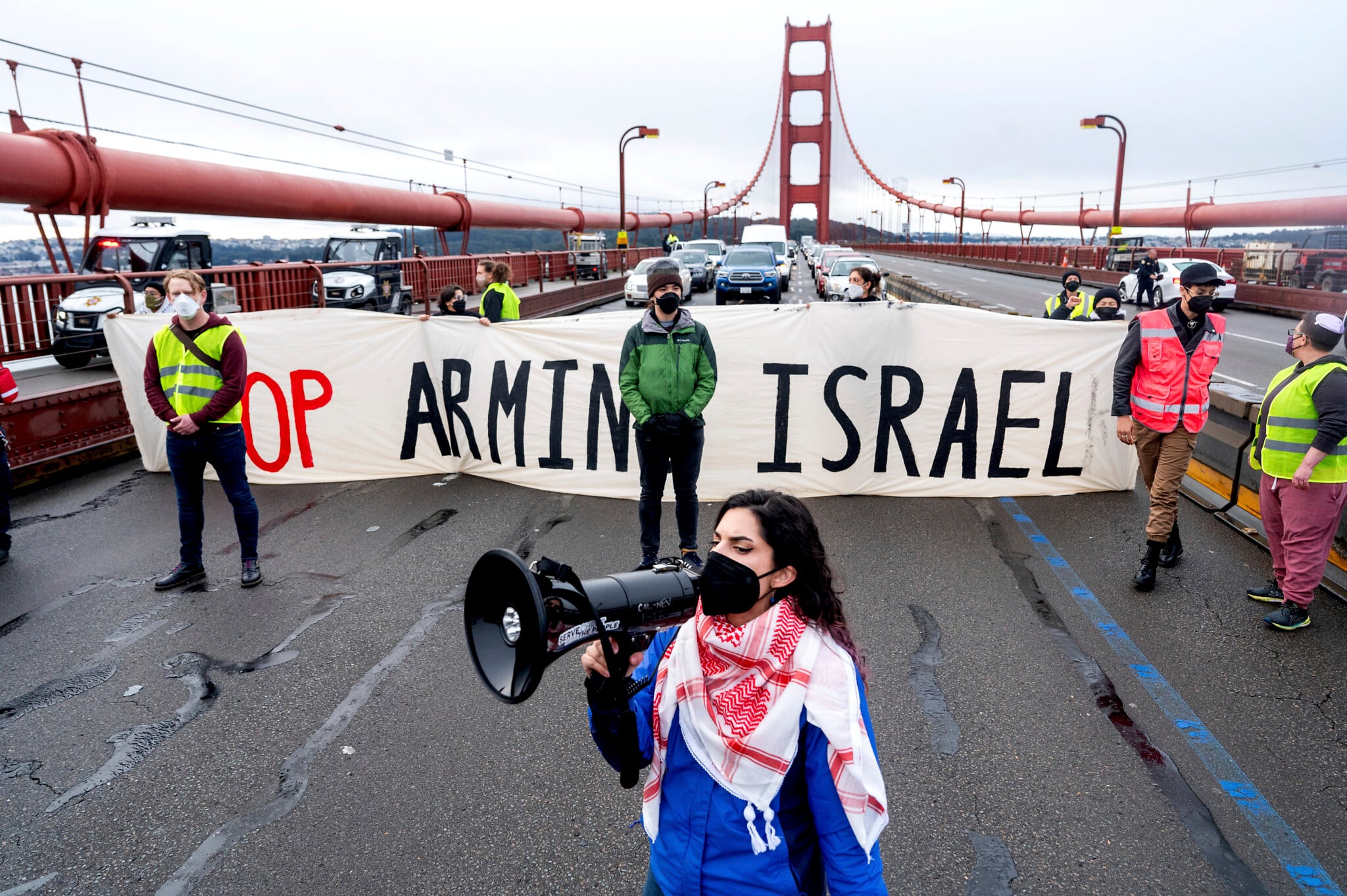
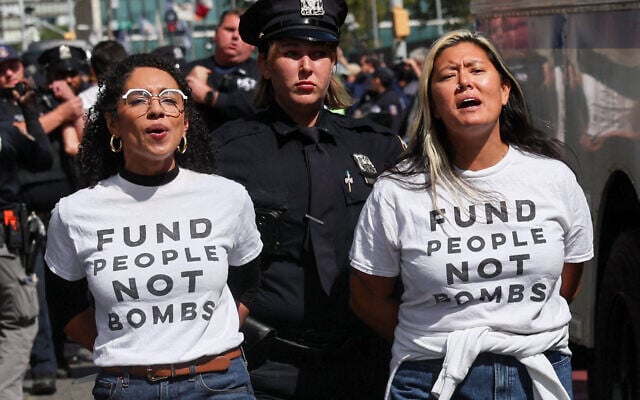
Seven protesters who blocked traffic on the Golden Gate Bridge in a 2024 pro-Palestinian protest against Israel’s military action in Gaza were convicted of misdemeanor charges by a San Francisco jury that remained deadlocked on the more serious charge of felony conspiracy.
The jury convicted each of the seven protesters on six misdemeanor counts, including false imprisonment, obstruction of a thoroughfare, and unlawful assembly, San Francisco District Attorney Brooke Jenkins said in a statement on Thursday.
One defendant was also convicted of another misdemeanor charge of refusing to disperse, Jenkins said.
The protesters will be sentenced in August and face up to five years in a county jail.
The seven protesters were named Bhavika Anandpura, River Allen, Rocky Chau, Sara Cantor, Conrad de Jesus, Sarah Ferrell, and Em Tillotson, according to local media.
The protest on April 15 was one of many held by US anti-Israel demonstrators who blocked roadways around the country, causing traffic jams and temporarily shutting down travel into some of the country’s most heavily used airports.
Seven pro-Palestinian protesters who shut down traffic on the Golden Gate Bridge in 2024 to denounce U.S. aid to Israel in the Israel-Hamas war were all found guilty of false imprisonment by a jury in San Francisco on Thursday. https://t.co/isVmfzBS6f pic.twitter.com/9yUlVAAYoU
— ABC7 News (@abc7newsbayarea) July 2, 2026
Large-scale protests in the US in 2024 demanded an end to Israel’s war against Hamas in Gaza and Washington’s support for Israel. The protests also called for the divestment of funds by universities from companies supporting Israel.
The jury could not reach a verdict on the most serious charge of felony conspiracy — an agreement between two or more people to commit a crime coupled with an overt act — which could have led to a sentence of up to 15 years upon conviction.
“At this time, we will evaluate our options and consider next steps,” Jenkins said.
Defense attorneys argued demonstrators were acting out of what they saw as a moral responsibility to oppose the devastation from Israel’s war in Gaza and Washington’s support for its ally.
They also argued that protesters chose to block the bridge after other methods, such as writing letters and appealing to congressional representatives, produced no results.
Jenkins’ office argued that the protest blocked traffic for four hours and caused a safety risk for those stuck in the traffic jam.
Pro-Palestinian protesters who shut down the Golden Gate Bridge were found guilty by a jury today.
A loud group of the protesters’ supporters chanted outside the courtroom, “From the river to the sea, Palestine will be free.”
Story: https://t.co/Os0TV3jGvm pic.twitter.com/YTk1hODVMN— KRON4 News (@kron4news) July 3, 2026
Nuha Abusamra, who represented one of the defendants, said the conviction on lesser charges marked a victory, according to local media KQED.
“Taking a bridge and blocking traffic for a few hours years ago is the bare minimum that we should be doing as American citizens while our tax dollars continue to fund the mass genocide of Palestinians,” she said.
Israel insists that it fights in accordance with international law, and has rejected allegations of genocide or other war crimes in its campaign against Hamas. It has noted evacuation warnings sent in advance of airstrikes; efforts, throughout most of the war, to facilitate the entry of humanitarian aid; and Hamas’s systematic use of human shields.
Cantor, a Jewish-American, has said she was motivated to protest against Israel’s actions in Gaza due to her feelings about the Holocaust.
In a May interview with KQED station, Cantor said: “As a child I was really obsessed with and disturbed by the question of who would I have been during that time period, how would I have acted?”
“I resolved that if I had been in that situation, or if I were to ever be in a similar situation, that I would resist, that I wouldn’t turn away, that I make sure to fight for the humanity of all people,” she said.
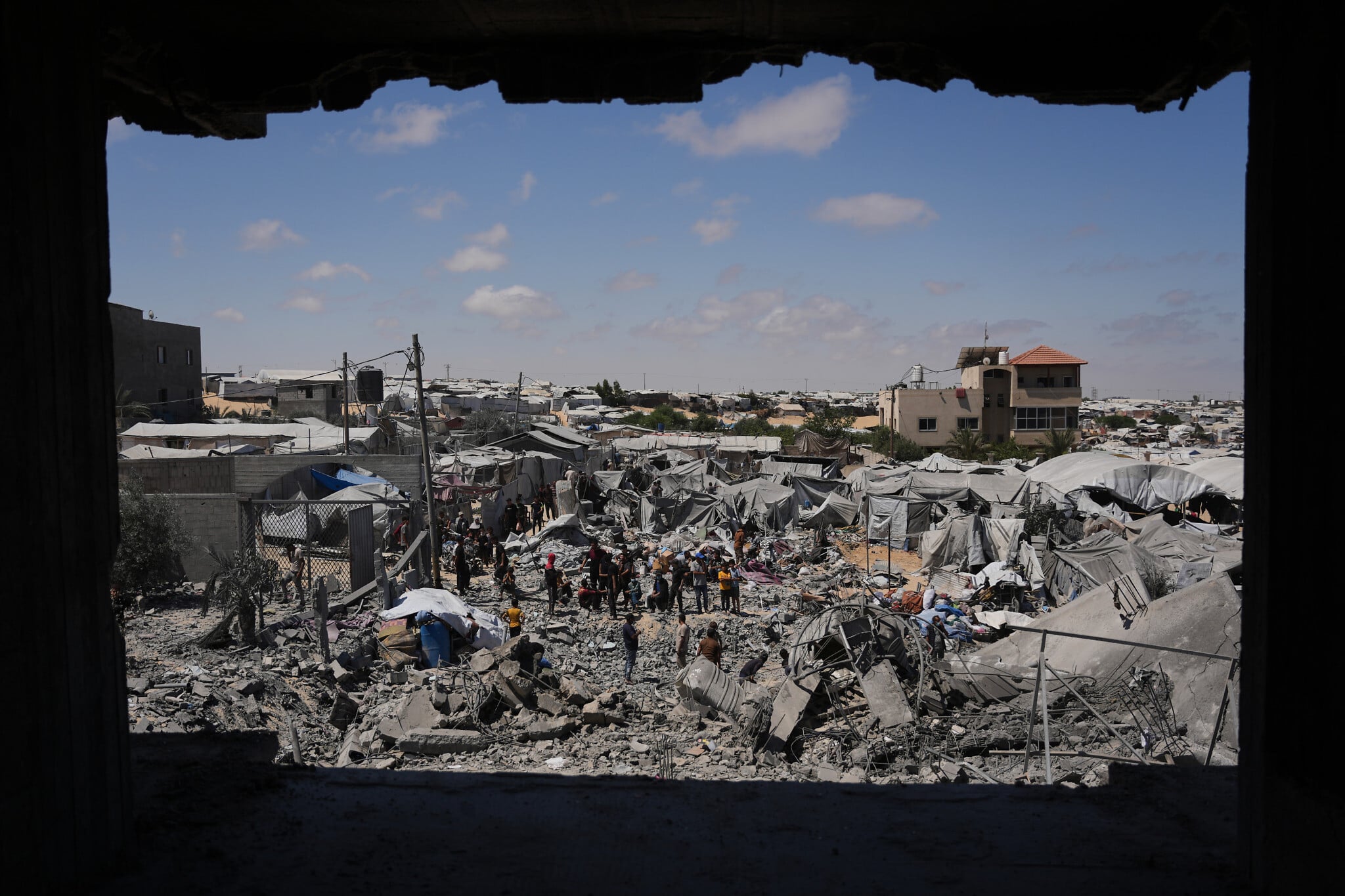
The war in Gaza was triggered by the devastating Hamas-led invasion of southern Israel on October 7, 2023, which killed 1,200 people, mostly civilians.
The Hamas-run Gaza health ministry says more than 72,000 people in the Strip have been killed during the war — including over 1,000 since the October 2025 ceasefire — though the toll does not differentiate between civilians and combatants.
The Israeli military believes that Hamas’s overall toll is largely accurate, with IDF officials estimating that two to three civilians were killed for every dead terror operative.
The IDF says it has killed over 23,000 combatants in Gaza and another 1,600 terrorists inside Israel during the October 7 onslaught.
Israel has said it seeks to minimize civilian fatalities and stresses that Hamas uses Gaza’s civilians as human shields, fighting from civilian areas including homes, hospitals, schools, and mosques.
The war, which caused a hunger crisis and internally displaced much of Gaza’s population, has been called a genocide by rights experts, scholars, and United Nations inquiries.



The Times of Israel Community.