

As gun debate rages, Trump changes the subject
US president conspicuously absent in immediate aftermath of Florida school shooting, then speaks about mental health
 Add ToI as a Preferred Source on Google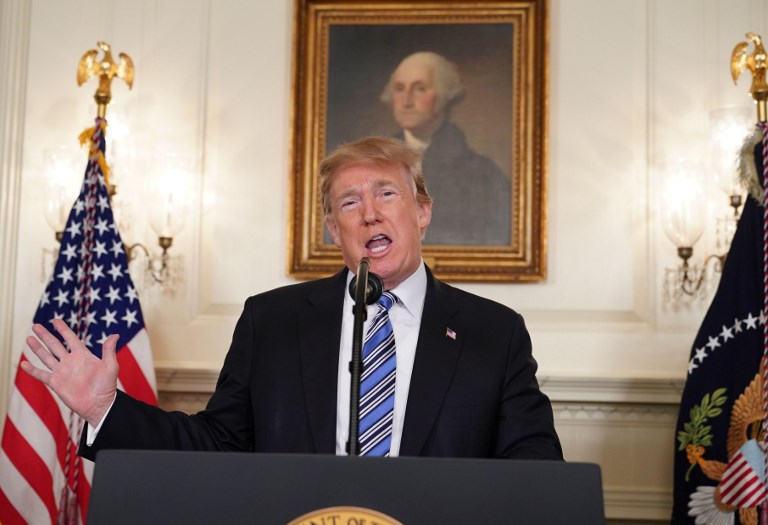
WASHINGTON, United States (AFP) — US President Donald Trump acted as consoler-in-chief Thursday to a nation despondent over the latest mass shooting of schoolkids, with an address that aimed to assuage — and steer debate away from the fraught question of gun control.
After a day and night of intense debate inside the White House, the 45th president walked into the Diplomatic Reception Room and spoke to a nation grieving “with one heavy heart.”
“We are here for you — whatever you need, whatever we can do, to ease your pain,” Trump said, addressing the families shattered by a gun rampage that killed 17 children and adults.
Trump had agreed to make the address only reluctantly, at the urging of senior aides.

The morning after the shooting, he issued a largely symbolic proclamation, ordering flags to be flown at half-staff at government buildings, military installations and at US embassies overseas.
But in the immediate aftermath on Wednesday, Trump’s absence had been conspicuous.
At almost exactly the time US authorities first confirmed the toll, in the early evening, the White House sent out a message saying the president would not appear again publicly that day.
In an unusual scene, reporters working in the usually heaving White House briefing room walked out the door toward Valentine’s Day appointments they had assumed they would miss.
In similar situations, previous presidents have quickly, within hours, appeared in the room, eager to console or unite.
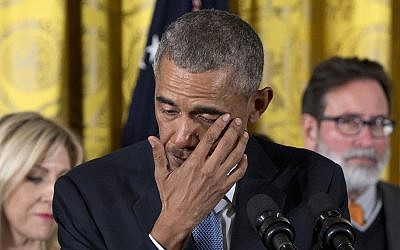
Barack Obama’s tearful appearance there after 20 elementary school children were murdered at Sandy Hook in 2012, was a seminal moment of his presidency.
“Everyone understood, when something of that magnitude happened that the American people expect to hear from the president,” said Obama speechwriter Terry Szuplat, who recalls the 44th president carrying out that duty at least 15 times.
“No one needed to come and tell us to start working, we understood the magnitude of these situations. We knew that at some point, somewhere, he would have to come out and speak. It was expected, required and necessary.”
Trump — as ever in his groundbreaking and rule-breaking presidency — initially chose to do things differently.
A pair of tweets
His only comments Wednesday were a pair of tweets offering “prayers and condolences” and saying he spoke to Florida Governor Rick Scott and was “working closely with law enforcement on the terrible Florida school shooting.”
My prayers and condolences to the families of the victims of the terrible Florida shooting. No child, teacher or anyone else should ever feel unsafe in an American school.
— Donald J. Trump (@realDonaldTrump) February 14, 2018
Just spoke to Governor Rick Scott. We are working closely with law enforcement on the terrible Florida school shooting.
— Donald J. Trump (@realDonaldTrump) February 14, 2018
With other questions brewing about Trump’s position on gun control, his alleged affair with a porn star and a battery of allegations against a top aide, the White House cancelled its already delayed regular daily briefing.
Inside any White House, there is a delicate conversation about what to say after a mass shooting and how to say it.
“Somehow this has become routine,” Obama admitted in 2015. By the end of his presidency, he had, he said, felt tapped out, unsure what to say and how it could make a difference.
“The reporting is routine. My response here at this podium ends up being routine.”
But according to Szuplat, “There is really only one person who can channel that grief and speak to that grief, and there is only one person who can truly speak for the nation.”
Part of the task is to help bring clarity to a confusing situation, but often the audience is the people directly involved.
In times of tragedy, the bonds that sustain us are those of family, faith, community, and country. These bonds are stronger than the forces of hatred and evil – and these bonds grow even stronger in the hours of our greatest need. https://t.co/bu140nscez pic.twitter.com/OoTXMCSexB
— Donald J. Trump (@realDonaldTrump) February 15, 2018
“I know from feedback we received on the scene and in the days and months that followed how much it means to these communities to hear directly from the president, to hear that ‘you are not alone,'” Szuplat said. “They need to know that the entire country stands with them.”
Trump did just that, vowing to visit Florida in the coming days, quoting the Scriptures and declaring, “We hold fast to our fellow Americans in their time of sorrow.”
But in the wake of any shooting or terror attack, Americans also expect solutions, a task complicated entirely by the country’s ingrained differences over gun laws.
Focus on mental health
This latest mass shooting — in a country where they are an almost-daily occurrence — has inevitably reignited questions about permissive rules that allow the purchase of assault rifles.
But Trump’s hard opposition to any additional gun control makes it more difficult for him to offer solutions.
He is the first president to have addressed the NRA, a powerful gun industry group that has outsized influence over American politics.
So many signs that the Florida shooter was mentally disturbed, even expelled from school for bad and erratic behavior. Neighbors and classmates knew he was a big problem. Must always report such instances to authorities, again and again!
— Donald J. Trump (@realDonaldTrump) February 15, 2018
Opponents of gun curbs have sought to steer public debate onto the motives, and mental health, of people using the weapons, and Trump’s response was in step with that strategy.
On Thursday morning the president again took to Twitter to call out the “erratic” behavior of the Florida gunman, 19-year-old Nicolas Cruz, saying neighbors should have reported him to the authorities.
During his speech he went one step further, promising to make the issue of mental health a priority, and to work with states and local authorities to make schools safer.
But not a word about guns.


The Times of Israel Community.