

As images from Gaza spread, US rabbis wrestle with war’s morality from the pulpit
Amid pressure on Jewish institutions to reckon with ongoing war, clergy ask Israel to alleviate suffering in Gaza, employing a Jewish moral vocabulary in a moment of despair
 Add ToI as a Preferred Source on Google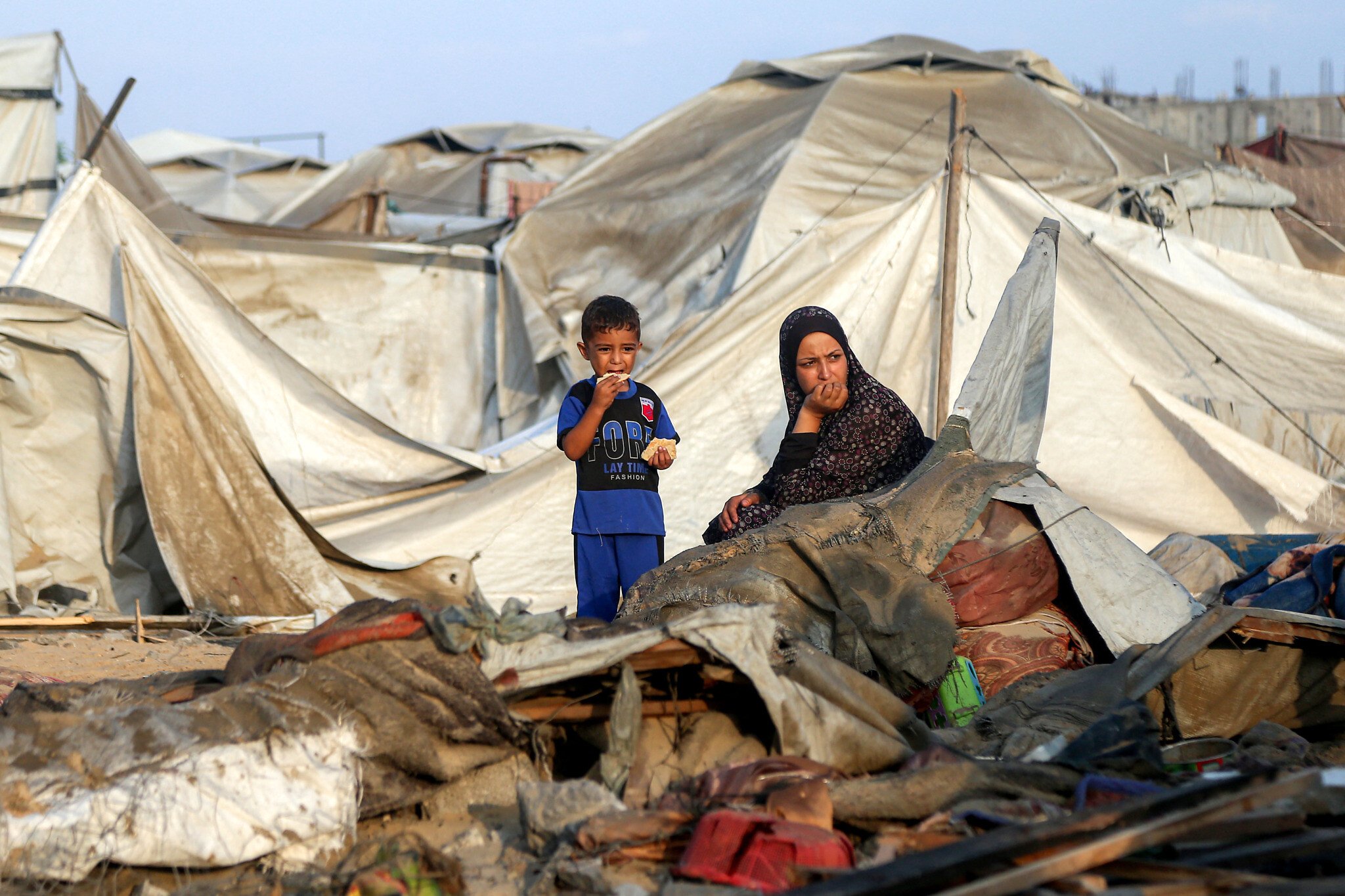
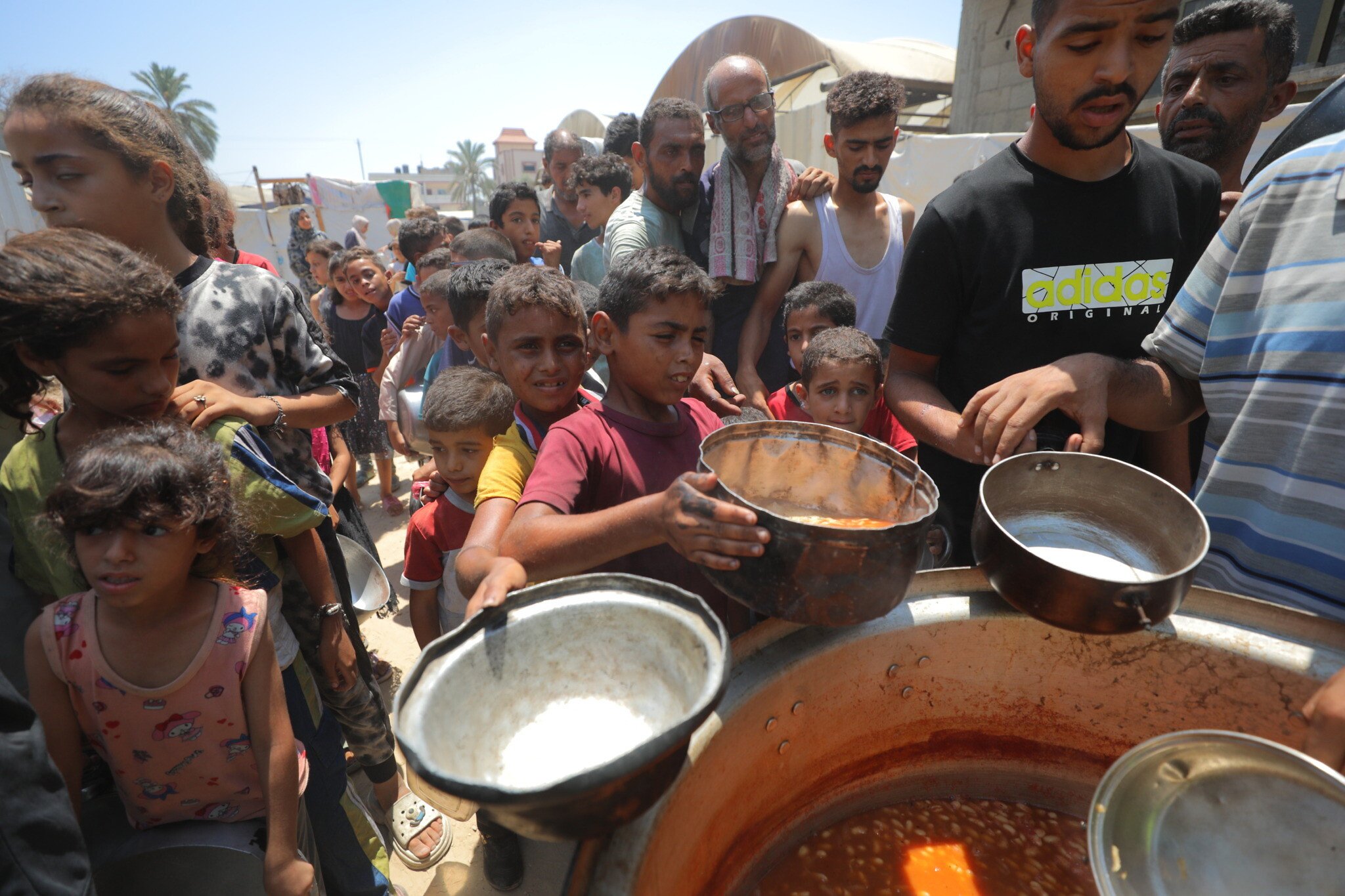
JTA — As images of malnourished children in Gaza continue to circulate and the international outcry grows louder, a number of American rabbis used their pulpits this past Shabbat to speak up about the humanitarian crisis, some with sorrow, others with moral urgency, and many with a sense that silence was no longer tenable.
The sermons came amid growing pressure on Jewish institutions to reckon with the consequences for Palestinian civilians of Israel’s war against Hamas as it nears the end of its second year. In recent days, more than 1,000 rabbis from around the world and across denominations signed an open letter demanding that Israel “stop using starvation as a weapon of war.”
The Union for Reform Judaism issued a public statement saying, “The situation is dire, and it is deadly,” and that Israel bears part of the blame even if Hamas is the primary cause. “The primary moral response must begin with anguished hearts in the face of such a large-scale human tragedy,” the statement said. In the Conservative movement, meanwhile, the Rabbinical Assembly cited Jewish values in calling on the Israeli government to alleviate the suffering in Gaza.
Despite these public declarations, in many congregations, the topic of Israel and Gaza remains complicated, given the unresolved trauma of the October 7, 2023, Hamas atrocities and the 50 hostages that remain in the hands of Gazan terror groups. Some rabbis have struggled with whether, and how, to speak publicly. Others have doubled down on the pulpit’s role as a space for moral wrestling and prophetic critique.
“This is not the Judaism we want our 12-year-olds to inherit,” said Rabbi Sarah Reines in her Friday night sermon at Temple Emanu El, the Reform congregation in Manhattan, referring to the Torah’s account of a divinely sanctioned war in which Moses commands the killing of Midianite men, women, and children.
Reines did not explicitly mention the situation in Gaza, but she unmistakably wrestled with the moral toll of war. Drawing from the week’s Torah portion, Reines used the imagery of the war against the Midianites to examine the ethical conduct of war through the lens of Jewish tradition. Citing Maimonides, she emphasized restraint, civilian protection, and the imperative to free captives, calling them “wartime priorities” rooted in Jewish values. “Are we protecting life,” she asked, “or are we hardening ourselves to it?”
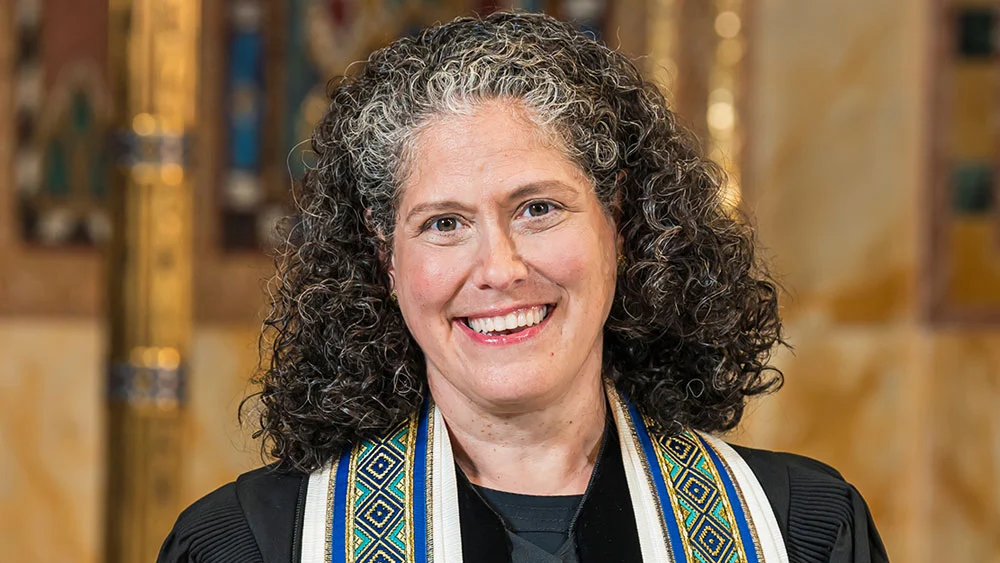
Reines was one of several rabbis who framed the current moment as a test of Jewish ethics, not only in terms of Israel’s actions, but in how Jews worldwide choose to bear witness.
In Gloucester, Massachusetts, Rabbi Naomi Gurt Lind grappled with the Torah’s command to “dispossess” the land’s inhabitants, a concept she called morally troubling in light of the ongoing war in Gaza.
A newly ordained rabbi serving Temple Ahavat Achim, a Conservative synagogue, she reflected on the Hebrew root “yarash,” which is linked to both “dispossess” and “inherit,” and explored how Jewish and Palestinian experiences of displacement echo each other. Identifying as “a Zionist through and through,” Gurt Lind affirmed both peoples’ connection to the land, saying she condemns Hamas’s actions as well as starvation as a tactic of war.
Not all rabbis spoke from the same ideological place, but a common thread was their effort to assert Jewish moral vocabulary in a moment of despair.
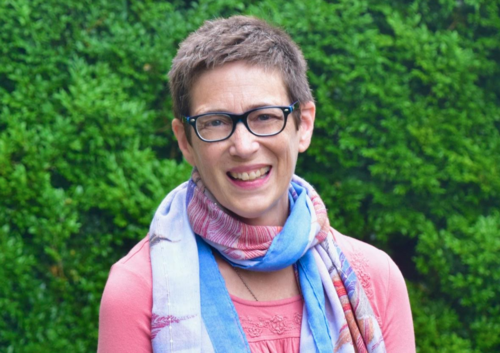
At SAJ, a Reconstructionist synagogue on Manhattan’s Upper West Side, Rabbi Lauren Grabelle Herrmann delivered a sermon that she acknowledged might alienate some people when she posted it to Facebook the next day. “I stand here broken-hearted before you,” she said. “Broken-hearted by what I am witnessing … and deeply troubled by the responses I am seeing from the broader Jewish community.”
Herrmann, a self-described progressive Zionist, organized her sermon around three common Jewish responses to the aid crisis: denial (“They are making it up”), deflection (“It’s Hamas’s fault”), and moral relativism (“This is just what happens in war”). She challenged each in turn, rooting her critique in teshuvah, the Jewish practice of repentance.
“Israel may not be responsible for the entire systemic problem,” she said, “but it is responsible for its part in the tragedy that is unfolding.”
In Santa Fe, New Mexico, Rabbi Neil Amswych of Temple Beth Shalom delivered an introspective and agonized message, one that wrestled not only with Israel’s actions but with the very role of the rabbi as public moral voice. “Why do some people need me to say what they’re thinking about Israel?” he asked. “Why can’t they do it?”
Amswych ultimately decided to sign the recent rabbinic letter urging Israel to change course, but only after what he described as a painful internal journey. He rejected performative politics and the culture of “black-and-white” statements.
“Every public statement lacking nuance that I make brings some people who agree with it closer to the Temple, and simultaneously pushes some people who disagree further away,” he said. “There is a cost to every public black-and-white statement in a community that is trying to be truly diverse.”
Even in sermons that didn’t deal with Gaza at all, the heaviness of the moment was salient.
In Los Angeles, Rabbi Hannah Jensen, who helps lead the progressive congregation Ikar, invoked the traditional Three Weeks of mourning on the Jewish calendar — and reimagined them as an extended period of civic grief for her city. Referencing the devastating wildfires in January and the mass ICE raids of recent weeks, she drew a direct parallel to ancient laments for Jerusalem.
“Lonely sits the city once great with people,” she quoted from the Book of Lamentations. “The imagery feels so palpable in the city right now.”
While Jensen’s sermon focused on displacement and trauma in Los Angeles, it pointed to a universal imperative in the face of crisis. “Our grief cannot be the whole story,” she said. “It must move us to action.”
Action, too, was a central theme in the sermon delivered by Rabbi Adam Louis-Klein at Kehillat Beth Israel, a Conservative congregation in Ottawa. He placed the war and its global fallout within the longer arc of Jewish history, drawing connections from the Hebron massacre of 1929 to contemporary campus antisemitism and media bias.
Without directly addressing the humanitarian crisis in Gaza, he said the current wave of criticism against Israel should be understood as a product of how antisemitism distorts the truth. He called on Jews to move beyond fighting antisemitism, arguing that only by engaging with Jewish knowledge and identity, can Jews assert themselves in the world, and escape what he characterized as the trap of perpetual defensiveness.
“We are not survivalists,” he said. “We are not fighting just to persist. Our survival today is now bound to the survival of truth itself — in a world where it is once again under siege.”








The Times of Israel Community.