

At least 35 people, including 4 children, said killed in growing Iran protests
Iranian protesters clash with security forces during sit-in at Tehran’s Grand Bazaar; group says over 1,200 detained as mass rallies spread to hundreds of locations around country
 Add ToI as a Preferred Source on Google
The death toll in violence surrounding protests in Iran has risen to at least 35 people, activists said Tuesday, as the demonstrations showed no signs of stopping.
The figure came from the US-based Human Rights Activists News Agency, which said more than 1,200 people have been detained in the protests that have been ongoing for more than a week.
The death toll included 29 protesters and four children, as well as two members of Iran’s security forces. Demonstrations have reached over 250 locations in 27 of Iran’s 31 provinces.
The group, which relies on an activist network inside of Iran for its reporting, has been accurate in past unrest.
The semiofficial Fars news agency, believed to be close to Iran’s paramilitary Revolutionary Guard, reported late Monday that some 250 police officers and 45 members of the Guard’s all-volunteer Basij force have been hurt in the demonstrations.
The agency also claimed Monday that the protests were slowing down, and that “the trend observed on Sunday night shows a notable decrease in the number of gatherings and their geographic reach compared to previous nights.”
Massive crowds of Iranian anti-regime protesters have taken to the streets of Sonqor and Kolyai in Iran's Kermanshah province, joining the nationwide protests against the Islamic Regime. pic.twitter.com/8RC1OAdspL
— Visegrád 24 (@visegrad24) January 5, 2026
Local media’s accounting of the protests is not exhaustive, and state-run outlets have downplayed their coverage of the demonstrations, while videos flooding social media are often impossible to verify.
On Tuesday, angry protesters conducted a sit-in at Tehran’s Grand Bazaar, witnesses said, with security forces ultimately firing tear gas and dispersing demonstrators as the rest of the market shut down.
The protest at the Grand Bazaar, the beating heart for centuries of both Iran’s economic and political life, represents the latest signal that the demonstrations are likely to continue as the country’s rial currency fell to a record low Tuesday.
Tenth day of anti-establishment protests in Iran
Viral photo shows protesters sitting in front of security forces in Tehran’s Grand Bazaar.
Location: https://t.co/oIdxft8vwC@GeoConfirmed pic.twitter.com/zVlXNcbPtf
— Ghoncheh Habibiazad | غنچه (@GhonchehAzad) January 6, 2026
Tenth day of anti-establishment protests in Iran
Video shows a group of protesters dispersed in Tehran
Location: https://t.co/aG1KGN8UE2pic.twitter.com/Hz0oeqng9o
— Ghoncheh Habibiazad | غنچه (@GhonchehAzad) January 6, 2026
Other demonstrations similarly have seen people sit down in front of police after a photo circulated earlier of a man seen sitting alone in front of security forces.
On Monday, most shops in Tehran were open, and residents were going about their business after the end of the weekend on Sunday, according to AFP reporters in the capital.
However, riot police were deployed at major intersections, and officers were stationed in front of some schools. Several universities have resumed classes, but only online.
Iran’s President Masoud Pezeshkian, while ordering a government investigation into one incident involving the protests, otherwise signaled Tuesday that the crisis may be rapidly moving beyond the control of officials.
“We should not expect the government to handle all of this alone,” Pezeshkian said in a televised speech. “The government simply does not have that capacity.”
Pezeshkian, in his speech, blamed inflation, sanctions, and other woes for causing the depreciation, and warned that tougher times may be coming.
“If we do not make realistic decisions, we ourselves will push the country toward crisis and then complain about the consequences,” he warned.
Fear of intervention
The growing death toll carries with it the chance of American intervention. US President Donald Trump warned Iran on Friday that if Tehran “violently kills peaceful protesters,” the United States “will come to their rescue.”
While it remains unclear how and if Trump will intervene, the comments took on new importance after the US military on Saturday captured Venezuelan President Nicolás Maduro, a longtime ally of Tehran.
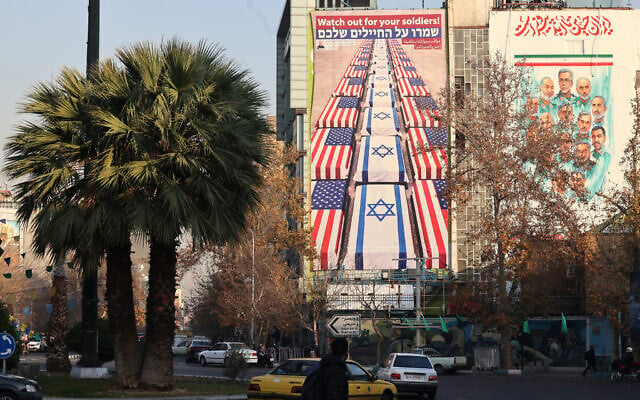
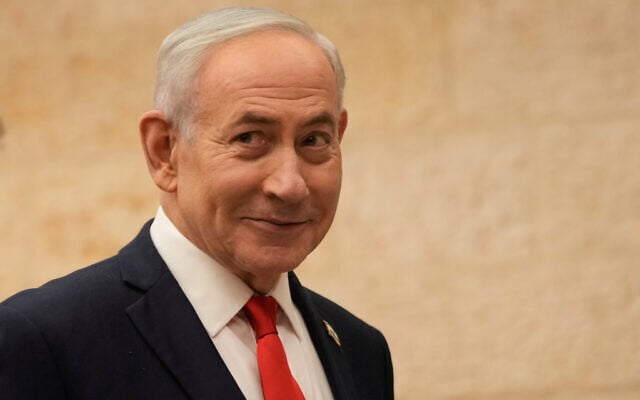
On Monday, Prime Minister Benjamin Netanyahu again backed the protesters, saying in Knesset, “We in Israel identify with the struggle of the Iranian people, and its aspirations for freedom and justice.”
He added that Iran might have reached “a decisive moment, in which the Iranian people take their futures into their hands.”
Earlier in the day, Iranian foreign ministry spokesman Esmaeil Baghaei said at a press conference that “the Zionist regime is determined to exploit the slightest opportunity to sow division and undermine our national unity, and we must remain vigilant.”
He accused Israeli and US leaders of “incitement to violence.”
Tehran toes the line
Since the protests began, officials have publicly struck a conciliatory tone when it comes to protesters’ economic demands, while vowing to take a hard line against any chaos or destabilization.
Late Monday, Pezeshkian assigned the Interior Ministry to form a special team for a “full-fledged investigation” of what had been happening in Ilam province. Protesters in Malekshahi County in Iran’s Ilam province, some 515 kilometers (320 miles) southwest of Iran’s capital, Tehran, were killed as online videos purported to show security forces firing on civilians.
The presidency also acknowledged an “incident in a hospital in the city of Ilam.” Online video showed security forces wearing riot gear raiding a hospital, where activists said they were seeking demonstrators.
The hospital assault drew criticism from the US State Department, which, in Iran’s Farsi language, called the incident “a crime.”
“Storming the wards, beating medical staff and attacking the wounded with tear gas and ammunition is a clear crime against humanity,” a post on the social platform X read. “Hospitals are not battlefields.”
A video circulating on social media shows the start of gunfire at protesters in the western city of Malekshahi, Ilam province, on Saturday. Information shared with Iran International indicates at least five people were killed and around 30 wounded during the incident. pic.twitter.com/spHJMhhLRv
— Iran International English (@IranIntl_En) January 4, 2026
A report by the semiofficial Fars news agency earlier alleged, without offering evidence, that demonstrators carried firearms and grenades.
Ilam province is mainly home to the country’s Kurdish and Lur ethnic groups and faces severe economic hardship.
But also on Monday, the head of the country’s judiciary said that Iran will offer no leniency to “rioters,” though he affirmed that the public has a right to demonstrate, as long as they follow the law.
“I instruct the attorney general and prosecutors across the country to act in accordance with the law and with resolve against the rioters and those who support them… and to show no leniency or indulgence,” Gholamhossein Mohseni Ejei said, according to the judiciary’s Mizan news agency.
He went on to add that Iran “listens to the protesters and their criticism, and distinguishes between them and rioters.”
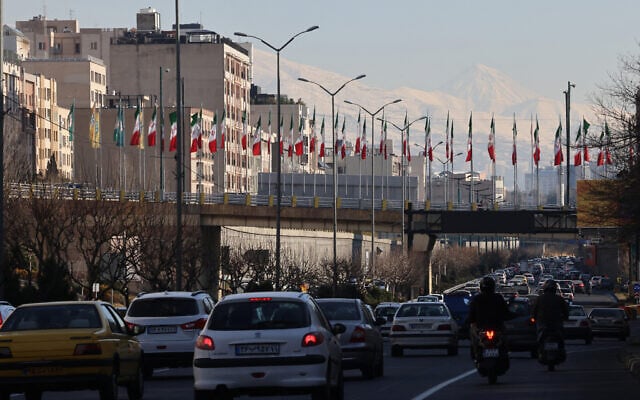
The protests have become the biggest in Iran since 2022, when the death of 22-year-old Mahsa Amini in police custody triggered nationwide demonstrations. However, the protests have yet to be as widespread and intense as those surrounding the death of Amini.
Iran has faced rounds of nationwide protests in recent years. As sanctions tightened and Iran struggled after a 12-day war with Israel in June, its rial currency collapsed in December, reaching an exchange rate of 1.4 million to $1. Protests began soon after.
On Sunday, the government announced a monthly allowance for every citizen to alleviate economic pressure, equivalent to around 3.5 percent of the average monthly wage.
Starting January 10, the government will provide a monthly stipend of 10,000,000 rials per person (about $7) in non-cashable electronic credit for use in select grocery stores, the semi-official Tasnim news agency reported.
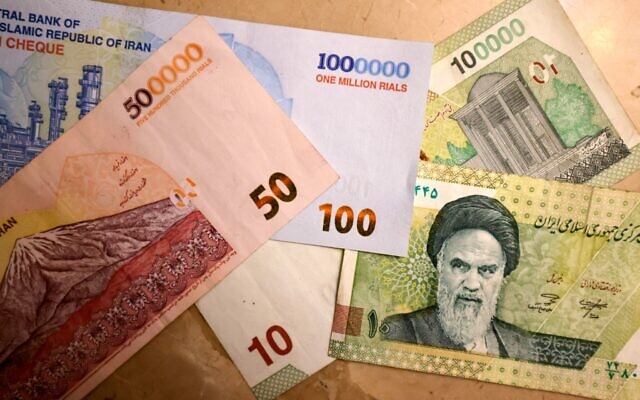
For lower-income households, whose monthly salaries barely exceed $150, the measure represents a modest but meaningful boost. The rial lost roughly half its value against the dollar in 2025, while official inflation reached 42.5% in December.
The reformist newspaper Arman Melli said Monday that the authorities had “heard the voices of the protesters,” while the conservative papers Javan and Kayhan accused the United States and Israel of financially supporting rioters.
Despite the government’s efforts to placate the protesters with stipends, demonstrations continued to spread to more and more cities across the country.
Protests have also taken place among the Iranian diaspora.
At a demonstration in Paris on Sunday, 29-year-old French-Iranian translator Sahar Aghakhani told AFP: “With each new protest, Iranian men and women gain ground. Movement by movement, we’re getting closer to the end of the regime.”








The Times of Israel Community.