

At tense cross-exam, Hebron soldier says his superiors lied
Elor Azaria, who killed an incapacitated stabber, tells court his commanders deliberately left information out of their testimonies
 Add ToI as a Preferred Source on Google
Raoul Wootliff is a former Times of Israel political correspondent and Daily Briefing podcast producer.
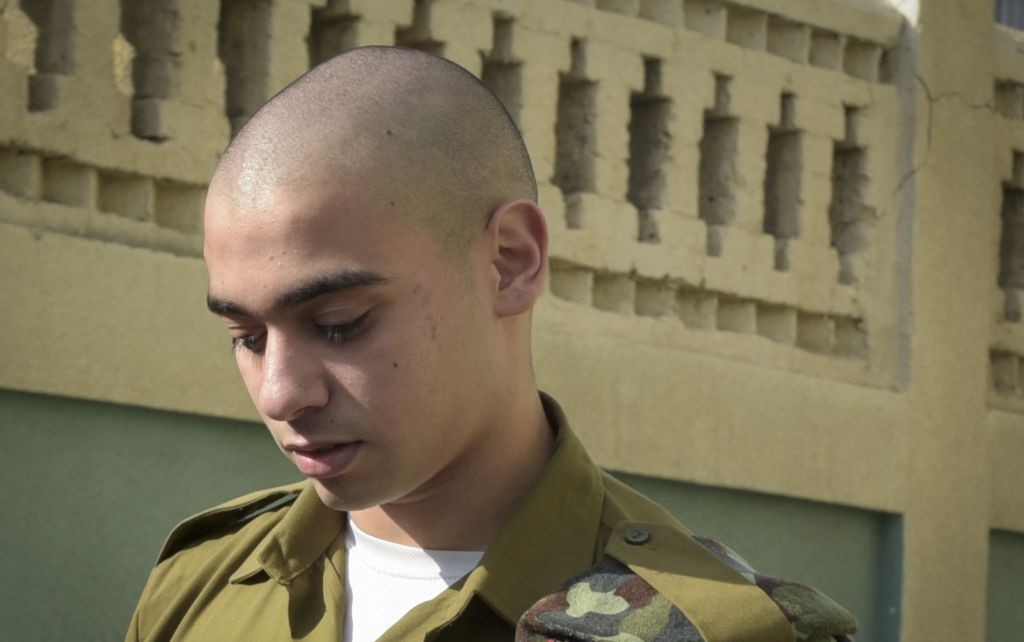
Facing his first cross-examination, an Israeli soldier on trial for killing an incapacitated Palestinian stabber on Monday accused his commanders of lying about the incident to the military court, asserting they had deliberately omitted important information in their testimonies.
Sgt. Elor Azaria was on the stand Monday for the second day in a row, answering questions from the prosecution over the March 24 incident during which he was filmed shooting Palestinian assailant Abdel Fattah al-Sharif in the head, nearly 15 minutes after Sharif was shot and wounded by soldiers when he attempted to stab them in Hebron.
An IDF soldier was moderately wounded in the stabbing attack, during the course of which a second Palestinian assailant was shot and killed.
Azaria, who has been charged with manslaughter, told the court that his company commander, Maj. Tom Na’aman, had left out key facts in his account of the incident and “lied on a few points.”
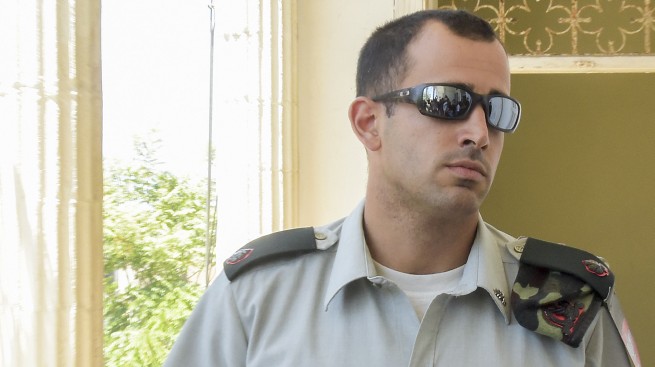
Much of the questioning focused on claims made by Azaria last week that his commanders had slapped him in the minutes immediately after the shooting.
In a letter given to the defense last week and to the court on Sunday, Azaria said Na’aman slapped him in the face shortly after the shooting. The defense called for a military police investigation into the incident.
During Monday’s questioning the prosecution showed the court a video of Azaria being interrogated immediately after the shooting, in which he said, “The company commander was not angry at me.”
Asked how he could now claim he was physically assaulted, Azaria said, “My mental state was not good. I am not a psychologist,” according to the Ynet news site.
“I was in shock — that’s why I never told the battalion commander about the slap,” he added. “I was in shock from the company commander’s response and from the whole incident. Anyone in the field can understand what I am talking about.”
In his first day on the stand Azaria sharply criticized his commanders, claiming that they failed to keep the situation under control, with civilians and news camera crews trying to get a closer look at the attackers.
“The commanders were complacent, didn’t pay attention to the terrorist. The company commander stood over [Sharif] talking on the radio, not alert to the situation, to what was happening at the scene, to the shouts,” he said Sunday. “From my point of view, they weren’t acting as expected from a commander.”
Last month Na’aman provided damning testimony against Azaria, saying Sharif posed no threat and that after the shooting him, Azaria told Na’aman: “This terrorist was alive and he had to die.”
Defense Minister Avigdor Liberman said Monday that politicians should let the military court do its job and not “decide [Azaria’s] fate” on their own.
“The political echelon, and especially the defense minister, must not be allowed to decide the fate of the soldier, all the more so before the legal process has ended,” he said in an apparent reference to comments made by his predecessor Moshe Ya’alon who, as defense minister at the time of the incident, had indicated he believed Azaria to be guilty.
Azaria will face questioning for a third day on Tuesday.
Times of Israel staff contributed to this report.






The Times of Israel Community.