

Atmosphere spotted on celestial body in far reaches of solar system
Icy body, classified as trans-Neptunian object, is 500 km across, has atmosphere over 5 million times thinner than Earth’s; astronomers mull better name than current (612533) 2002 XV93
 Add ToI as a Preferred Source on Google
WASHINGTON (Reuters) — In the far reaches of our solar system, beyond the outermost planet Neptune, resides a host of icy and desolate celestial bodies. Among these objects, only the dwarf planet Pluto was known to possess an atmosphere — until now.
Astronomers have identified another object from this realm, with a diameter of roughly 310 miles (500 kilometers), that has an atmosphere — albeit a thin one — in a discovery that suggests that some of these lonely bodies may be more dynamic than previously known. Researchers are now trying to determine what has caused it to have an atmosphere.
These bodies are called trans-Neptunian objects, and this one is named “(612533) 2002 XV93.” It orbits the sun at roughly the same distance as Pluto.
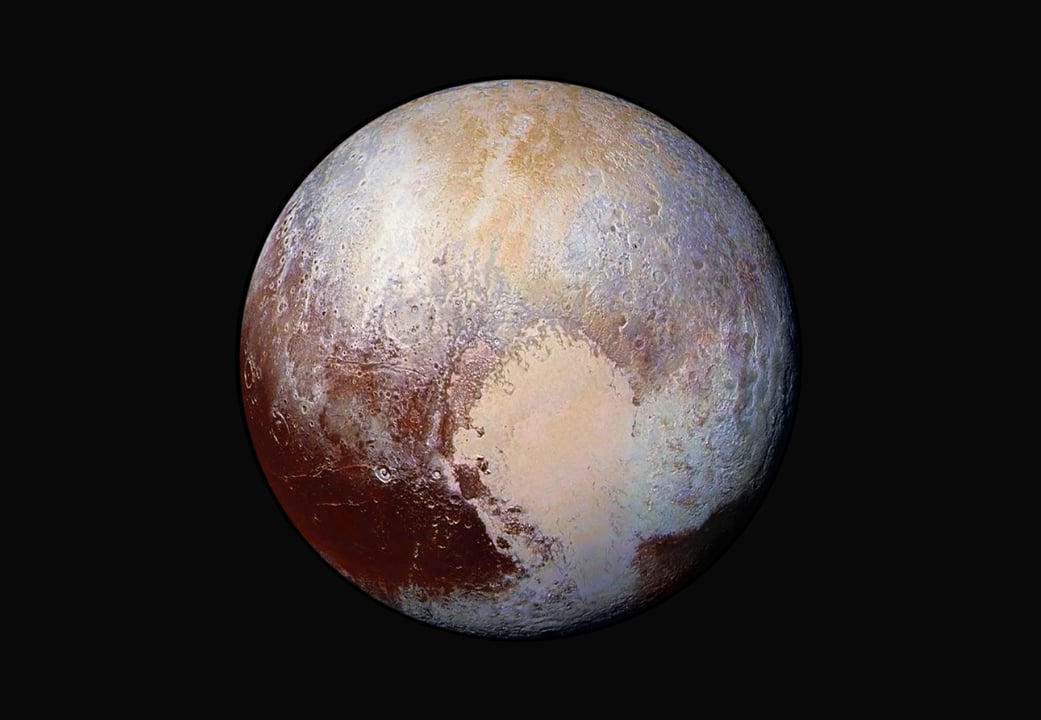
It is much smaller than the two largest trans-Neptunian objects — Pluto, with a diameter of 1,473 miles (2,370 kilometers), and Eris, with a diameter of 1,445 miles (2,326 kilometers). Pluto and Eris are classified as dwarf planets.
The object’s atmosphere appears to be roughly 5 million to 10 million times thinner than Earth’s robust atmosphere, and about 50 to 100 times thinner than Pluto’s tenuous atmosphere. The researchers said this object’s atmosphere may be dominated by methane, nitrogen, or carbon monoxide.
“The discovery suggests that some small icy bodies in the outer Solar System may not be completely inactive or unchanging, as previously assumed,” said astronomer Ko Arimatsu, head of the Ishigakijima Astronomical Observatory, a lecturer at the National Astronomical Observatory of Japan and lead author of the study published on Monday in the journal, “Nature Astronomy.”
“It was generally thought that an atmosphere would not exist on such a small object,” said astronomer and study co-author Junichi Watanabe, director of the Koyama Space Science Institute at Kyoto Sangyo University and a professor at the National Astronomical Observatory of Japan. “This suggests that even in a distant, cold world, there are dynamisms we haven’t imagined.”
The researchers presented two possible explanations for this object’s atmosphere. They said it may be an enduring atmosphere, perhaps sustained by cryovolcanism, with gases seeping or venting from its interior through cracks on its surface.
“This would not be a volcano like on Earth, with molten rock, but a cold, icy-world version involving volatile gases and ices,” Arimatsu said.
Alternatively, the atmosphere could be temporary, caused by gases released when another smaller object struck this one relatively recently.
“If the atmosphere was impact-generated, it may decline over the next several years or decades. If it persists or varies seasonally, that would favor ongoing internal supply,” Arimatsu said.
The researchers studied it using ground-based telescopes in Japan at Kyoto, Nagano, and Fukushima during a stellar occultation. This is when a celestial body passes in front of a distant star from Earth’s vantage point, temporarily obscuring the starlight. Scientists can determine physical characteristics of an object based on changes in light from the background star.
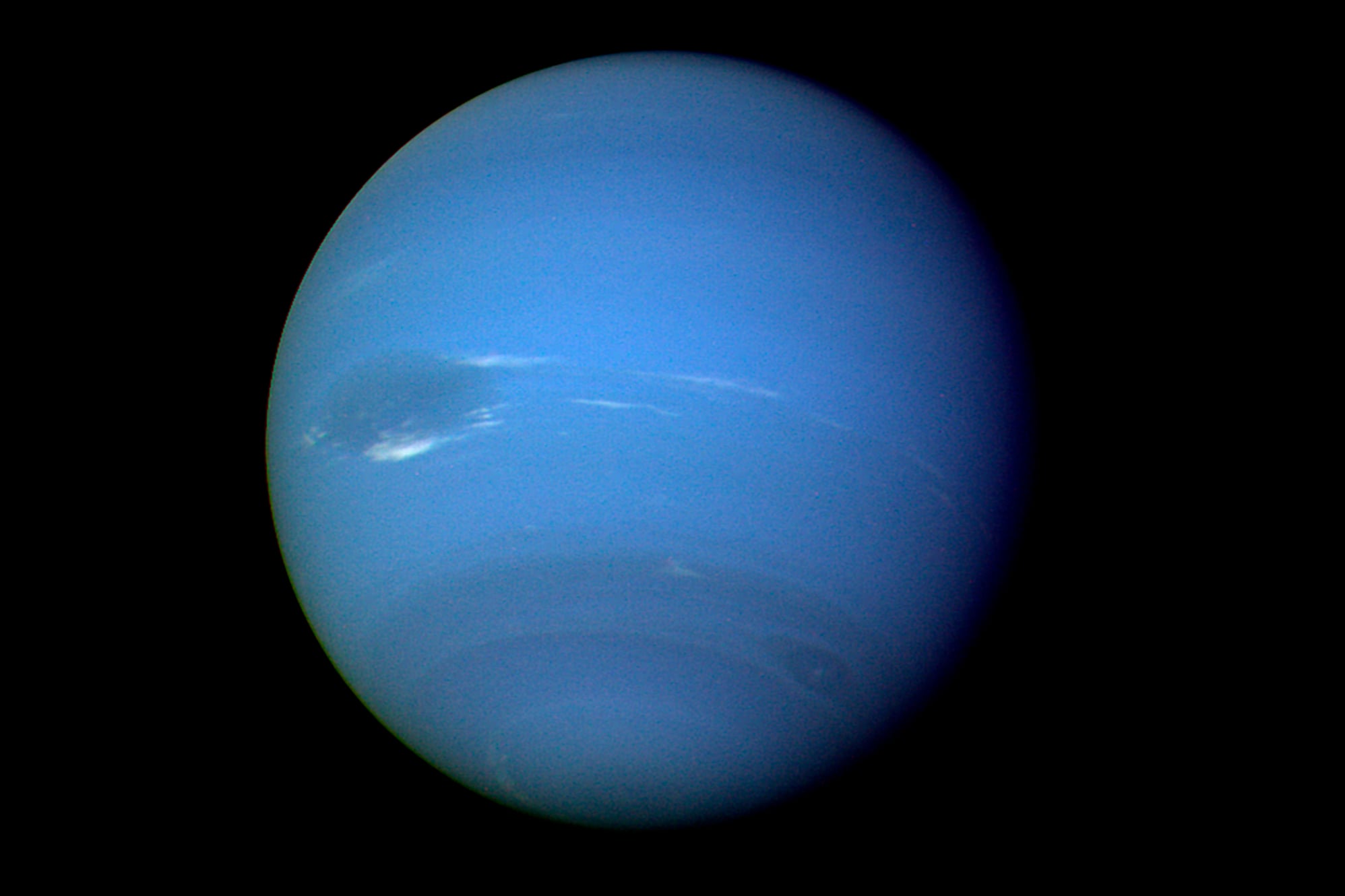
The object, inhabiting a vast expanse beyond Neptune called the Kuiper Belt, probably dates to the dawn of the solar system a bit more than 4.5 billion years ago. It travels an elliptical path around the sun, taking 247 years to complete one orbit. The researchers said its composition probably includes water ice, rock, and organic-rich materials.
At the time of the observations, it was located about 3.42 billion miles (5.5 billion kilometers) from the sun. That is about 37 times the distance between Earth and the sun, a measure called an astronomical unit, or AU. Its distance from the sun averages about 39.6 AU – 34.6 AU at its closest point and 44.6 AU at its farthest.
The researchers are aware that its current name “(612533) 2002 XV93” is not memorable.
“Within our team, we usually just called it XV93, which is convenient but admittedly not very exciting. Personally, since I work at Ishigakijima Astronomical Observatory in Okinawa, I would be very happy if it someday received a name connected to Okinawan mythology, such as Amamikyu, the creator deity in Okinawan tradition. However, formal naming follows the procedures of the International Astronomical Union,” Arimatsu said.










The Times of Israel Community.