

Austria heads to polls as Israel warily eyes another boost for far right
Anti-migrant FPOe, founded by Nazis but with views aligning with Netanyahu’s Likud, expected to place high enough for senior spot in ruling coalition under wunderkind Kurz
 Add ToI as a Preferred Source on Google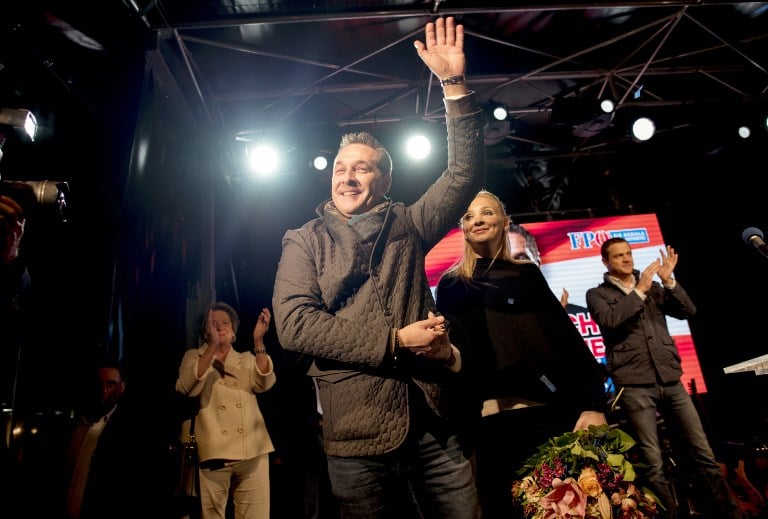
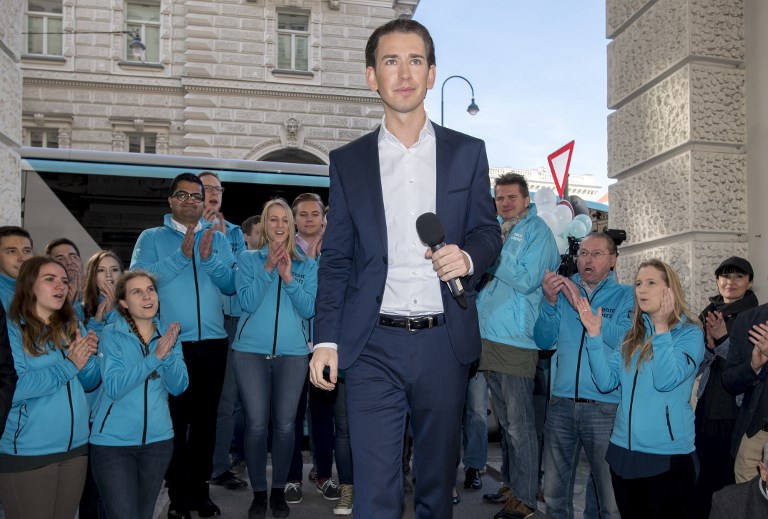
VIENNA, Austria — Austrians vote Sunday in a snap election tipped to see conservative Sebastian Kurz, 31, become the EU’s youngest leader and form an alliance with the far right, in the bloc’s latest populist test.
A rightward shift in the wealthy European Union member of 8.75 million people would be a fresh headache for Brussels, as it already struggles with Britain’s decision to leave and the rise of nationalists in Germany, Hungary, Poland and elsewhere.
But all signs indicate that Austrians, fed up with a record influx of asylum-seekers, want to swap the gridlocked centrist rule for a more hardline government, for the first time in a decade.
Some 6.4 million people are eligible to vote in Sunday’s closely watched ballot. Polls will open at 6 a.m. in Austria (7 a.m. in Israel) and close at 5 p.m. (6 p.m. Israel), with first estimates expected shortly afterwards.
The People’s Party (OeVP) — rebranded by the fresh-faced Kurz as his personal “movement” — is projected to reap over 30 percent of the vote with pledges to go tough on migrants and easy on taxes.
The “whiz kid” is likely to form a coalition with the euro-skeptic Freedom Party (FPOe), forecast to place second or third with at least 25 percent, polls suggest.
Founded by ex-Nazis, the FPOe almost won the presidency last year and topped opinion polls before Kurz stole votes with his radical OeVP makeover in spring.
FPOe chief Heinz-Christian Strache, 48, railed against asylum-seekers and vowed to stop Austrians from “becoming a minority in our own homeland,” at a rally late Friday.
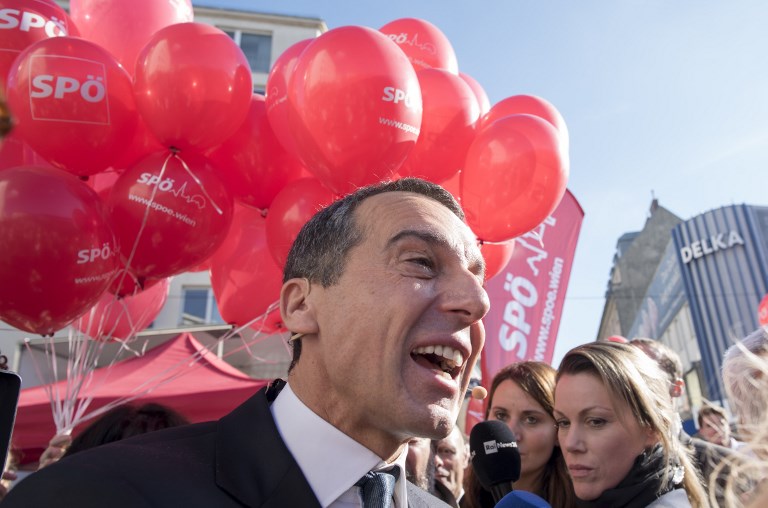
Meanwhile, embattled Chancellor Christian Kern, 51, and his once-mighty Social Democrats (SPOe) could be flushed into opposition after their promising campaign was decimated by blunders and scandals.
One of those scandals involved Israeli political insider Tal Silberstein, a former Kern adviser, being accused of using fake news to smear Kurz as an anti-Semite and of using anti-Semitic imagery to discredit him within the right-wing camp.
The SPOe had fired Silberstein in August after he was arrested in Israel over his alleged involvement in money laundering, charges he denies, in a case connected to diamond magnate Beny Steinmetz.
Discussing the affair last week, Kurz said that there was a referendum now about “whether we want the Silbersteins in Austria,” a comment that some observers interpreted as having anti-Semitic undertones itself (a claim Kurz vehemently denies).
Open hostility between the ex-railway chief and Kurz also makes any new attempt at ruling together seem unlikely.
Kern, in office since last May, issued a final warning Saturday against a right-wing alliance, saying “Austria was at the most important crossroads in decades.”
Better Israel ties, but at what price?
The OeVP and FPOe already shared power between 2000 and 2007. At the time the alliance with the far right — then led by the late, SS-admiring Joerg Haider — sparked protests and ostracized Austria. Israel recalled its ambassador for a year in a response.
But its return may not trigger the same backlash now that nationalists have gained ground across Europe.
While Israel has traditionally boycotted the FPOe, analysts say the rise of the party could lead to improved relations between Vienna and Jerusalem.
The far-right faction, like other ascendant hard-right parties in Europe such as Germany’s AfD, Britain’s UKIP, France’s FN and others, has sought to make common cause with Israel’s right-wing government, despite also being accused of harboring anti-Semites and former Nazis.
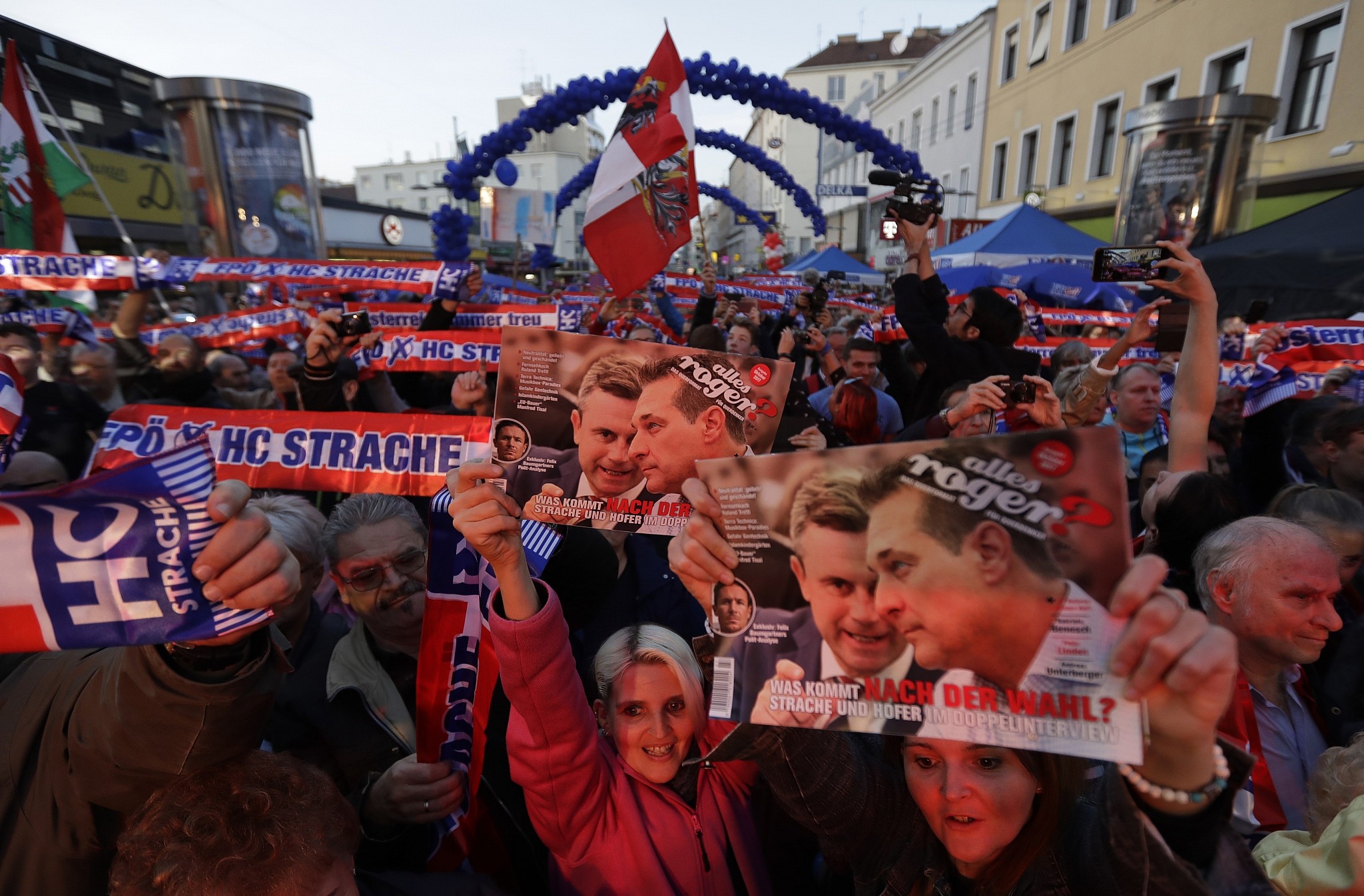
If senior party member Norbert Hofer were to become foreign minister, as is common for runners-up in Austrian coalition governments, Jerusalem would have to choose between ending its longstanding policy not to interact with nationalist parties and boycotting a top diplomat of a friendly country.
“The first time the FPOe entered government, the other 14 EU countries boycotted its ministers, as did Israel,” said Cas Mudde, a Dutch-born political scientist focusing on political extremism and populism in Europe. “But we live in another world now. If Israel is embracing Donald Trump in the US, and defending Viktor Orbán in Hungary, it would be seen as hypocritical to ostracize Strache in Austria.”
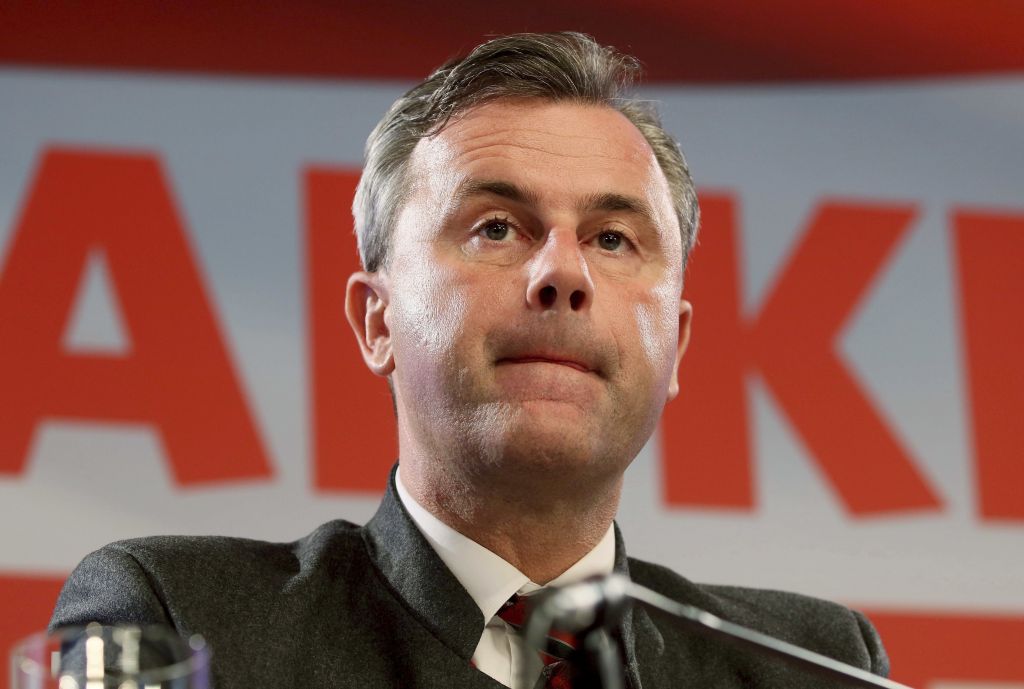
Strache has been to Israel several times but was not given meetings with senior officials. However, his views on the Israeli-Palestinian conflict more closely resemble those of the Likud and Jewish Home parties than those of the opposition Zionist Union. For instance, he supports Israel’s right to build settlements in the West Bank and advocates moving the Austrian Embassy from Ramat Gan to Jerusalem.
While a number of Likud figures have urged the party to drop its boycott of FPOe, many say the Austrian faction’s Nazi past places it beyond the pale.
“There is no doubt that the FPOe is trying as much as possible, especially in recent years, to distance itself from being called a neo-Nazi party. But one must remember: this is exactly who they were,” said Adi Kantor, who researches Israel-Europe relations for the Institute of National Security Studies in Tel Aviv. “There were clear anti-Semites and former Nazis in this party from the very beginning in the 50s.”
Israel’s Foreign Ministry declined to comment on the Austrian election. In private conversations, however, officials say they are planning for any possible scenario, though Jerusalem is unlikely to make any public statement before coalition negotiations in Vienna are concluded.
‘Captures people’s minds’
The early parliamentary election was triggered after Kurz became OeVP chief in May and ended the bickering “grand coalition” with the Social Democrats.
For his turquoise movement, he drew young candidates from outside politics and vowed to put “Austrians first” again.
“I am feeling optimistic,” OeVP party volunteer Michael Brandstetter told AFP in Vienna.
“The way Kurz goes about things is what has captured people’s minds.”
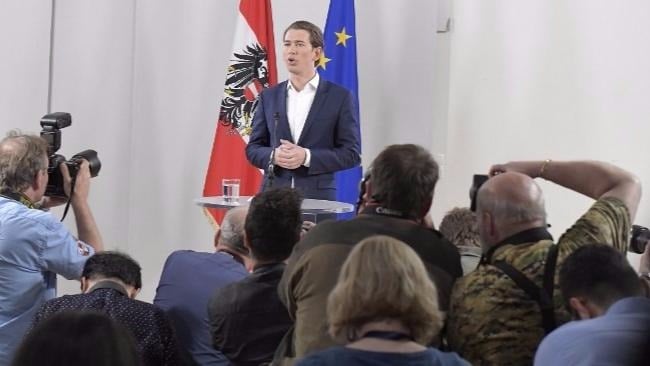
As foreign minister, Kurz claims credit for closing the so-called western Balkan migrant route in 2016, earning him praise at home.
Pushing far-right themes, the ambitious politician wants to cut benefits for all foreigners and shut Islamic kindergartens.
Kurz and Strache also see eye-to-eye on lowering taxes, slashing Austria’s red tape and keeping the EU more out of national affairs.
Experts say their union could turn Austria into a tricky partner for the bloc.
Vienna will hold the EU’s presidency in the second half of 2018, just when Brussels wants to conclude Brexit talks in March 2019.
Strache thinks Britain “will probably be better off after Brexit” and pushes for closer ties with eastern and central European countries.
“The Freedom Party as a government partner will not make a good impression in Europe (and) Kurz is aware of that,” commented Der Standard newspaper on Saturday.
“But the question is whether there is any getting around Strache after this election.”







The Times of Israel Community.