

Behind the scenes at New York’s nu Yiddish production of ‘Fiddler on the Roof’
The Broadway classic surprises as a mainstream hit beloved by alte kakers and critics; runs through September 2 at the Museum of Jewish Heritage
 Add ToI as a Preferred Source on Google
Jordan Hoffman, a member of the New York Film Critics Circle, is The Times of Israel's long-time film reviewer and the co-host of The Reel Schmooze.
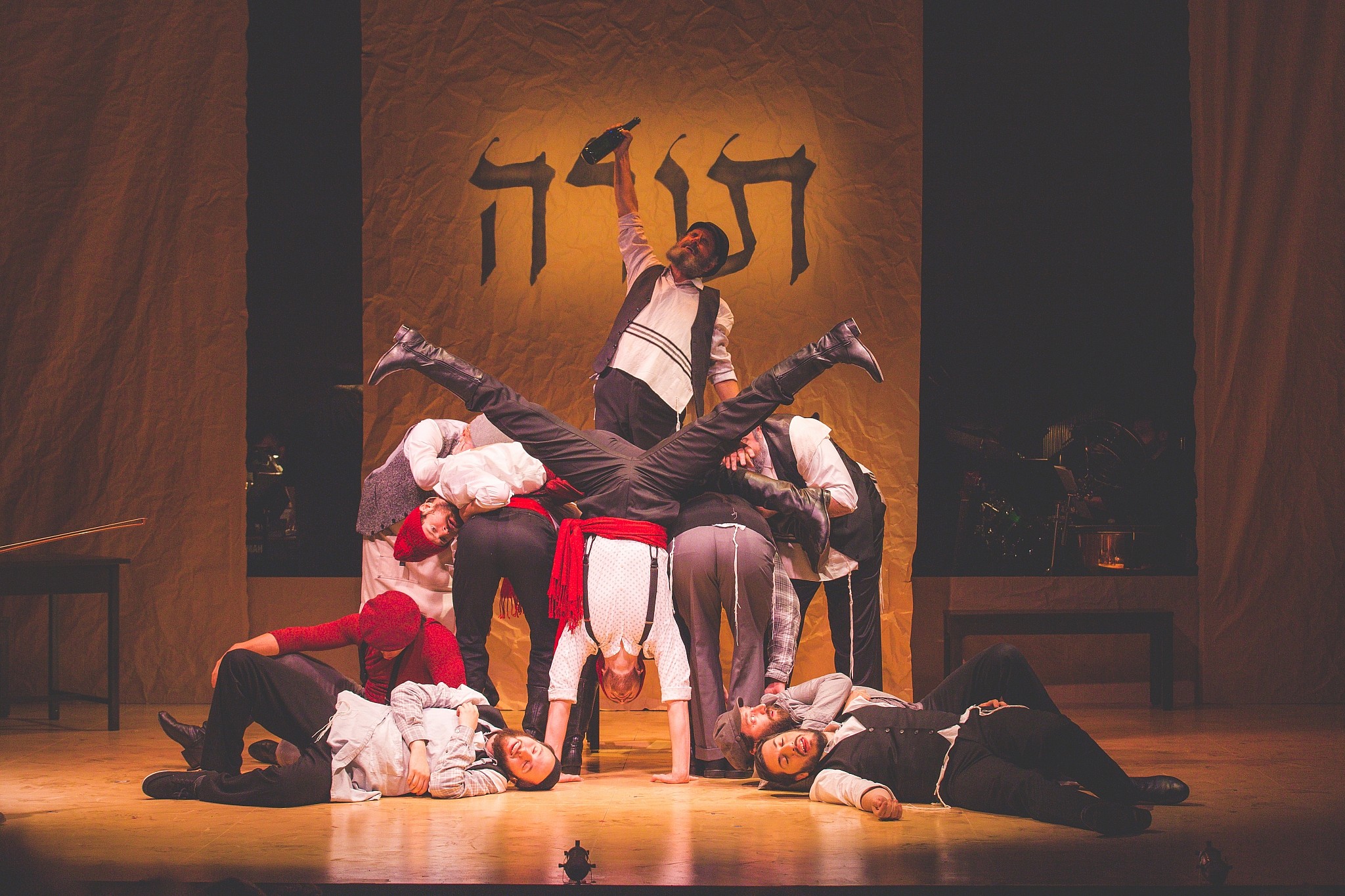

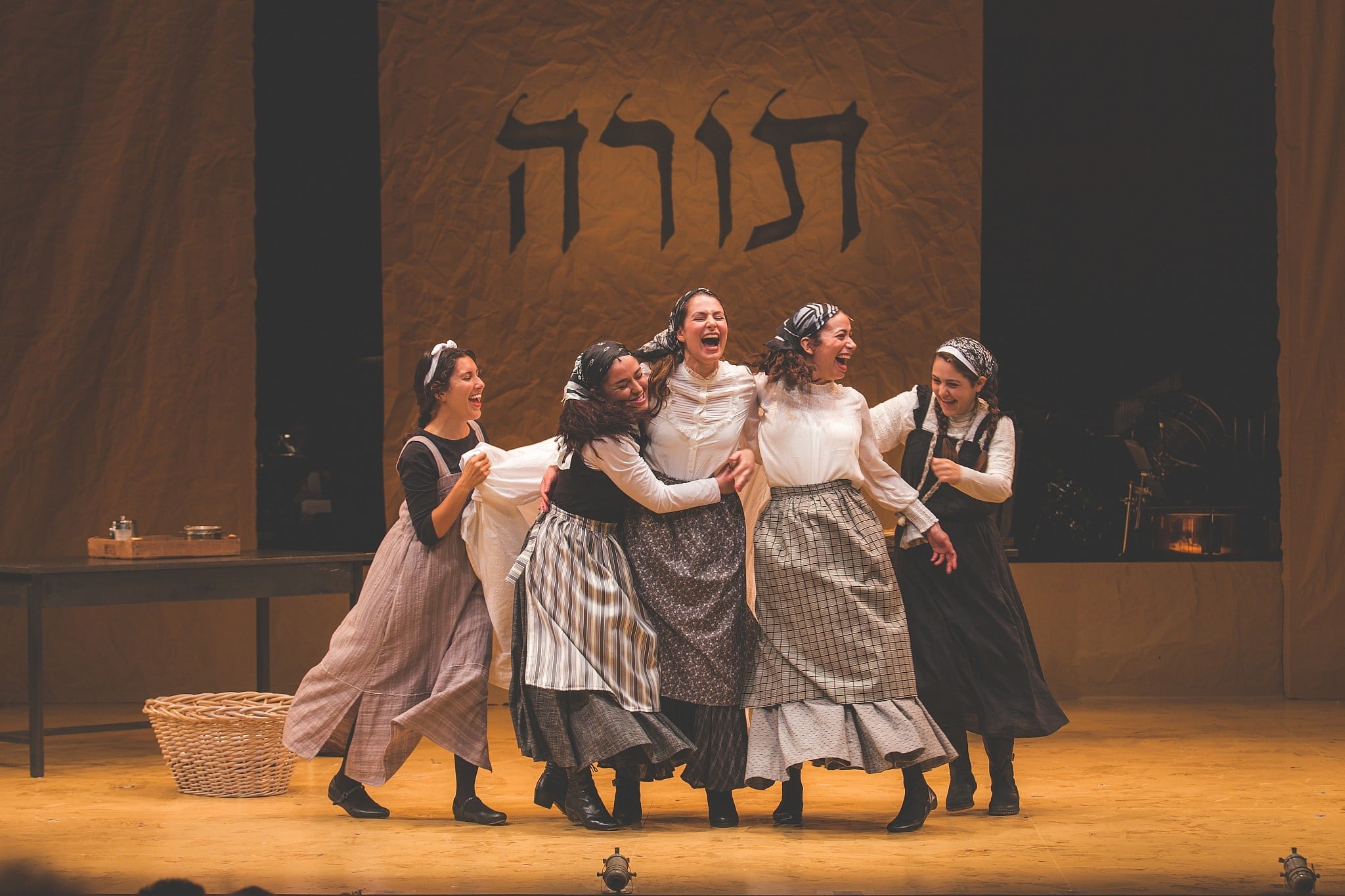
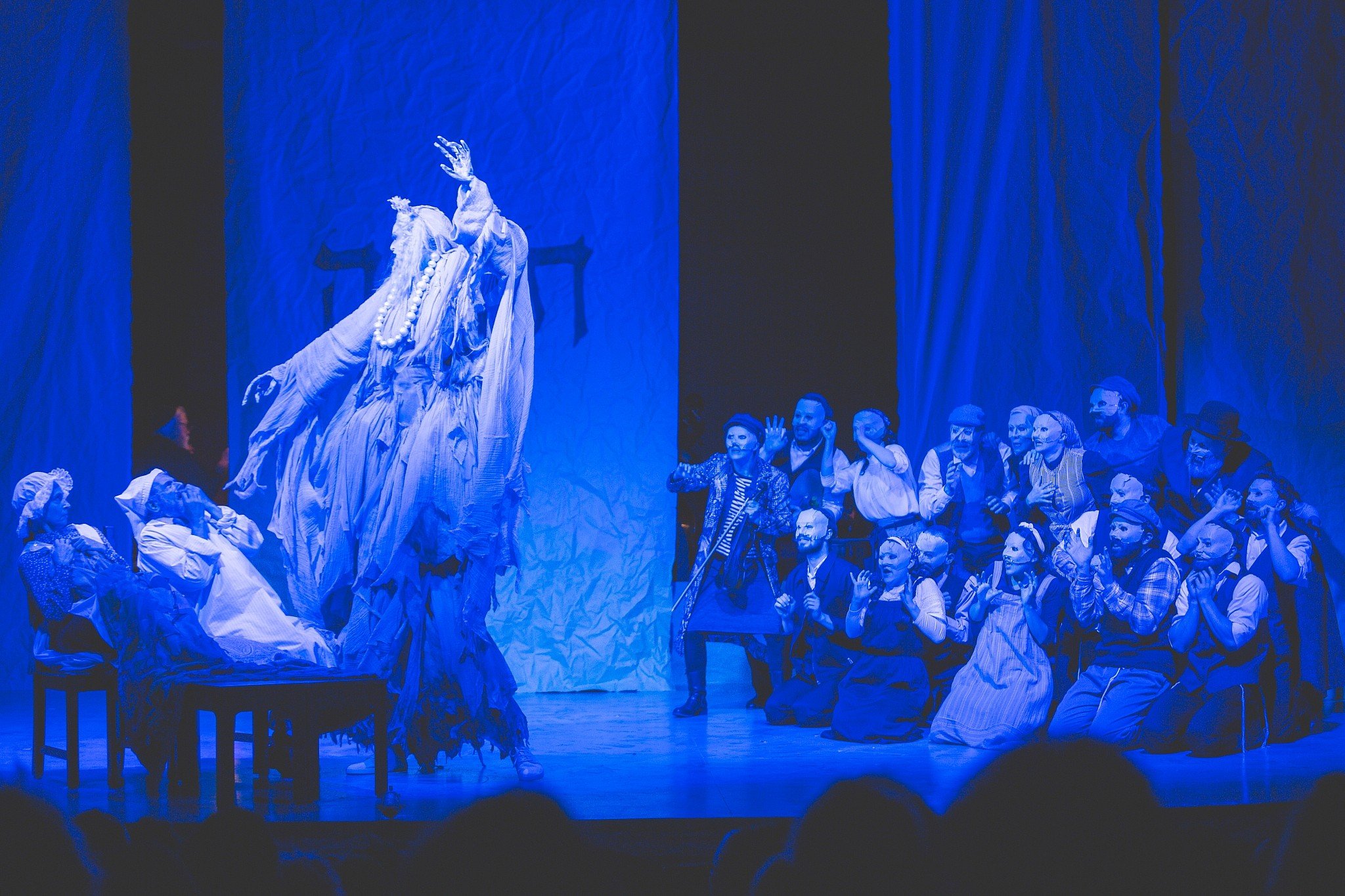
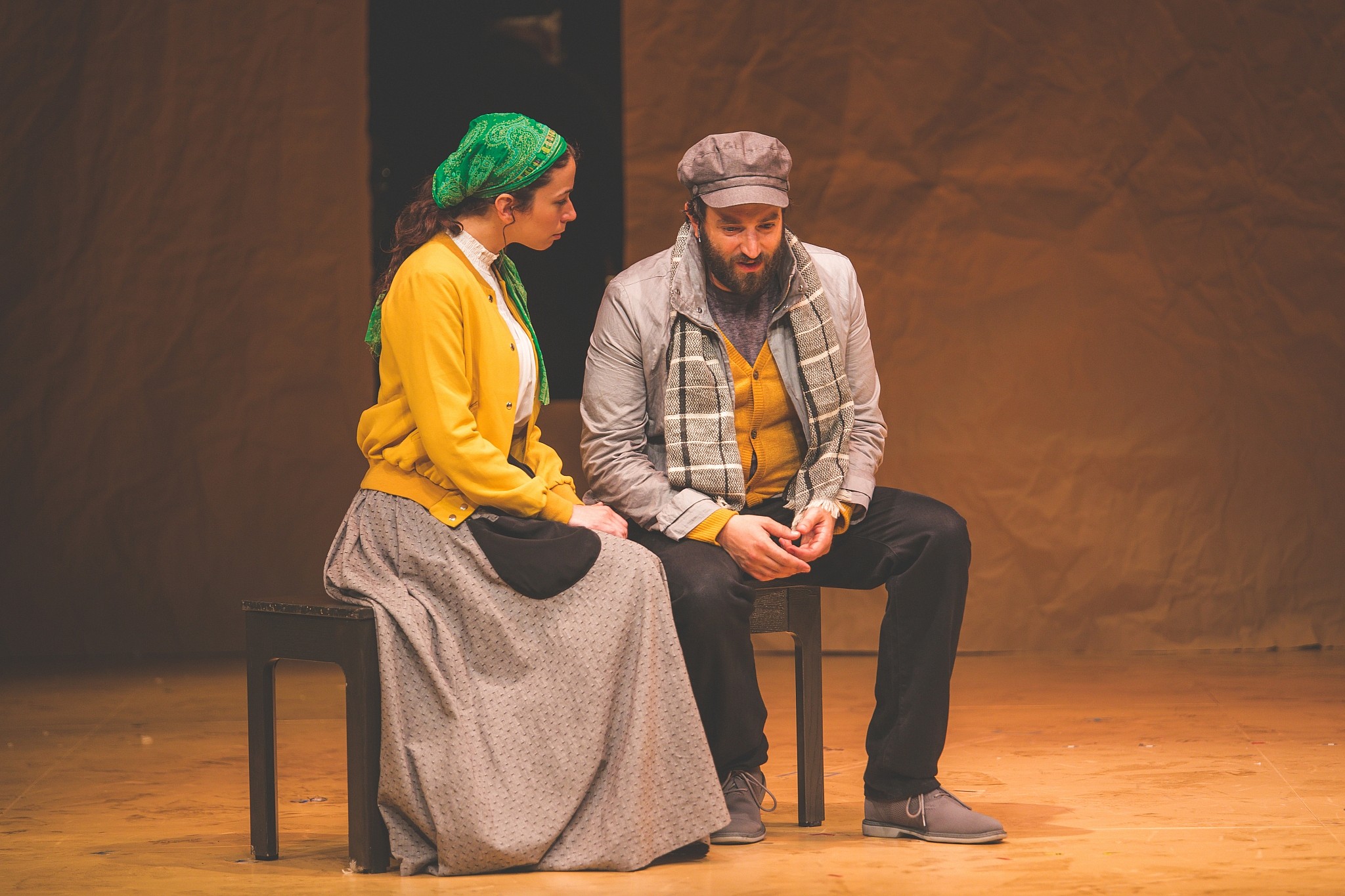
NEW YORK — Yet another production of “Fiddler on the Roof” is not usually the type of thing to get worked up about. At any given time one out of five JCC theater camps are rehearsing it. But at the Museum of Jewish Heritage, which proudly stands across New York Harbor from Ellis Island and the Statue of Liberty, something extraordinary is happening.
It’s like a warping of time and space that can send people back to the Russian shtetl in 1905 for seven performances a week. As I wrote in my recent rave review, this is less of a musical and more like a séance.
The National Yiddish Theatre Folksbiene is the longest continuously running Yiddish theater company in the world, dating back to 1915. You can almost picture Tevye, Golde and their two youngest daughters a few years off the boat, feeling nostalgic for their friends and family scattered throughout the Diaspora, catching a show in their mamaloshen.
Yiddish speakers are few and far between these days, but luckily there are people to guide productions like this off the ground like Zalmen Mlotek and Motl Didner, the NYTF’s artistic directors, and director Joel Grey.
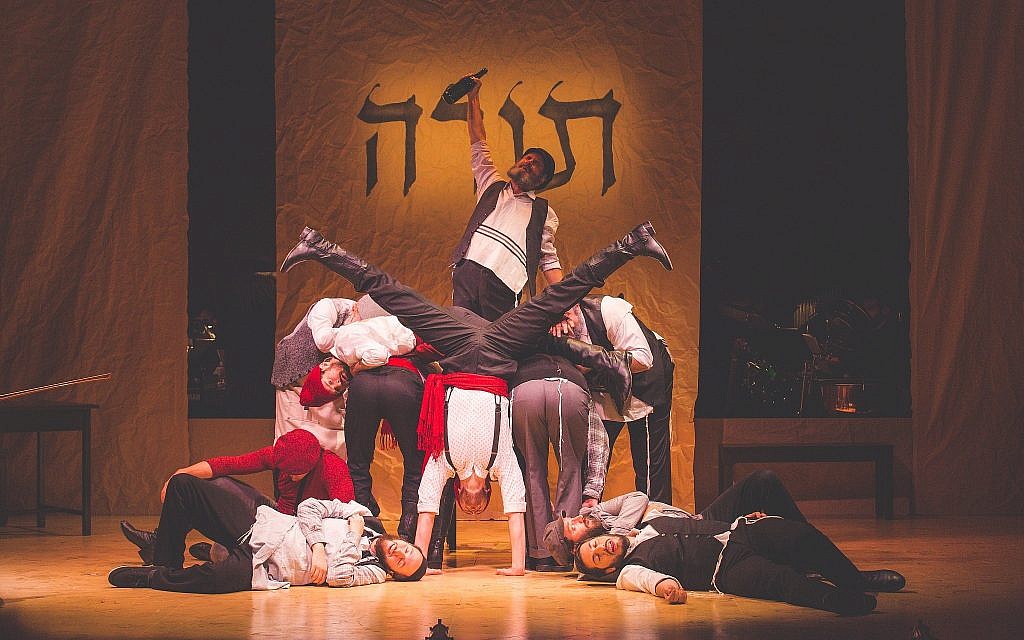
Some members of the company are fluent. But many of the main performers are not.
How much Yiddish did Jackie Hoffman, the actress, comedian, singer, monologist, Emmy nominee and recent viral sensation know before she agreed to play the part of Yente the Matchmaker?
“Gornisht!” she shouts, giving evidence that her lack of knowledge isn’t exactly true.
“I had one grandmother from Poland who lived until I was 13, and she and my mother would banter in Yiddish. My mother wanted me to learn it,” Hoffman tells me, “but of course I tried very hard not to do anything my mother wanted me to do at that age.”
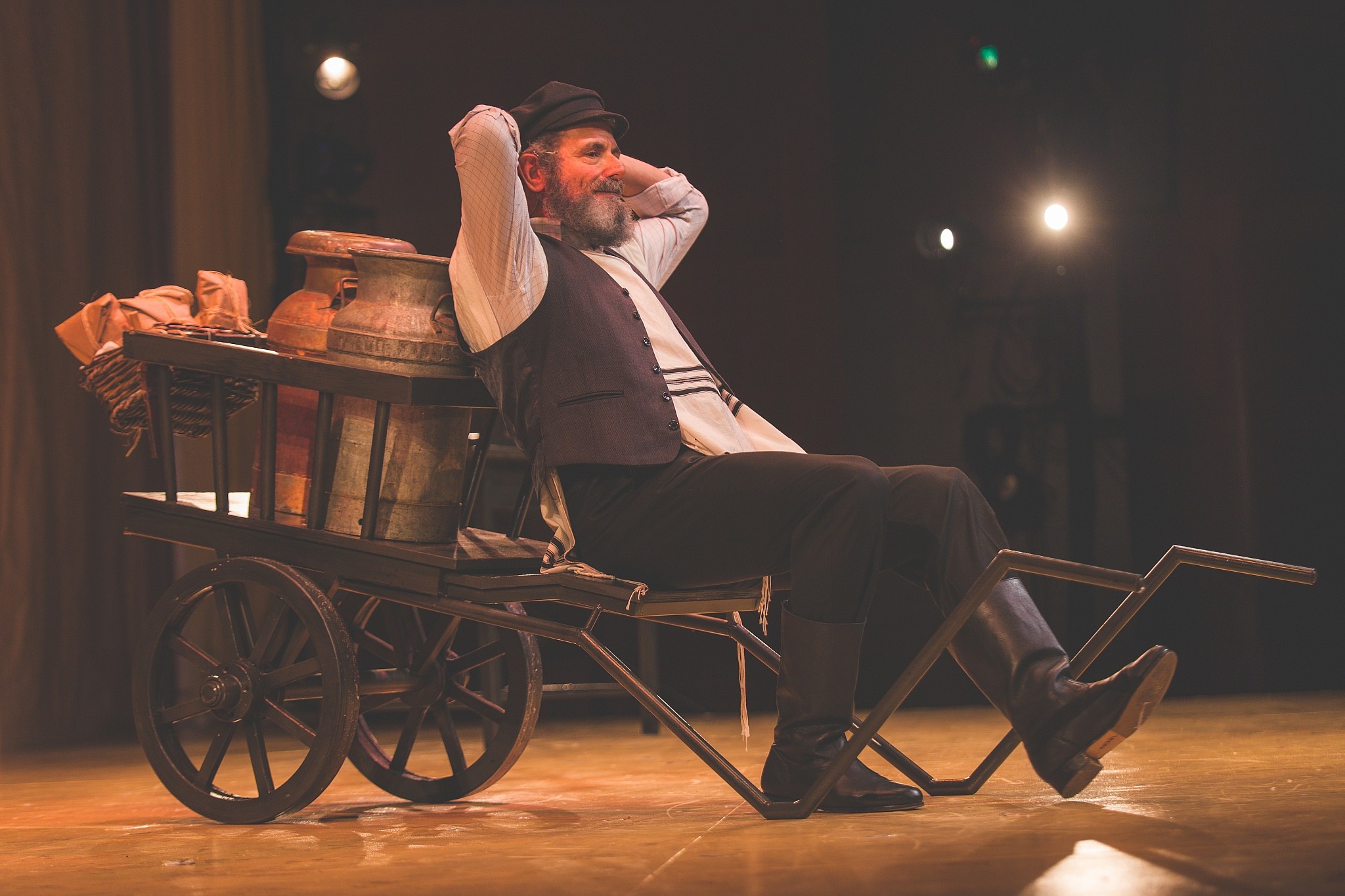
Steven Skybell, who plays the Tevye, the weary and wise everyman at the center of the tale, had it a little easier. Growing up Jewish in the very un-Jewish Lubbock, Texas, he and his brother would overhear Yiddish from their grandparents when they wanted to speak privately. As they got older they took it upon themselves to “learn Yiddish with just a grammar book over the phone.”
During a production of “Wicked” in Chicago, Skybell had loads of free time and ended up taking private lessons. “This gave me the chutzpah to tell the National Yiddish Theater that I spoke the language.”
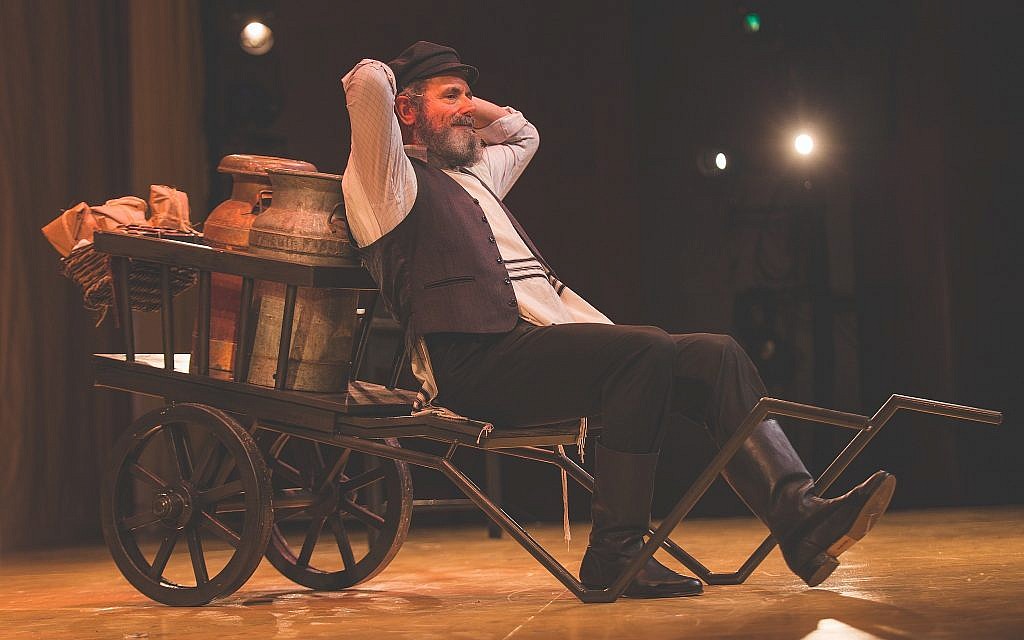
Skybell has been in five productions of “Fiddler” over the years, most recently on Broadway as Tevye’s nemesis (inasmuch as the good natured dairyman can have a nemesis) Lazar Wolfe. And even with his abundant familiarity with the show and his head start with the language, it still was a race against the clock to get the relatively low-budget show up and running.
You approach it like an opera in a foreign language
“You approach it like an opera in a foreign language,” Skybell says. “We were able to do a few three hour pre-rehearsals with Zalmen and Motl, to establish a base. But once rehearsals were going there were multiple rooms working every day. Scene work here, choreography here and Joel Grey is an amazing director. As a fantastic performer himself, he really knows how to converse with actors.”
It was Grey who personally invited Jackie Hoffman to join the cast.
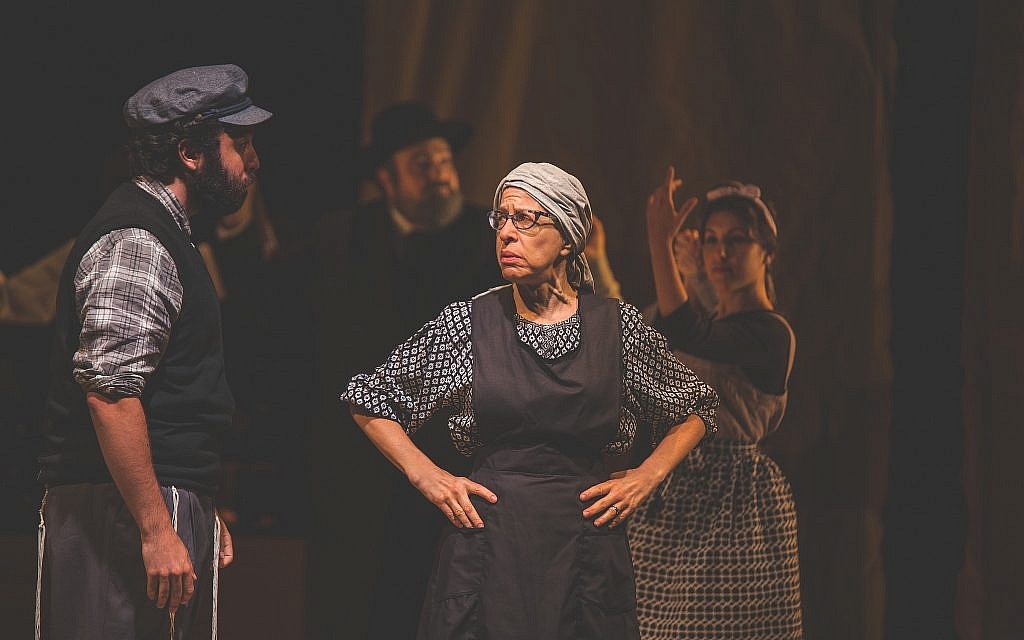
“He’s good friends with Bebe Neuwirth,” Hoffman says, referring to her co-star from the relatively recent Broadway success “The Addams Family.”
“I remember talking to [Grey] about some of the 45s I have of his father, [musician and comedian] Mickey Katz. And he sang to me one of Mickey Katz’s songs in gibber-Yiddish. So later I went to his 80th birthday party, and the theme was Berlin in 1931 [a reference to Grey’s famous role in ‘Cabaret’]. I came in a black and white dress with a yellow star on it. People weren’t having it. He just gave me a look and said ‘Hi, Jackie.’”
Despite her years in the theater, this is her first “Fiddler on the Roof.”
“I’ve never been in one, never even auditioned. They were all very goyish and they didn’t want my overt Jewish-ness. They wanted nothing to do with me, but now I’m in the best one. It’s bashert [meant to be],” kvells Hoffman.
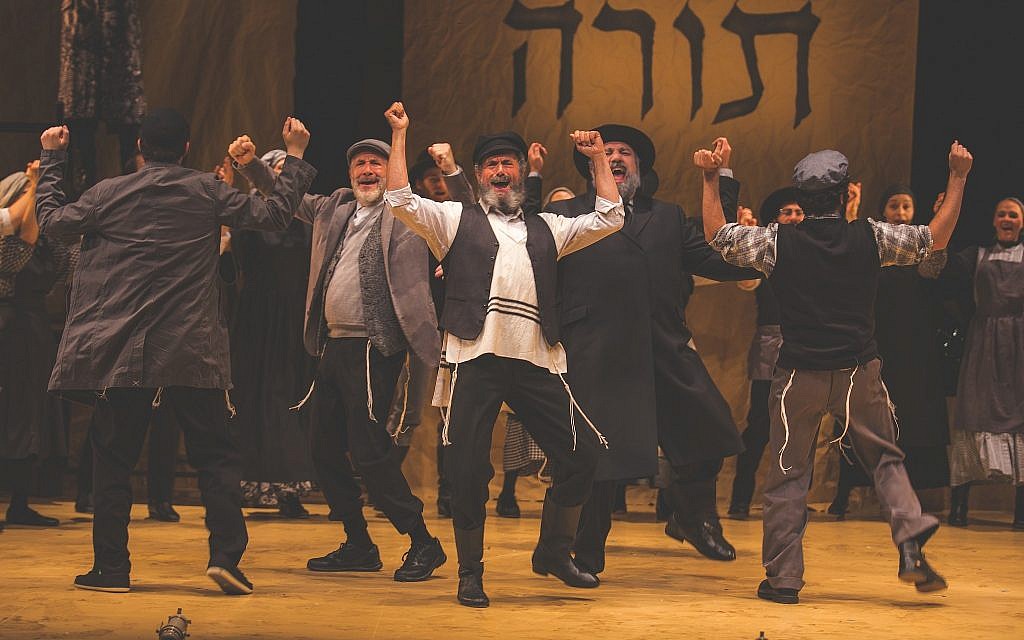
Evan Mayer, ensemble actor in multiple roles including Sasha (one of the kick-dancing Russians), is one of the few non-Jews in the cast.
“The production already feels so important, but doing it at this museum is even more powerful,” he tells me. He explains how everyone in the cast has been waist-deep in articles and books, and watching interviews to get the feel of the time period right.
“I’ve never felt more included in a production,” the young Wisconsin native says. “I’ve been invited to many Shabbos dinners.”
When I came to one of the previews it was at a rare Friday noon curtain. “We’re a shomer Shabbos production,” Skybell boasts, giddy to be one of the few theater actors with a hit show that gets Saturdays off.
Hoffman puts it a different way. “Unlike any other production I’ve ever done, it’s the alte kakers [old farts] who are the most enthusiastic.”
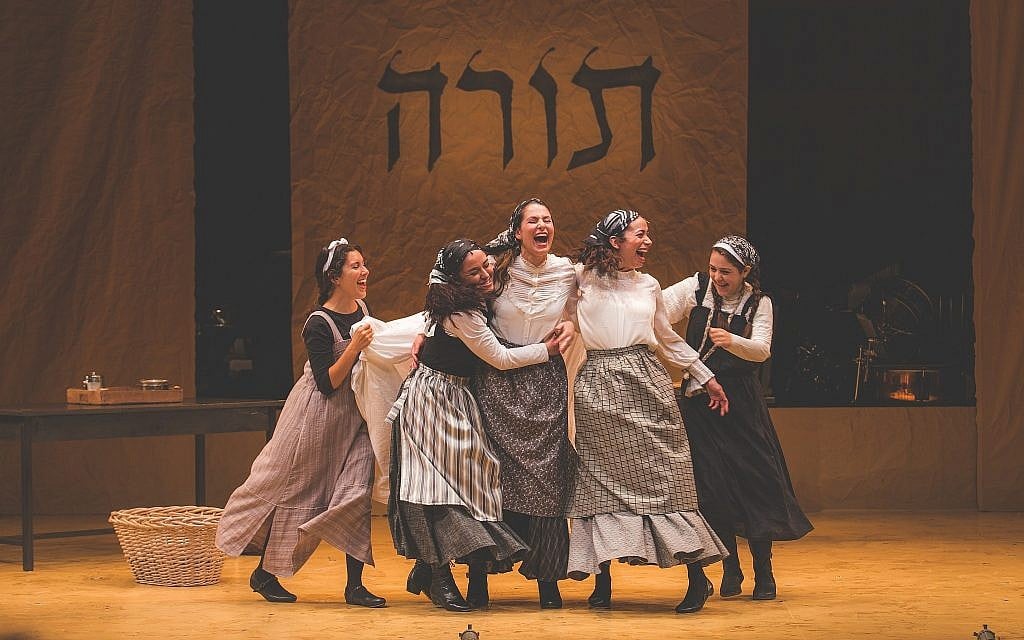
She explains to me how, since the theater is part of a museum and there isn’t a traditional stage door, she is pounced on by grateful ticket-buyers after each show. “They attack! The Jews do not edit; there is no tact!”
While nearly everyone has been congratulatory, she says, some give backhanded compliments. “Do you do this for a living or is it a hobby?”
Skybell tells me he was warned that sometimes Folksbiene audiences will have no problem correcting you if you get something wrong, but it hasn’t happened yet.
“Tevye speaks directly to the audience so having a little back-and-forth makes sense,” he says. “There’s a scene discussing the marriage with Lazar Wolfe and Tevye says ‘We gave our word’ and the phrase is ‘A vort is a vort,’ and I heard a man just repeat the phrase back; it was a moment of recognition.”
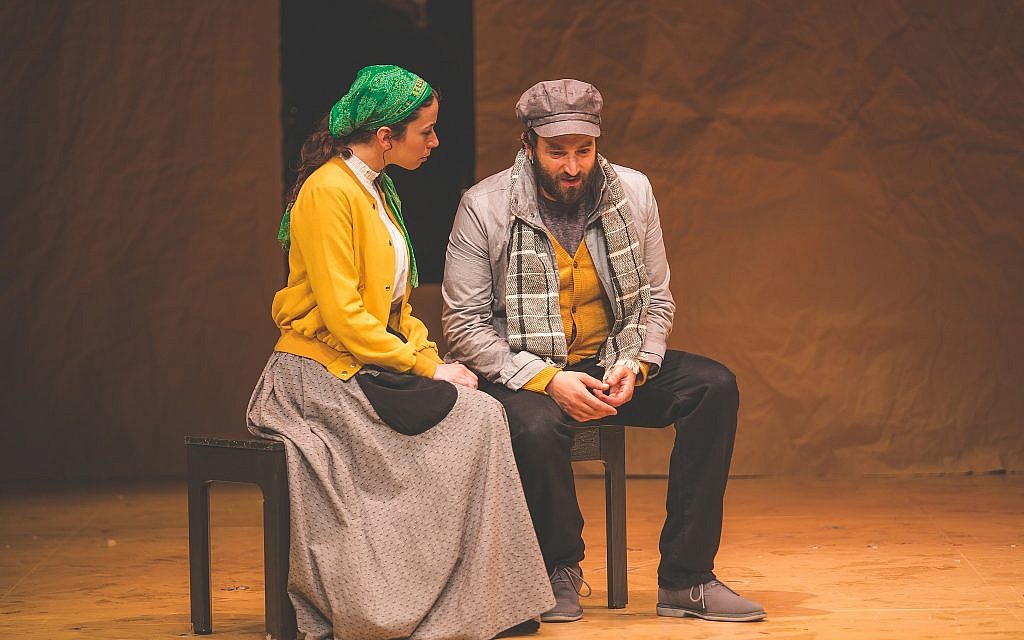
“Some actors can joke a little about ‘blue-haired audiences,’ but I tell you I love these audiences at the museum. The older the better as far as I am concerned,” says Skybell.
“Fiddler on the Roof” in Yiddish continues through September 2 at the Museum of Jewish Heritage.







The Times of Israel Community.