

Blood road: 10 things to know for March 19
Fresh terror fears; al-Ghad’s violent history; Abbas under fire; France and Israel grapple with a rogue consular employee; Israeli-Iranian soccer coexistence and a tush-tiff in TA
 Add ToI as a Preferred Source on Google
Joshua Davidovich is The Times of Israel's Deputy Editor
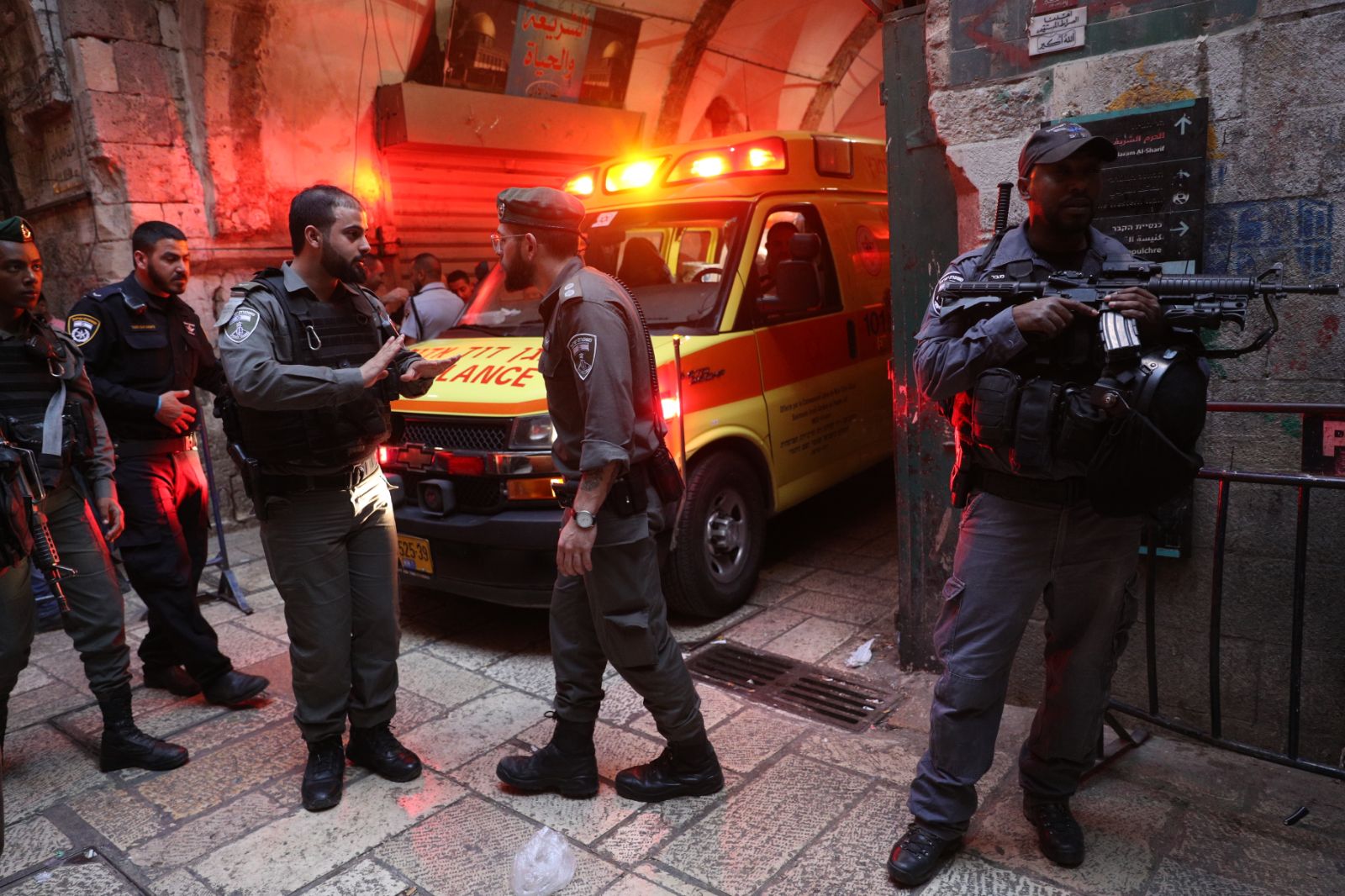
1. Now that Mr. Security — aka Prime Minister Benjamin Netanyahu — is safely ensconced in power for the foreseeable future, the topic of security has risen back to the top of the agenda, with concerns rising of a new terror wave and increasing tensions in the south amid a series of attacks and incidents.
- A deadly stabbing Sunday afternoon, just days after a deadly car-ramming Friday, adds to the sense of foreboding that attacks may be on the upswing.
- As The Times of Israel notes, “once common in the Old City, stabbing attacks have waned in recent months. However, tensions have been on the rise around Jerusalem since US President Donald Trump recognized the city as Israel’s capital in December.”
- In Yedioth Ahronoth, Yossi Yehoshua says the uptick in East Jerusalem, the West Bank and Gaza is not related to seasonal events, like Nakba Day, or Trump’s recognition of Jerusalem, but something much larger: “Unfolding before our eyes is the strategic warning Military Intelligence has been pointing to for over a year: the decade of relative quiet in the territories is behind us. The big violent confrontation between the Palestinian street and leadership and between the Palestinian street and Israel is just looking for an opportunity [to break out].”
- Israel Hayom’s Eyal Zisser claims, though, that “there’s is not an atmosphere or reality of being on the cusp of a breakout [of violence] or even an intifada… This is a series of acute incidents and they need to be dealt with as such.”
2. In war as in real estate, it’s location location location. Yedioth Ahronoth notes that the stabbing attack occurred at the “exact spot” on al-Ghad Street in Jerusalem’s Old City where the so-called “lone wolf” intifada broke out two and a half years ago, with the stabbing deaths of two people. Since then, there have been a number of attacks, but security in the area has been quite heavy.
- “Security officials are trying to figure out how the terrorist managed to sneak in a knife in an area under relatively tight security,” Yedioth writes.
- Al-Ghad street, a main thoroughfare which runs from the Western Wall through the Muslim and Christian quarters to Damascus Gate, is often among the most tense areas of the Old City, where the three monotheistic faiths come together. The Walla news site calls it “the blood road.”
- Calling the street by its Hebrew name, Haggai, Israel Hayom’s Nadav Shragai claims that the location of this attack and others along the same road was not coincidental. “The attack, like others before it, was meant to warn off Jews from visiting the holy sites in that place, the Western Wall and Temple Mount, at the center of Jewish identity and memory.”
3. The victim, 32-year-old Adiel Kolman, is remembered as a father of four and a happy-go-lucky-guy. ‘One knife, four orphans,” reads the top headline in populist Israel Hayom.
- “I called him my jewel,” his mother tells the Ynet news site.
- “He knew how to put in hard work and to keep the atmosphere positive and deal with the hardest challenges. Even when he needed to work hard in the most Sisyphean task, he knew how to do it with a good spirit and atmosphere,” a workmate at the City of David archaeological dig tells Walla.
4. Haaretz notes that the killer, Abd al-Rahman Bani Fadel was not known to security services and had just received a permit to work in Israel. “His brother and uncle are linked to the Hamas leadership, but he himself was not known to be a member of the group.”
- By Monday morning, the army had released a video of soldiers mapping Fadel’s house for demolition, meant to send a deterrent message.
5. On Twitter, US Ambassador David Friedman is bashing the PA for not condemning the attack.
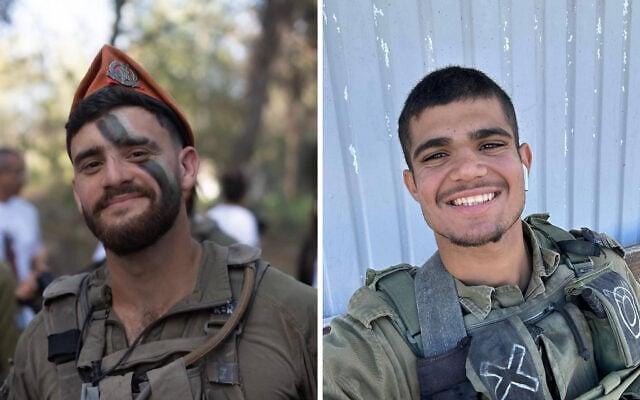
Tragedy in Israel. 2 young soldiers, Netanel Kahalani and Ziv Daos, murdered in the North, and father of 4, Adiel Kolman, murdered in Jerusalem, by Palestinian terrorists. Such brutality and no condemnation from the PA! I pray for the families and the wounded – so much sadness.
— Chargé d’Affaires ad interim Stephanie Hallett (@USAmbIsrael) March 19, 2018
- Yedioth notes that PA President Mahmoud Abbas recently met with Raghar Hadad, a Palestinian just released from prison for killing a yeshiva student on — you guessed it — al-Ghad Street, in 1997. “The subject of prisoners has a special place in the order of priorities for the Palestinian leadership, which is working to free all prisoners from the occupation jails,” the paper quotes Abbas saying.
6. Down south, the army is also trying to broadcast a message of deterrence to Hamas from digging tunnels.
- “The situational assessment in Israel is that Hamas understands the IDF’s advanced abilities to locate and destroy tunnels, and has thus kept from digging new tunnels. Hamas has ‘stopped starting on new’ tunnels works and instead is investing in existing passages,” Yedioth Ahronoth reports.
- This comes after Israel destroyed two tunnels on Sunday, including one believed to have been an attempt to rehab a destroyed tunnel from 2014. Hamas responded that the tunnel was old and unused.
- Netanyahu released a statement warning foreign donors to beleaguered Gaza that their money was being “buried underground” in tunnels.
- Netanyahu’s comment “raised eyebrows, to put it mildly,” Haaretz’s Noa Landau notes: “For a few months now, Netanyahu has been sending emissaries, headed by Regional Cooperation Minister Tzachi Hanegbi and the coordinator of government activities in the territories, Yoav Mordechai, urgently seeking international aid in every possible corner to fund a humanitarian rescue plan for Gaza.”
7. France’s donations to the Strip, or at least that of one consular employee, apparently included helping smuggle guns from Gaza to the West Bank, in turns out.
- Romain Franck, in his 20s, has admitted to smuggling 70 pistols and two automatic rifles, by taking advantage of lax checks afforded diplomats, according to the Shin Bet.
- He was arrested last month, but it was kept under gag order until Sunday evening. On Twitter, Channel 10 news reporter Barak Ravid notes that Israel made the case public just a few days before the visit of French Foreign Minister Jean-Yves Le Drian to the region.
The gag order on the arrest of the French consulate worker was lifted a few days before the 1st visit by the French foreign minister @JY_LeDrian to Israel
— Barak Ravid (@BarakRavid) March 19, 2018
- Nonetheless, Israeli officials are insistent that the case will not harm ties. “The ties with France are excellent and the affair doesn’t adversely affect them,” a Foreign Ministry official says.
- A French embassy spokesman official tells AFP that Franck “has benefited and continues to enjoy the consular protection” afforded diplomatic employees.
- Le Monde reports that Paris has decided not to protect Franck “given the seriousness of the case,” though he may serve his sentence in France rather than Israel.
8. Israeli soccer star Maor Buzaglo is getting attention on social media for posting a picture of himself with Iranian soccer player Ashkan Dejagah.
- “In soccer the rules are different and there is one language without preconceptions and without wars. The captain of the Iranian national team and me prove that its possible to do it differently,” he writes above the picture of the two.
בכדורגל החוקים שונים ויש שפה אחת בלי דעות קדומות ובלי מלחמות. קפטן נבחרת איראן ואני מוכיחים שאפשר אחרת
???????? ✌???? ???????? pic.twitter.com/1xaMWZlQqP— Maor Buzaglo (@MaorBuzaglo11) March 18, 2018
- Buzaglo is getting praised online, though Dejagah, who plays for Nottingham Forest, grew up in Germany and has only played a few games with Iran, has not posted the picture, nor has he gotten in trouble, yet, for the picture.
- Given the history of Iran kicking out players for merely showing up on the pitch where Israelis are, it’s likely there will be some sort of backlash eventually, though Tehran may have to decide if it cares more about its hatred of Israel or chances of advancing in the World Cup.
9. Saturday, a perfectly cloudless warm spring day, saw Israel break its solar energy production record, with panels producing 13.4 % of the total electricity being consumed in the country, the Israel Electric Corporation said Sunday.
- The Times of Israel notes that currently, just 2.6 percent of Israel’s energy currently comes from renewable sources on average, well below the 10% benchmark the country set for itself to reach by 2020, which itself is below the 20% OECD goal. Yet officials are taking heart in the new record.
- “This proves that when you want, when obstacles are removed, the solar revolution is gaining strength,” Jonathan Aikhenbaum, a campaign manager at Greenpeace Israel, is quoted saying.
10. Temperatures in Israel are expected to soar into the low 30s this week, making the end of winter feel downright summer-like.
- At least one person is ready — the model for large ads for laser hair removal whose giant nearly-bare tuchus has shown up on billboards in Tel Aviv, angering feminists and others, according to Yedioth Ahronoth.
Ad for laser hair removal…in the State of Tel Aviv. pic.twitter.com/qPGxUawBCR
— Neri Zilber (@NeriZilber) March 12, 2018
- “The best thing to do would be to laser away every one of the billboards to make sure nobody sees it and nobody buys the product,” the head of an organization that aids victims of sexual assault is quoted saying. “We’re sick of seeing ads that use women’s body parts to sell goods.”



The Times of Israel Community.