Stuart Winer is a breaking news editor at The Times of Israel.
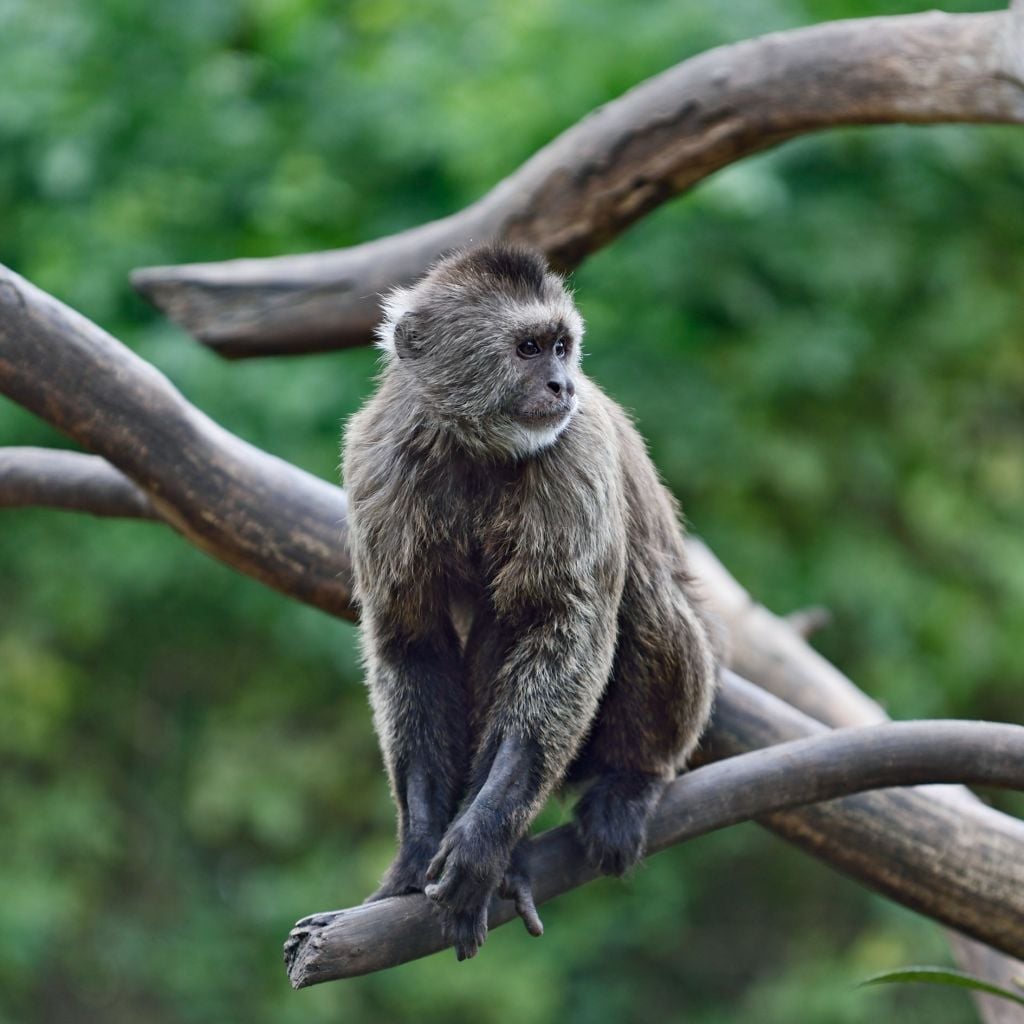
Conner, a wedge-capped Capuchin monkey that escaped from Ramat Gan Safari, January 16, 2017. (Tibor Jager/Ramat Gan Safari)
The Ramat Gan Safari on Monday appealed to the public for help in locating an escaped monkey that swung out of the wildlife park on the outskirts of Tel Aviv.
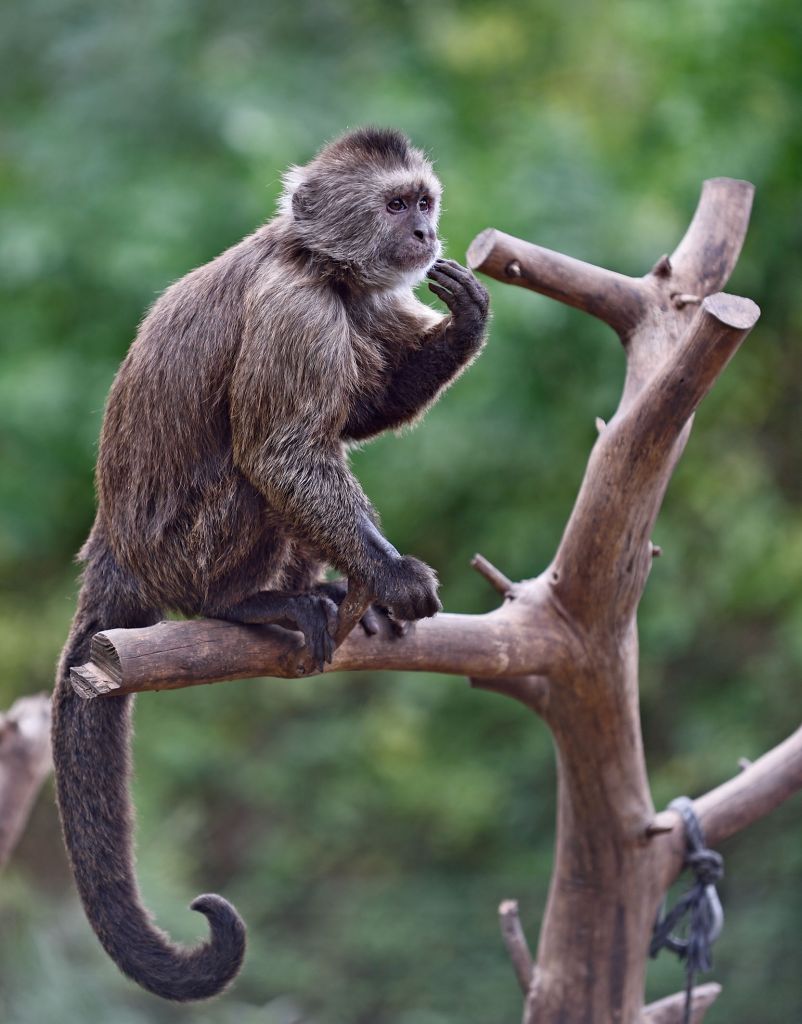
Conner, a 17-year-old wedge-capped capuchin monkey, poses no threat to the public, the safari said in a statement. Although Conner is not dangerous, safari officials said they were worried the public might be a danger to the monkey and urged people to be cautious if they see him.
Capuchin monkeys live in South America and can cover large distances as they swing between tall trees in the forests. Weighing about three kilograms (6.65 pounds), the wedge-cappeds get their name from a black triangle of dark fur on their heads.
Conner, a wedge-capped Capuchin monkey that escaped from Ramat Gan Safari, January 16, 2017. (Tibor Jager/Ramat Gan Safari)
Keepers asked that anyone who finds Conner not approach the monkey or make a commotion as that might scare him away. Rather, they said, finders should avoid making any loud noises and contact the safari at 03-6305325.
As escapees from the wildlife park go, Conner is on the small end of the scale. In March 2016 Tibor, a three-ton white rhinoceros sauntered out of a park exit gate. He was safely returned.
Get The Times of Israel's Daily Editionby email and never miss our top stories
A year earlier, three rhinos plodded out of a side gate, then spent a few minutes gazing at alarmed joggers before safari director Yehuda Bar herded them back inside.
Help us report truthfully on social media
As a multimedia journalist, my job is to take the quality, fact-based journalism produced by The Times of Israel newsroom and make it accessible across every platform — from Instagram posts to podcasts to short-form videos.
This is how many, especially young people, consume news these days. But misinformation is rampant on social media. Our team at ToI produces accurate, responsible short-form reporting on Israel and the Jewish world.
If you believe in the importance of factual social media journalism, please consider joining our reader support group, The Times of Israel Community. Your financial support is essential to sustain responsible multimedia reporting.
We’re really pleased that you’ve read X Times of Israel articles in the past month.
That’s why we started the Times of Israel - to provide discerning readers like you with must-read coverage of Israel and the Jewish world.
So now we have a request. Unlike other news outlets, we haven’t put up a paywall. But as the journalism we do is costly, we invite readers for whom The Times of Israel has become important to help support our work by joining The Times of Israel Community.
For as little as $6 a month you can help support our quality journalism while enjoying The Times of Israel AD-FREE, as well as accessing exclusive content available only to Times of Israel Community members.
Thank you, David Horovitz, Founding Editor of The Times of Israel


 Add ToI as a Preferred Source on Google