

Over Netanyahu’s objections, Central Elections Committee chooses new legal adviser
Intel executive Yifat Siminovski, formerly employed by the National Cyber Directorate, brings expertise in AI to the position, committee says
 Add ToI as a Preferred Source on Google
Sam Sokol is a former political correspondent at The Times of Israel. He was previously a reporter for the Jerusalem Post, Jewish Telegraphic Agency and Haaretz. He is the author of "Putin’s Hybrid War and the Jews"

The Central Elections Committee on Monday chose a new legal adviser, drawing protest from the Prime Minister’s Office, which attempted to claim that her selection was invalid due to an alleged procedural flaw.
In a statement, the committee announced that it had unanimously chosen attorney Yifat Siminovski “following a multi-stage, professional and comprehensive tender process.”
An executive at Intel, Siminovski previously served at the National Cyber Directorate and the Education Ministry, “and her expertise in the fields of cyber, artificial intelligence and technologies will contribute greatly to the work of the committee,” the committee stated.
The Central Elections Committee is an independent state body responsible for managing parliamentary elections and protecting their integrity. It is chaired by a Supreme Court justice and comprises representatives of the various factions in the Knesset. It is in charge of tallying votes and has the power to disqualify parties ahead of elections.
Conservative Supreme Court Deputy President Noam Sohlberg, serving in his capacity as chairman of the committee, on Sunday rejected Prime Minister Benjamin Netanyahu’s call to cancel the tender for a new committee legal adviser, informing the premier’s attorney that there was “no basis” for taking such action.
In a letter to Sohlberg on Sunday, attorney Ilan Bombach, representing both Netanyahu and his Likud party, argued that the search for a new legal adviser must be halted because it had not been launched in consultation with the civil service commissioner, creating a legal “defect that goes to the root” of the process.
However, Sohlberg rejected that line of thinking, stating that no consultation was necessary and that he “found no basis for what was claimed and requested” in Bombach’s letter, which came after the commission began searching for a replacement for its former legal adviser, Dean Livne, who recently retired after over a decade in the position.

The committee’s framing of Siminovski’s experience in dealing with artificial intelligence as an asset comes amid rising concern that generative AI could have a significant impact on the 2026 Knesset election, which is scheduled to take place no later than October.
In January, the committee announced that it was setting up a dedicated team in conjunction with the Shin Bet security service to examine concerns about AI influence on the upcoming national election.
Since the last election, in 2022, generative AI tools have exploded in popularity and sophistication, flooding social media with fake images and videos.
Even Prime Minister Benjamin Netanyahu has shared such media, including in October, when he posted an AI-generated image on his official prime ministerial X account depicting US President Donald Trump receiving a Nobel Peace Prize.
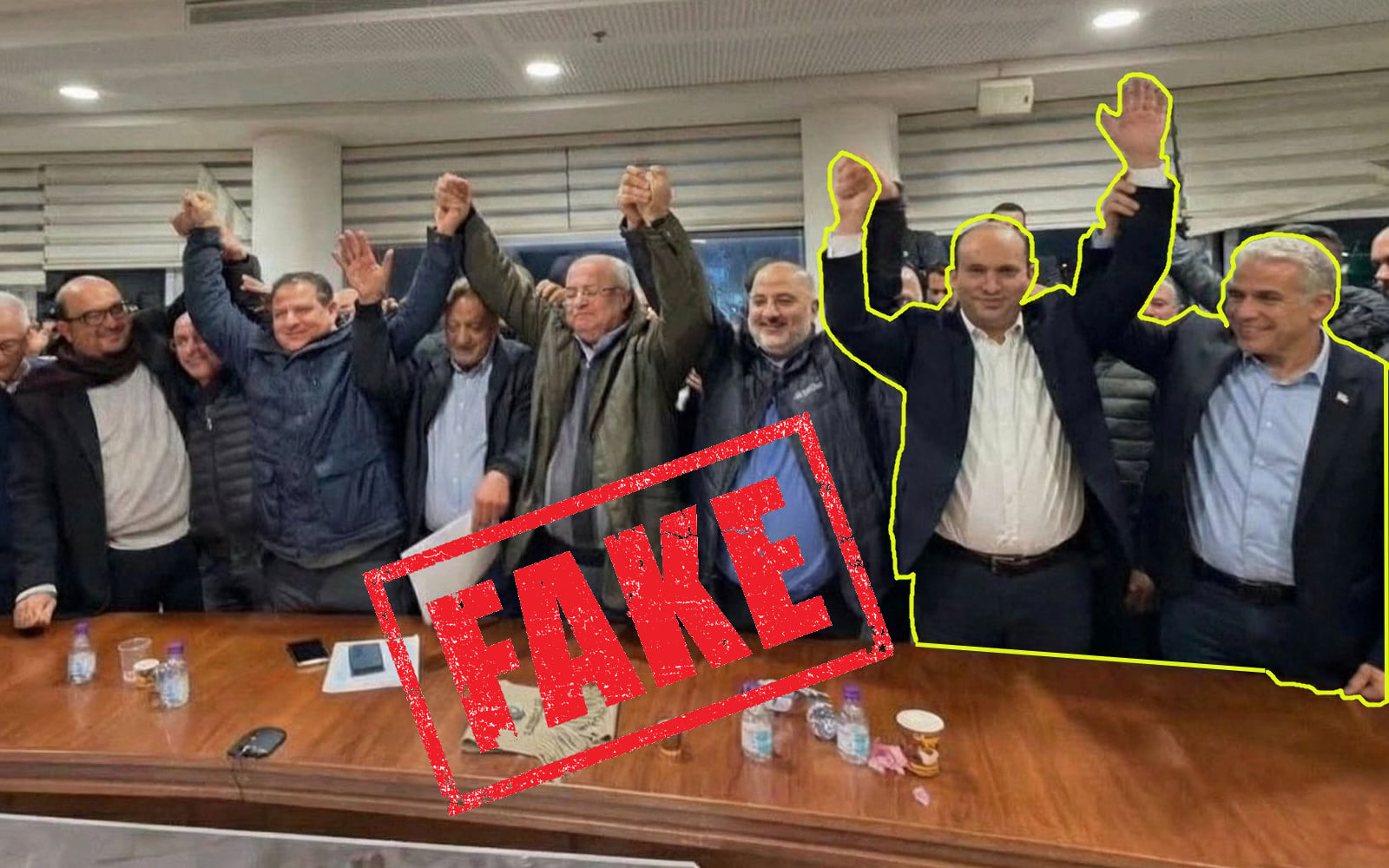
Last month, the committee ordered Likud to take down a manipulated image that appeared to show Naftali Bennett and Yair Lapid joining hands with Arab party leaders in celebration of an announcement that they would undertake efforts to run together in the next elections. Neither Bennett nor Lapid was involved with the agreement nor present at the event, and neither will run together with the Arab parties.
In recent years, Netanyahu and his party have made efforts to gain greater control over both government legal advisers and the electoral system. In March 2023, Likud MK Eliyahu Revivo filed, and quickly withdrew, a bill to allow the Knesset speaker to appoint the committee chairman.
The coalition also advanced a bill making it easier to disqualify Arab lawmakers and a measure preventing the Supreme Court from overturning Central Elections Committee rulings disqualifying parties.
It has also advanced legislation aimed at stripping the attorney general of authority over ministry legal advisers.









The Times of Israel Community.