

Chickenpox surges in Gaza camps amid overcrowding and poor sanitation
With families packed in tents, there is no space to isolate infected people as officials record 9,300 suspected cases this month; UNICEF warns other ailments spreading too
 Add ToI as a Preferred Source on Google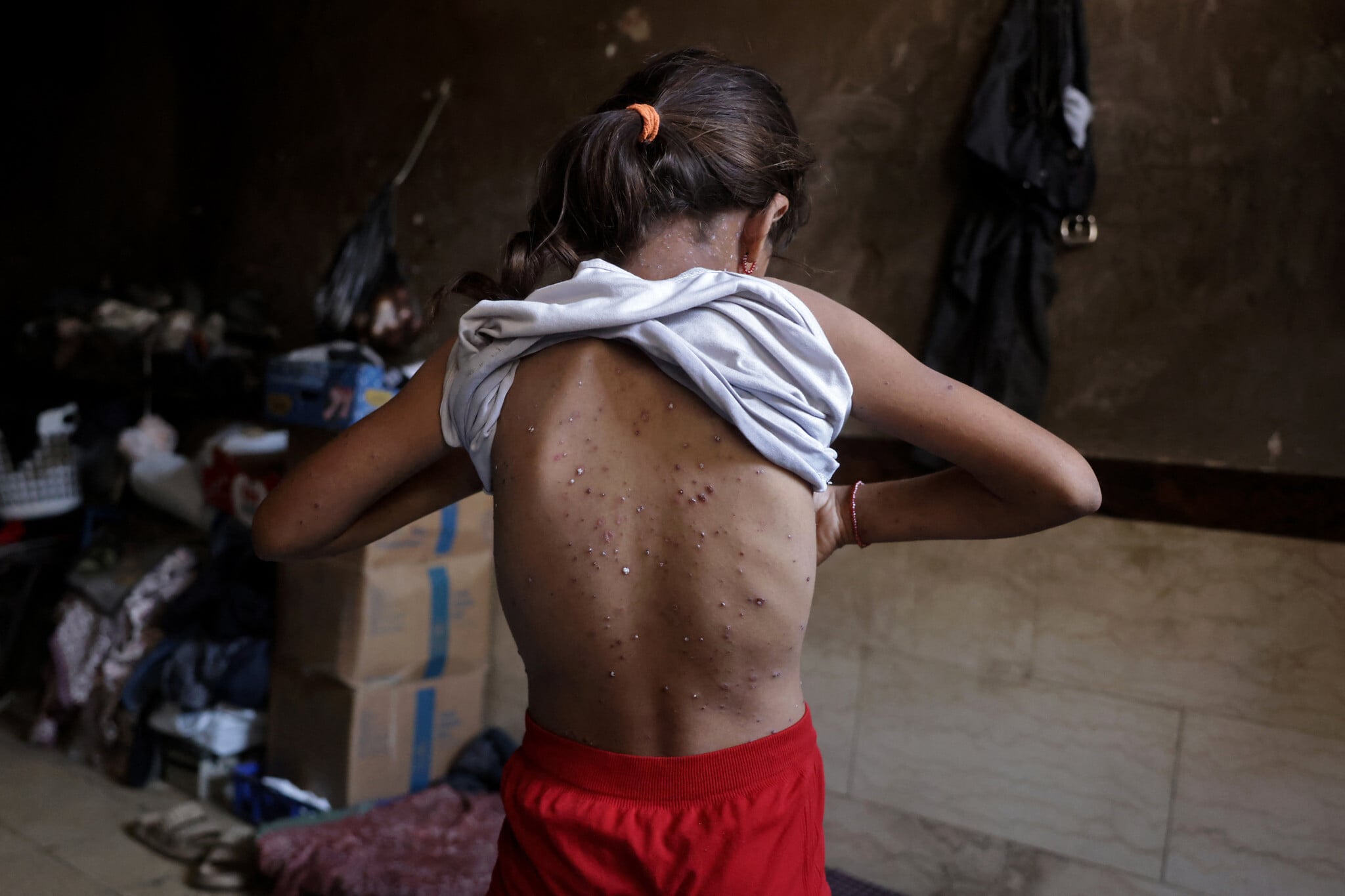
GAZA CITY — Eight-year-old Ruba Saadeh spends her days confined to the tent she shares with her family in Gaza, her body dotted with inflamed red blisters as chickenpox sweeps through overcrowded camps like the one they live in.
Doctors and displaced families in Gaza say the highly contagious disease has surged in recent months as war has forced hundreds of thousands of Palestinians into cramped tent camps with no clean water for hygiene.
“The doctor told us she needs daily cleaning and should be isolated for 20 days,” Ruba’s 19-year-old sister Alaa told AFP. “But how can we isolate her? We all live in one tent.”
UNICEF said health officials had already recorded more than 9,300 suspected cases of chickenpox across Gaza in early July, concentrated mainly in Khan Younis in the south.
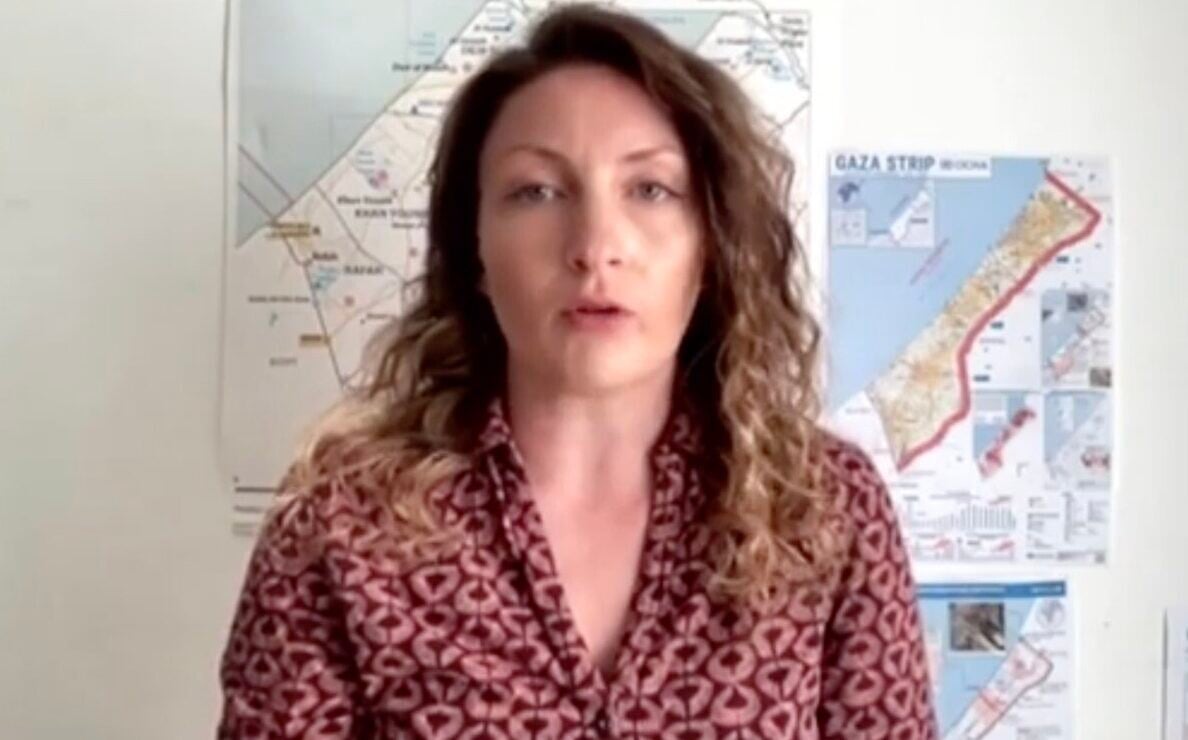
“That’s the most densely-populated area in the Gaza Strip… families are sheltering almost on top of each other,” spokeswoman Louise Wateridge told AFP.
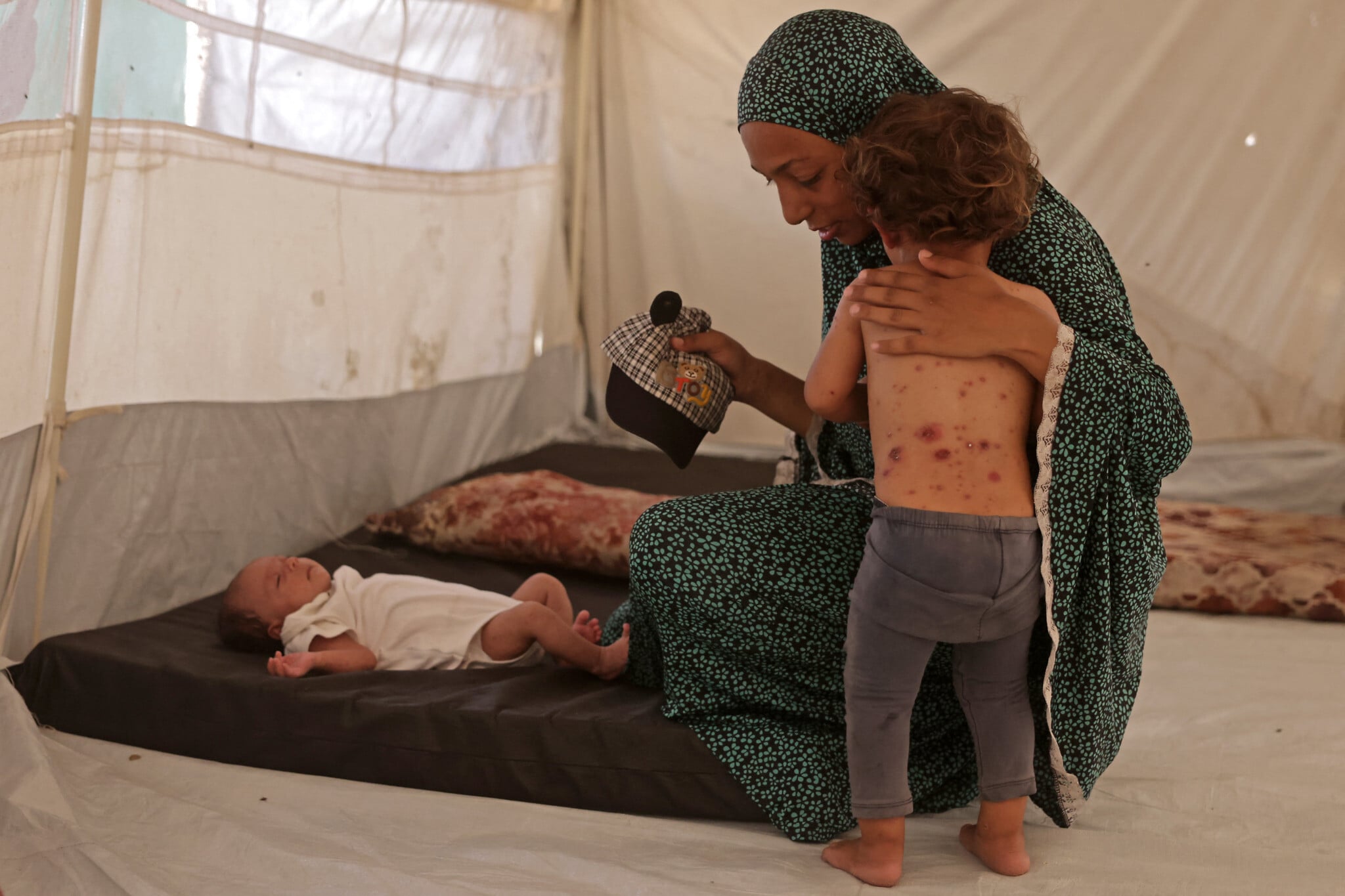
Raed Abdel Karim Abu Sariya, a dermatologist with the Palestinian Red Crescent Society, said that a lack of space to isolate patients is fueling the spread.
“Chickenpox patients must be isolated because the disease spreads through respiratory infection,” he said.
But in Gaza’s camps, he said, separating the sick from the healthy is virtually impossible.
“Imagine 10, 15 or even 20 people living in a small tent. Where can they isolate a patient?” he said, as he diagnosed a child who had red blisters on his stomach.
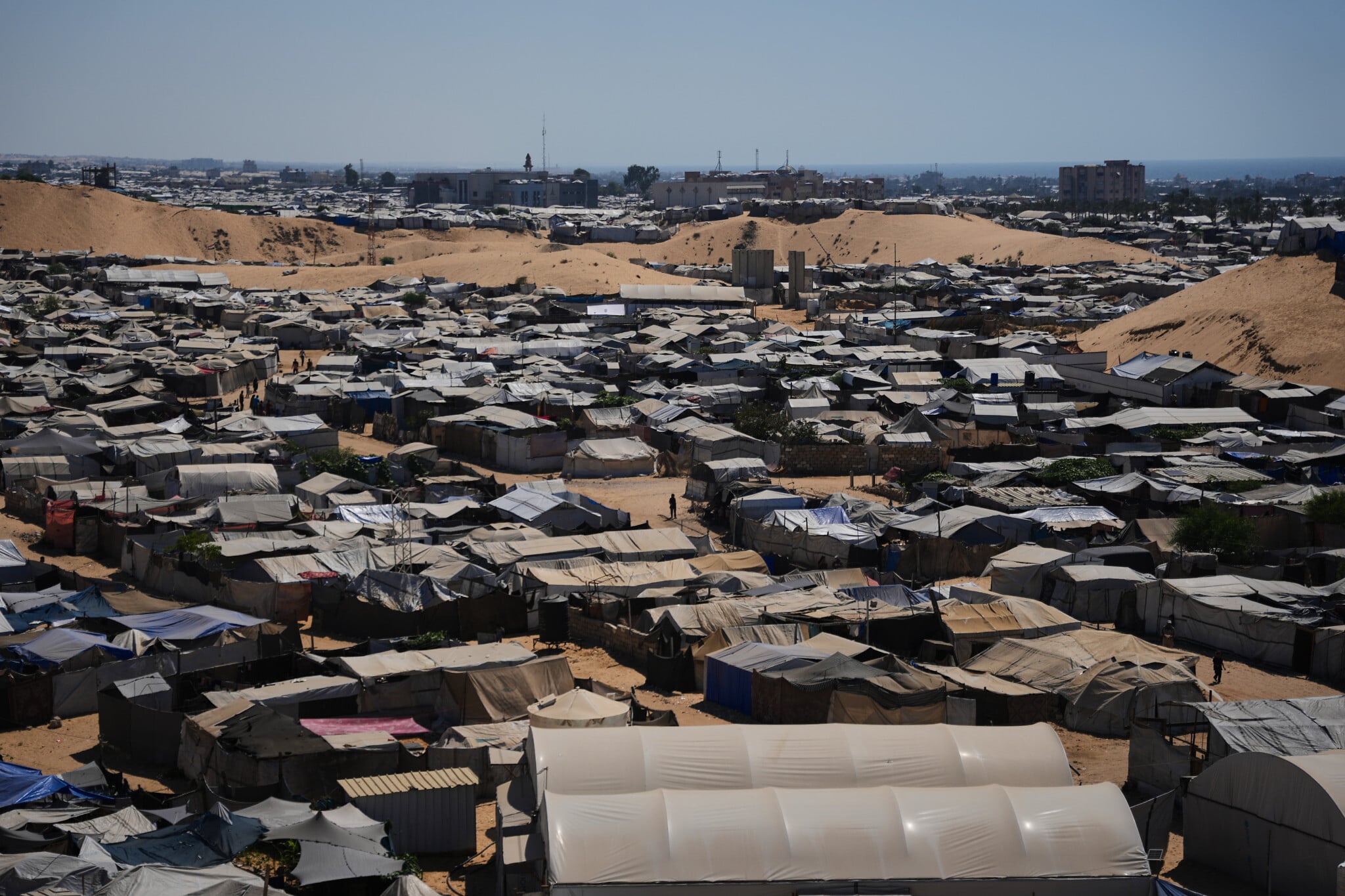
AFP footage from Gaza City shows stagnant pools of murky water full of garbage surrounding makeshift shelters, while children walk barefoot between rows of tents.
Outside a Palestinian Red Crescent medical center, patients lined up for treatment as Abu Sariya examined child after child with the telltale rash.
Alaa, Ruba’s sister, blamed the spread of the illness on “overcrowding in the tents, and the fact that we only get water once a week, and it’s salty and not clean.”
Alaa said the family also struggles to obtain basic cleaning products.
While in wealthier nations chickenpox can be seen as an unpleasant but manageable milestone in a child’s life, the insalubrious conditions in Gaza’s camps make it very difficult for patients and their families to prevent its spread or deal with symptoms.
“We have been living through three years of war. My father is unemployed and we cannot afford to buy cleaning materials,” Alaa said.
Can’t sleep ‘among rodents’
For families like the Saadehs, even basic precautions have become luxuries.
“What did we do to deserve living like this?” Ruba demanded. “We have all these rashes.”
“I used to shower every day,” she told AFP. “Now there is no soap, no shampoo, no detergent… We live in tents, and I can’t sleep because of the rats.”
Medics say the outbreak underscores the mounting public health challenges facing Gaza’s displaced population, where preventing infection has become as difficult as treating it.
International aid organizations have repeatedly warned that medical supplies remain grossly inadequate.
“Chickenpox is one part of it, but there’s also respiratory infections, watery diarrhoea, we’ve now got more than half of households reporting skin diseases, fleas, lice, scabies,” said Wateridge.
“There’s an increasing number of children that are requiring hospitalization, but this is while Gaza’s health system is on the brink of collapse.”
Gaza’s health care system has been severely damaged during the two-year war between Israeli forces and terror groups led by the Palestinian jihadist movement Hamas, with Israel targeting medical facilities it accuses of sheltering terrorists. Israel has provided evidence that Hamas uses medical facilities and other civilian sites for its own military purposes.
“When we’re talking about chicken pox or any of these diseases, it’s not gonna go away unless you solve the causes, the root causes of the situation,” said Wateridge, calling for more medicine to be allowed into the territory.
“There has to be space for people to live and not to be sleeping on the floor, not to be sleeping among these rodents.”
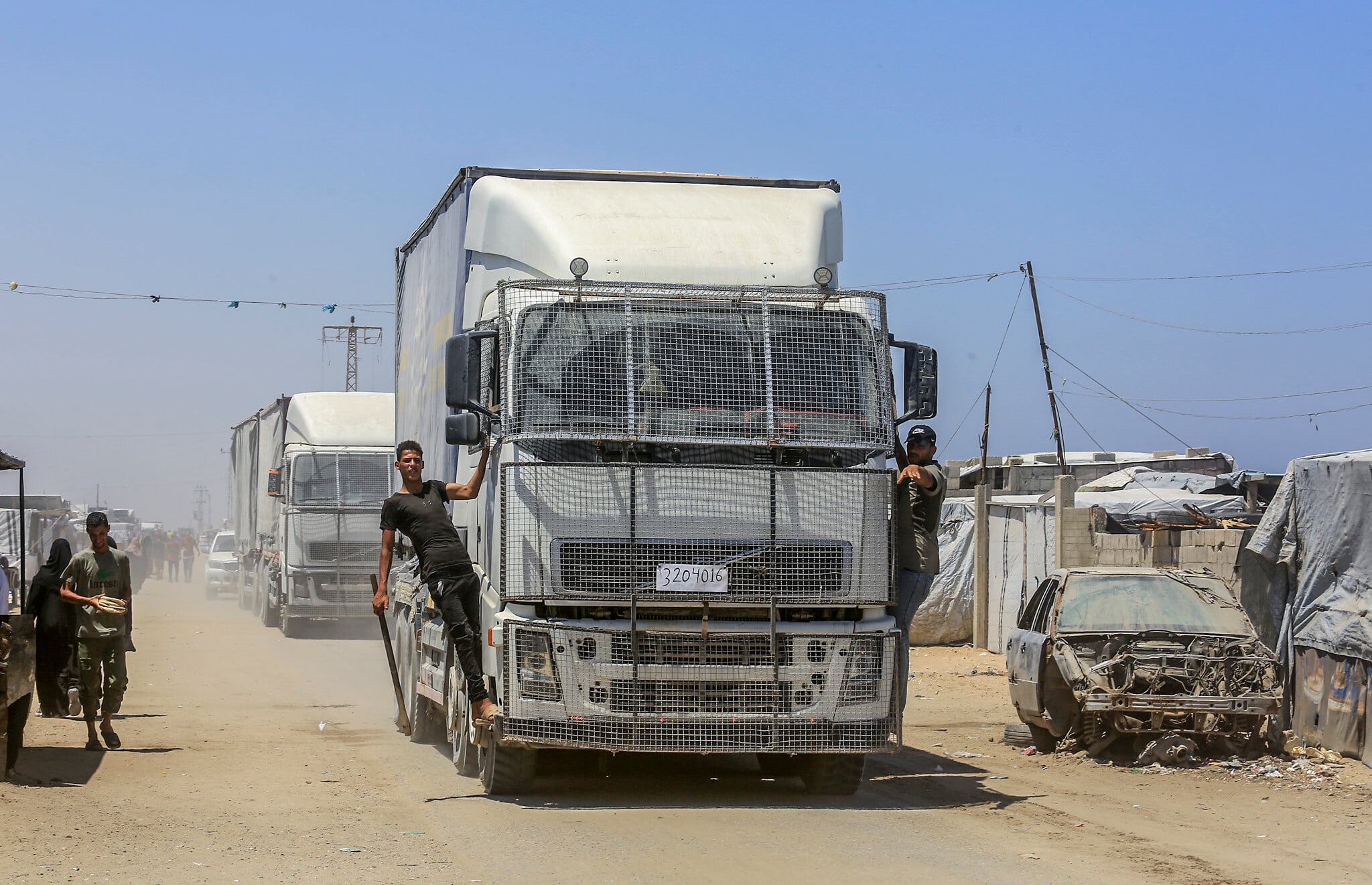
Earlier this month, UN Deputy Special Coordinator for the Middle East Peace Process Ramiz Alakbarov accused Hamas of interfering with humanitarian deliveries in Gaza and intimidating aid workers, making relief operations increasingly dangerous.
Throughout the war in Gaza, Israel accused Hamas of stealing aid for its own fighters or to sell to finance its operations, while others said the looters were frequently desperate and starving Palestinians.
A ceasefire was reached in Gaza between Israel and Hamas in October following two years of war, which was sparked when Hamas-led terrorists rampaged through southern Israel on October 7, 2023, slaughtering some 1,200 people and taking 251 hostages.
The second phase of the ceasefire, which was to involve Hamas’s disarmament and a gradual withdrawal of Israeli forces from Gaza, has been stalled for months.









The Times of Israel Community.