

Chief Rabbinate says it’s willing to let women take some rabbinical tests
After High Court of Justice ruled it must open its exams to women, state rabbinical body asks court to hold another hearing and postpone implementation of its original ruling
 Add ToI as a Preferred Source on Google
Rossella Tercatin is The Times of Israel's archaeology and religions reporter.

Three months after the High Court of Justice ruled that the Chief Rabbinate must open its rabbinical tests to women, the rabbinate asked the court to hold another hearing on the topic, but said that it is willing to allow women to take some of the tests.
“The chief rabbis’ position is that there are relevant differences between men and women regarding the possibility of receiving rabbinical ordination or qualifications, as well as in matters of Torah study,” the rabbinate said in a document submitted to the court on Sunday.
“At the same time, there is no obstacle for women to study certain subjects, including, first and foremost, laws relating to everyday life,” the document continued. “In accordance with this position, the chief rabbis believe that there is also no obstacle for women to be tested by the Chief Rabbinate in some of the aforementioned exams on these laws.”
The document mentioned Shabbat and so-called family purity laws as examples of topics that women could be tested on.
The rabbinate further asked the court to delay the implementation of the previous ruling until an additional hearing is held and a new decision is formulated.
The court rarely grants such hearings, and at least two of the petitioners seeking the opportunity for women to be tested voiced their opposition to the rabbinate’s request.
The Chief Rabbinate administers tests in the major areas of halacha (Jewish law). Candidates wishing to be recognized as rabbis must pass at least six tests, including on the three major halachic topics of kashrut, family purity, and Shabbat. The rabbinate also grants other types of certificates to those who pass the tests, with significant economic and social implications.
For example, the “Yoreh Yoreh” (“he may teach”) certificate – which is obtained after passing six tests – is, under certain conditions, considered equivalent to an academic degree in terms of salary benefits and is a prerequisite to access some public jobs.
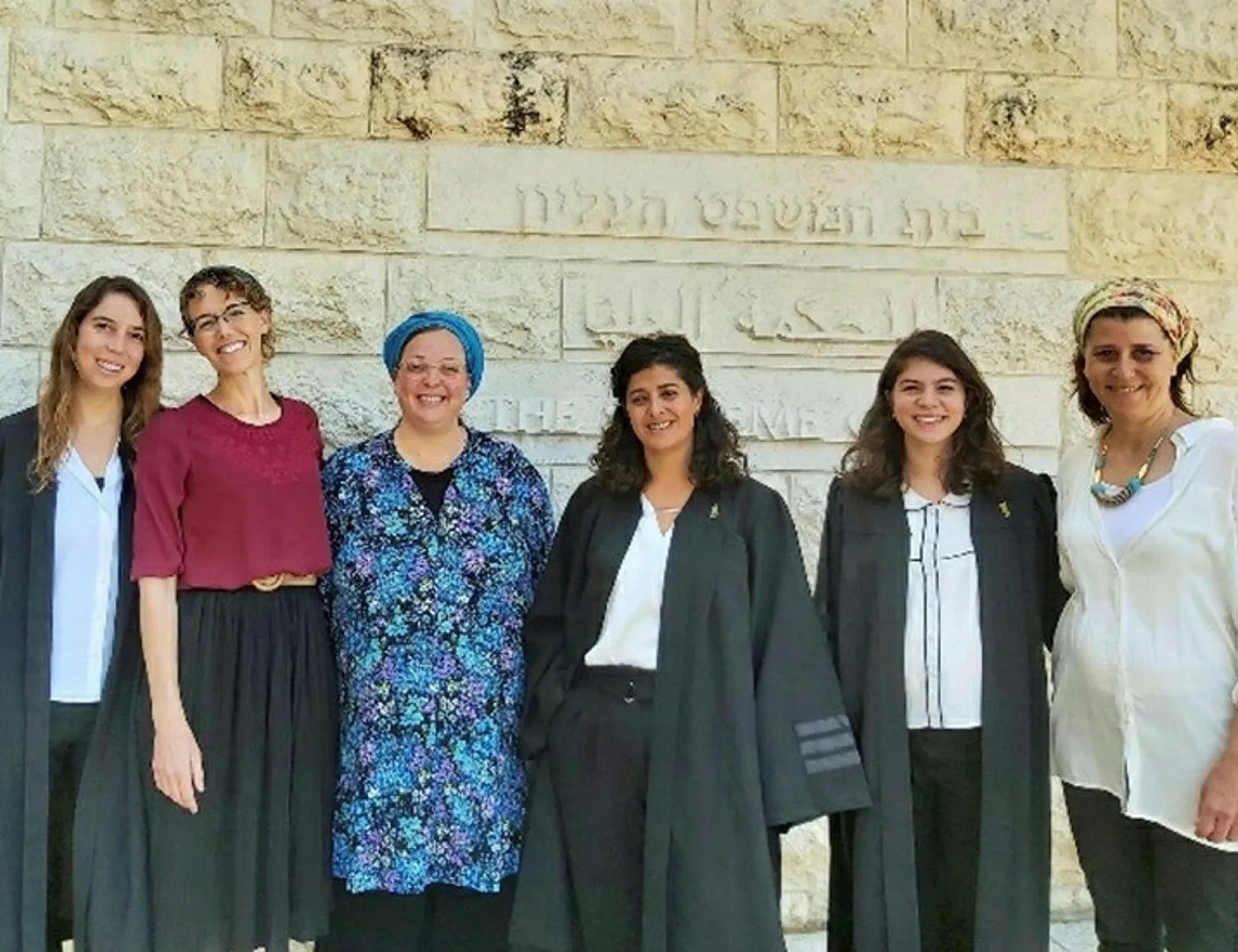
In 2019, three organizations focusing on religious and women’s rights, and five female Torah scholars, petitioned the court to ask that women be permitted to take the tests and be eligible for the privileges associated with passing them.
Over the years, several attempts to administer tests equivalent to those organized by the rabbinate under the auspices of other governmental bodies, including the Labor Ministry and the Religious Affairs Ministry, have failed.
In July, the court ruled that the rabbinate’s tests had to be open to all applicants.

Most years, the rabbinate offers tests in the spring, summer, and fall. The upcoming tests are set for next month, but the rabbinate has not opened registration for them yet.
In its letter to the court, the rabbinate asked to be allowed to organize at least the upcoming round of tests under the old system.
“This is a request that raises shameful arguments regarding the status of women and their ability to study and engage in Torah,” Rabbi Seth Farber, head of the ITIM religious rights organization, one of the petitioners, charged in a statement. “These claims shame the Chief Rabbinate of Israel and risk setting us back by years, and undermining the revolution in women’s Torah study.”
Farber’s wife, Michelle Cohen Farber, a Talmud scholar, is also among the original petitioners. Additional petitioners include Avital Engelberg, director of the Israeli branch of the New York-based Orthodox Yeshivat Maharat; Shlomit Flint, a Talmud teacher at Midreshet Be’er’s Yeruham and Ashdod campuses; Rabbanit Sarah Segal-Katz; the Rackman Center for the Advancement of Women’s Status; and the Kolech Religious Women Forum.
Farber noted that the case had already been adjudicated by the High Court, and there was no justification for reopening it or delaying the implementation of the July ruling.
“The Chief Rabbinate’s request for an additional hearing pushes us backward,” Segal-Katz told the Hebrew news outlet Ynet. “Even the attempt to present the distinction based on whether women are exempt from some [Torah] commandments does not justify preventing them from learning the subjects or being tested on them.”










The Times of Israel Community.