

Congress bill would force Trump to report on Saudi nuclear deal
Bipartisan legislation demands investigation into consequences of allowing kingdom to enrich uranium, including ‘security implications’ for Israel
 Add ToI as a Preferred Source on Google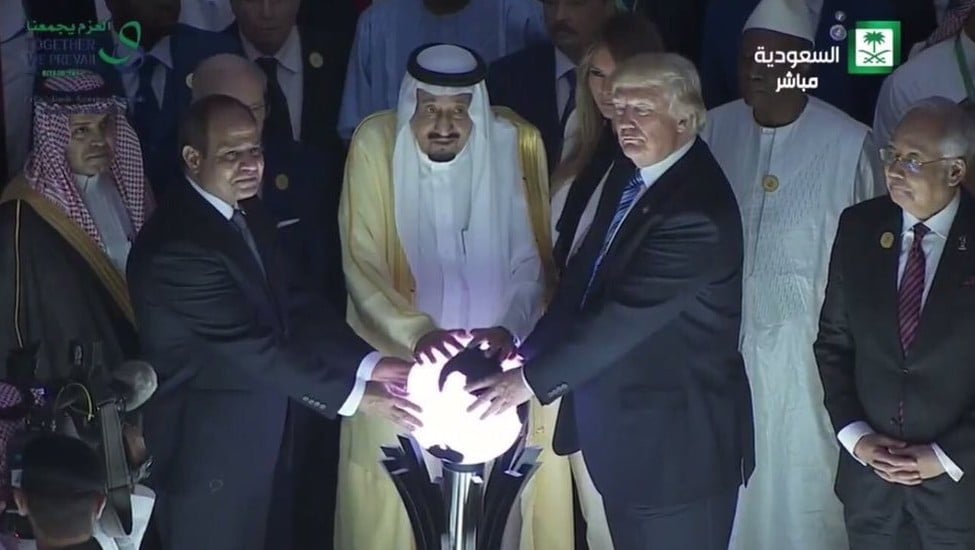
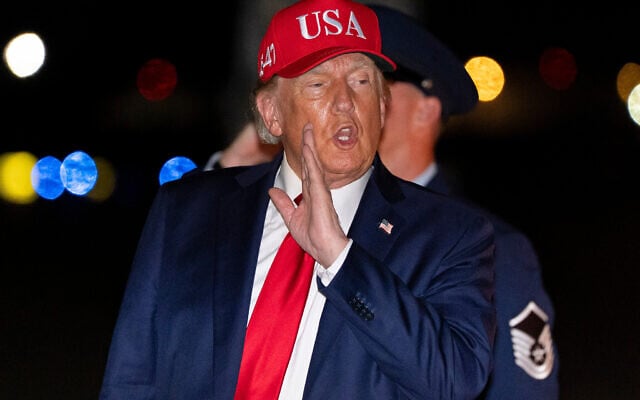
Bipartisan legislation introduced to Congress Friday would require US President Donald Trump to report on the national and regional security consequences of Saudi Arabia obtaining nuclear fuel enrichment capability.
The bill, proposed by Democrat Representative Brad Schneider of Illinois and Republican Mark Meadows of North Carolina, came after reports that the Trump administration may let Saudi Arabia enrich its own uranium as part of a deal to allow US companies to build nuclear reactors in the kingdom.
The legislation would force the administration to give Congress a report evaluating the “national security interests of the United States and regional allies, including Israel,” of allowing Saudi Arabia to become a nuclear nation.
“We must ensure any energy deal with Saudi Arabia does not spark an arms race in the Middle East or accelerate nuclear proliferation in the region,” Schneider said. “It’s also vital that we consider the security implications of a Saudi nuclear sale on our closest ally in the region, Israel.”
“Nuclear proliferation remains a real threat and one which is too often overlooked,” said Meadows. “When terrorist organizations have demonstrated an interest in obtaining nuclear fissile material, and when our ally Israel and other states in the region have longstanding tensions, our government must be cautious and informed about the implications of a nuclear transfer to any state in the Middle East.”
In March Prime Minister Benjamin Netanyahu asked Trump not to go ahead with the emerging deal to sell Saudi Arabia nuclear reactors. Israel, which is believed to possess a sizable nuclear arsenal, has long warned that Iran’s atomic program could spark a nuclear arms race in the Middle East.
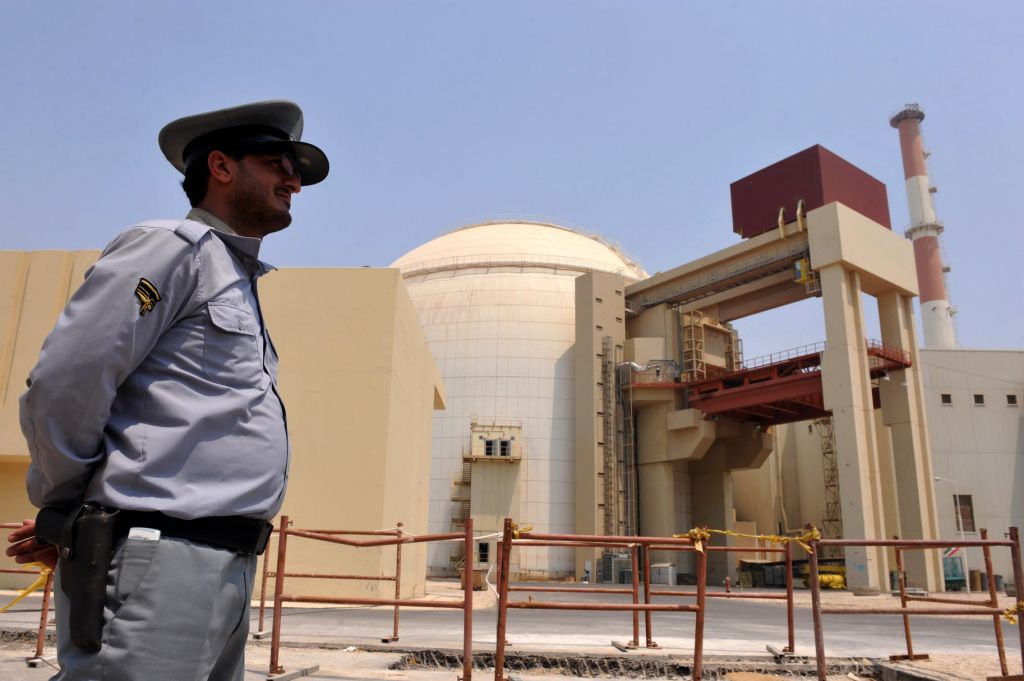
Saudi Arabia has announced its intentions to embark on a massive program to become “self-sufficient” in producing nuclear fuel. Preliminary plans suggest the Saudis may be looking to build as many as 17 reactors in all.
Netanyahu reportedly asked that, if the Americans insist on going ahead with building the reactors, Saudi Arabia be prevented from enriching uranium by itself. He demanded that this be a precondition for the entire deal.
The Saudis, meanwhile, reportedly demanded the right to enrich uranium and made it a condition to awarding the contracts — expected to be worth tens of billions of dollars — to US companies.
In December, Saudi Arabia’s energy minister said the US and Riyadh will begin talks within weeks on cooperation over the kingdom’s emergent civilian nuclear program.
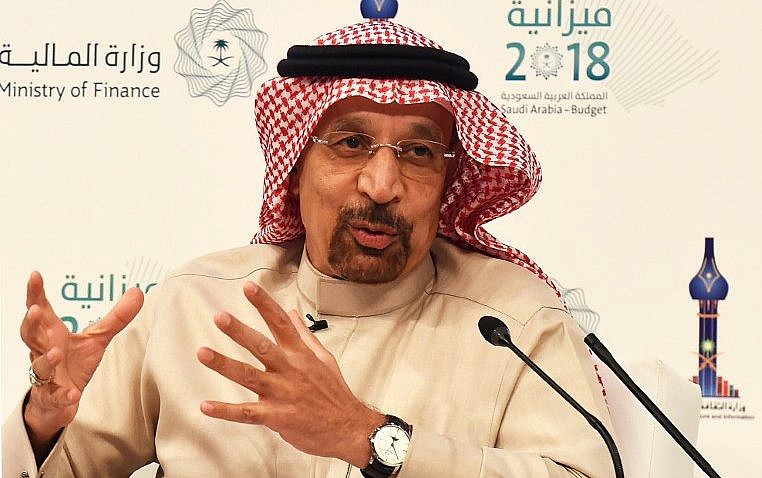
Khalid al-Falih told Reuters his nation would ask Washington to allow US companies to take part in the program.
Falih noted that Saudi Arabia has already “signed agreements with China, Russia, with France, so their technologies will be competing for the Saudi national nuclear project.”
US law forbids cooperation with nations that have not signed a so-called Section 123 Agreement, which limits nuclear work to peaceful uses only. Though Riyadh has said it does not seek a military program, it has said it seeks “self-sufficiency in producing nuclear fuel” and has in the past refused to sign an agreement that would limit its ability to enrich uranium.
“We hope that through the negotiations that will be taking place over the next few weeks with our American partners that we will find common ground that will allow the American government to meet the intent of American law,” Falih said.
“We absolutely want to harness nuclear energy for peaceful purposes. There should be no doubt about Saudi Arabian intentions. Whatever we do is going to be under strict compliance with international agreements,” he said.
“But we will not deprive ourselves of accessing our natural resources and localizing an industry that we intend to be with us for the long term.”






The Times of Israel Community.