

Cop, IDF troops enter West Bank village under PA control to seize ancient artifact
Police officer was friends with Ze’ev Erlich, who died in 2024 while examining an archaeological site in Lebanon; police were reportedly unaware of operation
 Add ToI as a Preferred Source on Google
Rossella Tercatin is The Times of Israel's archaeology and religions reporter.
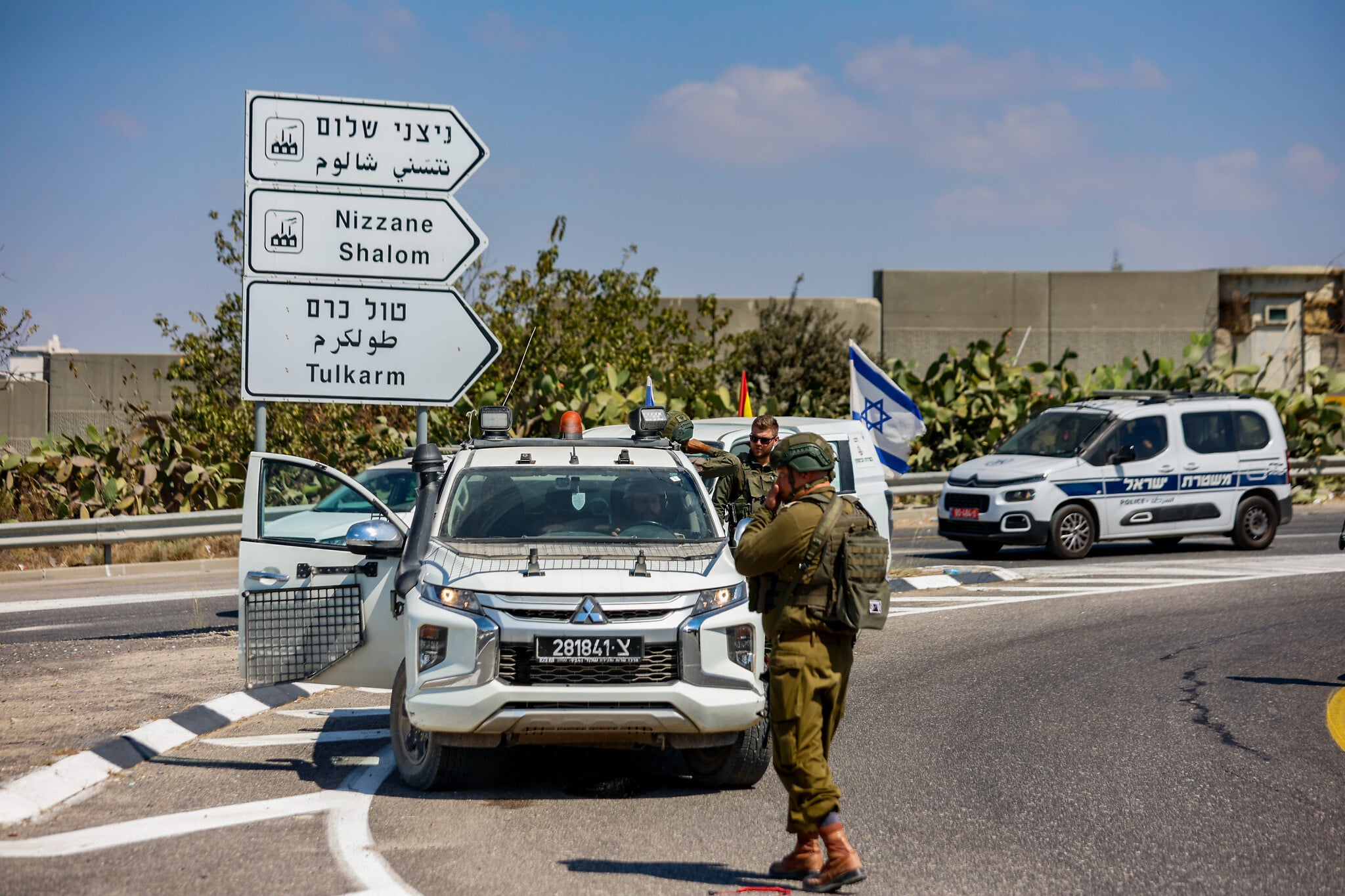
A police officer entered a Palestinian village in Area A of the West Bank with IDF soldiers and unlawfully seized an archaeological artifact, according to a Tuesday report that was confirmed to The Times of Israel by an IDF spokesperson.
The officer, Meir Rotter, is an amateur archaeologist and was friends with Ze’ev Erlich, who died in November 2024 in a Hezbollah attack in southern Lebanon with Sgt. Gur Kehati. Erlich was allowed to enter the western sector of southern Lebanon, in IDF uniform, to examine an archaeological site without the necessary approvals by Col. (res.) Yoav Yarom, who was removed from service in December and received a severe command reprimand as a result of the incident.
In a video shared by Haaretz, Rotter said it was Erlich who had spotted a stone engraved with a menorah embedded in a building in Kafr Dhaba, east of Tulkarm, during a tour he conducted in the village in 2017 (it was not clear whether he did so as part of the military or as a civilian, which would be illegal under Israeli law).
“A few years ago, Jabo [Erlich] visited and saw a repurposed stone,” Rotter said, apparently addressing the soldiers, and aware that he was being filmed. “It has a decoration of a menorah, which was familiar to us from other places. We find Samaritan menorahs in Jitt, Kafr Qaddum, Hajjah… Here too, in Kafr Dhaba, we find a lintel with a menorah.”
“After our visit, the residents realize that there is something here that might be worth money, worth gold,” he added. “I don’t know what it is worth. They dismantle the lintel and the lintel is waiting, apparently to be sold to antiquity robbers. In a search of the village, we found the stone thrown in one of the courtyards, and we will save it. This is a matter of heritage; we are returning a lost object to its owner.”
Under the Oslo Accords, the Palestinian Authority has full security and civilian control over Area A, including over antiquities. While Israeli forces routinely conduct security operations, instances when they intervene in non-security-related matters are rare. However, this was not the first time police have operated in Area A in recent months.
Rotter serves as the head of the police’s ultra-Orthodox community department, not in the West Bank.
קצין המשטרה מאיר רוטר מדבר עם חייליו על אבן מסותתת עתיקה שהחרים בניגוד לחוק בכפר ד'נאבה, ביום שישי
שימוש לפי סעיף 27א' pic.twitter.com/uBe7SxUEt0— הארץ חדשות (@haaretznewsvid) March 16, 2026
According to Haaretz, the police said it was not familiar with the operation, which was not conducted on its behalf, and the officer’s involvement would be examined.
The staff officer of the Archaeology Unit of the Civil Administration, a branch of the Defense Ministry’s Coordinator for Government Affairs in the Territories (COGAT), which is in charge of civilian affairs in the region, was also not involved.
An army spokesperson told The Times of Israel that the incident was under review, and procedures on the matter would be clarified, adding that the artifact was not in the possession of IDF forces or personnel.
The operation happened against the backdrop of a controversial legislative initiative to pass a bill transferring control over antiquities in the West Bank to an Israeli civilian body, including in areas A and B (where Israel maintains security control, but the PA has civilian control, as opposed to Area C, where Israel has both civilian and military control). The bill was approved by the Knesset Culture and Education Committee last month and is set to be voted on by the plenum, though no date has been announced yet.
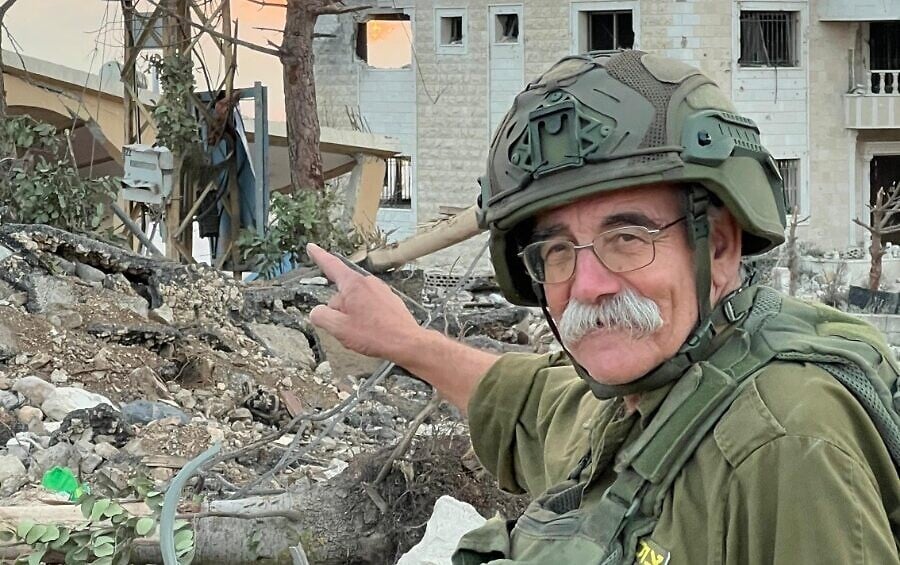
According to his profile in the Academia portal, where scholars often publish their studies, Rotter authored or co-authored four archaeology papers in Hebrew. The most recent, published in 2021 in an academic journal by Ariel University, is titled “Four Samaritan Lamps in the Village of Hajjah in Samaria” (the biblical name of the northern West Bank). Hajjah is also located in Area A. The paper is co-authored by Erlich. In the paper, Rotter presents his affiliation as the Department of Land of Israel Studies and Archaeology at Bar-Ilan University.
A Bar-Ilan spokesperson told The Times of Israel that Rotter is not affiliated with the university. The spokesperson added that a Meir Rotter completed a master’s degree at Bar-Ilan but that without comparing ID numbers it was impossible to confirm it was the same person.







The Times of Israel Community.