

Despite dashing hopes for a visit, Indonesia cautiously eyes ties with Israel
For the world’s largest Muslim-majority country, the path to Jerusalem runs through Gaza – and Trump

 Add ToI as a Preferred Source on Google
Nava Freiberg is The Times of Israel's deputy diplomatic correspondent.

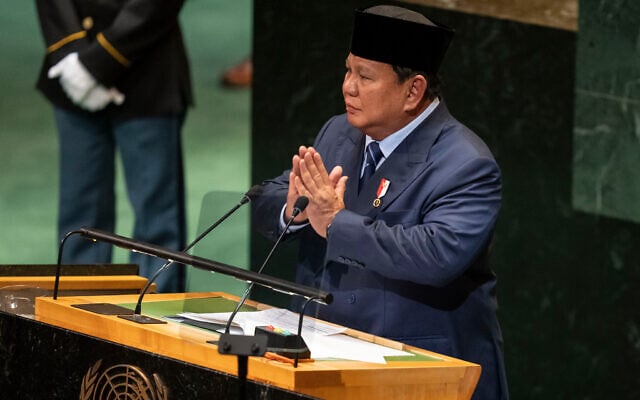
Indonesian President Prabowo Subianto raised eyebrows of the normally staid diplomats at the United Nations General Assembly in New York last month with a single, surprising word: “Shalom.”
Before ending his assembly address with the Hebrew word for “peace,” Subianto — the leader of the world’s largest Muslim-majority country, which has no formal relations with Israel — spoke in an unexpectedly sympathetic tone about the Jewish state, saying that the world must “recognize,” “respect” and “guarantee the safety and security of Israel. Only then can we have real peace.”
He publicly offered to send 20,000 peacekeepers to Gaza and said Indonesia would “immediately” recognize Israel once it recognizes a Palestinian state.
Three weeks later, while US President Donald Trump visited Israel to mark the implementation of his Gaza peace plan, reports surfaced in Israeli media that Subianto would make a landmark visit to Jerusalem the following day, after his scheduled attendance at the Sharm al-Sheikh summit promoting the plan.
The idea was not entirely far-fetched. Subianto has earned repeated public praise from the US president for his enthusiasm in helping advance the Gaza plan, which Washington has touted as quickly paving the way for new normalization agreements between Israel and Muslim states in the Middle East — and beyond.
But back in Jakarta, as Trump addressed the Knesset, alongside Prime Minister Benjamin Netanyahu and Knesset Speaker Amir Ohana, with several long-winded speeches about the regional peace that was ostensibly beginning, the rumors were firmly shot down.
Hours after the visit had been confirmed by anonymous officials, including to The Times of Israel, Indonesia’s Foreign Ministry issued clear denials of any such trip, affirming their longstanding support for the Palestinians in Gaza. Another source later told The Times of Israel that Subianto had approved the visit, but backed out once the plan leaked to the press, fearing backlash at home.
It is easy to understand why. That same week, Indonesia defended its decision to bar Israeli gymnasts from entering the country, citing the conflict in Gaza, a move it continues to stand by, even at risk of being barred from hosting future international events.
Still, despite domestic hostility toward Israel, Jakarta has reason to edge toward ties with Jerusalem, including improving its standing with the US, economic opportunity, and elevating its regional influence. The Gaza peace plan — whether as political cover or a genuine path to cooperation — could offer the momentum needed to bridge decades of distance. But, as with most of Israel’s relationships in the Muslim world, it depends on how Trump’s Gaza plan progresses — if it does at all.
A constitutional imperative
To Israelis, Subianto’s rumored visit sounded historic. To Indonesians, it sounded impossible.
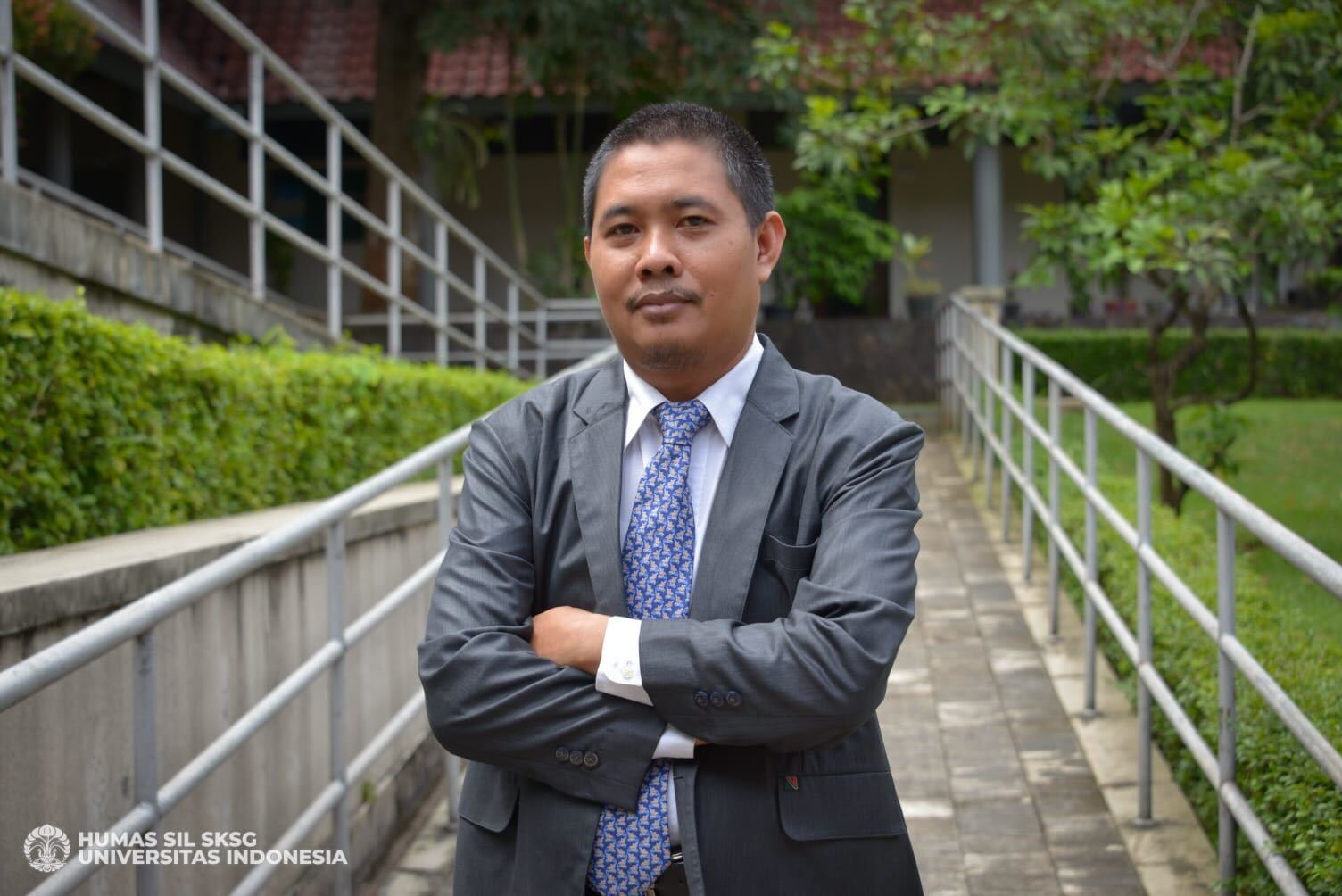
“I was surprised by the reports,” said Yon Machmudi, head of the Department of Middle East and Islamic Studies at the University of Indonesia. “I think Israel overestimates [Subianto’s] position,” he said, noting that “any policy coming from our president that creates closer relations with Israel will create domestic problems and strong reactions from the Indonesian public.”
Jakarta has periodically surfaced as a potential candidate to join the Abraham Accords normalization agreements between Israel and Muslim states since they were signed under Trump five years ago. But speculation often fades under the weight of domestic resistance.
That resistance runs deep. When Indonesia declared independence from the Dutch Empire in 1945, it enshrined opposition to colonialism as a core constitutional principle. Within that worldview, Indonesians widely see Israel as occupying Palestinian land and denying Palestinians statehood — a violation of rights they feel obligated to defend.
“Whenever someone deviates from the official stance on ties with Israel, that deviation is seen as a deviation from the constitution itself — and the constitution holds tremendous authority in Indonesia,” said Giora Eliraz, a research fellow at Hebrew University’s Harry S. Truman Institute.
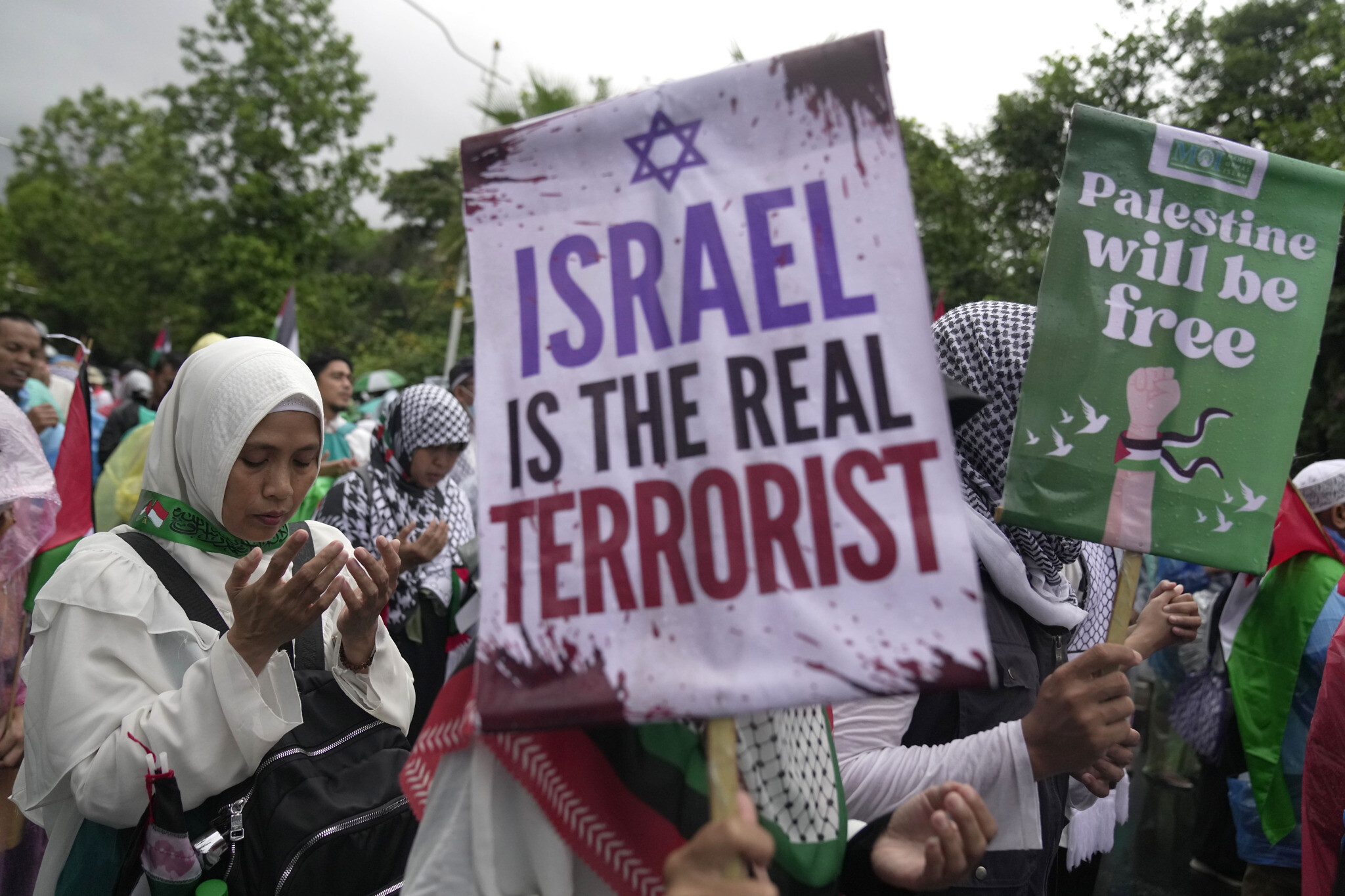
Though largely rooted in national ideology, this stance also has religious foundations in the Muslim-majority country. “Within the more activist parts of the Muslim public, the motivation is driven by pan-Islamic sentiment,” Eliraz said. While Indonesia is officially secular, for many Muslims there, “the Palestinian people are seen as part of the collective Muslim identity. Anyone who diverges from that line is seen as deviating not just politically, but on a faith-based level.”
Cautious cooperation
Indonesia’s ideological rigidity has not entirely precluded engagement with Israel.
During the long authoritarian rule of President Suharto from the late 1960s to the 1990s, Jakarta quietly opened unofficial military and intelligence cooperation with Jerusalem, reportedly involving arms deals, intelligence sharing, and the training of Indonesian officers in Israel.
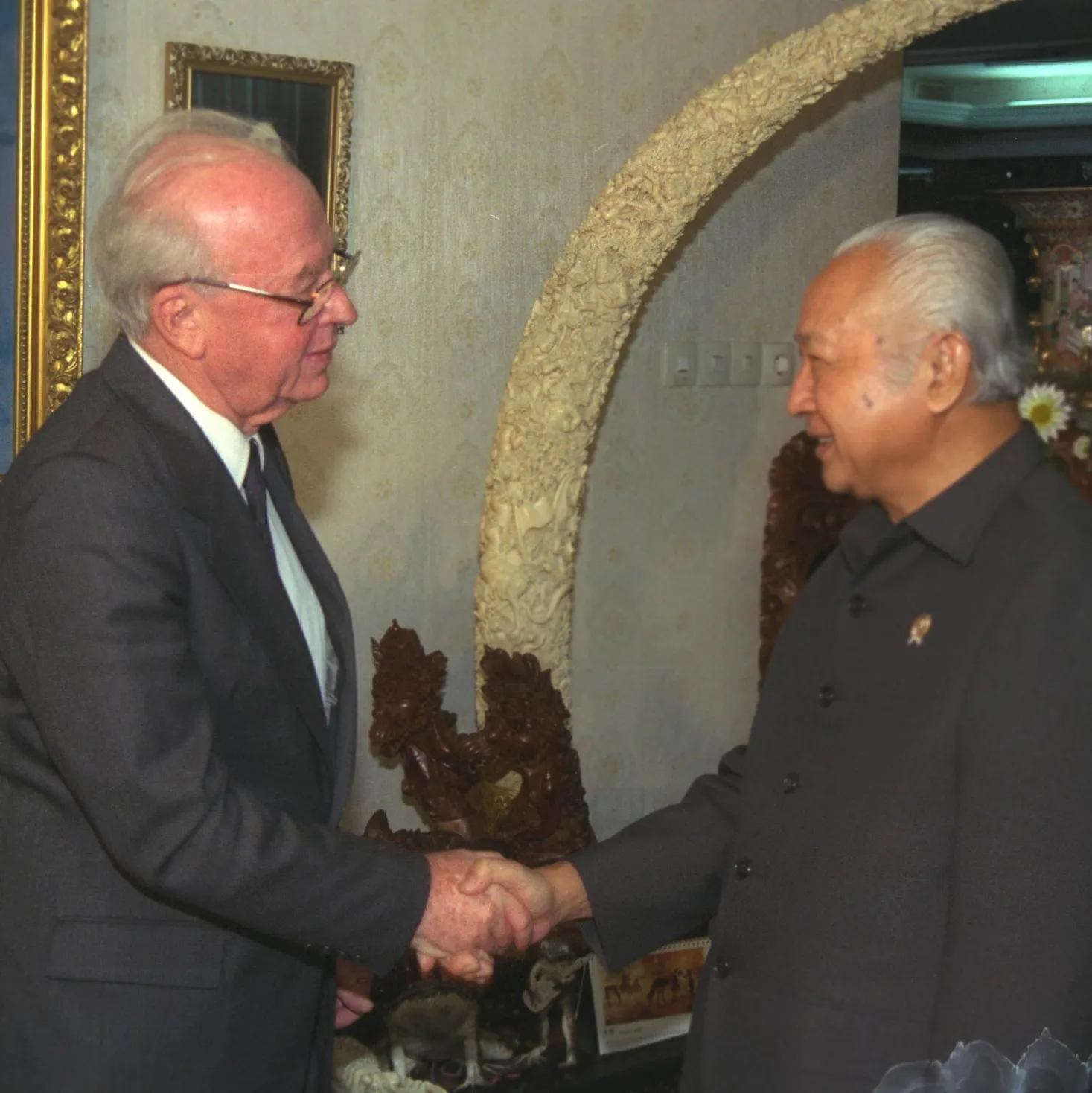
In 1993, then-Israeli prime minister Yitzhak Rabin met with Suharto in Jakarta, marking the first — and so far only — official visit of an Israeli leader to the country. Notably, the meeting took place strictly in the context of advancing the Israeli-Palestinian peace process after the recently signed Oslo Accords. Suharto received Rabin not as the president of Indonesia, but as the acting chairman of the Non-Aligned Movement — a Cold War coalition of states that maintained neutrality between East and West.
Subianto, who served as a general under Suharto and was once his son-in-law, has continued this tradition. “Subianto is genuinely pragmatic and sincere about peace,” Eliraz said, “but he’s bound by traditional Indonesian policy: linking diplomatic relations with Israel directly to Israel’s policy toward the Palestinians.”
Jakarta’s role in the ‘day after’
With so much to risk at home, Jakarta is unlikely to rush normalization with Israel. Yet Indonesia’s foreign policy has long balanced principle with pragmatism, and, alongside its commitment to Palestinian statehood, it has practical motivations to engage with Israel.
Subianto follows Jakarta’s traditional diplomatic doctrine known in Indonesian as “bebas dan aktif” — an “independent and active” foreign policy, meaning that Indonesia should engage globally without aligning too closely with any power bloc.
“Beyond values, Indonesia also has a strategic interest in the region: it wants to raise its international standing and take a more visible role on the global stage,” said Eliraz. “Trust-building diplomacy is part of its diplomatic DNA.”
Over the last two decades, the country’s difficult but successful transition from authoritarian rule to democracy has also shaped its foreign policy. Jakarta’s growing engagement with the Middle East stems from both a desire to promote stability and reconciliation and a concern that regional extremism could threaten its fragile multiethnic fabric at home.
Indonesia has long pursued this approach abroad, including in Afghanistan, and during the Arab Spring in Egypt and Tunisia.
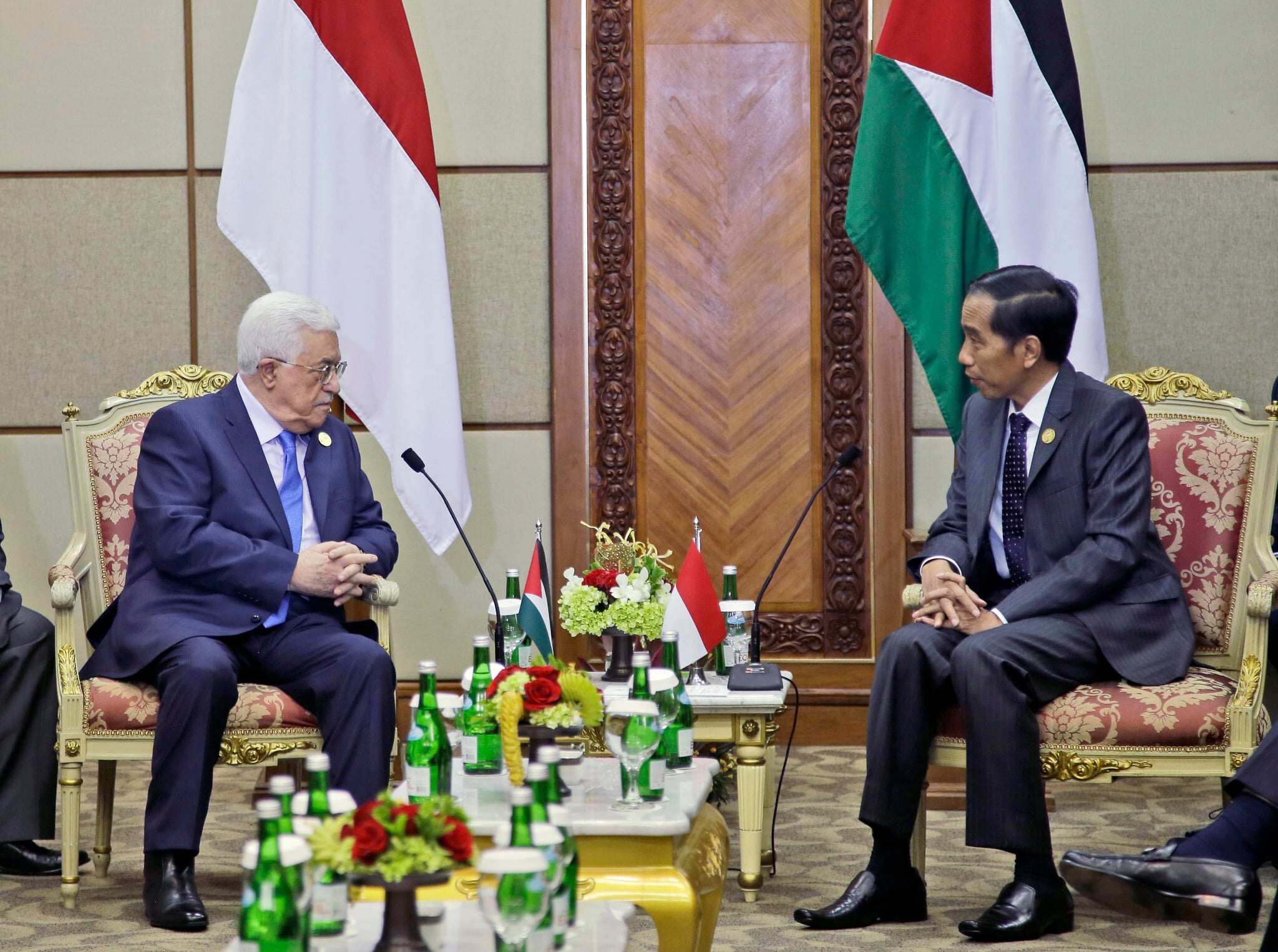
The war in Gaza has brought Indonesia further regional attention. A communication channel was reportedly opened between Israel and Indonesia to discuss the potential resettlement of Palestinians from Gaza as part of broader plans to encourage emigration from the Strip, though Jakarta has firmly denied any involvement.
The war also underscored how Jakarta could play a role in Gaza’s “day after.” Machmudi agreed that Indonesia’s goals in advancing the US Gaza plan are both ideological and practical: “Our president’s position [on Israel] is clear, but we still give room for rational choice… It’s not only about solidarity [with the Palestinians.]”
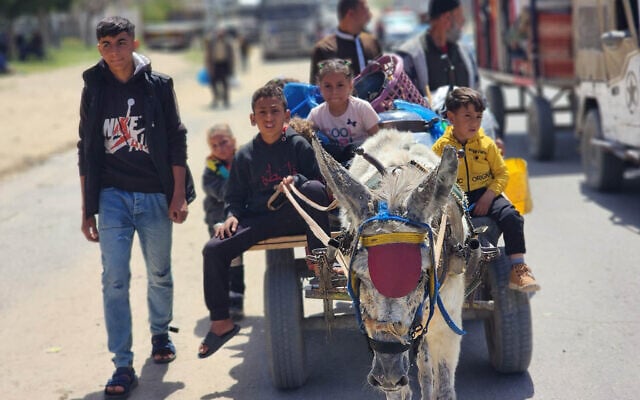
Both economic and strategic motivations play a role, he explained.
“We want to see the Middle East become stable and prosperous, as this will create economic opportunities. Investment will flow to Indonesia, and we can also do business there,” he said.
Furthermore, “Subianto is happy to be part of Trump’s proposal,” Machmudi continued, “because in this position, Indonesia also wants to be close with the United States, with Trump, in terms of international relations. We support the Palestinians, but we also have an interest in being close to the Americans.”
While its most visible contributions in Gaza may take the form of peacekeeping troops or humanitarian aid, Jakarta may also be uniquely positioned to lead efforts in deradicalizing local populations by exporting its brand of moderate, democracy-minded Sunni Islam, Eliraz noted. Indonesia champions a “soft power” diplomacy of moderate Islam, he explained, largely shaped by its two major Muslim organizations — Nahdlatul Ulama and Muhammadiyah — which have led efforts to counter extremism and promote interfaith dialogue.
Eliraz added that Indonesia has not publicly emphasized deradicalization as a potential contribution, perhaps being wary of competition with leading Arab states for influence in Washington’s plan.
Jakarta’s hopeful Jews
For Indonesia’s tiny Jewish community, estimated at around 100 people, any warming of ties to Israel holds not just political but religious promise.
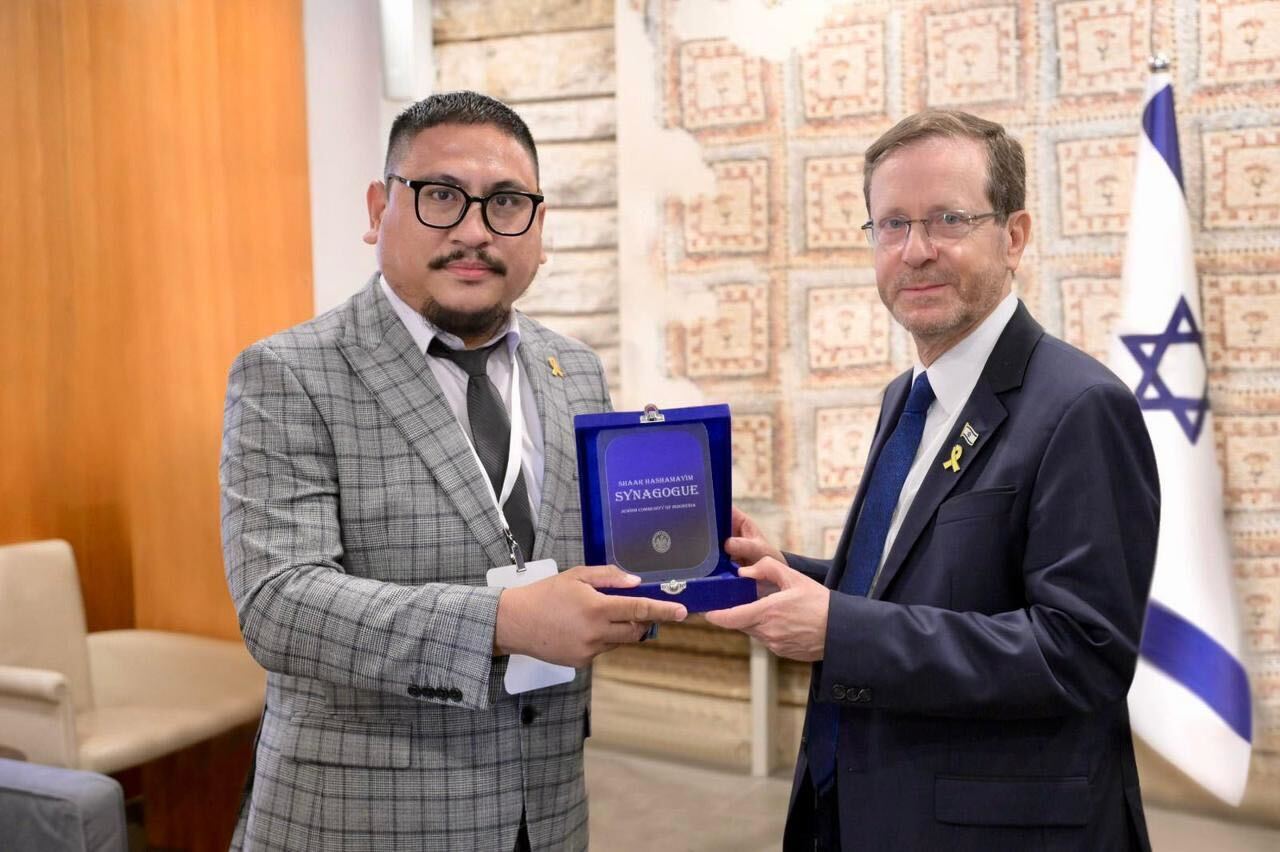
Born in Indonesia to a family of mixed Indonesian-Dutch Jewish descent, Rabbi Yaakov Baruch began reconnecting local Jews with their heritage in the early 2000s. After founding a synagogue in 2004, he moved to Jakarta to revitalize the Jewish community there, organizing Passover seders, High Holidays, and Hanukkah celebrations with expat Jews and Israelis.
Before the war, Baruch led interfaith dialogues between Muslims and Jews, who “were very enthusiastic to hear about the similarities between Judaism and Islam,” he said. But after Hamas’s October 7, 2023, attack on Israel that sparked the war in Gaza, “everything fell apart.”
Members of the Muslim community “became very aggressive toward me and stopped speaking to me and my Jewish friends. It took time for them to finally soften again,” Baruch said, adding that “anti-Israel and anti-Jewish sentiment is very high, but it hasn’t reached a dangerous level yet.”
He recalled one incident several years ago in a Jakarta mall when he said men attacked him for wearing a Jewish skullcap, “My wife was heavily pregnant. We were surrounded and attacked because I was wearing a kippah. It has haunted me to this day.”
Any improvement in Israel-Indonesia relations would significantly help daily Jewish life, Baruch said: “It would make it easier for us to prepare everything for worship — matzah, kosher wine, and the Arba Minim [traditional four species used on the Sukkot holiday.]”
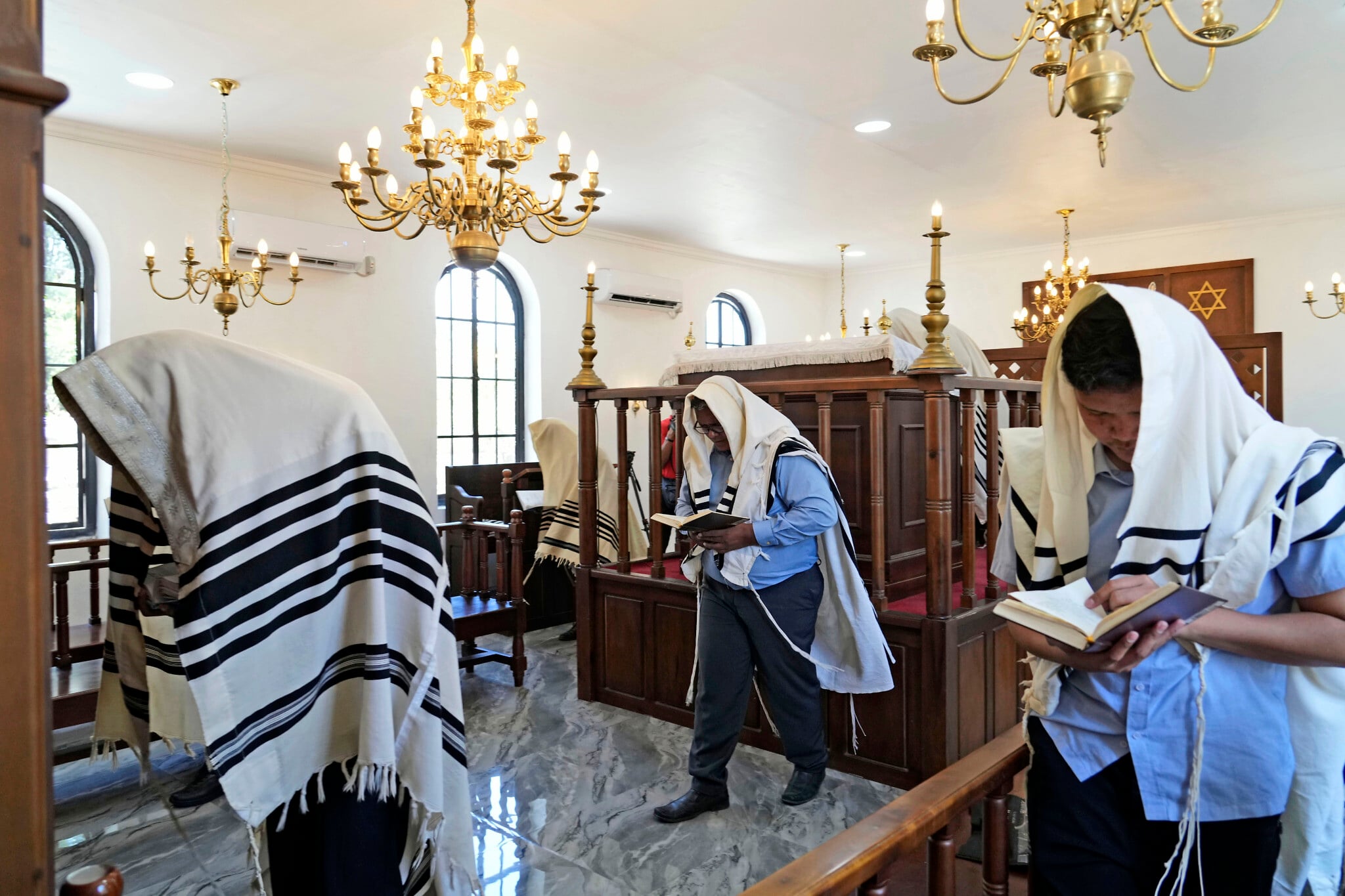
“We’d finally be able to live our Judaism fully,” he said hopefully.
Looking forward
Indonesia’s president understands how normalization would benefit the country, and is eager to make it a reality, said Daniel J. Samet of the American Enterprise Institute.
“The ceasefire has put normalization back on track,” he told The Times of Israel. “Quiet in Gaza gives Jakarta the political cover it needs to recognize Israel and expand ties. But if the ceasefire collapses, as it very well could, he will be hard-pressed to follow through.”
Others were more skeptical that calm alone would suffice. “Even if Subianto wanted to show flexibility, to settle for less than [Israel’s] full recognition [of a Palestinian state,] there would still have to be something concrete he could point to as a sign of progress on the Palestinian issue.”
Machmudi even doubted that Israeli recognition of a Palestinian state would be enough to drive normalization: “The implementation of the two-state solution is equally important [to recognition.] Commitment and implementation must go together.”

Indonesia may become more flexible on engagement with Israel, but the more distant a viable political solution to the Israeli-Palestinian conflict seems, the harder that will be for the country. If Trump’s peace plan delivers visible progress, Jakarta may be prompted to reconsider its ties with Israel — allowing it to play the postwar role it has shown eager interest in.









The Times of Israel Community.