

Ducks, not phalluses, real stars of 1,900-year-old find in northern Israel
Archaeologist at Roman settlement of Omrit, near Hula Valley, says phallic find that grabbed headlines pales in comparison to pastoral frescoes discovered at Roman manor
 Add ToI as a Preferred Source on Google
Ilan Ben Zion is an AFP reporter and a former news editor at The Times of Israel.
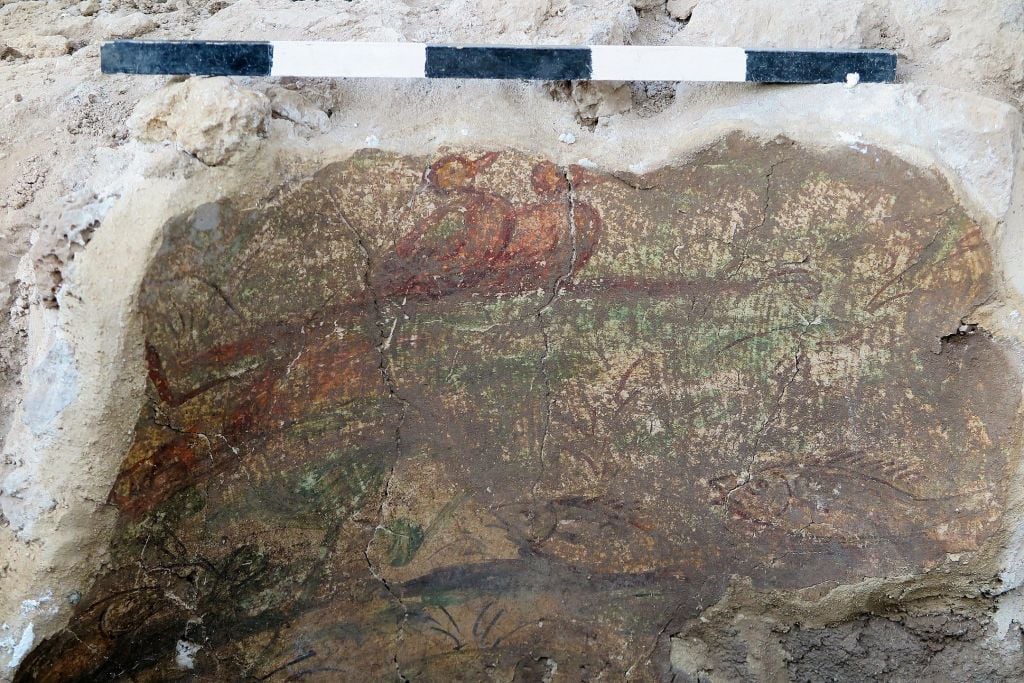
Stunning pastoral frescoes from a 1,900-year-old building have been uncovered following excavations at the site of an ancient Roman temple in northern Israel.
The discovery at Horvat Omrit points to the presence of a wealthy Roman community during the first and second centuries CE, the period when Judea was engulfed by two major Jewish revolts against Rome.
Omrit sits atop a hill at northern end of the Hula Valley at the very northern end of the Galilee, and is considered one of the best preserved, if lesser known, Roman imperial sites in the country.
The tantalizing find was made by an expedition co-directed by Daniel Schowalter, a professor of religion and classics at Carthage College, during excavation work during the summer of 2016.
He described the new discovery at a meeting of the Archaeological Institute of America and the Society for Classical Studies in Toronto in January.
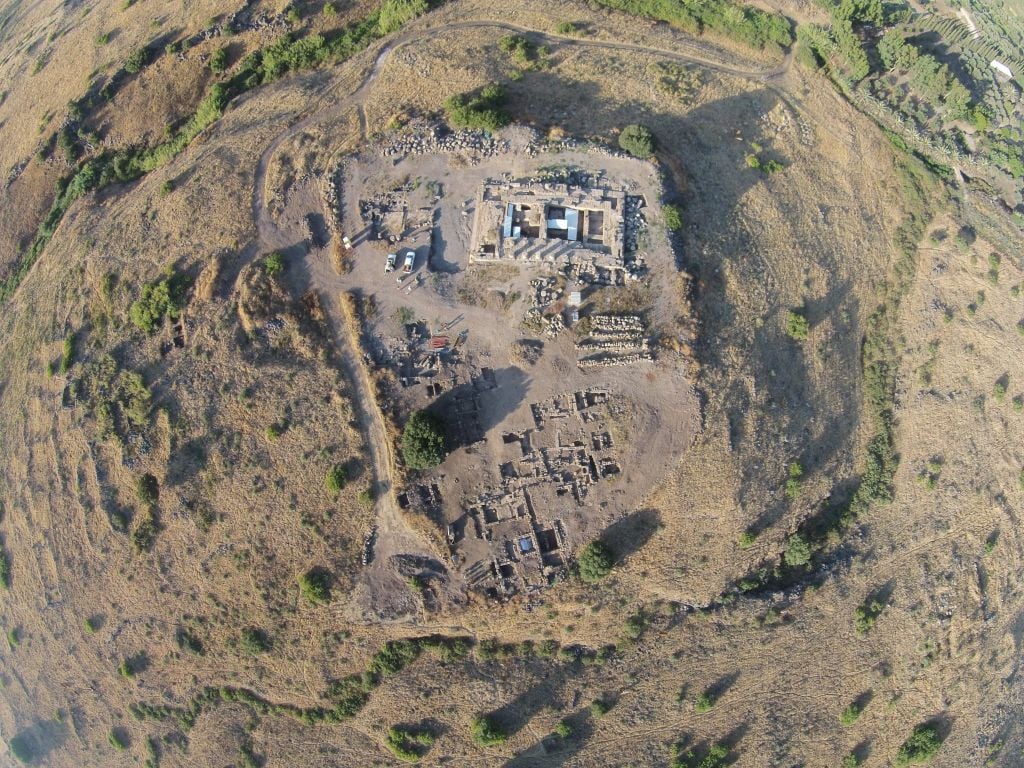
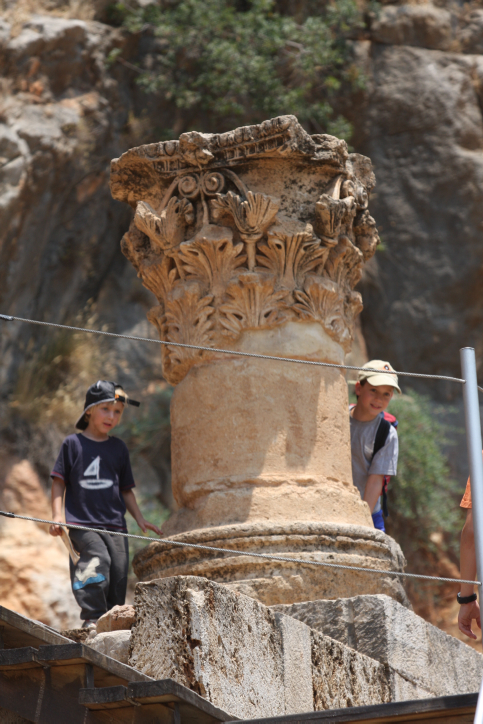
The site is best known for a Roman temple, discovered soon after excavations began in 1999.
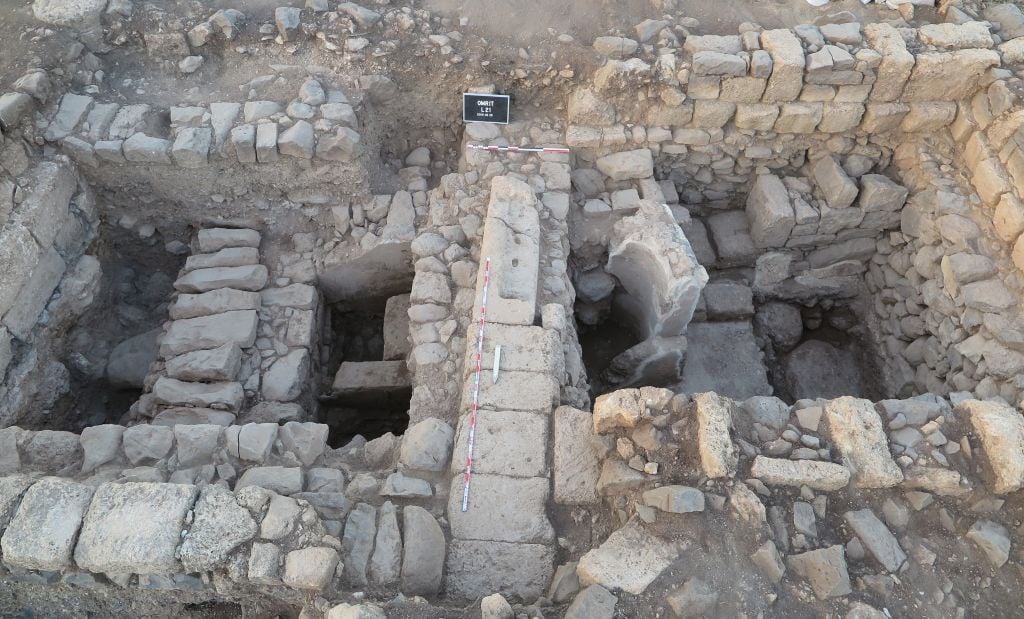
While excavating the settlement surrounding the temple in June, Schowalter and his team stumbled across the frescoed room.
In the room they found a broken fountain with “a really nicely painted fresco of a nature scene with ducks floating on the water and fish swimming underneath and plants and everything else.”
“Apart from that fountain, the walls of the room have a pattern that looks like a lattice fence, and if you look through the lattice fence you see in the background trees, bushes, leaves, maybe some birds,” he told The Times of Israel in a telephone interview.
“It’s really cool because clearly they were trying to portray that you were looking through a fence into a garden.”
“Somebody spent a lot of time making the room look very, very nice,” Schowalter said.
“Presumably this room is part of a house, but so far all we have is the room, so it’s a little hard to know exactly,” he said. The structure may have served as the residence of the temple’s caretakers, or as the home of Roman officials or local elites in the first and early second century CE.
“We can’t say who it would have been, but certainly there would have been people of substance, people with money in the region,” Schowalter said. The inhabitants were Roman, and thus far there has been no evidence of Jewish presence found at the site.
The room is situated to the north of the temple, and there’s a long porticoed structure, known as a stoa, dating to the third century CE that was built atop it.
“Over the last couple of years we discovered that it was built over earlier remains, earlier buildings,” Schowalter explained. “This room is part of that earlier building activity.”
When the ancient builders at Omrit lay the foundations for the stoa, they filled in the existing houses with rubble. In the fill were found little terra cotta phalluses, Roman amulets.
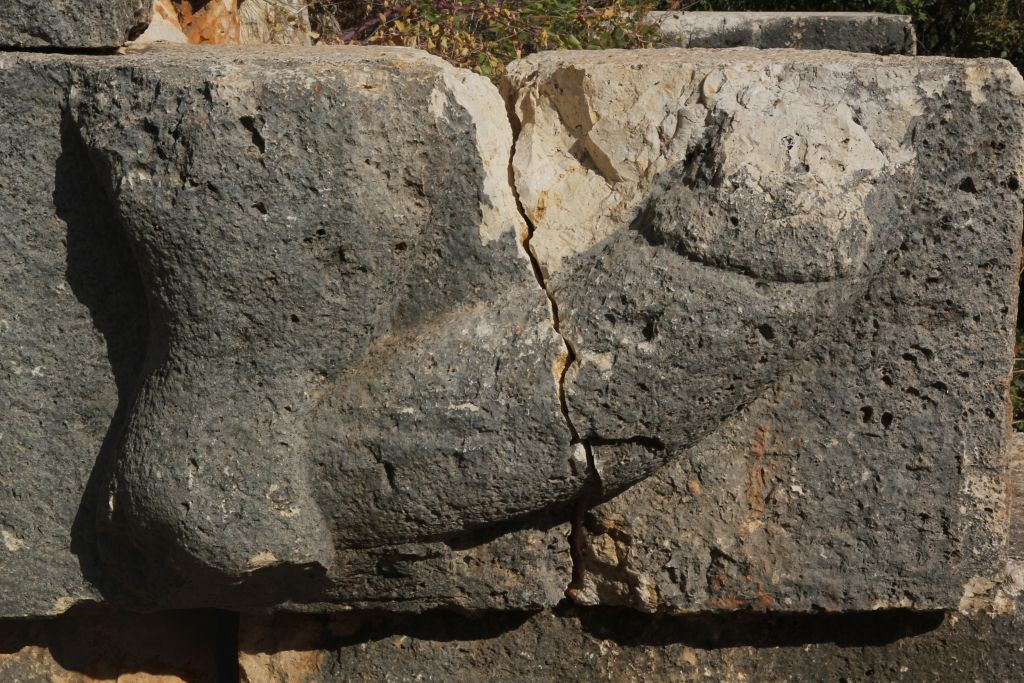
While the phalluses grabbed headlines recently, Schowalter downplayed their significance.
“They’re very small, about three centimeters (just over an inch) long, and one is complete and the other is broken,” he said. “It’s a pretty simple find, and we frankly don’t know where it came from because it was part of the fill. It was basically dumped in.”
Phallic amulets were commonly used by Romans to ward off the evil eye, referred to in Latin as fascina. They were etched into stones at crossroads, hung as pendants around the necks of children, and placed in gardens and hearths for totemic protection.
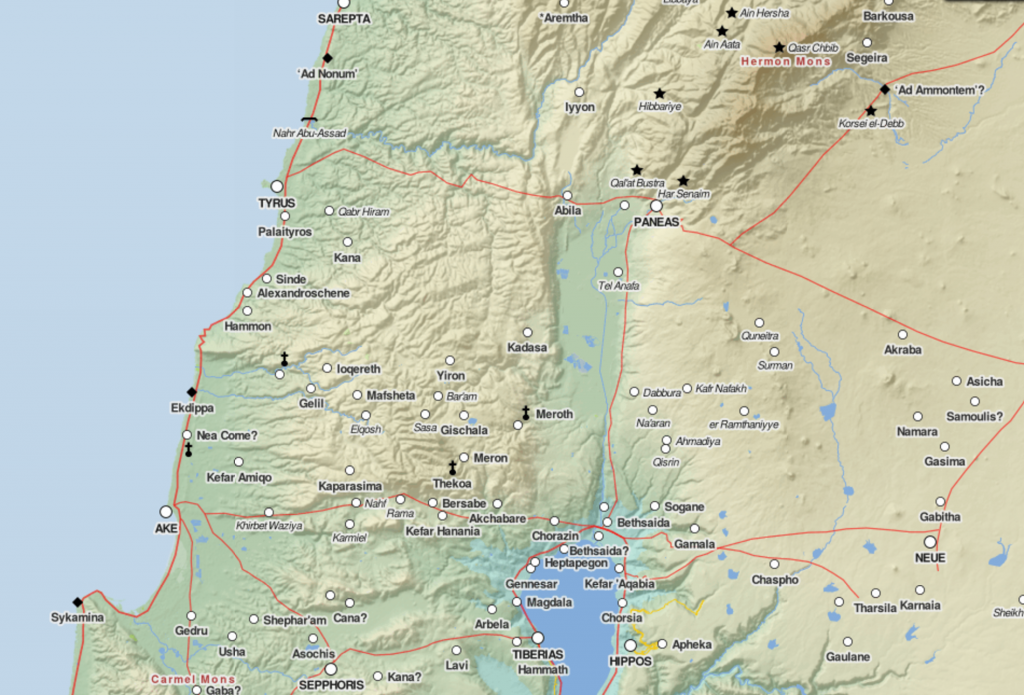
The building’s proximity to Caesarea Philippi, also known as Paneas for its sanctuary to the god Pan, leads archaeologists to believe that it was closely affiliated with that town.
Paneas sat at a major crossroads, and the temples and houses at Omrit sat to the south, on the road running down to the Sea of Galilee, making it “a pretty important spot,” Schowalter said.
The full details of the frescoed walls found at Omrit will be published once researchers have a chance to study them in greater detail.
Excavations at Omrit began in 1999, headed by J. Andrew Overman of Macalester College in St. Paul, Minnesota, who first found the Roman temple at the site.
Based on the size of the exposed podium, Overman posited that the temple was probably around 15-20 meters high, making it a comparable size and shape to the Maison Carree in Nimes, France, one of the best preserved Roman temples remaining, which dates to around the same period.

Later excavations found there were three temples at the site, built one on top of the other. The remains of the buildings encapsulate “a microcosm of architectural development” in the region over the centuries, from Near Eastern to Hellenistic to Roman styles, a 2015 report on Omrit said.
“It’s a little bit difficult to pin down the dating of the building, and we don’t know for sure to whom it was dedicated,” Schowalter said, but he and his colleagues believe that based on its architecture and style, the second phase of the temple may have been the temple Josephus mentions King Herod erected in honor of Augustus Caesar in the first century BCE.
“We can’t prove that, and some people agree with us and some people disagree with us, but that’s our best estimation,” he said.
Schowalter’s excavation of the settlement surrounding the temple complex that led to the frescoed room find began in 2012.
The Omrit Settlement Excavations Project is co-directed by Schowalter, along with Jennifer Gates-Foster of the University of North Carolina, Chapel Hill; Michael Nelson from Queens College, City University of New York; Benjamin Rubin, an independent researcher; and Jason Schlude of the College of Saint Benedict & Saint John’s University.
The team plans to return to Omrit for its final season in a five-year series of excavations this June. Schowalter hopes to glean more information about the third century stoa-like building, as well as explore the building where the frescoes were discovered last year and learn more about it.
If they’re lucky, he hopes to find more paintings.










The Times of Israel Community.