

IDF vet wounded in Gaza conflict missing in Nepal
Families of nine Israelis still unaccounted for hold out hope, as those rescued from remote areas tell of deadly conditions in wake of quake
 Add ToI as a Preferred Source on Google
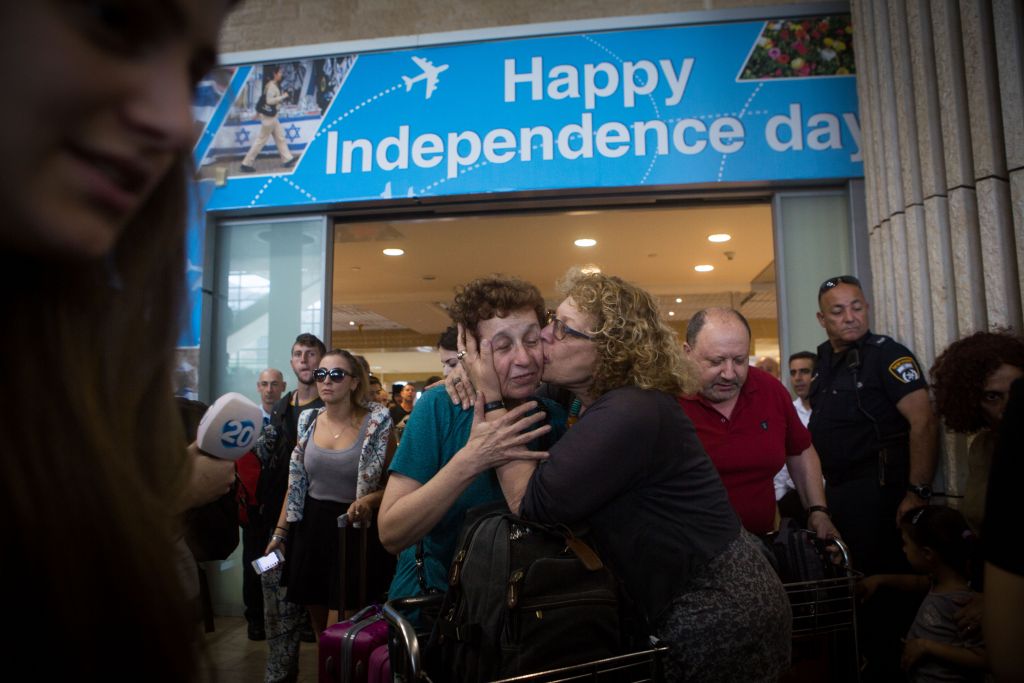
Standing in the entrance hall in Ben-Gurion Airport on Tuesday afternoon as 216 Israelis returned from quake-ravaged Nepal, Orit Asraf appealed to the fresh arrivals for any information about her son’s whereabouts.
But no one could help.
Or Asraf is one of the nine Israelis who have not shown any signs of life since Saturday’s massive earthquake, which claimed the lives of at least 5,000 people as of Tuesday, with the death toll steadily climbing.
Asraf was moderately wounded fighting with the IDF in last summer’s Gaza war in Shejiaya. After recovering from his injuries and completing his army service, he went backpacking in Nepal, a popular destination for post-army Israelis, and was slated to return to Israel in July.
His family last heard from him on Friday, and none of those arriving at the airport had any information to offer his mother, who carried a large banner reading “Who has seen Or Asraf?” and stood amid the tearful embraces and joyful reunions of the returning Israelis.
He was last seen in the Langtang region.
His mother told the Ynet news website that Or had a satellite phone on him at the time of the quake, but it did not send out a signal, a development she said was “very troubling.”
“I have a lot of hope. I’m sure that he’ll come back and I’m trying to glean information so that it will be possible to rescue him,” she said.
מי ראה את אור אסרף? pic.twitter.com/Z3nsjyvJcO
— keren savyon (@KerenSavyon) April 28, 2015
Dozens of Israelis remained stranded as of Tuesday night in hard-to-reach areas, primarily in the remote Langtang region and near Mount Everest, even as Israeli rescue teams managed to extract dozens of Israeli hikers from those regions.
The father of one of these trekkers told Channel 2 that his daughter — who was also in the Langtang National Park, about 60 kilometers (40 miles) north of Kathmandu — had contacted them overnight Sunday-Monday at 4 a.m. warning that one of their fellow hikers had a head wound, and that there were near-constant rockslides. They have not heard from her since.
Dave Gordon, an American from San Francisco, said he was in the area until Tuesday waiting for the rescue flight.
“Cliffs came down, four or five porters were deceased, buried in the rock fall,” he said of the quake. “Trails are completely destroyed. People are stuck. They can’t get out. It was very bad.”
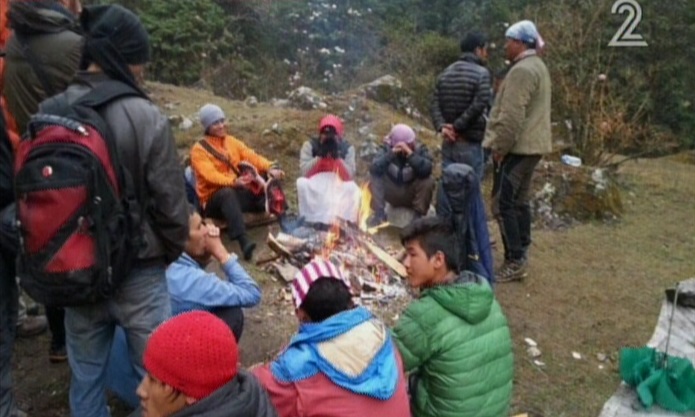
Roi Dermer, another backpacker, told Israel’s Channel 2 that people were dying of their injuries or of the cold right before his eyes because the rescue teams did not get there in time.
He said the local Nepalis were working hard to save lives, contradicting other reports that the locals were growing violent toward backpackers over a lack of food.
In Kathmandu, the Israeli rescue teams were finishing the construction of a field hospital on Tuesday evening. The medical facility is slated to be the largest one Israel has ever built in its humanitarian efforts abroad, including in Haiti and the Philippines.
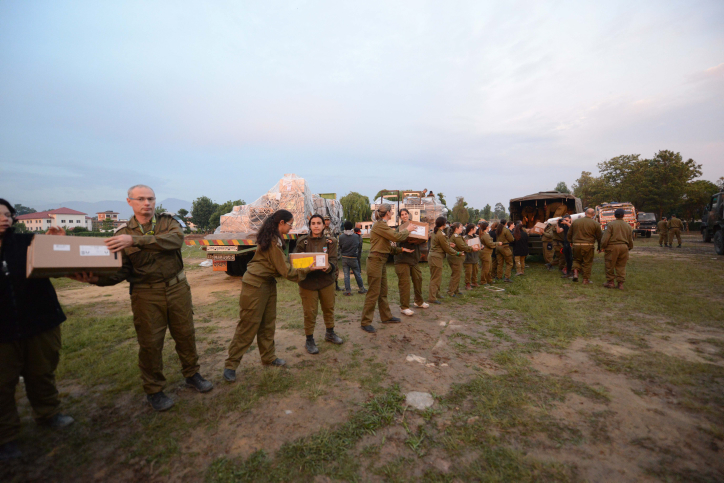
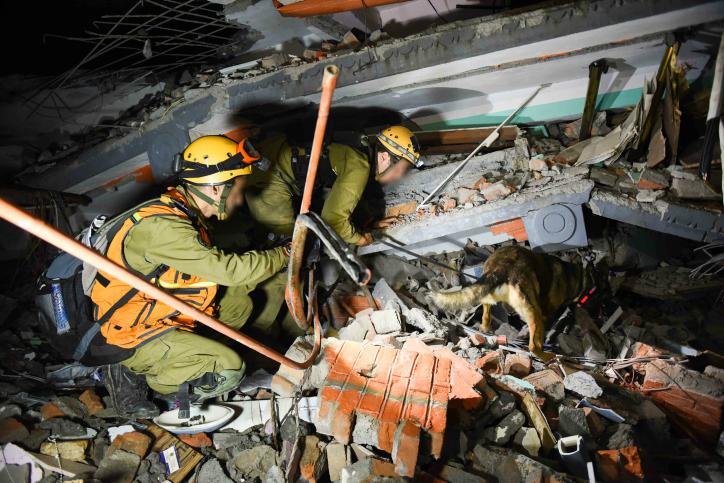
Members of the Home Front Command in Nepal began pulling bodies from the rubble on Tuesday evening, but no survivors have been found.
Prime Minister Benjamin Netanyahu on Tuesday said that retrieving the stranded Israelis was the top priority of the Israeli rescue teams.
“The most important task at this moment is to rescue the Israelis who are on Mt. Everest and to complete the evacuation of the frozen lakes area,” he told the head of the IDF team, Col. Yoram Laredo. “I have instructed that the possibility of dropping them equipment, food, clothing and means to keep warm, by plane or helicopter, be considered. Send my regards to everyone, good luck and keep up the good work.”
At Kathmandu airport, flights arrived with emergency aid and helicopters brought in both foreign trekkers and local villagers from quake-struck areas.
Helicopters crisscrossed the mountains above a remote district Tuesday near the epicenter of the weekend earthquake in Nepal, ferrying the injured and delivering emergency supplies. Officials said 250 villagers were feared missing in a new mudslide.
Two helicopters brought in eight women from Ranachour village, two of them clutching babies and a third heavily pregnant.
“There are many more injured people in my village,” said Sangita Shrestha, who was pregnant and visibly downcast as she got off the helicopter. She was quickly surrounded by Nepalese soldiers and policemen and ushered into a waiting van to be taken to a hospital.
The little town of Gorkha, the district’s administrative and trading center, is being used as a staging post to get rescuers and supplies to those remote communities after Saturday’s magnitude-7.8 earthquake.
Not far from the quake’s epicenter, 250 people were feared missing after a mudslide and avalanche on Tuesday, district official Gautam Rimal said.
Heavy snow had been falling near the village, Ghodatabela, and the ground may have been loosened by the quake. Rimal said officials received initial reports of the disaster by phone but then lost contact.
The village, about a 12-hour walk from the nearest town, is along a popular trekking route, but it was not clear if the missing included trekkers.
Across central Nepal, including the capital of Kathmandu, hundreds of thousands of people were still living in the open without clean water or sanitation more than three days after the quake. It rained heavily in the city Tuesday, forcing people to find shelter wherever they could.
On Tuesday night, French rescuers freed a man from the ruins of a three-story Kathmandu hotel, one of a cluster near the main bus station. The man, identified as Rishi Khanal, was conscious and taken to a hospital, but no other information about him was released.
In Gorkha, some women who came off the helicopters on Tuesday were grimacing and crying in pain and unable to walk or speak, in agony three days after being injured in the quake.
Sita Karki winced when soldiers lifted her. Her broken and swollen legs had been tied together with crude wisps of hay twisted into a makeshift splint.
“When the earthquake hit, a wall fell on me and knocked me down,” she said. “My legs are broken.”
After an hour of dark clouds gathering, the wind kicked up in Gorkha and sheets of rain began to pour down.
Geoff Pinnock of the UN’s World Food Program was leading a convoy of trucks north toward the worst-affected areas when the rain began to pound, leaving them stuck.
“This rain has caused a landslide that has blocked my trucks. I can maybe get one truck through and take a risk driving on the dirt, but I think we’ll have to hold the materials back to try to get them out tomorrow by helicopter,” he said.
Aid workers who had reached the edges of the epicenter described entire villages reduced to rubble.
“In some villages, about 90 percent of the houses have collapsed. They’re just flattened,” said Rebecca McAteer, an American physician who rushed to the quake zone from the distant Nepal hospital where she works.
And yet, the timing of the earthquake — near midday, when most rural people are working in the fields — meant most villagers were spared injuries when buildings collapsed, she said. So far, police say they have 373 confirmed deaths in Gorkha district.
Most those injured, she added, were young people and the elderly, since most young men long ago left their villages in search of better-paying work.
“The immediate need is getting support to where it’s needed, but there will be a lot of work rebuilding,” said McAteer, who was heading back soon to the center of the quake zone.
Thomas Meier, an engineer with the International Nepal Fellowship who accompanied McAteer to the devastated villages, said the disaster’s aftermath would stretch long into the future.
“This is a long-term emergency,” he said. “This will need major attention for the next five years. People have nothing left.”
Jamie McGoldrick, the UN resident coordinator in Kathmandu, told reporters that 8 million people had been affected by the quake, and that 1.4 million needed food assistance.
The challenge is to reach them in rugged isolated villages.
After flying by helicopter over the Kathmandu Valley, he noted the erratic path of the quake’s power.
“Some areas on one ridge are completely untouched, on the other side it’s completely flattened,” he said.
The UN says it is releasing $15 million from its central emergency response fund for quake victims. The funds will allow international humanitarian groups to scale up operations and provide shelter, water, medical supplies and logistical services, U.N. spokesman Farhan Haq said.







The Times of Israel Community.