

Ex-US humanitarian envoy pans Israeli claim UN allowing aid to amass on Gaza border
David Satterfield, who served during early months of war, says dangerous transport routes, looting by desperate Palestinians severely hinder ability to pick up and deliver aid

 Add ToI as a Preferred Source on Google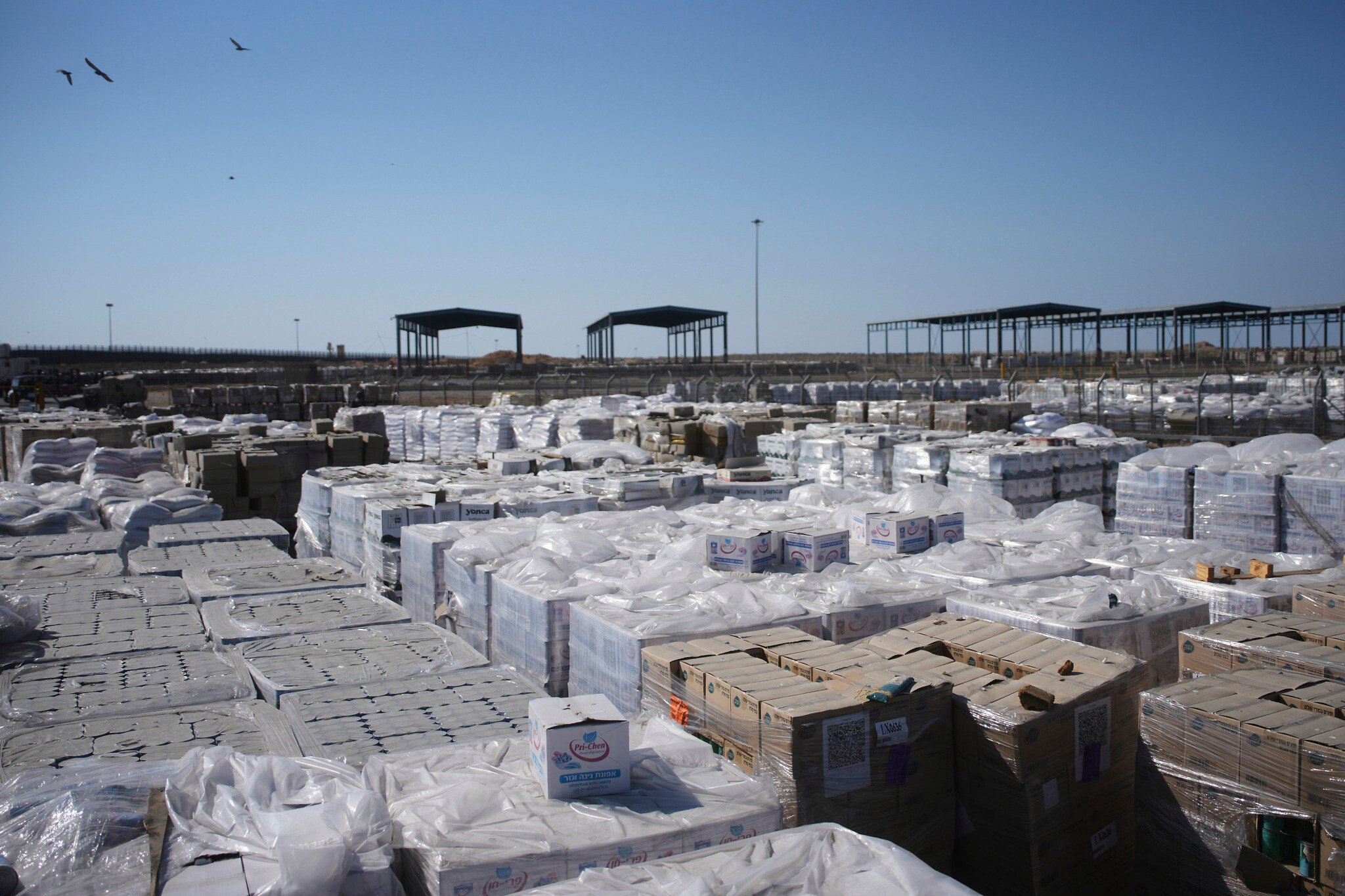
After long dismissing global alarm about the humanitarian crisis in Gaza, Israeli officials have shifted in recent days to acknowledging that a degree of hunger is afflicting civilians in the Strip.
But while certain areas of the war-town enclave are lacking food, this is because the United Nations has failed to distribute large quantities of aid that are sitting on the Gaza side of the border, Israel claims.
A senior officer from Israel’s Coordinator for Government Activities in the Territories brought journalists to the Gazan side of the Strip’s Kerem Shalom crossing on Friday, where he declared that aid piling up there was “due to a lack of cooperation from the international community and international organizations.”
David Satterfield, who served as the US humanitarian envoy during the early months of the Gaza war, hit back at the Israeli claim in a recent interview.
“It is disingenuous — knowingly false — for any party to assert that it is failure, lack of courage, or deliberate conspiratorial withholding of aid by the UN or international organizations that is responsible for the humanitarian suffering in Gaza,” Satterfield told The Times of Israel.
When aid transport roads become too badly damaged by Israeli military operations, when there are insufficient deconfliction mechanisms in place to ensure that aid workers don’t accidentally get hit by IDF fire, when authorizations aren’t given by the army for aid to be picked up and delivered, and when looting becomes increasingly widespread due to food insecurity, an environment is created where the UN is physically prevented from doing its job, the former US envoy elaborated.

While still blaming the UN, Israel appeared to tacitly recognize its own complicity in the humanitarian crisis on Saturday, by announcing a series of steps to alleviate the situation, including establishing new corridors for the UN to safely deliver aid, instituting humanitarian pauses to its military operations in densely populated areas, reconnecting the power line to Gaza’s only desalination plant, and launching its own airdrops of food and medicine for the first time.
Although those steps are critical, Satterfield maintained that if they are not accompanied by a broader surge of aid into the Strip from as many crossings as possible, the hunger crisis will not be fully mitigated.
Desperation breeds violence
Since Israel lifted its aid blockade in late May after 78 days, assistance has primarily been delivered through the Gaza Humanitarian Foundation and existing mechanisms operated by the UN and international organizations.
Both mechanisms have been prone to violence, with UN trucks repeatedly looted, including by thousands of desperate Palestinians, unsure when they and their families will receive their next meal.
GHF boasts that it manages to transport aid to distribution sites without facing the same violence, but that is because it is delivering assistance through areas that the IDF has largely cleared of Palestinians.
Moreover, while trucks haven’t been looted en route to GHF sites, the scenes at those sites aren’t radically different from those at looted UN convoys, where aid workers fall back to allow thousands to frantically rummage through boxes of assistance, rather than try to distribute it in an orderly fashion.

The GHF has also faced criticism for forcing Palestinians to walk long distances, often coming under deadly fire when crossing IDF lines to pick up aid.
“You have a population in desperate straits — more desperate than at any point since the October 7 massacre [by Hamas-led terrorists in southern Israel in 2023] and when the initial cut-off of assistance began,” Satterfield said.
That desperation breeds violence. Some civilians don’t comply with directives aimed at ensuring an orderly distribution process, and then face gunfire from what reports have claimed are trigger-happy Israeli soldiers or American contractors.
Violence has also come from criminal gangs or Hamas operatives, whom the IDF accuses of trying to induce chaotic scenes near aid distribution sites.
‘Flooding the zone’
“There is an established, proven way of confronting and overcoming these problems, and it has been demonstrated repeatedly in Gaza since the fall of 2023, which is to ‘flood the zone,'” Satterfield said. “You deliver assistance at scale and you do so on a sustained basis to wherever populations are present.”
Giving a rough estimate, the former US humanitarian envoy said at least 350 trucks of aid need to come through multiple crossings each day.
Since Israel partially lifted an 11-week aid blockade on May 19, an average of just about 70 aid trucks have entered Gaza each day.
Even if Israel reaches the 350 mark, Satterfield explained that there still will be an initial period of looting that could last up to two weeks until Palestinians have more confidence that they will be able to continue to secure food for their families in the future.
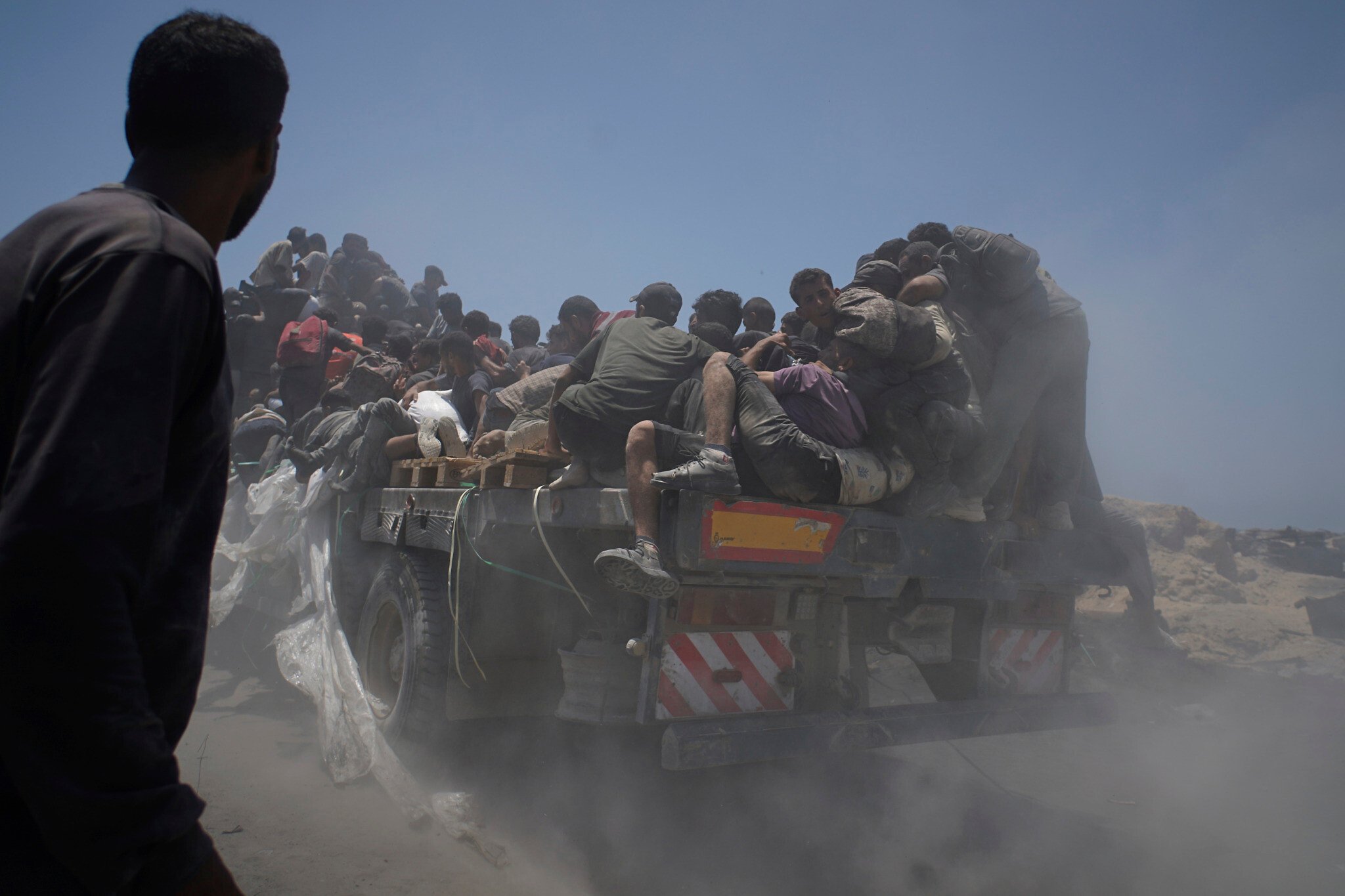
Moreover, looting carried out for purposes of commoditization will also dissipate because the value of assistance in the marketplace will drop due to the rise in supply.
“This is not theory. It’s what happens,” Satterfield said.
While the UN has refused to cooperate with the GHF, arguing that the US- and Israeli-backed organization is a tool of the Israeli government to displace and endanger Palestinians, the former US envoy argued that the GHF can and should continue to operate as an additive to international organizations in a “flood the zone” scenario.
UN risk calculus
Addressing the Israeli accusation that the UN is not adequately picking up aid that has amassed at Gaza crossings, Satterfield agreed with the UN retort that the Kerem Shalom and Zikim platforms at the Gaza border are not “McDonald’s drive-throughs” that can be accessed at will.
Moreover, aid transport routes, which became complex and difficult to maneuver once the war started with the Hamas-led invasion and massacre in southern Israel almost 22 months ago, have become severely damaged since the IDF’s May 2024 takeover of the southern Gaza city of Rafah.
“The high level of civilian unrest, lack of law and order, the presence of gangs and criminal elements and a desperate population makes movement off these platforms exceedingly difficult,” Satterfield said. “Deconfliction and coordination with the IDF is a complicated process in itself, as most moves by the humanitarian community require explicit approval from the IDF regarding timing and routes.”
The UN and international organizations take all of these factors into consideration when assessing their ability to pick up aid from the Kerem Shalom platform in south Gaza and the Zikim platform in north Gaza, he said.
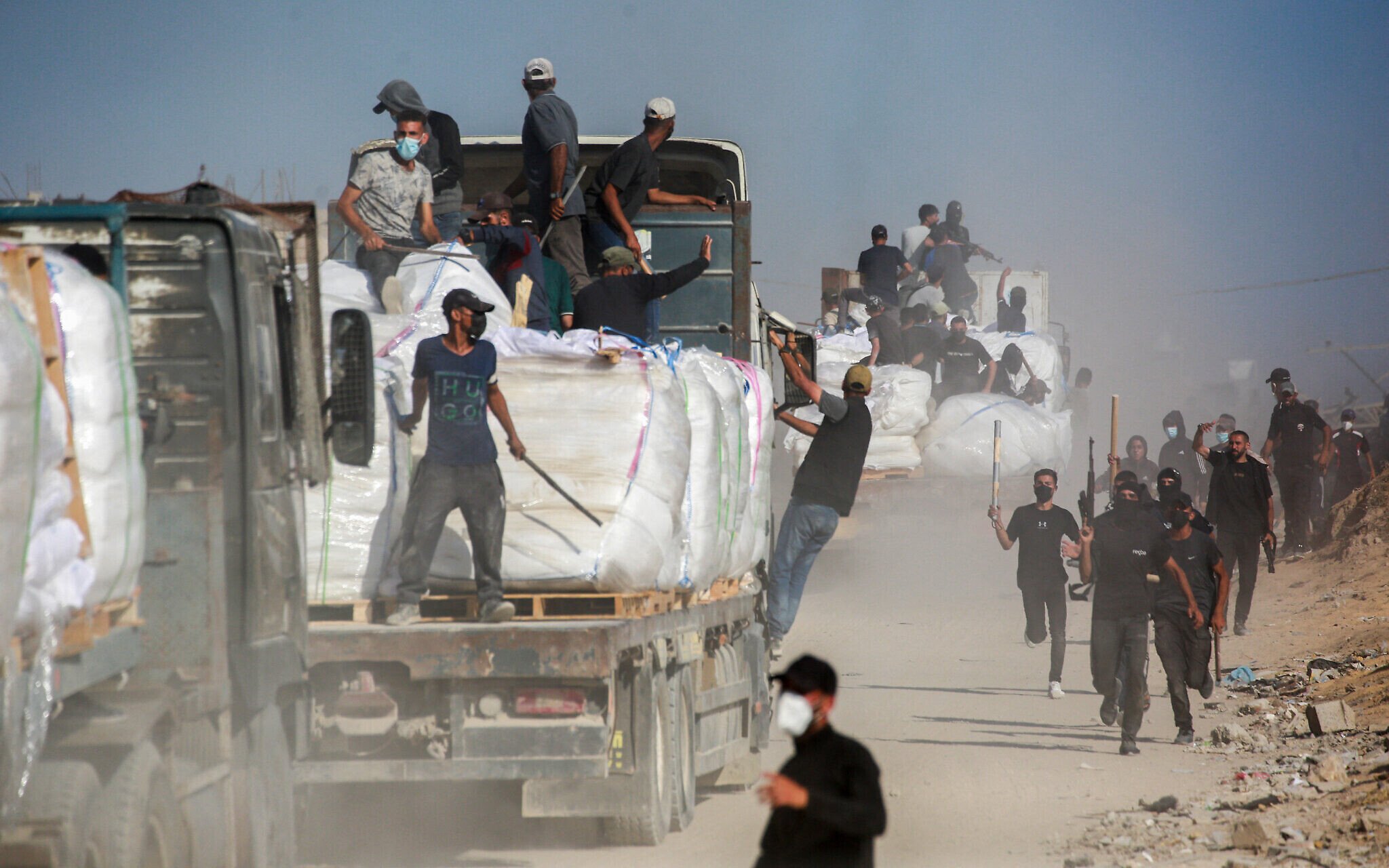
They are not risk-averse and are willing to put their staff in a high degree of danger in order to deliver aid, Satterfield said, noting that some workers have lost their lives in the process.
“They only halt movements when they believe they would put their trucks and their drivers into absolutely certain harm’s way,” the former US humanitarian envoy maintained.
Satterfield pointed out that the past week isn’t the first time that Israel highlighted the large quantity of aid at the Gaza border that isn’t picked up, adding that the pallets awaiting destruction at earlier points in the war reached over 1,500 truckloads.
“It’s not the tragic fact of starvation and deprivation that drives movement off the platforms,” he said. “It is the physical ability to [transport]… without violence. That’s always been the calculus.”
Is Hamas stealing aid?
Over the weekend, The New York Times — citing two senior military officials — reported that Israel has never found evidence that Hamas has “systemically” stolen aid from the UN. The IDF denied the story.
Satterfield said “there’s no question” that the terror group has worked to take “political advantage and certainly some physical substantive advantage out of the aid distribution process.”
Hamas operatives have made a point of “flaunting” their presence at aid sites in a message to Palestinians that the group has no intention of ceding its role in the distribution process.
However, Satterfield maintained that “the bulk of all assistance delivered by the UN and by the international organizations has gone to the population of Gaza and not to Hamas. Full stop.”
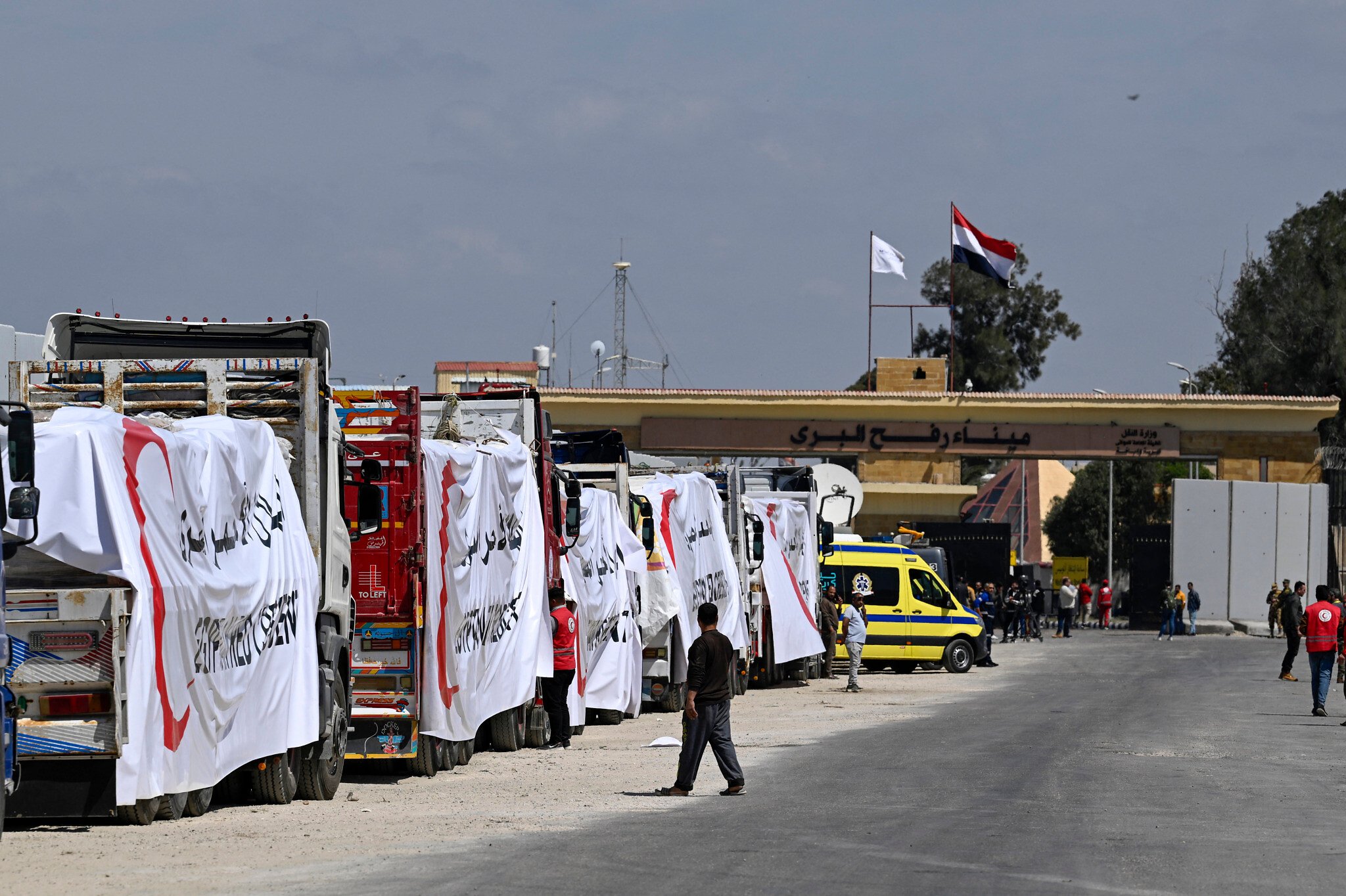
He made an exception for aid delivered by the Egyptian and Palestinian branches of the Red Crescent, which have “zero international accountability,” exposing the organization’s trucks to a much higher degree of Hamas diversion.
Notably, Red Crescent trucks were among those seen entering Gaza on Sunday as Israel took steps to increase aid entering the Strip. The organization did not immediately respond to a request for comment.
Satterfield said Red Crescent aid is distinct from assistance from the UN, which is accountable to funding states, including the US.
“This doesn’t mean assistance hasn’t gone to Hamas. It has. Or that that’s not a bad thing. It is. Or that withholding all assistance hurts Hamas. It does. But it hurts Israel more because of the international opprobrium and the ultimate strategic inelasticity for Israel of this situation — of two million people suffering and now starving,” he argued.
Headlines shouldn’t shape policy, but mainstream media reports about mounting hunger “are not the product of journalist invention or Hamas propaganda,” Satterfield said.
“The problem Israel confronts is real and must be dealt with in the manner that proved relatively successful in the past. That means ‘flood the zone’ with assistance,” he asserted.









The Times of Israel Community.