

Flood of tears: 8 things to know for April 27
Deaths of 10 students in a flash flood near the Dead Sea leave the country in mourning at the senseless loss of life
 Add ToI as a Preferred Source on Google
Adiv Sterman is a breaking news editor at The Times of Israel.
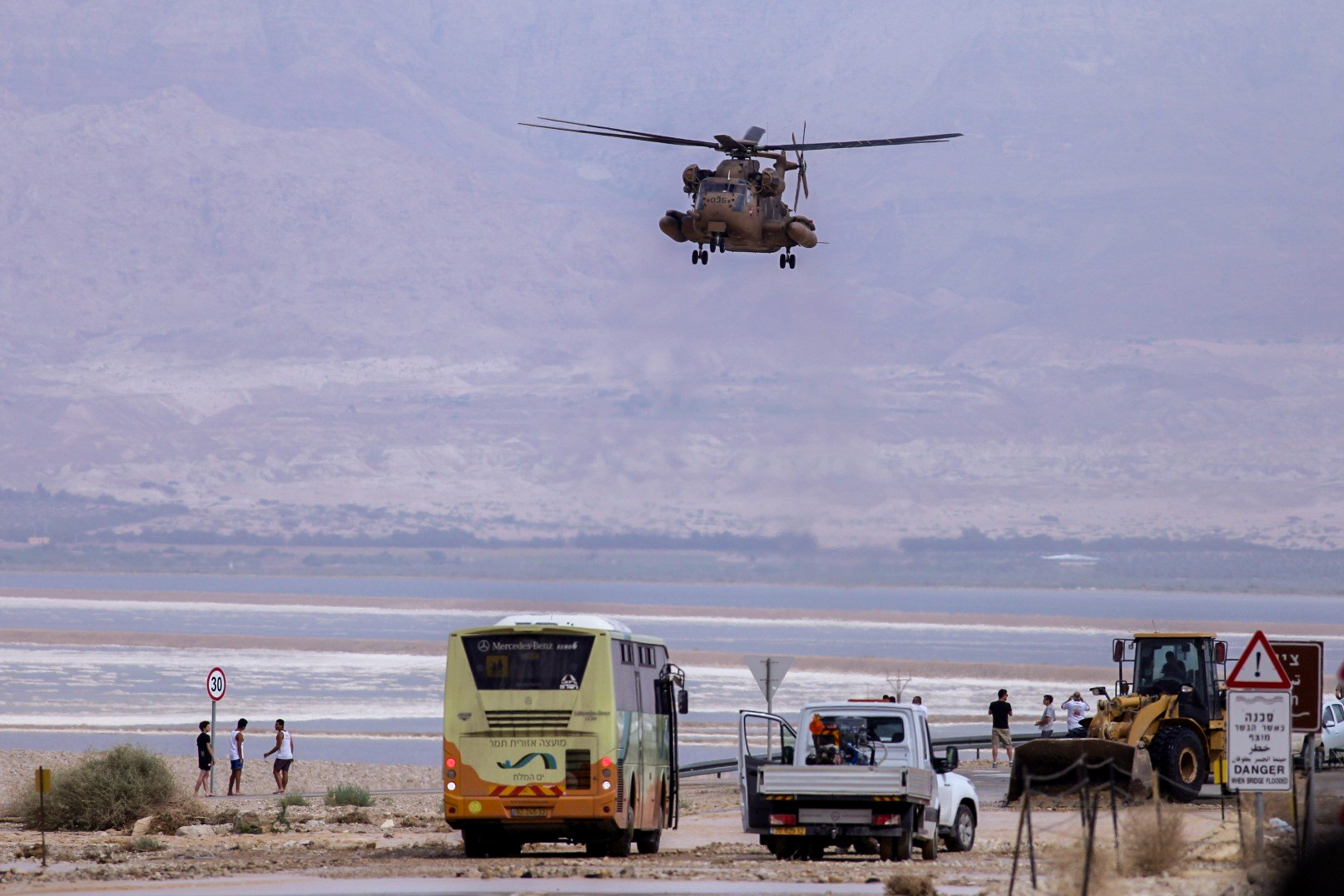
1. 1. The dark gray skies accompanying the strange, unseasonable downpours reflect the country’s somber mood in the aftermath of a hike arranged by a Tel Aviv-based premilitary academy, which resulted in the deaths of 10 teenage students in flash floods.
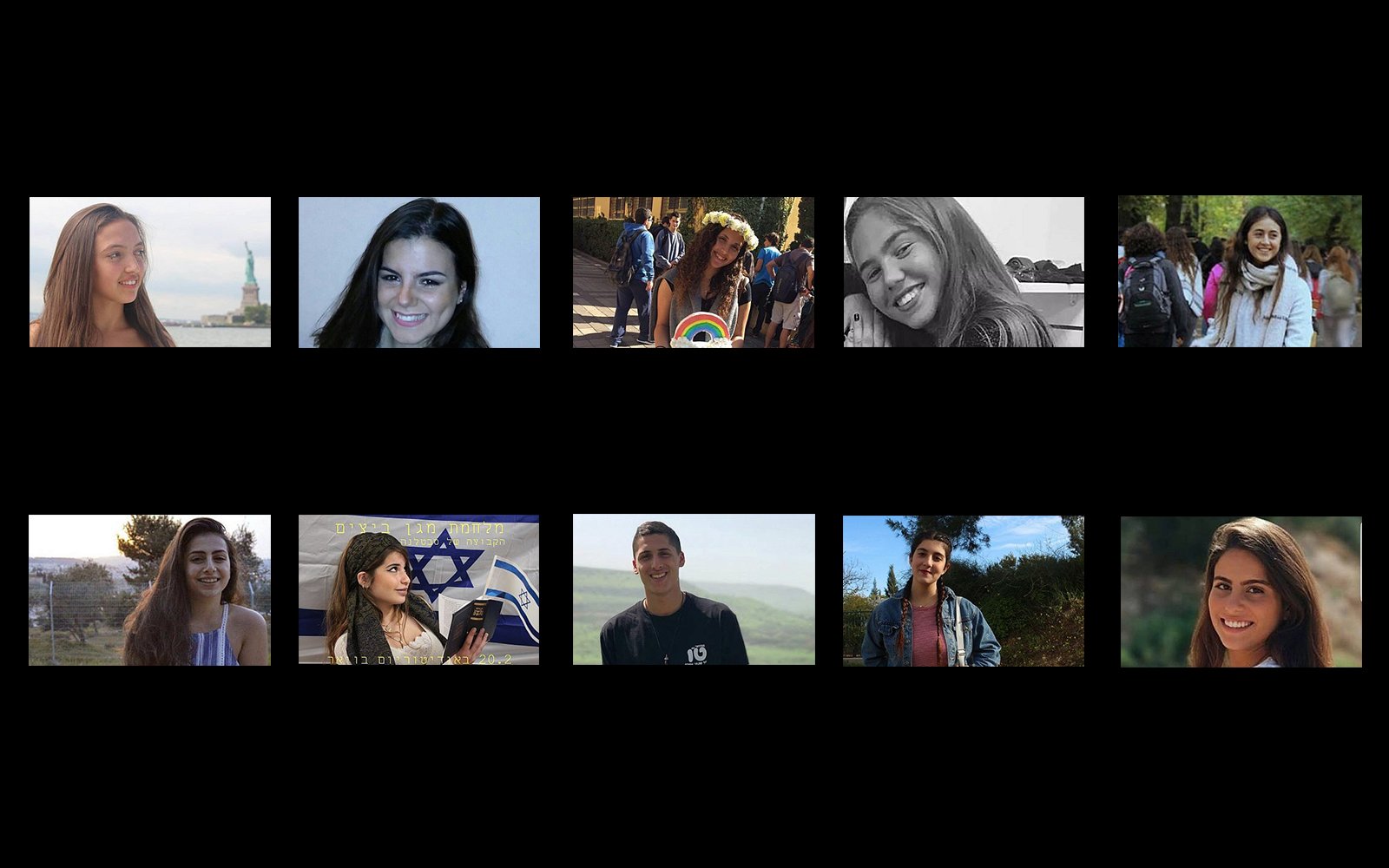
- The fatalities — nine young women and one young man — were high school students on a field trip organized by the Bnei Zion pre-military academy, which they had applied to attend in the coming year. They were hit by flash floods in the Tzafit riverbed in the southern Dead Sea area.
- Authorities confirmed the deaths of the first nine victims on Thursday evening, and said rescue teams were still working to locate a young woman missing since the incident. Early Friday morning, her body was reported found near Neot Hakikar, south of the Dead Sea.
- Two other students were lightly to moderately injured, and the other 13 in the group were located and rescued unharmed.
2. On Friday morning, police arrested the principal of the Tel Aviv academy as well as an instructor — on suspicion of negligent homicide.
- Police said the pre-military academy’s hike went ahead despite warnings of life-threatening weather conditions. The two were questioned overnight for their suspected failure to heed flood warnings south of the Dead Sea, police said.
- A third suspect was also questioned and later released to house arrest, according to police.
3. Between the the smiling photos of the young students juxtaposed with the reports of their senseless loss of life, the news coverage by Israel’s main newspapers of the incident expresses genuine, deep sadness over the deaths, a feeling that is also noticeably present on Israeli social media and in the responses of politicians to the news.
- “The State of Israel mourns the promising young lives that were cut short by this tragedy in the Arava,” Prime Minister Benjamin Netanyahu wrote on Twitter, while President Reuven Rivlin said the entire country was “mourning the loss of young promising lives in the heavy disaster.”
- Education Minister Naftali Bennett expressed condolences over the “weighty tragedy” as well, and said his ministry would remain in contact with the deceased students’ high schools in the coming days.
4. At least three other individuals were killed in flash floods across the country over the past days.
- On Friday morning, police located a body near an overturned truck in a flooded area in the Dead Sea region. The driver of the vehicle was missing, police said.
- Earlier, rescue crews used a helicopter to locate a 17-year-old Bedouin young man swept away in the Mamshit Stream in the Negev Desert; he was pronounced dead after being found, police said. In the West Bank, police said rescue teams were searching for a young Palestinian woman who was reported to have been swept away by flooding near the settlement of Ma’ale Amos. Later Wednesday, her body was found.
- Authorities were advising all Israelis to avoid the Dead Sea and Arava desert regions on Friday, with more torrential rainfall and flooding along its riverbeds on the weather forecast, and road closures anticipated throughout the day.
5. Haaretz’s Yossi Verter delves into the political crisis brewing around the so-called “override bill,” a controversial piece of proposed legislation that would rein in Israel’s Supreme Court, and free the government from court-imposed restrictions that prevent it from dealing with pressing issues, such as terrorism and illegal immigration.
- The left’s vehement opposition to the bill “is perceived as a struggle over the essence of democracy,” Verter explains. “The High Court of Justice is the last barrier separating civil rights and the rule of law from the crude behavior of the government.” Meanwhile, on the right, the override bill is seen as a means to curb court judges from placing “sticks in the government wheels, pouring sugar into its fuel tank, trampling the Knesset and mocking the people’s decision.” Verter says the right believes the courts “must be restrained.”
- The proposed legislation would allow 61 out of the Knesset’s 120 members to reapprove a law struck down by the Supreme Court, effectively giving any government the ability to quash the ruling. The legislation would take the form of a passage added to the Basic Law: Human Dignity and Liberty. With no constitution, Israel’s basic laws set the parameters of the balance of power between different branches of government.
- The idea of legislating to alter the balance between the judicial and executive arms of government has gathered steam lately, particularly after a recent ruling by the court blocking the deportation of African migrants.
6. Netanyahu and Justice Minister Ayelet Shaked — who, along with Jewish Home party leader Naftali Bennet, has been the main proponent of the bill — are set to meet Sunday with Supreme Court President Esther Hayut.
- Hayut is expected to tell Netanyahu and Shaked that she strongly objects to court rulings being overturned with a majority of 61 MKs. The Ynet news site reported that the court would accept the legislation if it would require a two-thirds majority — or 80 MKs — but that Hayut may compromise on 75 MKs being able to overturn a ruling.
- Coalition partners Kulanu are reportedly prepared to require 65 MKs, while Bennett and Shaked’s Jewish Home insist that a majority of 61 MKs should be enough.
- Given the great discord surrounding the override bill within the government, the suspicion that the legislation saga is being used by Netanyahu as a pretense to call for early elections is becoming increasingly popular.
7. In an interview published Thursday with the Saudi-owned, London-based news outlet Elaph, Defense Minister Avigdor Liberman threatened to strike Tehran, along with Iranian facilities in Syria, if the Islamic Republic dare to attack Tel Aviv.
- Liberman’s statements came in response to the increasingly aggressive threats coming out of Tehran following an April 9 strike against an alleged Iranian drone facility in central Syria, which Iran has claimed Israel carried out — although the Jewish state has not commented on the issue.
- During the interview, Liberman also criticized the 2015 Iran nuclear deal, and argued in favor of the United States pulling out of the accord, as US President Donald Trump has threatened to do.
8. Speaking of the Iran nuclear agreement, US Defense Secretary Jim Mattis on Thursday emphasized the value of certain aspects of the Iran nuclear agreement, saying he was struck by provisions that allow for international verification of the Middle Eastern state’s compliance.
- “I will say it is written almost with an assumption that Iran would try to cheat,” he said in testimony before the Senate Armed Services Committee. “So the verification, what is in there, is actually pretty robust as far as our intrusive ability to get in” with representatives of the International Atomic Energy Agency to check on compliance.
- The Pentagon chief said the administration was still considering whether the nuclear deal can be improved enough to persuade Trump it is worth preserving. “It’s going on today as we speak,” he said of the consultations. The question being discussed within the administration, and between the US and its European allies, he said, is “whether we can repair it enough to stay in it, or if the president is going to decide to withdraw from it.” He said Trump has not yet made a decision.
- Trump, for his part, has said he will decide whether to pull out of the agreement entirely by May 12.




The Times of Israel Community.