

For Israeli Arabs, Facebook is key to connecting with long lost relatives
Families split up in 1948 able to reunite virtually through social networking site
 Add ToI as a Preferred Source on Google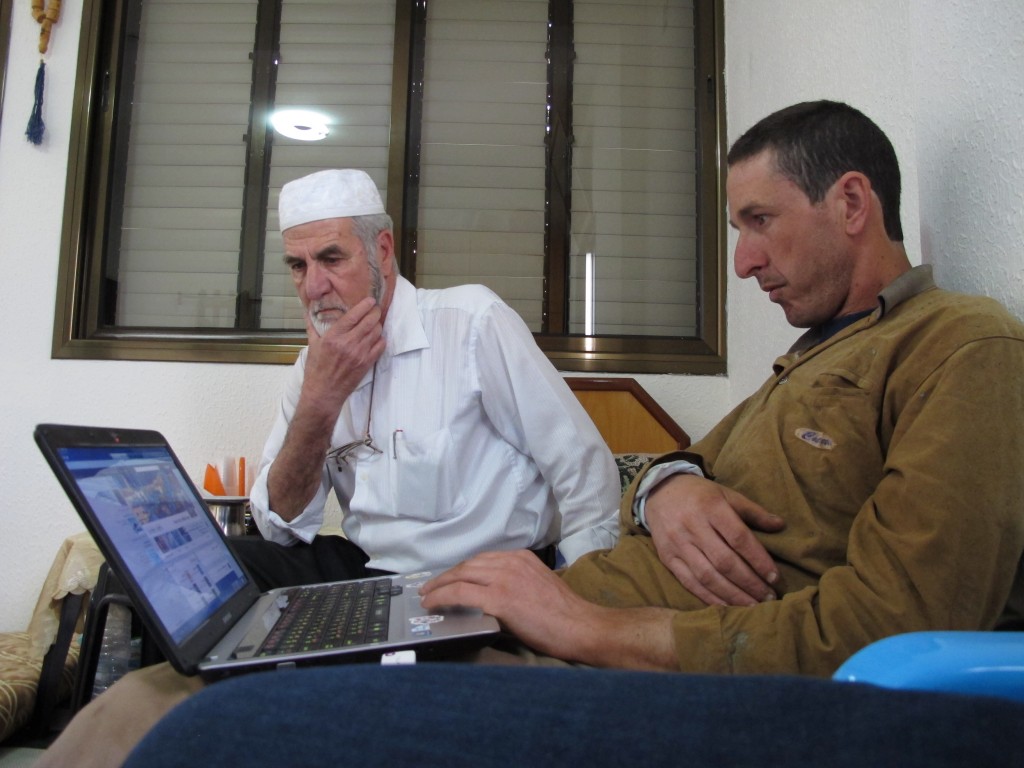
SIDON, Lebanon (AP) — As Jewish forces advanced on their village during the War of Independence in 1948, the Faour family piled children and belongings into donkey carts and fled, hoping to return home when the fighting stopped.
Only some of them got back, and the family is still divided. Some are in the Lebanese city of Sidon as stateless refugees. Others are 80 kilometers (50 miles) away as Israeli citizens in their village of Shaab, across a fenced and hostile border.
Granddaughter Mona Maarouf, 26, considers Shaab home, even though she has spent her life in Sidon, has never visited her ancestral village and maybe never will. She knew she had relatives there but knew nothing about them.
Then she joined Facebook.
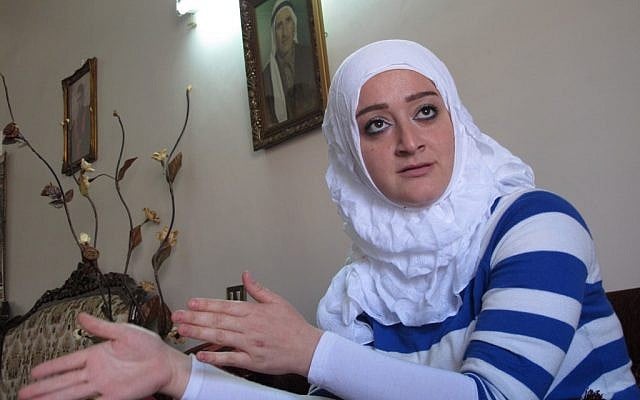
Now she tracks who has died in the village, and her cousins in Israel weigh in on her marriage prospects. “I didn’t think anyone knew anything about me,” she says. “Then I saw that they knew everything.”
Social media have produced a boom in communications between Palestinians in Israel and the Arab world, once connected only through rare letters carried by intermediaries or the International Red Cross. Younger exiles like Maarouf are tracking down and getting to know relatives separated for decades.
Many Palestinians say they now know more about their extended families than at any time since the birth of Israel, an event Palestinians mourn every May 15 as the “Nakba,” or catastrophe.
Mostly they stick to swapping family photos and news, worrying that political talk could draw attention from intelligence agencies. Some, however, say stronger ties will bolster the Palestinian demand that some 5 million Palestinian refugees registered with the UN return to their villages, a demand that Israel rejects, saying it would destroy the Jewish state.
“Now we can communicate with all our family,” said Maarouf’s aunt, Taghreed Eissa, who also has spent her life as a refugee in this Mediterranean city. “That makes it impossible for the new generation to forget the Palestinian cause.”
“What happened to the Palestinians is what happened to the Jews before: They were dispersed throughout the world,” said Ali Khatib, 67, a Shaab man with relatives in Syria, Denmark, Canada and Saudi Arabia.
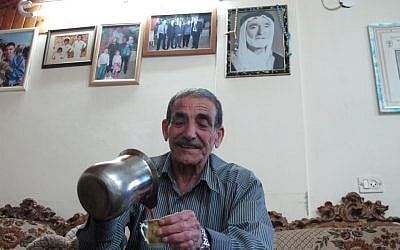
Khatib’s family, too, was split by Israel’s creation: his father became an Israeli citizen, while his uncle became a refugee in Lebanon. They lost touch. Then recently his son asked him about a man in Lebanon named Hisham Khatib whom he had just met online.
His father pointed to a photo of his aunt and uncle on the living room wall.
“Those are his grandparents,” he said.
Also in Shaab, Houriya Faour, in her 70s, said that before social media, finding relatives was a struggle.
“Now my son comes and tells me, this person says hello,” she said.
Typing on a laptop, her son Mohammed, 36, opened a Facebook chat with a woman named Huda Faour whom he found while searching for his last name.
“how r u can I ask u a question,” he wrote. “what are your mom’s and dad’s names?”
Minutes later, he had found a new relative — in Texas.
Sitting in his travel agency in Shaab, Anwar Faour, 40, scrolled through his Facebook friends, pointing out relatives he has found in the United Arab Emirates, Syria, Lebanon, Dallas, Texas, and Los Angeles. He recalled his surprise as condolences poured in from all over the world upon the recent death of his uncle, a revered village council head.
[mappress mapid=”1070″]
Across the border, Mona Maarouf followed the news of the uncle’s decline on Facebook and was the first to tell her side of the family when he died. Her grandfather and his father were brothers, among 11 siblings who ended up divided among Israel, Syria and Lebanon.
The interest goes both ways.
When Maarouf got engaged to a Palestinian man living in Sweden, Anwar Faour and his brothers in Israel saw photos of the couple online.
“They asked for his number and called him and said, You take care of Mona,” Maarouf said.
The engagement broke off, but Maarouf said the experience made her feel closer to her relatives.
Divide remains
While Facebook strengthens ties, it also highlights differences.
Faour, the travel agent, is an Israeli citizen and cannot enter most Arab countries. He speaks Hebrew and Arabic. Like many Arab citizens of Israel, he complains of discrimination by the state, but says he prefers it to living in a refugee camp.
‘We talk about general stuff: How are you, what’s going on, who got married, stuff like that. We never talk politics. I’d like to ask them what they think about things, but I can’t.’
A cousin he corresponds with regularly, Larissa Ajjawi, has spent her life as one of Lebanon’s 436,000 Palestinian refugees who cannot become citizens, hold most jobs or buy property. She speaks Arabic but prefers to write in English or French.
“We talk about general stuff: How are you, what’s going on, who got married, stuff like that,” said Ajjawi, 40, who lives in Beirut. “We never talk politics. I’d like to ask them what they think about things, but I can’t.”
When asked separately, their views on the Israeli-Palestinian conflict differ substantially.
For Ajjawi, who says she gets uncomfortable around Israelis when she travels abroad, the solution is simple: All the refugees should come back, and “All the Jews who have come to Palestine since 1948 should go back. They have their own countries.”
For Faour, who never has lived outside Israel and has Jewish friends and colleagues, the solution is different, and not at all simple.
“All we want is for there to be peace and two states so that all people can live their lives,” he said.
“Of course I want my relatives to come back and live here, but that’s not what Israel wants,” he said. “It’s a very hard question.”
Copyright 2012 The Associated Press.




The Times of Israel Community.