

For Messianic Jews in Jerusalem, Yaron Lischinsky’s murder was a personal loss
Marginalized in Israel, adherents of the controversial movement maintain the holiness of both the Bible and the Christian Gospel, placing an emphasis on the Jewish identity of Jesus
 Add ToI as a Preferred Source on Google
Rossella Tercatin is The Times of Israel's archaeology and religions reporter.
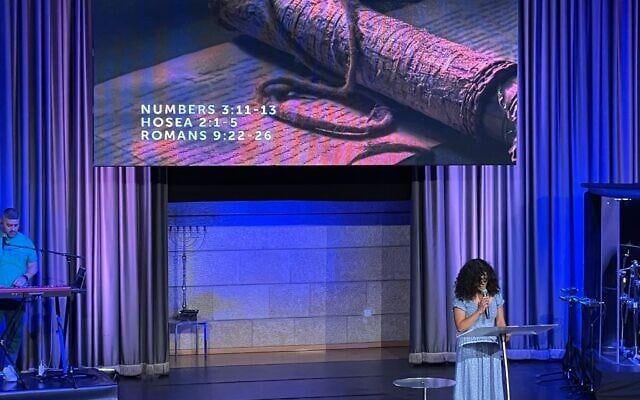
On Sunday, Pastor Chad Holland took the stage at the weekly service of the King of Kings messianic congregation in Jerusalem before an electrified audience. During the previous hour, some 150 English speakers gathered in a former movie theater in downtown Jerusalem, singing, listening to excerpts from both the Hebrew Bible and the New Testament, and reciting prayers in a highly energetic atmosphere.
Yet, Holland struck a somber tone as he noted that the community had just concluded a difficult week.
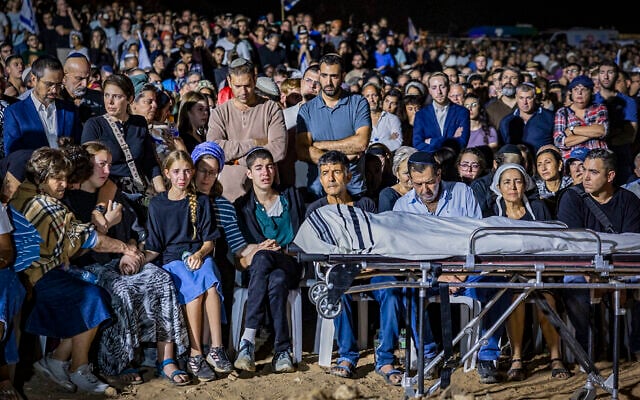
“We experienced a deep loss in our family this week,” he said, referring to the murders of Yaron Lischinsky and Sarah Milgrim, who were killed May 21 in an antisemitic attack at the Capital Jewish Museum in Washington, DC, where they served as staffers at the Israeli embassy.
The Lischinsky family belongs to the Hebrew-speaking congregation Melech Hamelachim, which is part of the King of Kings network. It meets on Friday afternoons, in the same building that Holland’s group convenes in.
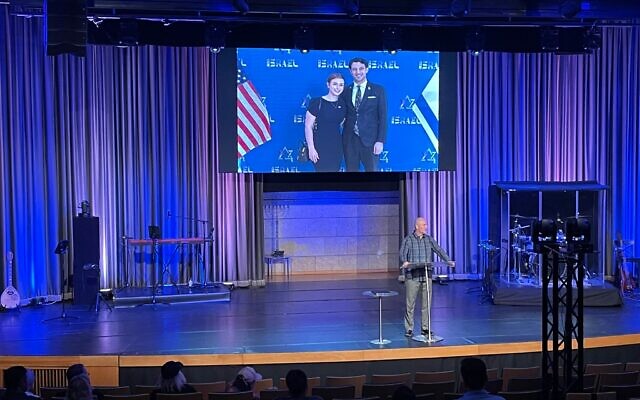
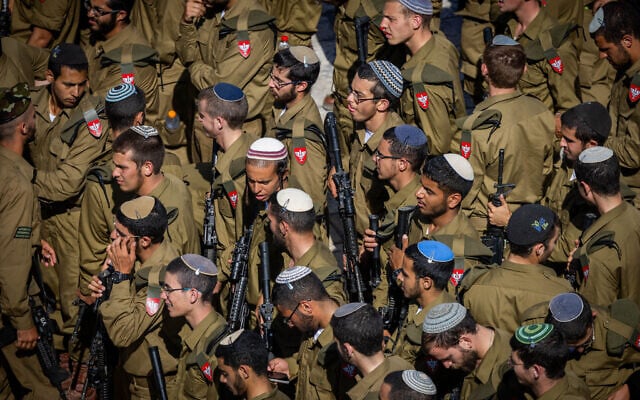
“Yaron grew up here,” Holland noted, as pictures of the young couple appeared on the screen behind him. “He was Israeli. He served in the IDF for three years. His father, Daniel, and the rest of his family belong to one of our King of Kings congregations. He was a member of our own young adults group.”
Messianic Jews maintain the holiness of both the Bible and the Gospel but place an emphasis on the Jewish identity of Jesus, whom they refer to by his Hebrew name, Yeshua. While many adherents considered themselves part of the Jewish people, the movement is considered outside the fold by all mainstream Jewish denominations, as believing in Jesus is considered to run counter to the key tenets of Judaism.
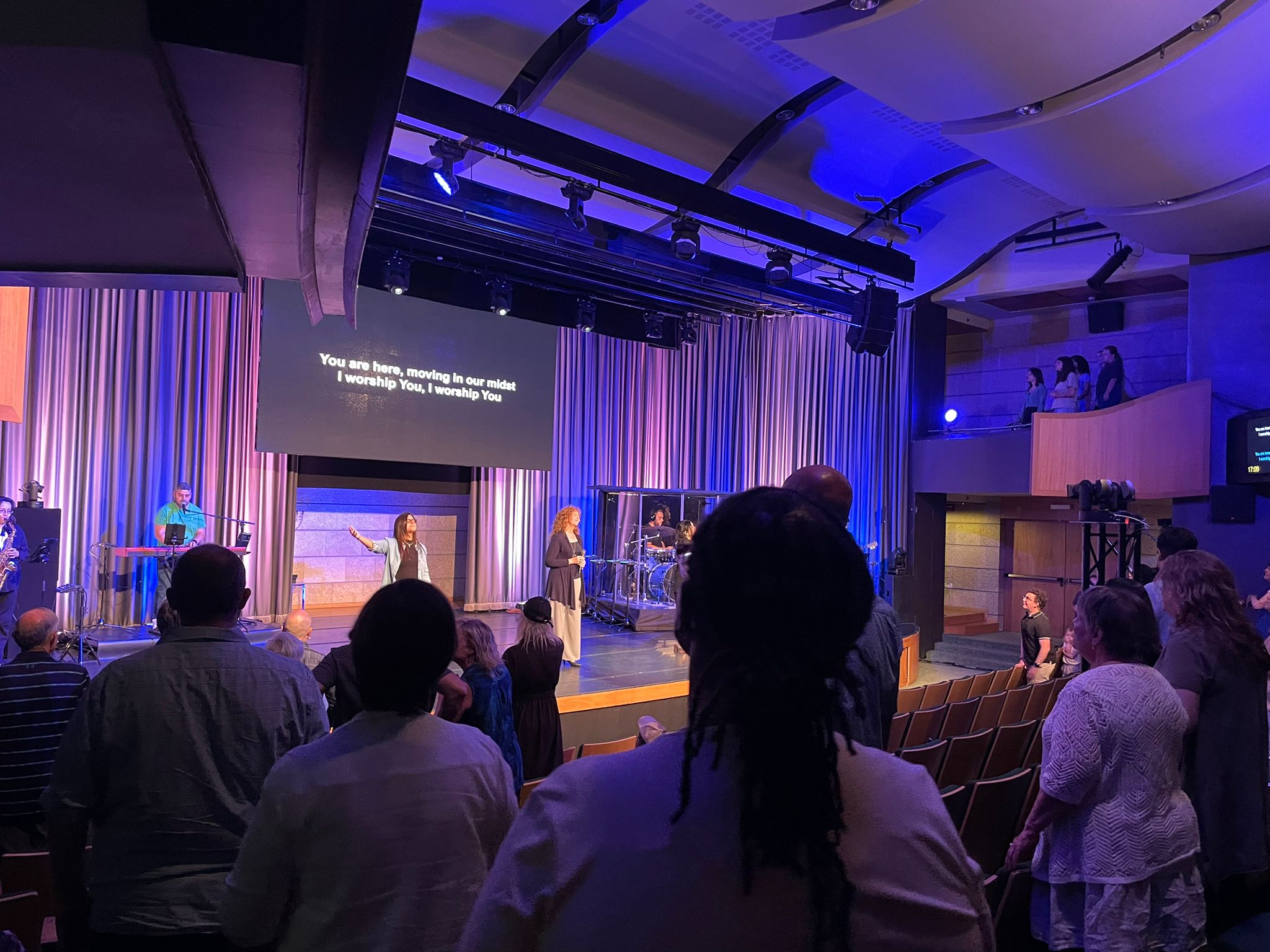
Sunday’s function opened with a half hour of singing. Three vocalists, accompanied by a keyboard, guitarists, sax, and drums, led faith-themed songs, mainly in English but with Hebrew and Arabic incorporated at times. Most people stood and sang along, opening their arms in an act of worship.
“All of my life, in every season, You are still God, I have a reason to sing,” said one of such songs. “Ze mi she’ata, ze mi she’ata (that is who You are).”
The service also included what was called a “Parasha reading,” featuring verses from the biblical books of Numbers and Hosea (from the Torah portion and haftara, or Prophets portion, that will be read in synagogues on the upcoming Shabbat). Also read were verses from the Book of Romans, with the New Testament called by its Hebrew name “HaBrit HaHadasha.”
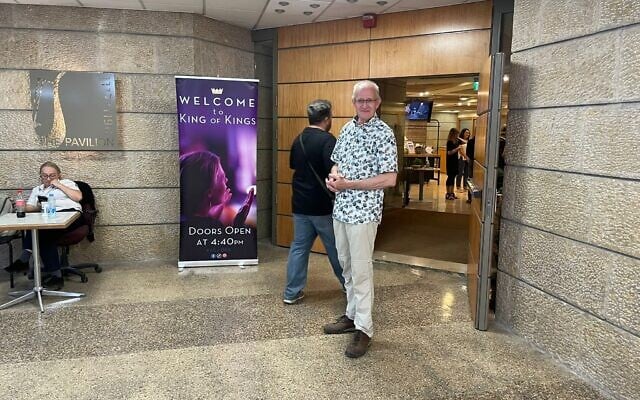
In his sermon, Holland took a jab at those who described Lischinsky as a Christian.
“Let me be clear, with Sarah and Yaron, we lost two Jewish believers,” he said. “There isn’t a more Jewish thing to do than to find your Jewish messiah.”
A ‘disciple-making community’
Messianic Judaism is frowned upon by many Jews, perhaps especially in Israel, following centuries of Jews having been persecuted in the name of Jesus.
After a long and bloody history of forced conversions to Christianity, Israel also remains wary of proselytizing. Israeli law expressly forbids the giving of money or gifts to encourage conversions to another religion, and proselytizing to minors. A bill to make proselytizing illegal altogether was advanced by ultra-Orthodox members of the coalition but eventually blocked by Prime Minister Benjamin Netanyahu in March 2023.
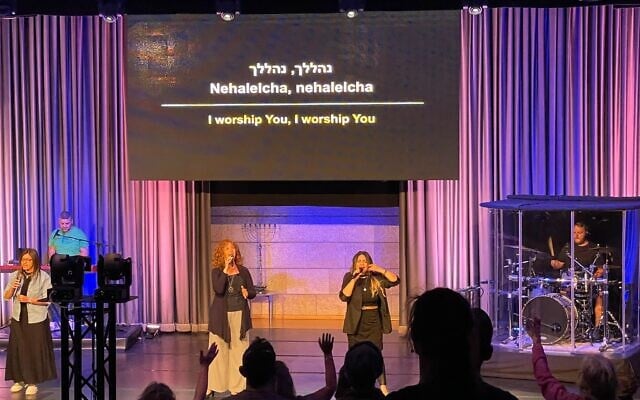
Yet, many Messianic congregations appear to encourage proselytizing in their messaging.
The Fellowship of Israel-Related Ministries (FIRM), which counts both the Jerusalem English-speaking King of Kings and Hebrew-speaking Melech Hamelachim congregations as local partners, describes itself as being on a mission to “empower local ministries to transform lives in Israel with the love of Jesus.”
“We serve a network of almost 70 ministries and organizations in Israel that share a passion for reaching Israelis with the Gospel,” the website adds.
On its website, King of Kings describes itself as a “compelling, Messiah-centered, Spirit-empowered, disciple-making community that reveals the true face of Yeshua (Jesus) to Israel and to the nations.”
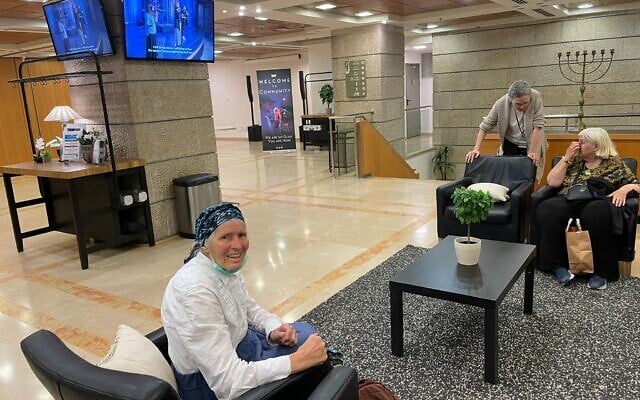
Finland-native Ulla Nuoraho, a pastor in the congregation who has lived in Jerusalem for 27 years, told The Times of Israel that it does not seek out people to persuade them to change their beliefs.
“We don’t do a lot of like evangelism per se,” she said. “We meet people, and if they are open and ask questions, we answer. It’s not our calling to be on the streets and preach.”
During the Sunday service, worshipers were also invited to donate money, through either baskets passed around, charity boxes on the wall, or online, as Pastor Mike Mott gave a talk about the biblical commandment of tithing.
Mott claimed that since the beginning of the Israel-Hamas war, King of Kings has raised and donated millions of shekels to charity in the country, including to IDF soldiers. A brief video showcasing what was described as an encounter between members of the community and IDF soldiers who benefited from the congregation’s support was also screened.
Asked about proselytizing, Melech Hamelachim senior pastor Oded Shimoni said that the community is not actively trying to draw people in.
“Let me dispel one myth,” he said. “We are not proselytizing in the sense of convincing people with money or with other benefits to change their beliefs or their inner persuasion.”
“We give a lot of charity, but this is aid for the needy, not aimed at proselytizing them, and I want to make that clear,” he added.
According to Shimoni, “the personal relationship with God comes through an inner conviction.”
“We can only share what we have come through,” he said. “We do that in our conversations with neighbors, with friends, and with people we work with. The doors are open if people want to come in and hear more about our faith, but we’re not necessarily going out to draw people in.”
Yaron had ‘profound questions about life, faith, God’
Shimoni spoke with The Times of Israel a few hours after Lischinsky’s funeral on May 25. (Sarah Milgrim’s funeral was on May 27 at Congregation Beth Torah in Overland Park, Kansas.)
“I have known his father Daniel for 37 years,” he said. “Yaron was born in Israel. The family moved to Germany when he was an infant, and he participated in the congregation regularly after they moved back when he was 16.”
“I had the privilege to get to know Yaron a bit closer as he was beginning his academic studies,” he added. “He had profound questions about life, faith, God, and how to serve God and the country.”
Shimoni, 61, said that both he and his wife were born into Jewish families in Israel. He came to his current faith as a result of a long personal search in his twenties, after the conclusion of his army service.
He questioned the term “Messianic Jew,” though, as he said that the concept of messianism is increasingly associated with the far-right national religious community.
“I am a Jew who believes in the Jewish Messiah, Yeshua,” he said.
According to the pastor, it is hard to know the number of Messianic Jews who live in Israel because many fear the stigma.
“I have seen estimates that vary between 15,000 and 85,000,” he said. “Because of religious oppression, a lot of Messianic Jews are keeping a low profile. There are many small groups and congregations not on the public radar.”
Melech Hamelachim has some 100-150 members, he said. A large part of them are Israelis or new immigrants who were born Jewish and serve in the army.
Still, Shimoni said that the community has become more accepted in Israel over time.
“When I became a follower of Yeshua 40 years ago, believers were not allowed into certain high-security units in the army, but nowadays, I think that while there are certain walks of life that would continue to consider us as not Jewish, a lot of people would recognize that the nation of Israel is made of diverse groups and diverse beliefs and we are faithful citizens in the land.”
“Messianic Jews as a whole see themselves as an integral part of a nation,” he added. “We serve the country. There have been people who are Messianic Jews who were killed throughout the recent war. So it’s a mixed bag.”




The Times of Israel Community.