

Gafni chides Netanyahu on ditching ‘override clause’: He can’t decide unilaterally
Ultra-Orthodox coalition partner says he has made his feelings clear to PM, who has since reportedly backed away from public pledge to scrap the contentious legislation
 Add ToI as a Preferred Source on Google
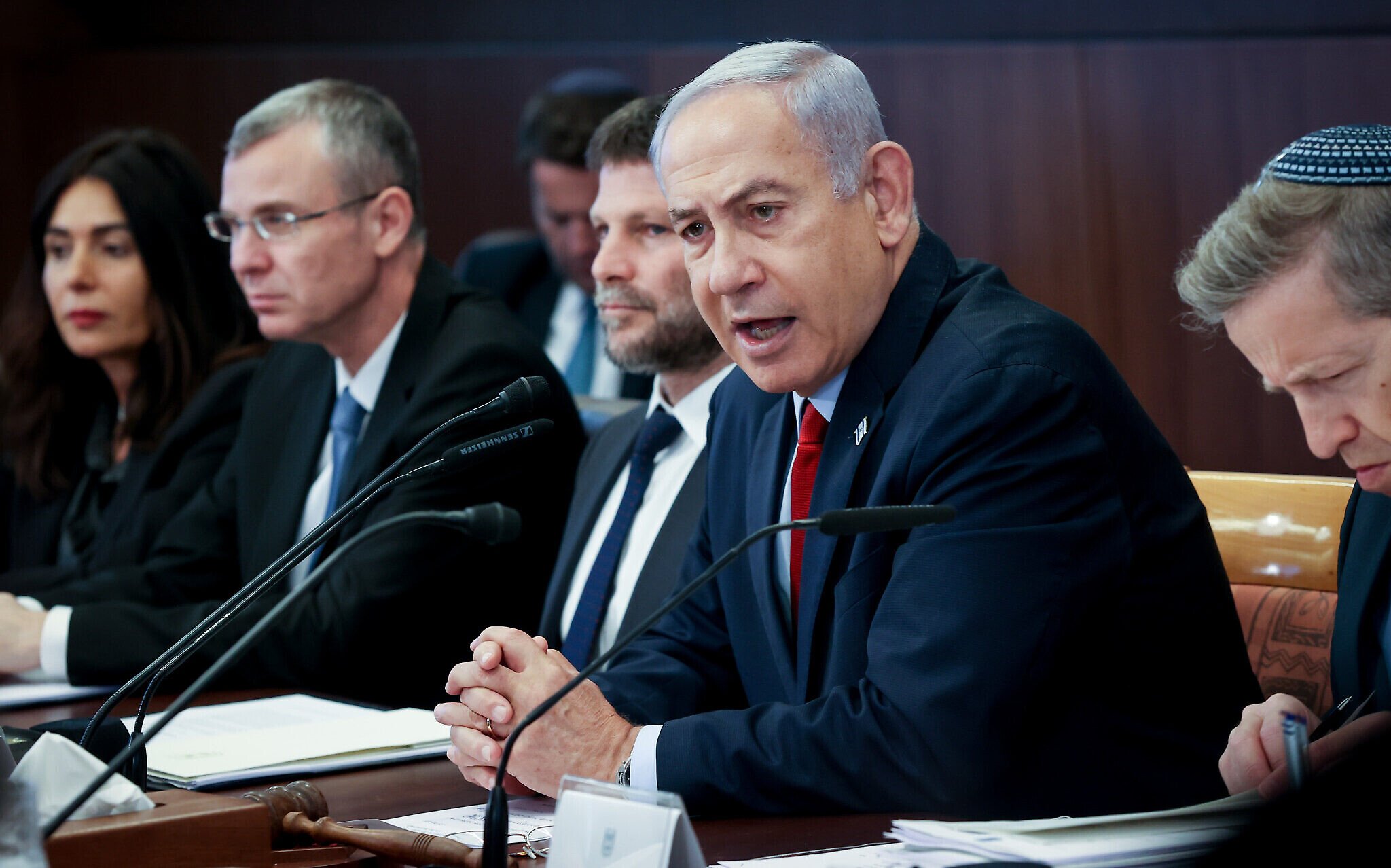
United Torah Judaism MK Moshe Gafni castigated Prime Minister Benjamin Netanyahu in an interview published Tuesday over the premier’s recent conflicting comments on passing some form of “override clause” as part of the government’s polarizing judicial overhaul.
“A coalition is a partnership,” Gafni said in an interview with the ultra-Orthodox paper Yated Ne’eman. “He can’t decide by himself that he is burying one section [of the overhaul] or another that we all agreed upon.”
“His statement was not appropriate and it’s good that we clarified things,” Gafni said.
Passing an override clause — which would grant the Knesset the right to veto or preempt High Court decisions to strike down legislation — was a coalition demand of the Haredi parties, which have long been angered by the High Court’s rulings on certain issues relating to their community, including repeatedly striking down legislation that exempts them from military service.
Gafni’s comments came after Netanyahu last week told the Wall Street Journal that he had thrown out the so-called override clause due to public opposition.
“The idea of an override clause, where the parliament, the Knesset, can override the decisions of the Supreme Court with a simple majority, I said, I threw that out… it’s out,” Netanyahu told the newspaper, adding that he is “attentive to the public pulse, and to what I think will pass muster.”

During the interview, Netanyahu specifically dismissed advancing an override clause in any form, even one demanding a supermajority of lawmakers in order to cancel a court decision. His interviewer asked him whether the override clause “might come back with the supermajority.” Netanyahu responded categorically: “No, I said it’s out.”
However, on Sunday, the prime minister appeared to backpedal, reportedly telling members of his cabinet that he has not fully backed away from passing some form of override clause.
In closed-door comments, Netanyahu reassured some ministers that he still supports a watered-down version of such legislation, but not an unlimited and all-encompassing bill as was initially proposed, the Walla news site reported.
According to the report, Gafni told Netanyahu on Sunday that his, Gafni’s, lack of reaction to the Wall Street Journal interview “should not be interpreted as silence… Don’t think that we are quiet and agree with the fact that there will be no override clause.”
While Justice Minister Yariv Levin had originally floated the idea of allowing the Knesset to override decisions made by the High Court, the bill that was ultimately put forward would have allowed the Knesset to pass legislation that was immune from judicial review from the outset, which Hebrew media continued to refer to as an “override clause.”
That legislation has been frozen since March, when large-scale protests against the judicial overhaul forced Netanyahu to pause the override push and join the opposition for compromise talks, which have since broken down. The coalition has since started working on passing other segments of the overhaul, though not the override clause.
In his public comments at the start of Sunday’s meeting, Netanyahu did not mention anything about the government’s judicial overhaul efforts.
Netanyahu’s comments to the US newspaper were met with anger from some members of his religious-right wing coalition.
National Security Minister Itamar Ben Gvir, a far-right coalition partner, accused Netanyahu of “surrendering” to mass protests against the planned judicial shakeup, saying that “we were elected to bring governance and change; reform is a cornerstone of that promise.”









The Times of Israel Community.