

Gaza slum growth illustrates economic plight, bleak future
In el-Zohor, where barefoot children play in rusty skeletons of discarded vehicles surrounded by mountains of garbage, Palestinians hold little hope
 Add ToI as a Preferred Source on Google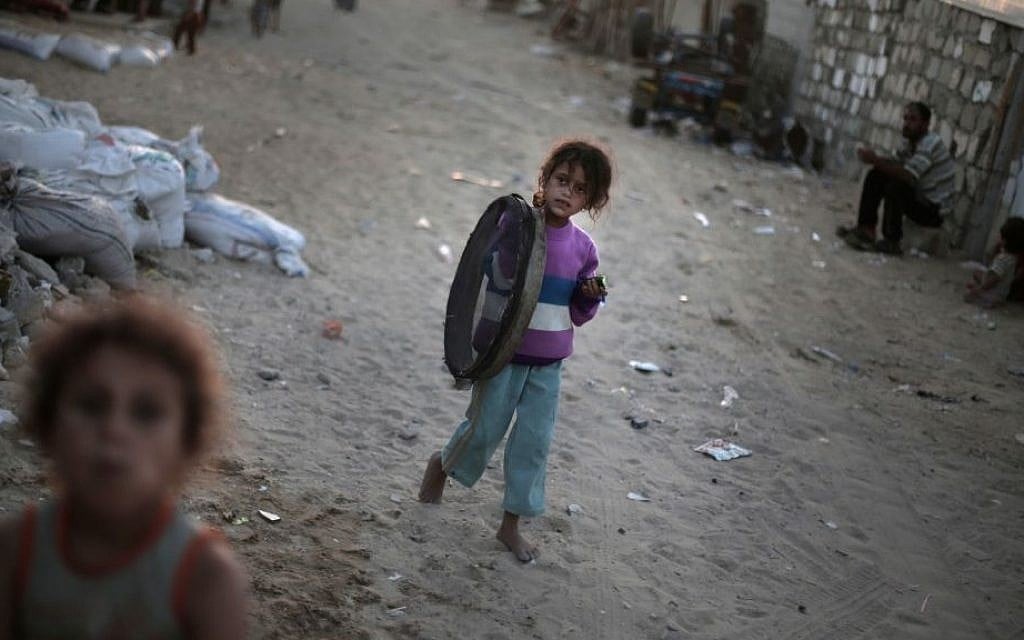

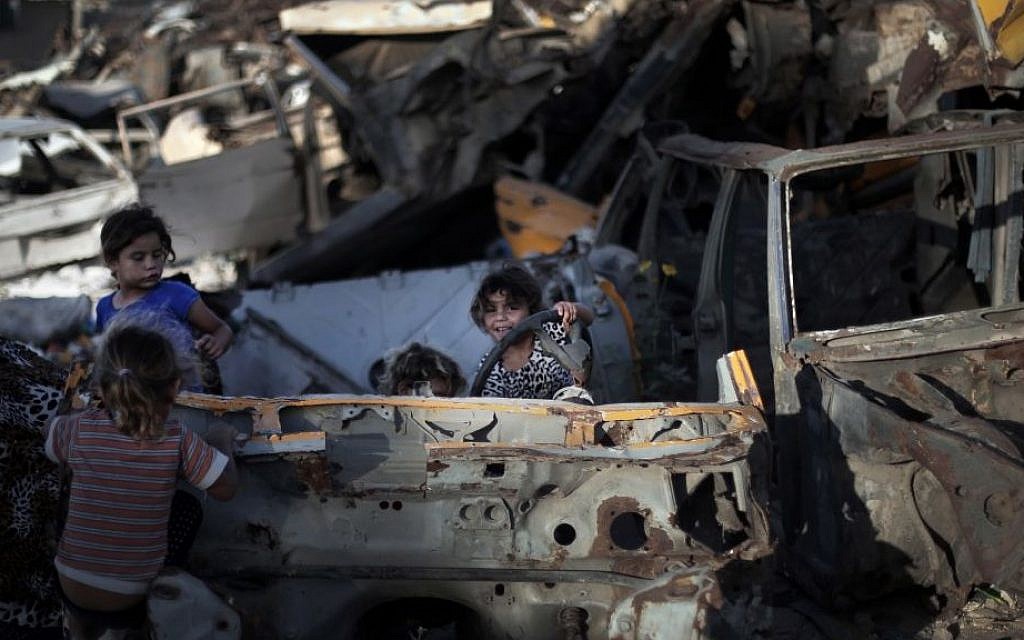
EL-ZOHOR, Gaza Strip — The expansion of Gaza’s el-Zohor slum, where barefoot children play in the rusty skeletons of discarded vehicles surrounded by mountains of garbage, is a sign of the times in Gaza, where poverty is growing and there is little hope for the future.
While Gaza has always been poor, conditions for the 1.8 million people who live in the crowded seaside territory have worsened since the Islamic terrorist group Hamas seized power in 2007.
Soon after, Egypt and Israel, citing security concerns, imposed a blockade on the territory in a move that had a devastating impact on the local economy. Deepening the despair, Hamas, which avowedly seeks the destruction of Israel, has fought three wars against the Jewish state since the takeover. Some areas are still in ruins from the 2014 war and thousands of people are still displaced. The UN warned last year that Gaza could become “uninhabitable” by 2020 if current trends continue.
But even by Gaza standards, conditions are deplorable in the el-Zohor, or “Flowers,” neighborhood near the city of Khan Younis in the southern part of the territory. While Gaza’s poor generally have access to basic amenities, health care and municipal services in the neighborhood are among the worst in the territory.
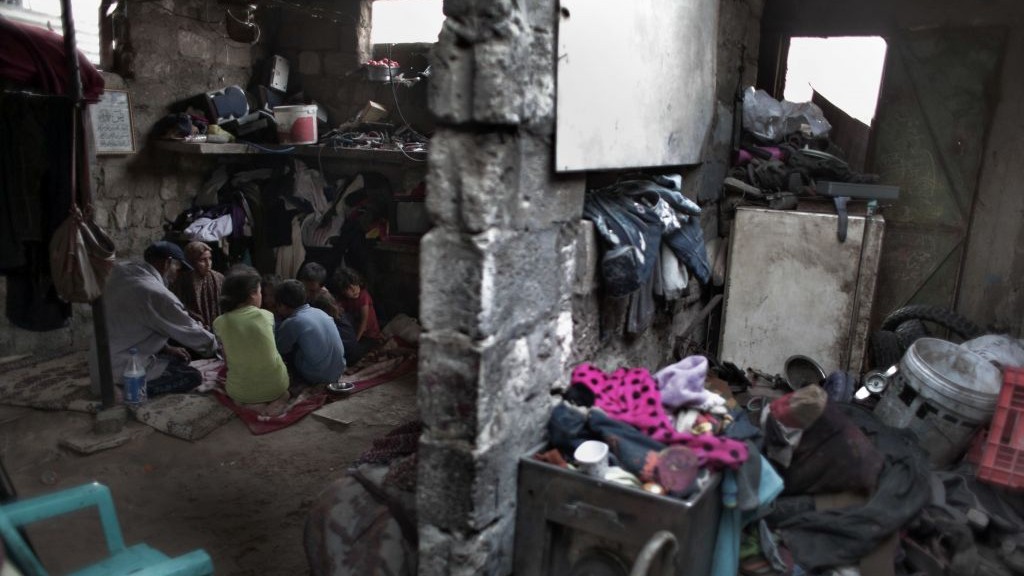
The shacks, adjacent to a landfill, have no electricity or running water. Piles of garbage encroach on the makeshift homes, covering rooftops with trash while the acrid smell of burning waste wafts over the squalor. The searing heat and long summer days have compounded the difficulty of fasting during the monthlong Ramadan holiday.
The neighborhood didn’t even exist eight years ago. Today, about 50 families live there.
Locals say Hamas is intentionally making conditions worse in the neighborhood to try and force people off of public property. They say if Hamas finds electric wires connected to nearby utility poles it cuts the lines.
Resident Mahrous Zourob, a 33-year-old father of five, said Hamas imposes “impossible conditions” on the slum dwellers.
Each family has a story that reflects Gaza’s economic plight. Most say they lost their income when breadwinners could no longer enter Israel to work after Hamas took power. Zourob, who worked in as a laborer in construction, farming and Gaza’s smuggling tunnels on the Egyptian border before they were largely destroyed, said he used to live in a rental home but had to move out three years ago because of a lack of work.
Israel, the US and others consider Hamas a terror organization for its suicide bombings, shootings and other attacks that have targeted civilians over the years. Israel says the blockade is essential to its security, since Hamas exploits every security breach to import weapons, and is again digging tunnels beneath the border and replenishing its rocket supplies. Critics say the blockade, which has restricted the movement of people and goods in and out of the territory, amounts to collective punishment.
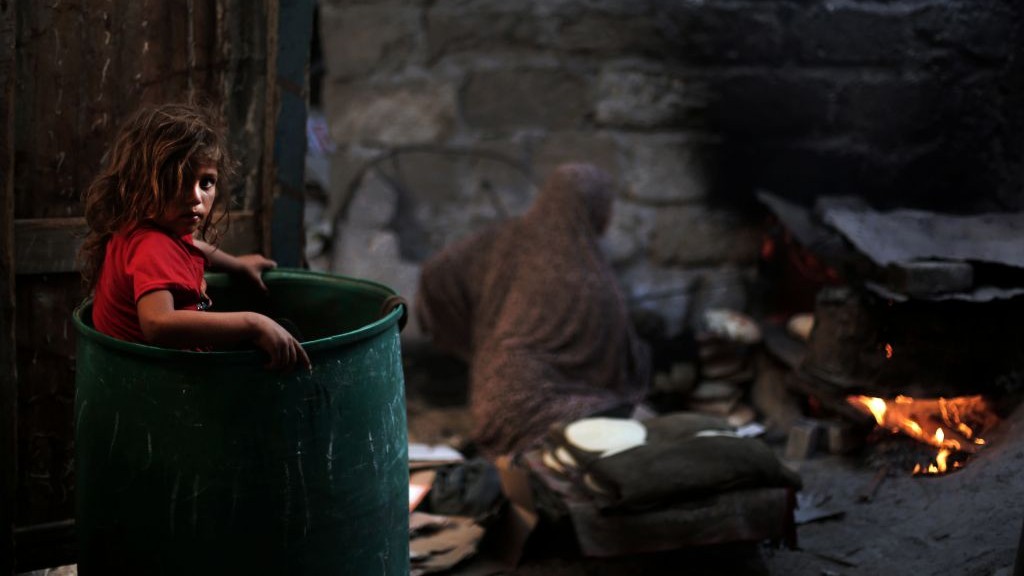
According to the UN, more than 800,000 people in Gaza receive food aid and nearly 50 percent of the population is unemployed.
Aid worker Eyad Al-Shami said he was “shocked from the situation of the families” in el-Zohor when he brought them meals donated by Saudi Arabia to break the Ramadan fast this week.
Asmahan Farwana said she sends some of her eight children to beg in the markets to buy food. Her husband had a workplace injury and can no longer work.
“Today, we found a meal, thank God,” she said after gathering her children around for a donated meal of chicken and rice.









The Times of Israel Community.