

Gaza up, Abbas down: 7 things to know for June 27
Efforts to solve the humanitarian crisis may be stalled and fighting continuing, but the fact is that the Strip has taken a central role in the Palestinian conversation
 Add ToI as a Preferred Source on Google
Joshua Davidovich is The Times of Israel's Deputy Editor
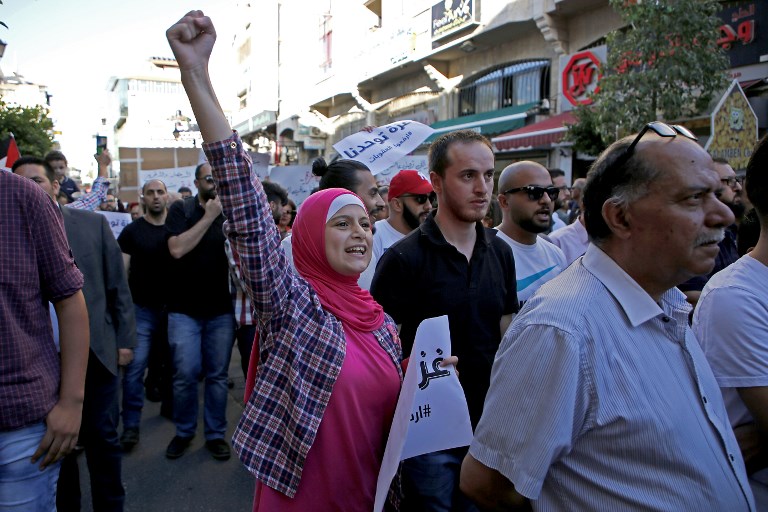
1. Three interconnected things appear to be happening simultaneously in Gaza. A. A battle between Israel and fire kite launchers, with the army trying to thwart the phenomenon without letting it explode into something larger; B. Negotiations with Hamas to ease the Strip’s conditions, in exchange for captive Israelis and soldiers remains; and C. An international effort to solve the humanitarian crisis there.
- The first aspect came in the form of a rude awakening to Israelis near the Gaza border in the middle of the night, as over a dozen rockets were fired in the dead of night in response to Israel targeting parked cars of kite launchers, including that of a senior Hamas operative.
- As noted by The Times of Israel, Hamas says the kites are allowed under a ceasefire, but the missile strikes at empty cars and other positions in response are violation.
- Speaking to Channel 10, minister Zeev Elkin ups the rhetoric and says that by firing at the empty car, Israel was sending a message that Israel will fire missiles not only to stop active kite and balloon launches, but also to hunt down and assassinate anyone involved. “Whoever is involved in this endangers themselves during the launch and also during the night after. We know who is doing it and whoever is doing it — their blood is on their heads.”
2. Meanwhile, talks with Hamas seem stalled.
- On Tuesday night, Israel’s Channel 10 news reported that Israel had sent a message to Hamas that it wanted to do a quick deal to get its captives and captive remains out of Gaza, but without any preconditions, leaving open the question of what Israel was offering in return.
- Hadashot news reported that Hamas had rejected an idea for a seaport serving Gaza to be placed in Cyprus, insisting that Israel first release 50 members jailed by Israel since they were freed in 2011, under the Gilad Shalit deal.
- Haaretz reports that Egypt will soon present its own plan for easing the crisis, including a joint development zone between the Strip and the Sinai and Rafah being open more often.
- In the same paper, columnist Amira Hass says that no aid plan will end Israel’s conflict with the Strip or pull it out of its doldrums, unless the blockade is lifted.
3. The Times of Israel’s Avi Issacharoff writes that “Hamas isn’t rushing to accept these offers, in part because Israel is demanding that the terror group disarm as a condition of any long-time agreement between Israel and Gaza. Hamas doesn’t accept that demand.”
- Yet the fact that the world’s attention is turned to Gaza, together with the PA increasingly being seen as a peace talks spoiler, thrust Hamas onto the world stage, a position it does not want to lose by launching a war.
- “For Hamas, the economic situation in Gaza may be dire, but politically and diplomatically, it is not in bad shape at all. If even Trump’s envoys are seeking to remedy Gaza’s woes, and Israel is talking about the need for an arrangement with Hamas, then from its perspective — at least in some sense — things are moving in the right direction.”
4. Yedioth’s Alex Fishman writes that since leaving the hospital, PA President Mahmoud Abbas has been increasingly isolated and paranoid, fighting external battles with the US, Egypt, and anyone endorsing the Trump plan — which he refuses to even read — and internal battles with Fatah, about his not appointing a successor despite health issues.
- Fishman writes that Abbas has been avoiding public appearances because of people making plans behind his back to push him out of power, including bolstering support from militias, and that public and private anger is rising over his role in Gaza’s beleaguered state.
- “His disconnect from reality is so deep that he has managed to get mixed up with the Gulf states and Saudi Arabia over his insane demand that the Arab League cut ties to the US over the embassy move to Jerusalem,” he writes. “It’s no surprise that, behind the scene, Arab countries are sending him envoys, telling him to take the American money to repair Gaza and shut his mouth.”
- “Jared Kushner and Jason Greenblatt are wasting their time with this guy.”
5. Abbas himself may need the money too. Israel Hayom reports that a law to cut off money to the Palestinians in amounts equal to the stipends paid out to terrorists, and the cost of the damage caused by fire kites has sparked a disagreement inside the government over exactly what shape the law should take.
- At the heart of the issue is whether the cabinet should be able to decide on their own whether to return the money that had been withheld in some cases. The paper reports that it seems the version that will move forward will not give the leaders much leeway, but will still allow a bit of wiggle room.
- “According to what appears to be the accepted draft, only on a case in which the defense minister reports to the government that the Palestinians stopped paying the stipend for a full year will the cabinet be able to decide on returning the money to the PA.”
- On Wednesday, MK Avi Dichter also confirmed an i24 report that the US had begun implementing the Taylor Force act, which does much the same with US aid to the Palestinians.
6. Prince William is due to meet with Abbas on Wednesday, which may give the Palestinian leader a bit of a boost.
- The Times of Israel’s David Horovitz notes that the prince’s visit to Israel is already giving Netanyahu a boost, and its timing is related to Israel, the Gulf, and the UK aligning against Iran.
- “That the first official royal visit to Israel is under way, and under way precisely now, people involved in this trip privately acknowledge, is in large part also a function of change elsewhere in the region,” he writes.
- “The Saudis are being extremely careful in publicly acknowledging the improving nature of their links with Israel. But Prince William’s visit, a substantive milestone in its own right for Israel, is also assuredly a significant indication of a wider positive shift in relations hereabout.”
7. The fighting in southern Syria is putting Israel in a spot, with some 50,000 displaced already, Jordan shutting its gates and refugees heading to the Golan border.
- Haaretz’s Amos Harel writes that defense brass are stuck between wanting to continue helping people in the border villages, but also wanting quiet on its border and wanting to keep the Iranians away.
- “In internal discussions, some defense officials, including officers in the army’s Northern Command, have said Israel has a humanitarian obligation to residents of these border villages,” he writes.
- “Nevertheless, it’s hard to imagine that the public would support risking Israeli soldiers’ lives to save Arab citizens of an enemy country. It’s more likely that Israel won’t intervene directly in the fighting, but will try to make the regime’s return to the border region contingent on an agreement to remove Iranian forces and the Shi’ite militias from it.”
8. The power of the press is also on display in two cases where reports and public pressure led companies to change their ways: Barkan wines and El Al.
- After a report on Barkan Winery firing its Ethiopian workers, because it feared they would make the swill unkosher, unleashed outrage and calls for boycott, the company said Tuesday night it would return them to their posts.
- In Yedioth, Masrorti movement leader Yizhar Hess says, while we are at it, Israelis should challenge the rules by which only Orthodox Jews are allowed to touch the wine to ensure it remain kosher, noting that American Jews have already found halachic solutions for the issue.
- “It can’t be that this draconian halacha, born in 12th century France because of issues there that necessitated taking extra caution, should also be in place today when the situation is so different,” he writes.
- El Al also came under pressure over allowing Haredi men who refuse to sit next to women to run roughshod over their flights, holding them, causing chaos and embarrassing passengers, despite a court case a year ago declaring the practice illegal. The airline has said it would no longer allow it, period, after high-tech companies announced boycotts.
- Haaretz’s Allison Kaplan-Sommer writes that despite the bad name given boycotts because of the BDS movement, the cases show that keeping your shekels to yourself can exact change: “Boycotting has been making a comeback in recent days, at least when it comes to matters of religion and state. A secular public frustrated and angered by what it sees as sexism and racism in products it consumes – in acquiescence to the ultra-Orthodox establishment – has this week mobilized the power of the pocketbook.”








The Times of Israel Community.