

Gazans halt Israeli fruit imports
Measure comes to pressure Israel to allow vegetable exports from the enclave to the West Bank
 Add ToI as a Preferred Source on Google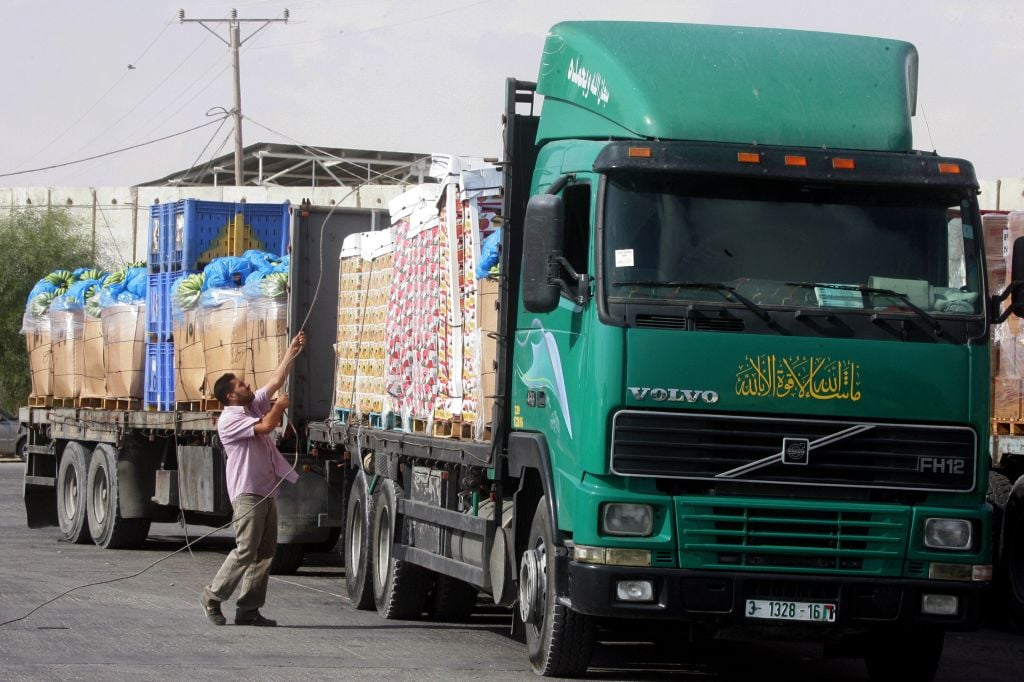
The Gaza Agriculture Ministry stopped all Israeli fruit exports into the coastal enclave on Wednesday, in a bid to pressure the Israeli government to resume vegetable exports from Gaza to the West Bank.
According to a report in the Palestinian Ma’an News Agency, Israel prevented some 12 trucks of Gaza produce from leaving the Kerem Shalom crossing en route to Jordan on Sunday. The ban costs the exporters some $150,000 in losses, and will ultimately lead to a decrease in vegetable prices in the Gaza Strip as a result.
“We decided to stop importing fruits from the Israeli side to pressure Israel to resume allowing our vegetables to be exported,” Tahsin Wal-Saqqa, general manager of marketing and crossings in the ministry, said on Wednesday.
The Hamas-run ministry on Monday issued a warning that it would boycott Israeli fruit.
The warning came months after a 50-day bloody conflict between Israel and terrorists in the Gaza Strip, leaving the enclave in humanitarian and economic crisis.
“If Israel doesn’t reverse its decision to halt the export of Palestinian agricultural produce… we will ban the entry of fruit” from Israel, a ministry statement said.
Gaza has been choked by an eight-year blockade which Israel imposed after Hamas kidnapped one of its soldiers in a cross-border raid. The blockade, also imposed by Egypt, is designed to prevent Hamas and other Gaza terror groups importing weaponry into the Strip.
The Jewish state controls two of the tiny coastal territory’s three crossings — Kerem Shalom in the south and the Erez personnel crossing in the north. Egypt controls the third crossing at Rafah in the south.
After the Israel-Hamas war ended on August 26, the international community, including the International Monetary Fund, urged Israel to loosen the blockade to allow in crucial humanitarian aid and to revive the ailing economy.
Israel has allowed a small amount of construction material into Gaza to help rebuild some of the tens of thousands of homes destroyed by airstrikes and artillery, but has not palpably eased the blockade. It fears that Hamas will abuse any easing of restrictions in order to build new cross-border attack tunnels and accelerate rocket production.
The export of farm produce is a key source of income for Gaza, home to 1.8 million Palestinians.
Exports from Gaza currently stand at around 2 percent of what they were before the blockade.
For the first time since 2006, Israel recently allowed a ton of fish and crabs and 10 tons of cucumbers to be sent to the West Bank.










The Times of Israel Community.