

Global flights in chaos as Iran’s strikes on Gulf shut down world’s busiest air hub
Thousands stranded across world as Dubai, Doha airport closures cause cancellations and rerouted flights, in one of the worst aviation disruptions in years
 Add ToI as a Preferred Source on Google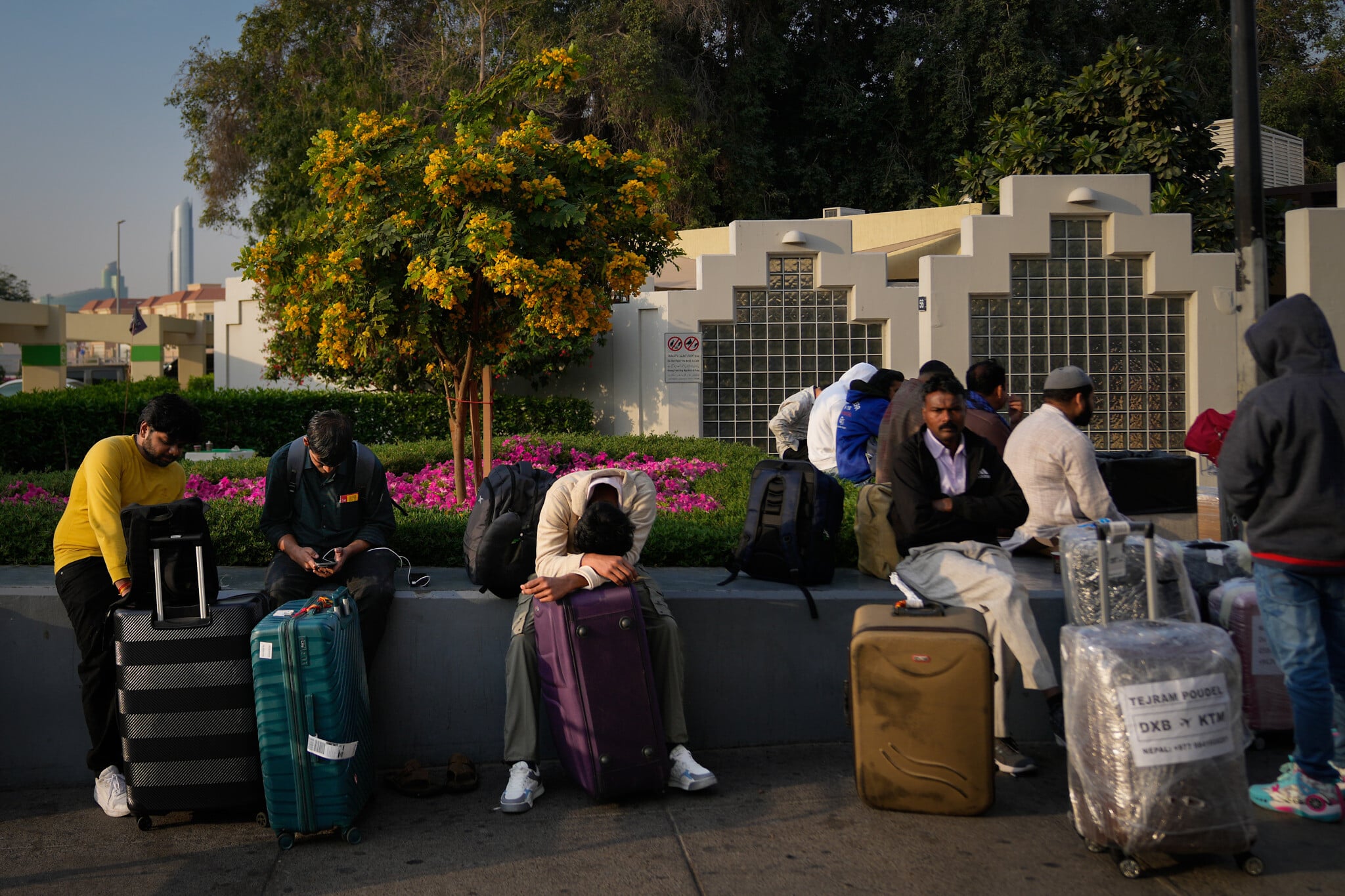
Global air travel remained heavily disrupted on Sunday as continued Iranian missile and drone fire kept major Middle Eastern airports closed, in one of the sharpest aviation shocks in recent years.
Key transit airports, including Dubai, the world’s busiest international hub by passenger traffic, Abu Dhabi and Doha were shut or severely restricted, and much of the region’s airspace remained closed after US and Israeli strikes killed Iranian Supreme Leader Ayatollah Ali Khamenei and much of Iran’s military leadership on Saturday.
Israel said it launched another wave of strikes on Iran on Sunday, while loud blasts were heard for a second day near Dubai and over Doha after Iran launched retaliatory air attacks on the neighboring Gulf states.
Dubai International Airport sustained damage in Iran’s attacks, and airports in Abu Dhabi and Kuwait were also hit, with nearly all airports across the region closed until further notice. Israel’s Ben Gurion Airport will not open until Wednesday at the earliest, Channel 12 reported Sunday, as Israeli airlines continued to cancel flights.
Thousands of flights were affected across the Middle East, according to data on flight-tracking platform FlightAware.
Airspace over Iran, Iraq, Kuwait, Israel, Bahrain, the UAE, and Qatar remained virtually empty, maps by Flightradar24 showed early on Sunday.
More than 3,400 flights have been cancelled today across seven airports in the Middle East (DXB, DOH, AUH, SHJ, KWI, BAH, DWC), as many airspaces remain closed for security reasons. pic.twitter.com/L48tAlVmGU
— Flightradar24 (@flightradar24) March 1, 2026
The flight tracking service said that a new notice to airmen (NOTAM) had extended the closure of Iranian airspace until at least 8:30 a.m. GMT on March 3.
Ripple effects
Airport closures sent shockwaves far beyond the Middle East, leaving thousands of travelers stranded across Asia and Europe.
In Bali, Indonesia, long queues snaked through I Gusti Ngurah Rai International Airport as passengers waited to speak to airline staff.
Travelers sat on their luggage, waiting to find out details of their flights at Hazrat Shahjalal International Airport in Dhaka, Bangladesh, while departure boards in Kathmandu’s Tribhuvan International Airport showed a long list of canceled flights.
Dubai and neighboring Doha sit at the crossroads of east-west air travel, funneling long-haul traffic between Europe and Asia through tightly scheduled networks of connecting flights. With those hubs idle, aircraft and crews remained stranded out of position, disrupting airline schedules worldwide.
“It’s the sheer volume of people and the complexity,” said UK-based aviation analyst John Strickland. “It is not only customers, it is the crews and aircraft all over place.”
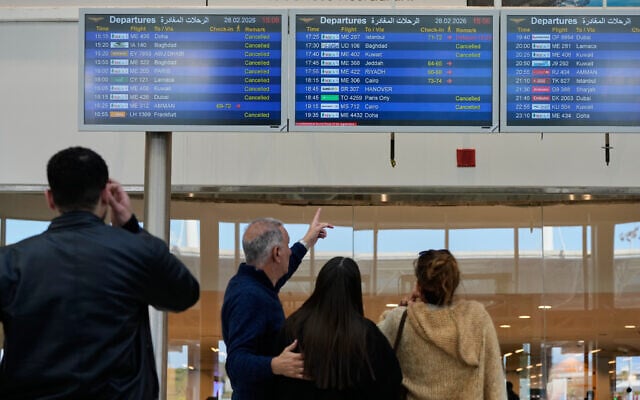
Airlines across Europe, Asia, and the Middle East canceled or rerouted flights to avoid closed or restricted airspace, lengthening journeys and driving up fuel costs. The disruption has been intensified by the loss of Iranian and Iraqi overflight routes, which had grown more important since the Russia-Ukraine war forced airlines to avoid both countries’ airspace.
The Middle East airspace closures were squeezing airlines into narrower corridors, with fighting between Pakistan and Afghanistan adding a further risk, said Ian Petchenik, communications director at Flightradar24.
“The risk of protracted disruption is the main concern from a commercial aviation perspective,” Petchenik said.
“Any escalation in the conflict between Pakistan and Afghanistan that results in the closure of airspace would have drastic consequences for travel between Europe and Asia,” he added.
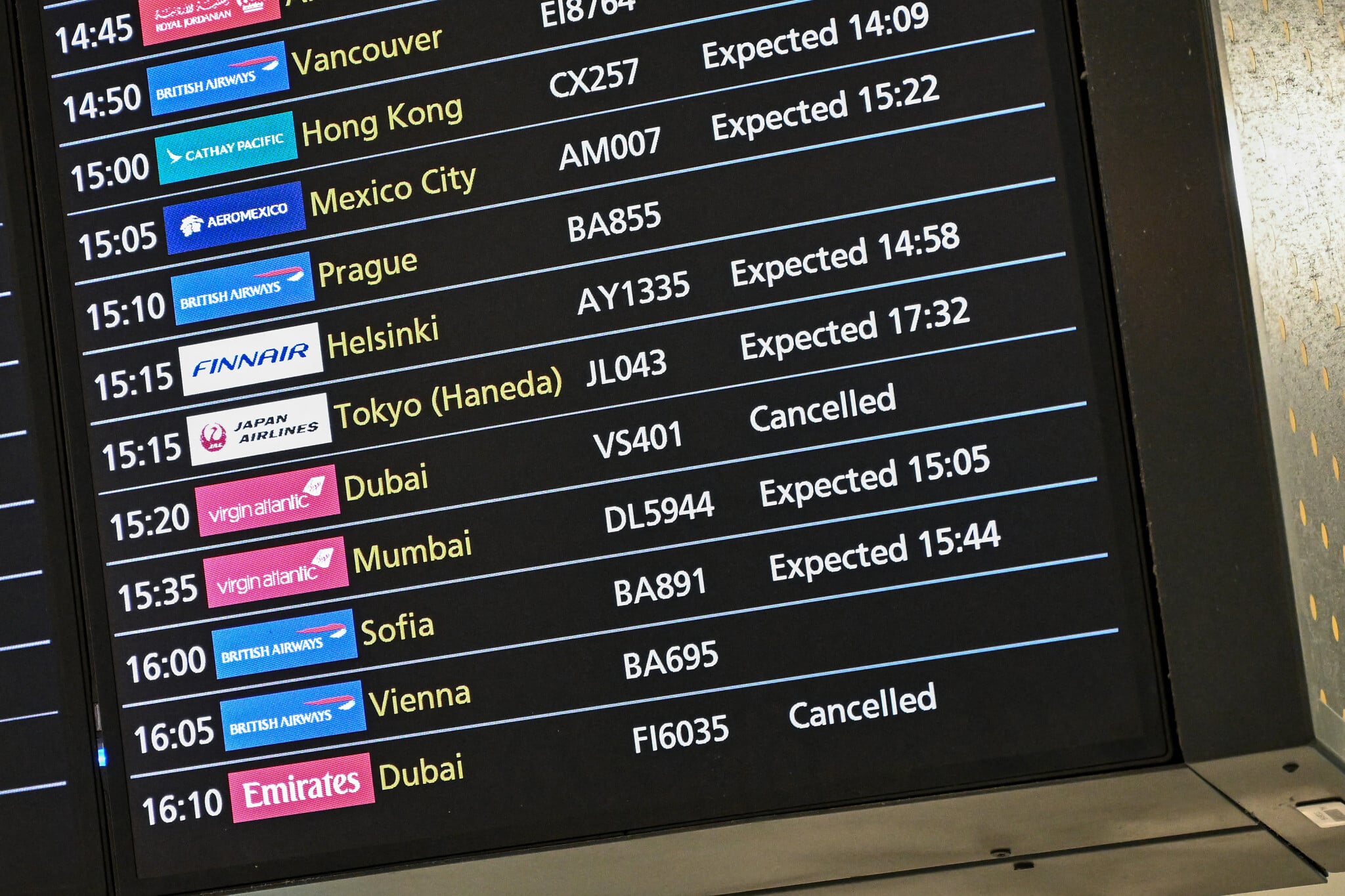
Highlighting the scale of the disruption, Air India canceled its flights on Sunday, departing from Delhi, Mumbai, and Amritsar to major cities in Europe and North America.
Air France also canceled its flights scheduled for Sunday to Beirut, Dubai and Riyadh, the airline said in a statement. Those suspensions came on top of the previously announced cancelation of its flights to Tel Aviv.
The Lufthansa group of carriers additionally suspended all flight services to and from Ben Gurion Airport through March 7, citing the “current situation in the Middle East.”
The German group, whose carriers also include SWISS, Austrian Airlines, Brussels Airlines, and Eurowings, said it canceled flights across the Middle East, including Tel Aviv, Beirut, Amman, Erbil, and Tehran.










The Times of Israel Community.