

Graphic novel depicts French Jew who got rich by helping both Nazis, Resistance
Now in English, award-winning ‘Once Upon a Time in France’ presents the thrilling and complicated life of profiteer Joseph Joanovici, who made millions staying alive at any cost
 Add ToI as a Preferred Source on Google
Renee Ghert-Zand is the health reporter and a feature writer for The Times of Israel.

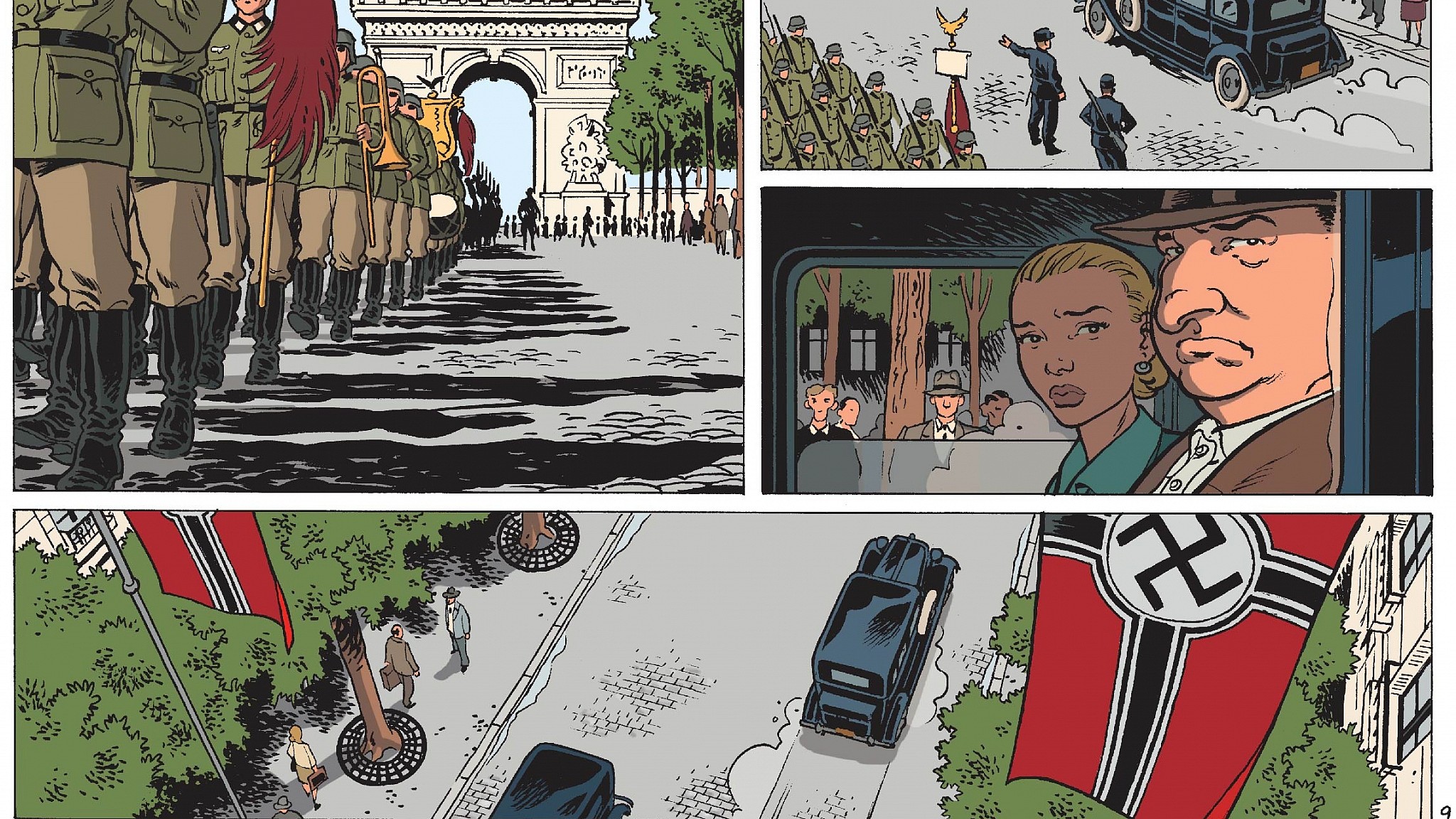
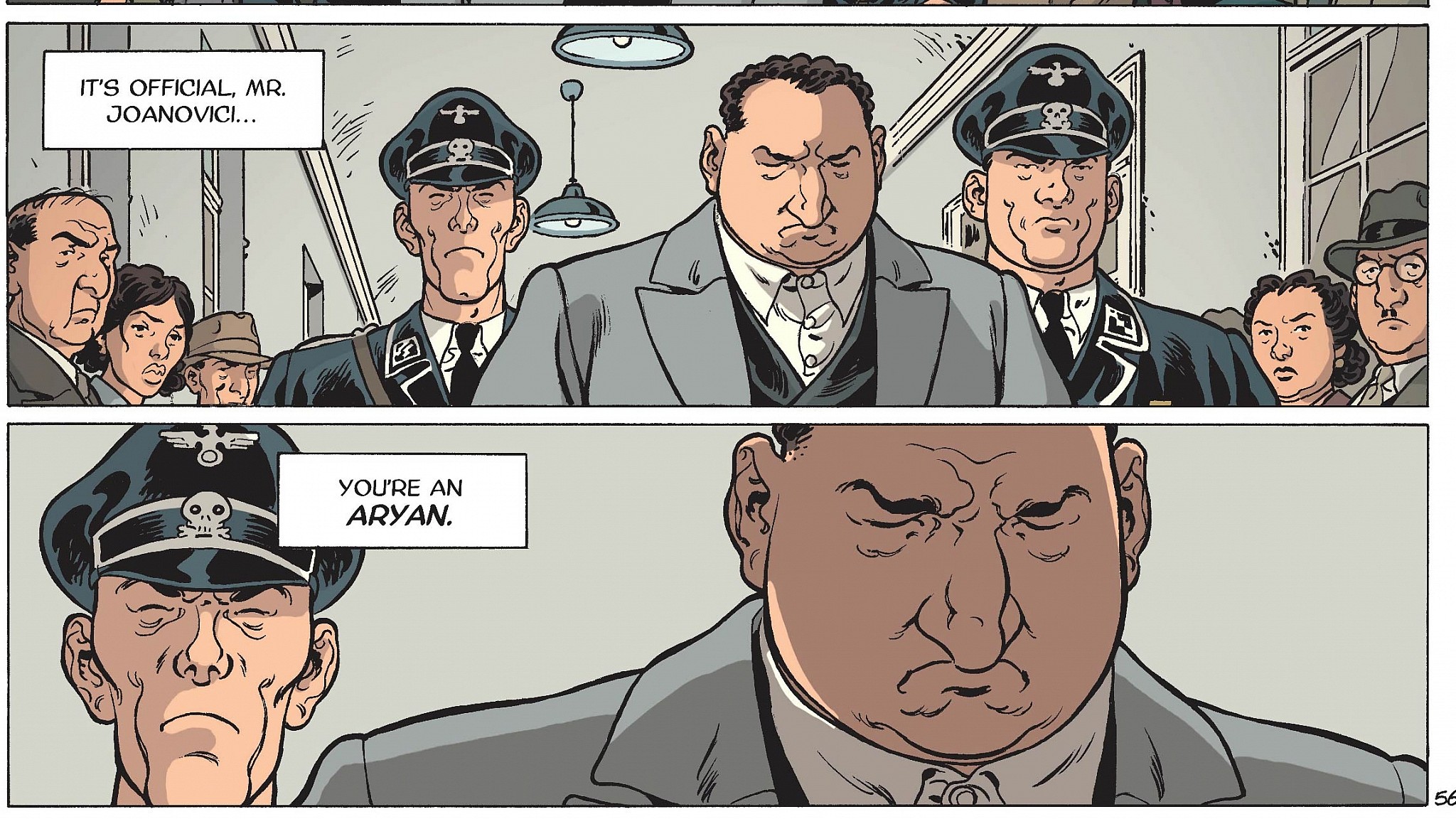
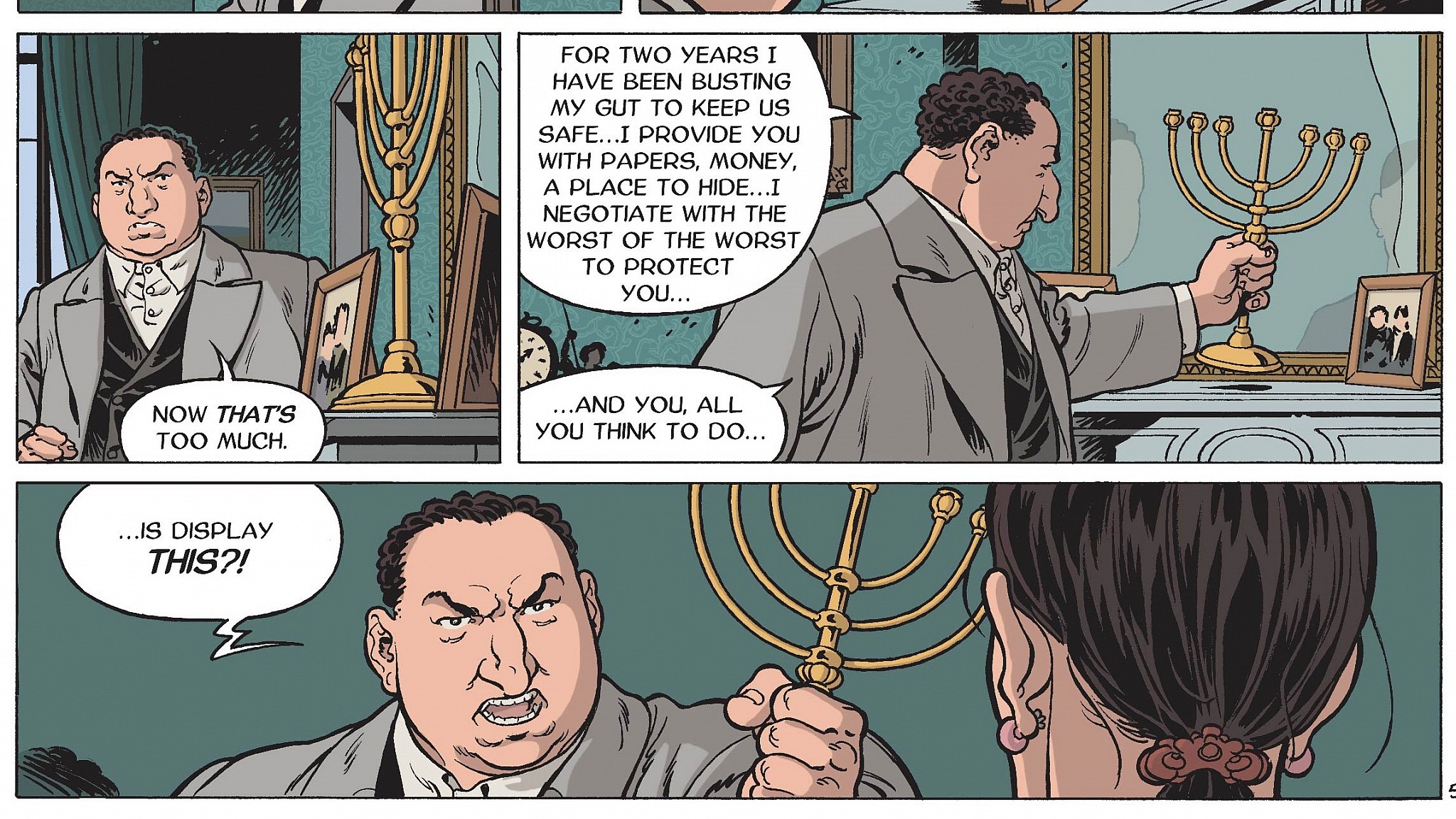
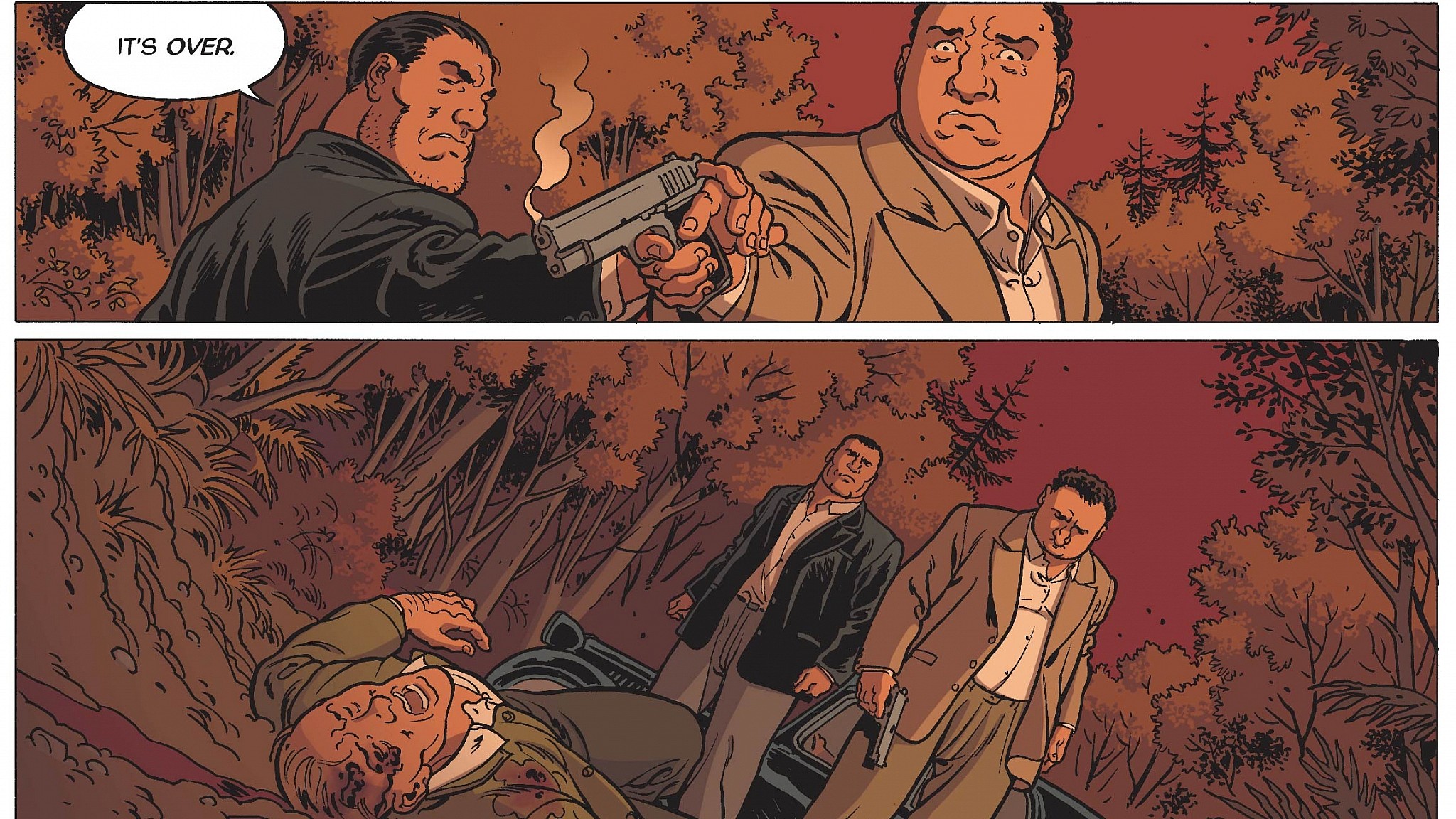
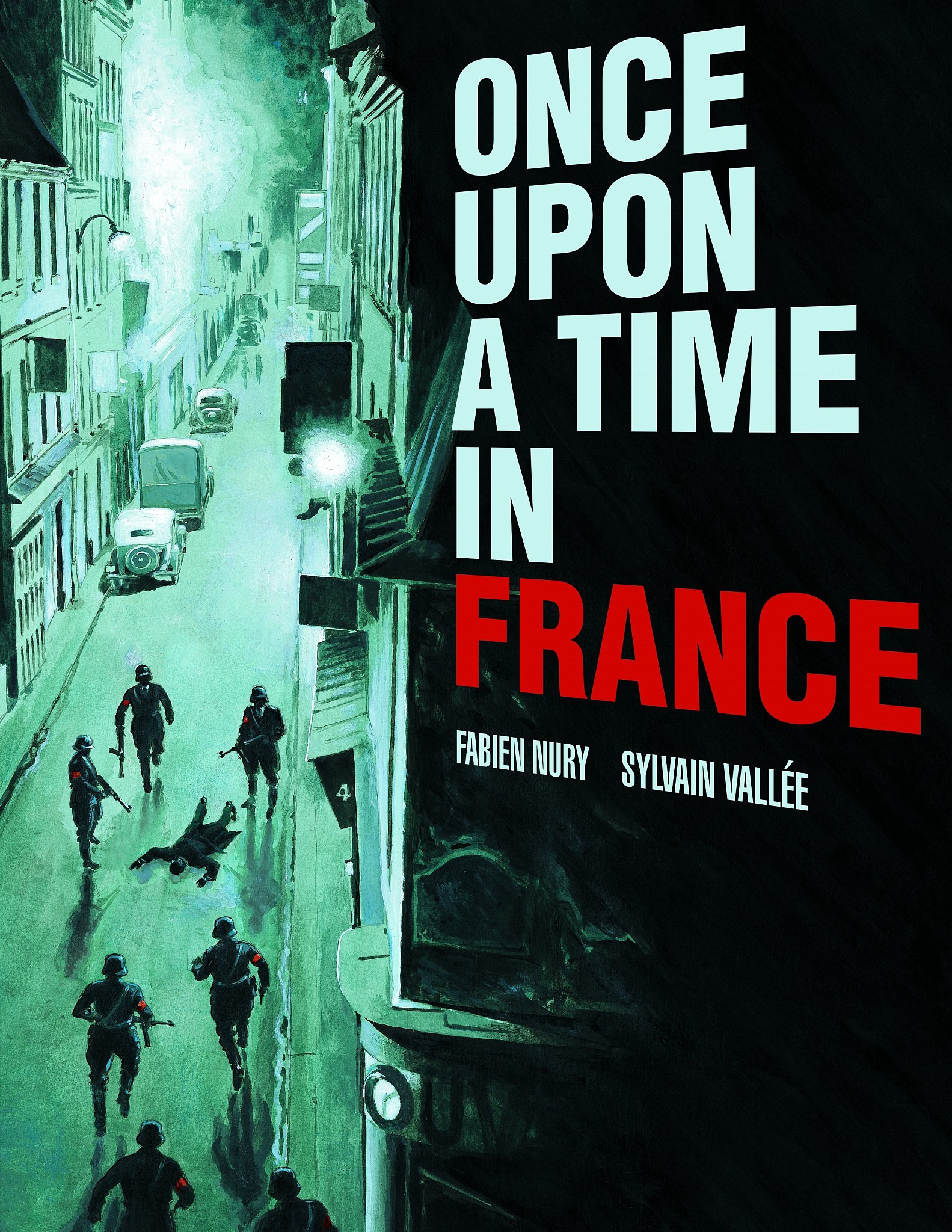
Joseph Joanovici was a Jewish French-Romanian war profiteer who made millions supplying metal to the Nazis while simultaneously supporting the French Resistance. His life is used as the heart of the new graphic novel, “Once Upon a Time in France,” where the complicated real-life character plays both sides in World War II in a bid to keep himself and his family safe at any cost.
Perhaps the most amazing aspect of Joanovici’s story is that he managed to survive the war when many other French Jewish profiteers, such as the infamous Michel (Mandel) Szkolnikoff, met a violent end. Joanovici emerged from the war as a hero to some and a traitor to others — but by all counts, very much alive.
Orphaned during the 1905 Kishinev Pogrom, Joanovici married a fellow orphan named Eva and migrated in 1925 with her to a northern suburb of Paris. He accepted a lowly job at his wife’s uncle’s scrap metal business, and the couple had two daughters. The illiterate yet savvy Joanovici pushed the uncle out and took over with the help of his brother Marcel. Soon, the self-made Joanovici got mixed up with the mob and also began supplying the Nazi regime in neighboring Germany with metal.
French citizens born decades after the war became familiar with Joanovici through a book by Alphonse Boudard titled, “L’étrange Monsieur Joseph” and a 2001 television film based on it. Many more learned of his complex biography through the French edition of “Once Upon a Time in France,” which was published in 2015 as “Il était une fois en France” following the graphic novel’s initial six-volume serialization between 2007 and 2012. The English edition was published by Dead Reckoning (an imprint of the Naval Institute Press) in September.
The original French-language version, an international bestseller and winner of major awards, was scripted by Fabien Nury and illustrated by Sylvain Vallée. Nury’s other works include the “The Death of Stalin” graphic novels which served as the basis for the 2018 Hollywood film of the same name starring Steve Buscemi.
Nury, 43, told The Times of Israel that he first became aware of Joanovici almost 20 years ago as he researched French organized crime in the 20th century.
“His entire life was an amazing rise and fall story, with the Nazi occupation right in the middle. There was every aspect of the criminal world I’d been looking for, but with a new — and true — point of view. He wasn’t a gangster, at least not in the way people imagine gangsters. And of course, the five years of WWII, when he played both sides to the end and survived, were unbelievable,” he said.
“But it wasn’t a WWII story; it’s the story of a man, a biography,” added Nury, who lives in Bordeaux.
According to Nury, it was relatively easy to locate primary and secondary source material from which to develop the 368-page graphic novel’s script. Unlike the doings of other war profiteers who were killed by the Gestapo, those of Joanovici became part of the public record through court records and press reports from his high-profile post-war trial.
Life in the gray zone
“There are few Holocaust graphic novels that are as well researched and detailed,” noted Dr. Jean-Marc Dreyfus, a Holocaust historian at the University of Manchester and Sciences Po, who is currently a senior fellow at the US Holocaust Memorial Museum in Washington.
Although Dreyfus offered high praise for “Once Upon a Time in France,” he added the caveat that it is impossible to know the entire truth about Joanovici and the grey zone in which he operated.

“By definition, this kind of history cannot be fully documented. The Gestapo and the Resistance did not document what they were doing,” he said.
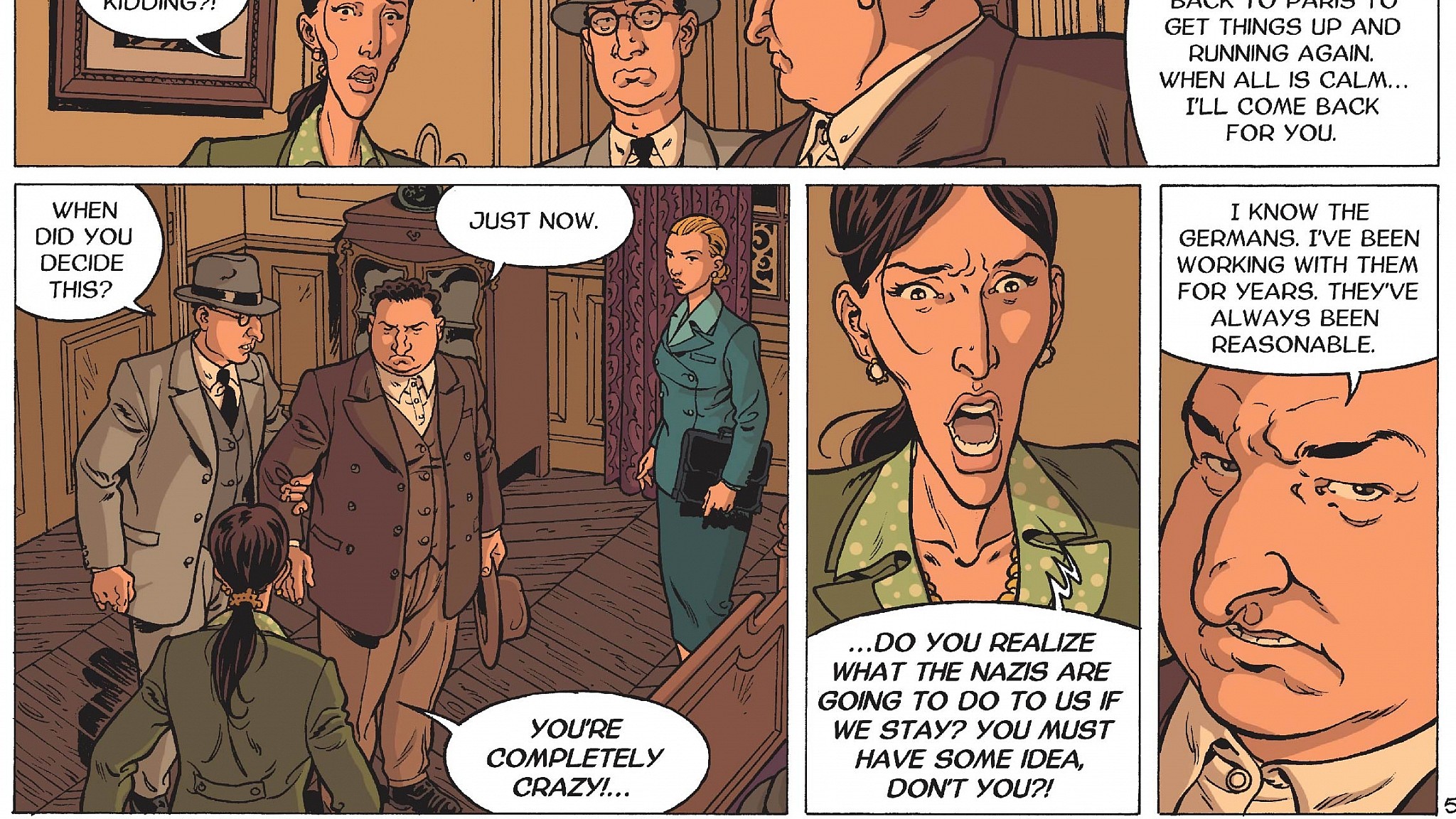
Nury said he was careful to put a warning at the beginning of the book stating that “Once Upon a Time in France” is a work of fiction. It is based on historical research, but it has “partially true” and “partially false” scenes as a result of the author’s “simplifying, condensing and displacing events.” In addition, secondary characters might be composites of three different persons in real life.
“I am not a historian, even if I try to seriously research my stories. I followed the overall arch of his life, as much as I could, simply because I couldn’t invent anything better,” Nury said.
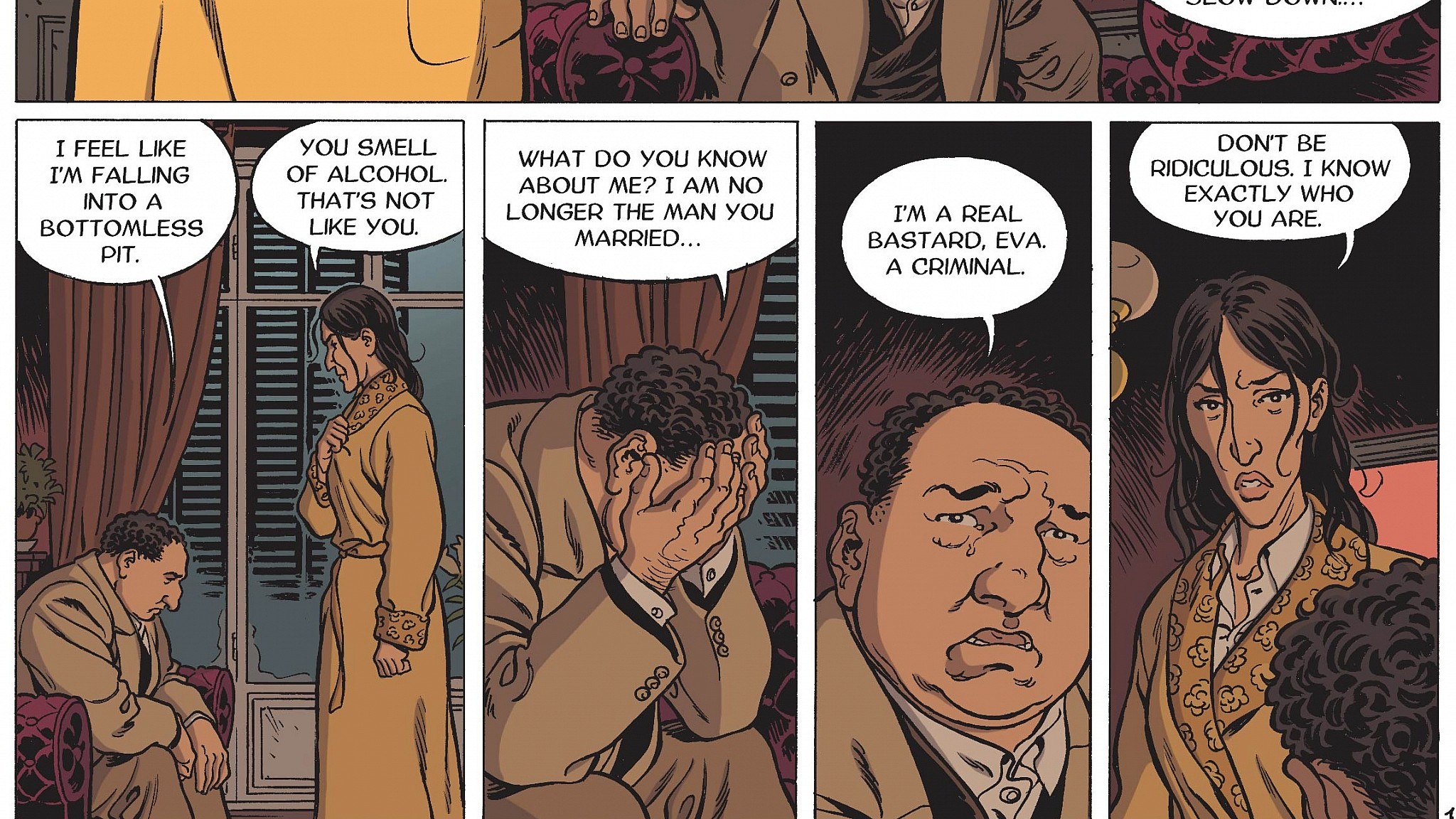
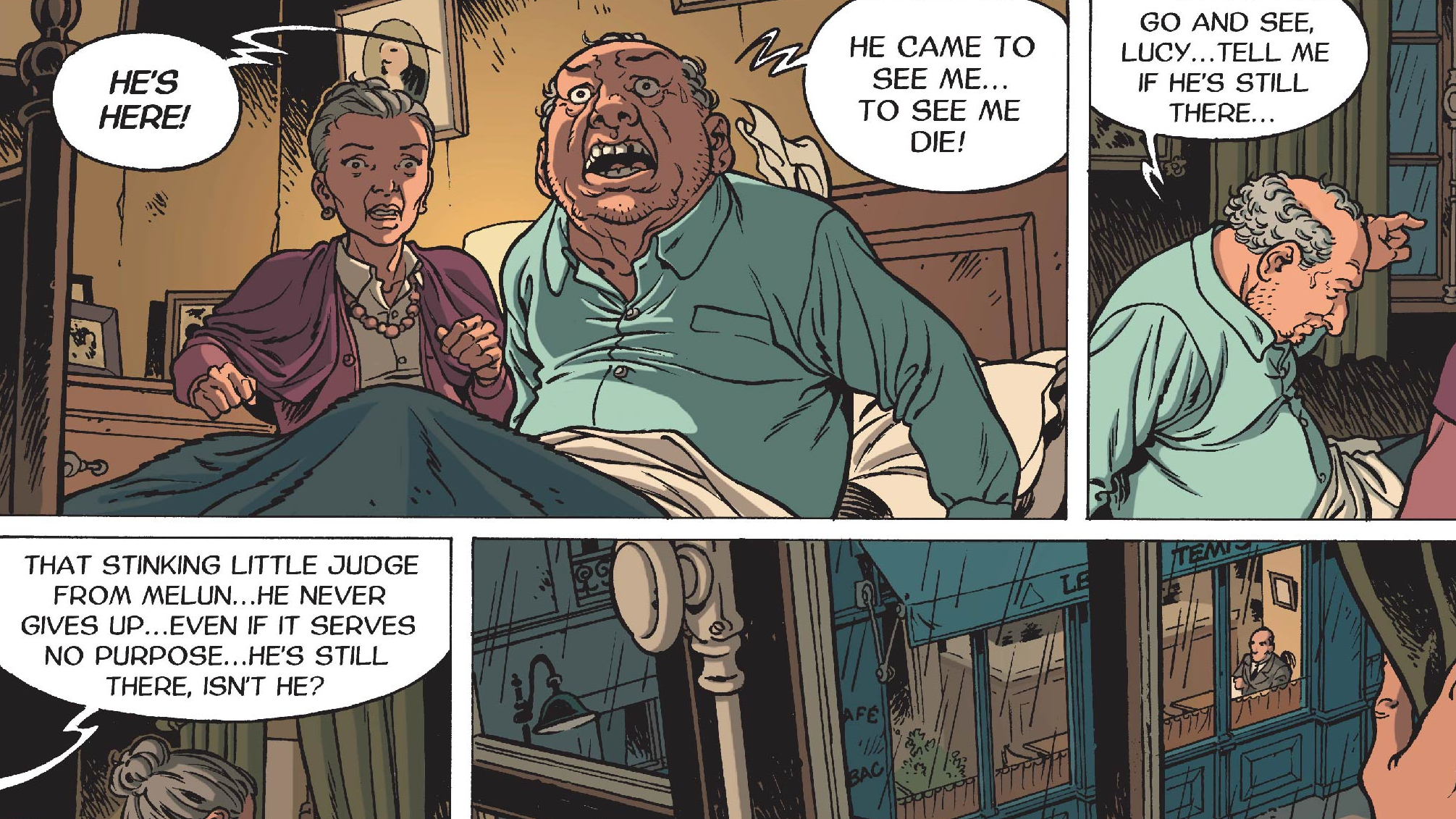
Nury’s script and Vallée’s masterful noir-style illustrations take readers along for a fast-paced, non-stop ride from the Kishinev pogrom to Joanovici’s death in Clichy, France in 1965. The narrative is not always chronological, and sometimes it is hard to distinguish among some of the unsavory secondary players — from Nazis to mobsters to dirty police authorities — that Joanovici got mixed up with. Trying to survive while making millions, Joanovici was constantly juggling relationships with allies and foes — and was not always sure which was which.
Graphic and gruesome ‘reality’
“Once Upon a Time in France” has its share of graphically violent scenes, and is not for the faint of heart reader. One such scene takes place when Joanovici, accompanied by his ever-loyal assistant and lover Lucy, are attacked in Mende, where Joanovici is on house arrest after being released from jail following his 1949 trial and conviction for economic collusion with the enemy. “I’ll never be safe,” cries Joanovici, who survives the attack. Indeed, this utterance sums up the anti-hero’s entire state of being.

Following the attack, Joanovici escaped to Israel in 1958, relying on the Law of Return to attain refuge. However, once the Israeli authorities discovered his criminal past and that he had entered the Jewish state on false pretenses, he was extradited back to France. Joanovici’s offers of philanthropic gifts to Israeli institutions in an attempt to get into the good graces of the Israeli authorities were rebuffed.
“The story tells something important about Israel in the 1950s. It saw itself as a moral state. It was a good public relations move for it to reject Joanovici,” Dreyfus said.
Joanovici was far from innocent, but Dreyfus pointed out that France’s focus on his collaboration with the Nazis was “a smokescreen,” a way to divert attention from the French establishment’s collaboration with Germany during the war.
“This book deals with the economic exploitation of France and the complexity of the times, and the difficulty France had coming to terms with collaboration in the immediate post-war period,” Dreyfus said.
Although “Once Upon a Time in France” is a very French story, Nury recognized its universal themes and is pleased that it is being translated into English.
“I think the destiny of this man has a universal feeling to it. Of course, it is deeply rooted in the history of France, but there is something about survival, power and guilt that can be felt in many countries,” Nury said.
According to the author, the timing of the English edition’s publication couldn’t be more appropriate. The story of Joanovici’s life and the choices he made are instructive for our times.
“[Soon] there will be no living witness of the worst crime in the history of mankind. And guess who’s back? The nationalists, the extremists, the merchants of hate that we hoped would be disqualified for centuries. It only took 80 years before they could crawl out from under their rocks,” Nury said. “We have to remember and honestly ask ourselves: What would I have done then? What should I do now?”







The Times of Israel Community.