

Hamas says jailed commander Abdullah Barghouti assaulted, starved in Israeli prison
Terror group says he was beaten by guard, lost half his body weight; no comment from IPS; Barghouti is serving 67 life terms for making bombs in the 2nd Intifada that killed dozens
 Add ToI as a Preferred Source on Google
Hamas on Thursday accused Israel of the “direct assault and deliberate beating” of Abdullah Barghouti, a notorious senior Hamas commander serving multiple life sentences in an Israeli jail for his role in suicide attacks during the Second Intifada.
Barghouti, a key leader in the terror group’s military wing and master bombmaker, was sentenced in 2003 to 67 life terms for making the bombs used in deadly attacks at the Hebrew University, Jerusalem’s Sbarro restaurant and the city’s Ben Yehuda pedestrian mall, and several other terror attacks, killing a total of 66 and injuring hundreds.
According to a statement released by the Hamas-affiliated Asra prisoner affairs agency, a jailer at Israel’s Gilboa Prison slammed Barghouti’s head against an iron door as he was on his way to a prison visit, leading him to bleed from near his left eye.
In addition, Barghouti’s body weight dropped from 110 to 60 kilograms (243 to 132 pounds) as a result of Israel’s “starvation policy,” the agency alleged. The agency’s statement did not specify when Barghouti was allegedly beaten, nor when his body weight started dropping.
In a statement to Al Jazeera, Barghouti’s family said it learned from his lawyer that he is subject to “continuous assaults” in prison: “We fear for his life.”
Meanwhile, top Hamas official Abdul Rahman Shadid claimed in a statement that “what happened to the commander Barghouti is an example of what thousands of prisoners are subject to” in Israeli jails, and calls for an “escalation of popular, media and legal action” against the treatment of Palestinians in Israeli prisons.
The Israel Prison Service did not respond to a request for comment.

National Security Minister Itamar Ben Gvir, who oversees the IPS, has repeatedly boasted of making conditions more difficult for Palestinian prisoners, including reducing rations, arguing he was “here to make sure the terrorists get the bare minimum.”
In September, the High Court of Justice ruled that the IPS was failing to provide enough food for Palestinian detainees and ordered conditions be improved, though recent testimony from released prisoners indicates conditions have not changed, with some reporting extreme hunger and abuse.
Previous reports compiled in 2024 from the Public Defender’s Office of Israel’s Justice Ministry showed that Palestinian security detainees held in Israeli prisons suffered from severe and systematic violence from prison guards, deprivation of food, and medical neglect, while also having been subjected to unsanitary conditions that caused and exacerbated outbreaks of disease in the prisons.
Inspectors from the office who visited four prisons that year documented seeing skeletal prisoners and witnessing physical evidence of beatings and medical neglect on the bodies of prisoners they interviewed. The reports were made public recently after a yearlong legal battle by the Association for Civil Rights in Israel (ACRI).
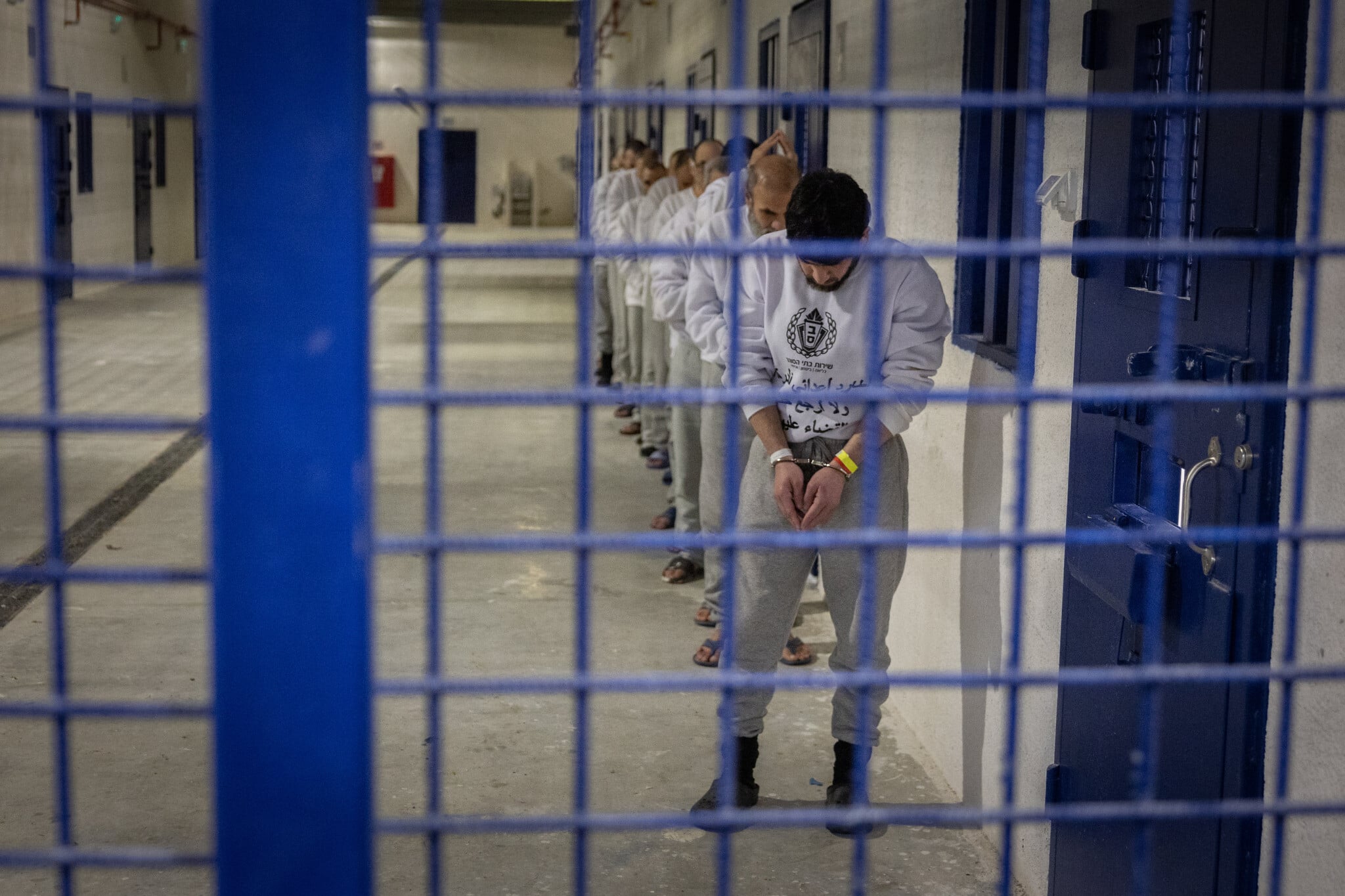
Independent verification of the treatment of detainees has become more difficult since the start of the war in Gaza following the Hamas-led October 7, 2023, attack, when Israel barred prison visits by the International Committee of the Red Cross, a role the Geneva-based body has played in conflicts around the world for a century.
ACRI, which was also involved in the High Court case, has accused the government of harboring a “policy of starvation” in prisons, and has petitioned the court to allow Red Cross access to Palestinian detainees. It has also applied to the court to have the IPS held in contempt for failing to comply with September’s order that it improve conditions.
At least 101 Palestinians have died in Israeli custody since the start of the Gaza war, according to the nonprofit Physicians for Human Rights Israel (PHRI).









The Times of Israel Community.