

Hezbollah rejects Beirut’s call to disarm as ‘major mistake’
Terror group says move ‘fully serves Israel’s interest’; IDF strike in Lebanon kills Hezbollah operative who it says directed terror cells in Syria to launch rockets at Golan
 Add ToI as a Preferred Source on Google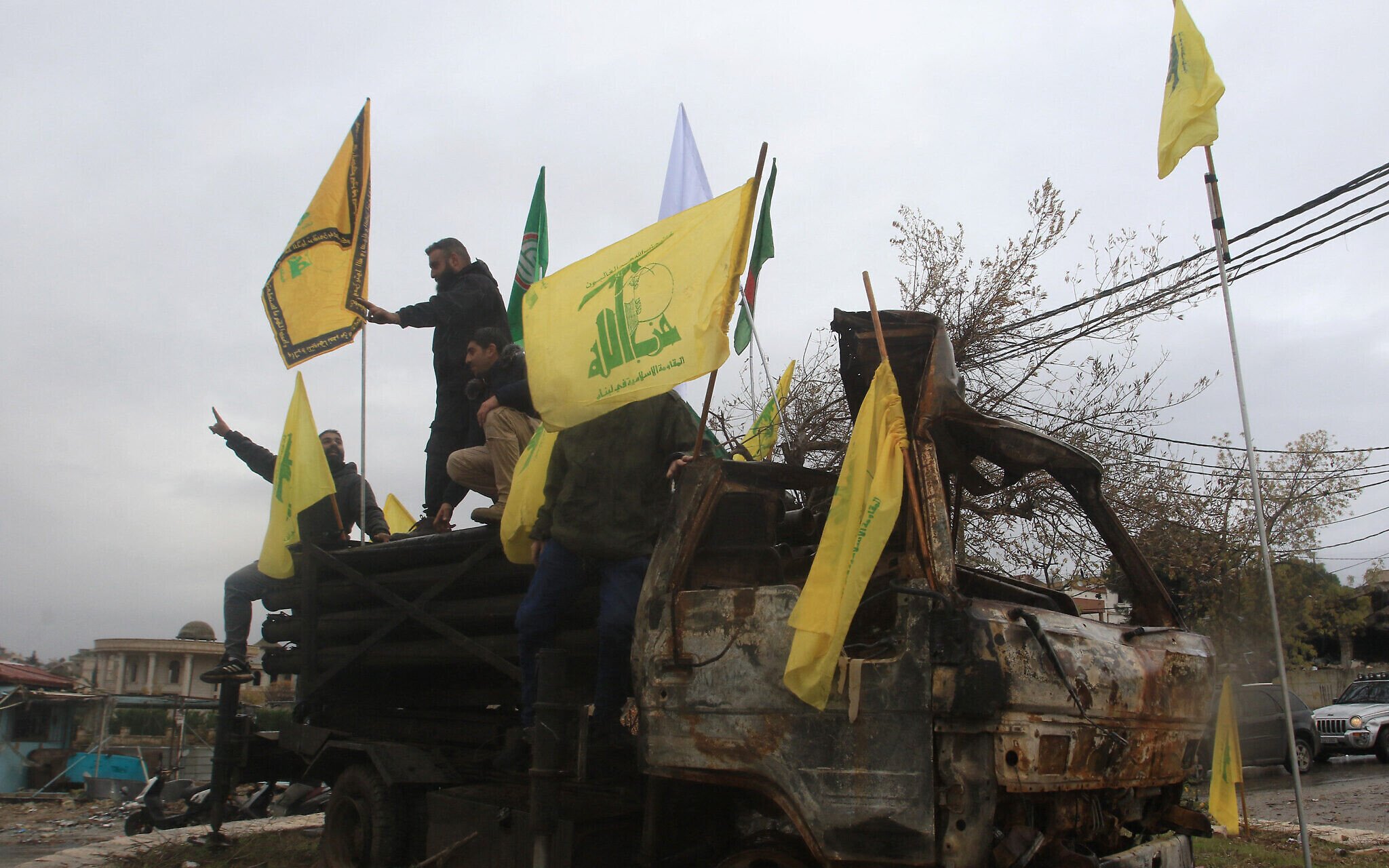
Hezbollah on Wednesday dismissed the Lebanese government’s announcement of plans seeking to disarm the terror group by the end of 2025, calling it a “major mistake” that harms the country’s sovereignty.
In a statement, the Iran-backed organization said in its response to Tuesday’s announcement that the move was a result of US “diktats” and that it will treat the decision “as if it does not exist.”
“This decision fully serves Israel’s interest,” the group said.
The statement said Shiite ministers walked out of the cabinet session before the decision was reached as “an expression of the resistance’s (Hezbollah’s) rejection of this decision.”
Nonetheless, Hezbollah said it remains open to a national strategic security dialogue, to ending what it called Israeli aggression against Lebanon, and to working on rebuilding and restoring what the “enemy has destroyed.”
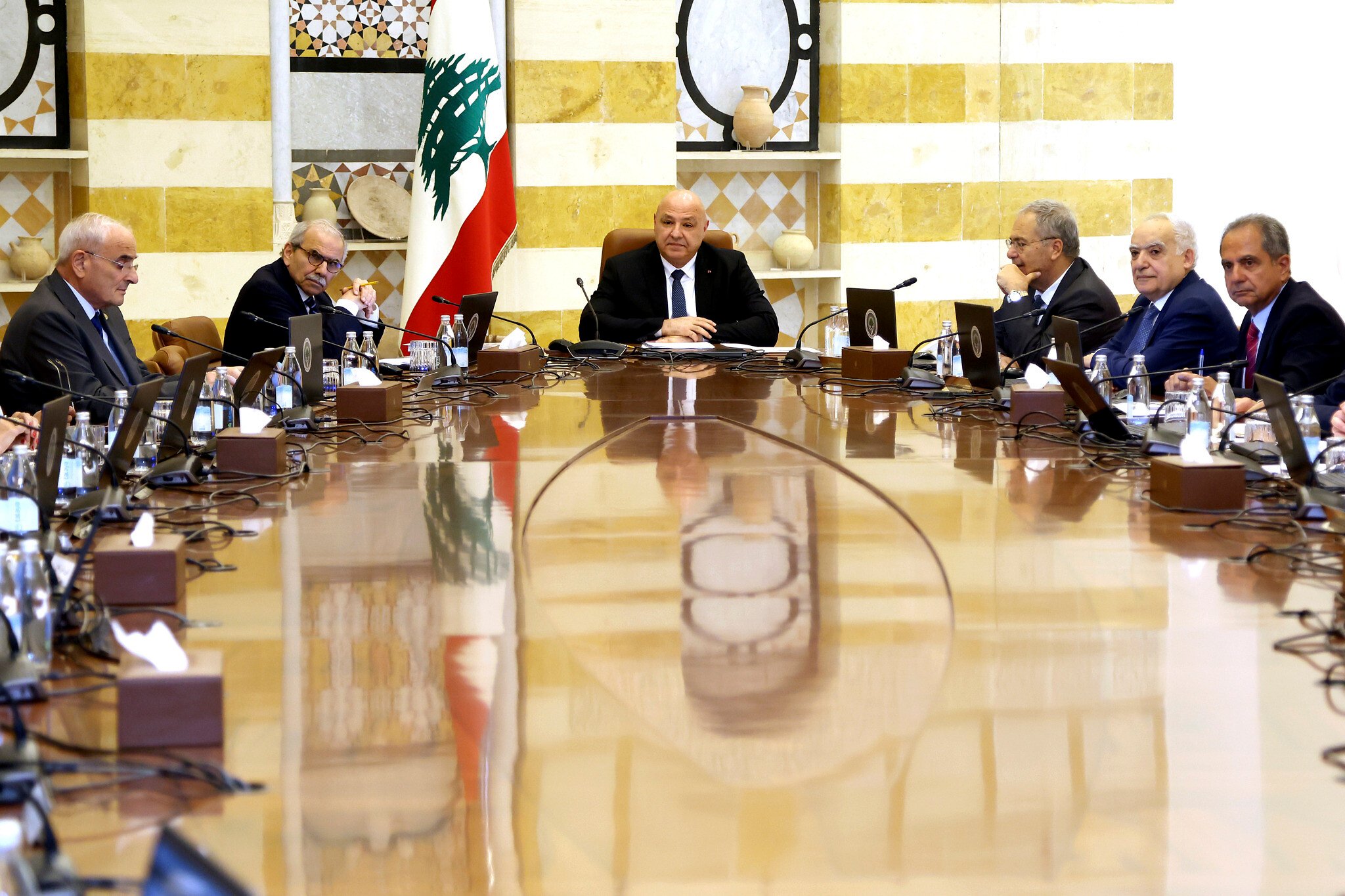
On Tuesday, the Lebanese government convened to discuss the clause asserting the state’s monopoly on arms, which effectively means the disarmament of Hezbollah, as part of a proposal submitted by the United States in June. However, at the end of the session, Prime Minister Nawaf Salam announced that the discussion on the matter was postponed until a cabinet discussion on Thursday.
A US-brokered ceasefire last November ended the conflict between Hezbollah and Israel, though Israel has continued to carry out strikes on what it says are Hezbollah arms depots and fighters, mostly in southern Lebanon.
The proposal made by US envoy Thomas Barrack included a roadmap to Lebanese officials to fully disarm Hezbollah, in exchange for Israel halting its strikes on Lebanon and withdrawing its troops from five points they still occupy in southern Lebanon.
That proposal included a condition that Lebanon’s government pass a cabinet decision clearly pledging to disarm Hezbollah.
With little progress on the proposals, Washington’s patience began wearing thin. It pressured Lebanon’s ministers to swiftly make the public pledge so that talks could continue.
But Lebanese officials and diplomats say such an explicit vow could spark communal tensions in Lebanon, where Hezbollah and its arsenal retain significant support among the country’s Shiite Muslim community.
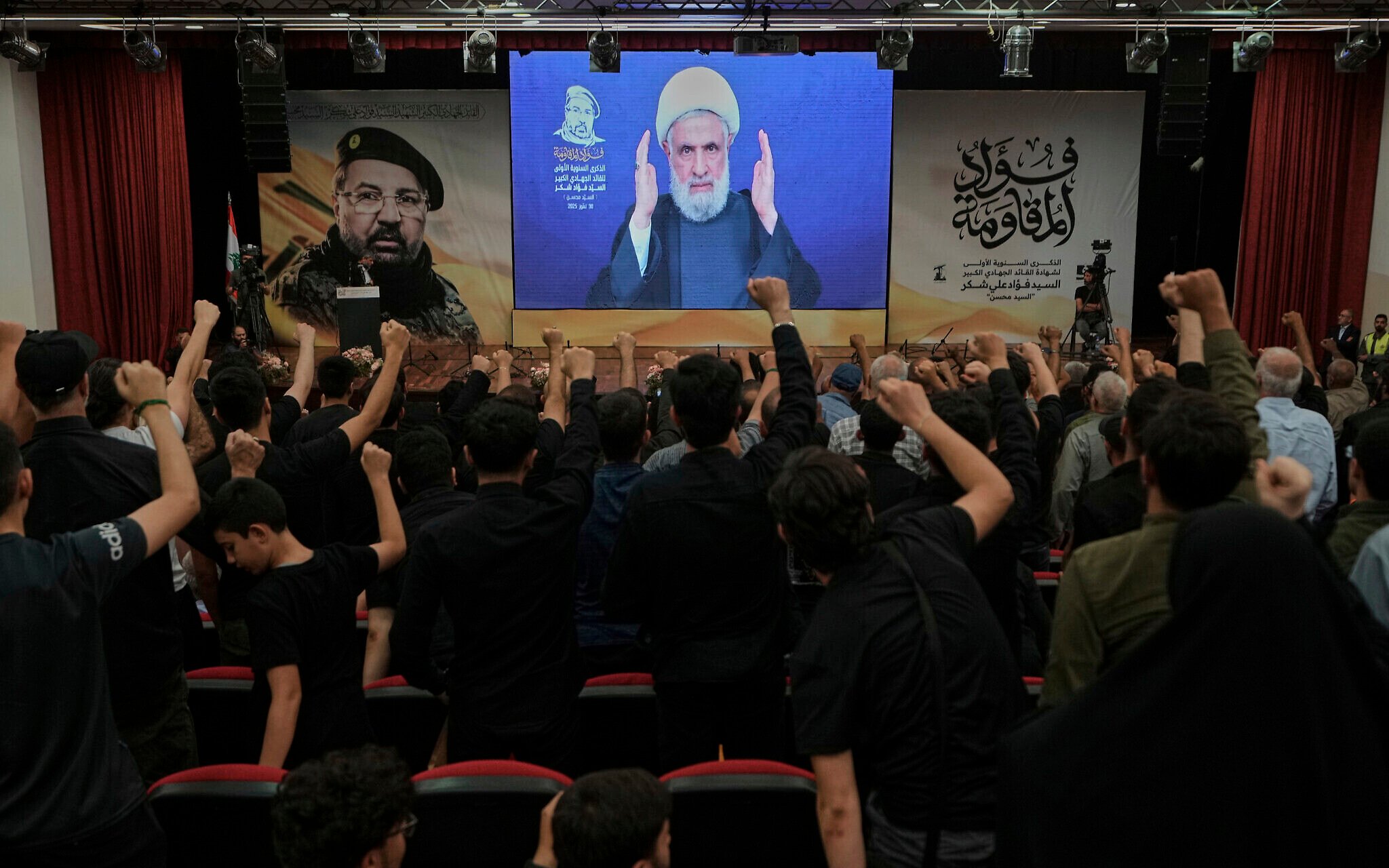
Hezbollah’s chief Naim Qassem on Tuesday also rejected calls to disarm and threatened a new war with Israel if it opened a “large-scale aggression” against Lebanon.
Hours after Hezbollah issued the statement on Wednesday, the IDF carried out airstrikes in southern Lebanon that it said targeted weapon depots, rocket launchers, and sites used to store construction vehicles that were used by the terror group to restore its infrastructure.
“The Hezbollah terror organization continues its attempts to restore terror infrastructure throughout Lebanon, while endangering Lebanese civilians and using them as human shields,” the IDF said, adding that the presence of weapons and Hezbollah’s activity in the area “constitutes a violation of the understandings between Israel and Lebanon.”
Earlier in the day, the IDF said it killed a Hezbollah operative in an overnight drone strike in Lebanon’s northeastern Beqaa Valley.
According to the military, the operative, Hassam Qassem Gharab, was directing — from Lebanon — terror cells in Syria to launch rockets at the Golan Heights in northern Israel.
“The terrorist’s activity posed a threat to the State of Israel and its citizens,” the IDF said.
Since the beginning of a ceasefire in November 2024, the IDF says it has carried out over 500 airstrikes against Hezbollah targets in Lebanon, killing at least 230 operatives and destroying dozens of sites belonging to the terror group, saying they violated the terms of the truce.







The Times of Israel Community.