

High Court rejects bid to annul 3.25% Knesset threshold
Justices cite proximity to general election and suggest petitioners make fresh attempt ahead of next election
 Add ToI as a Preferred Source on Google
Itamar Sharon is a news editor at The Times of Israel
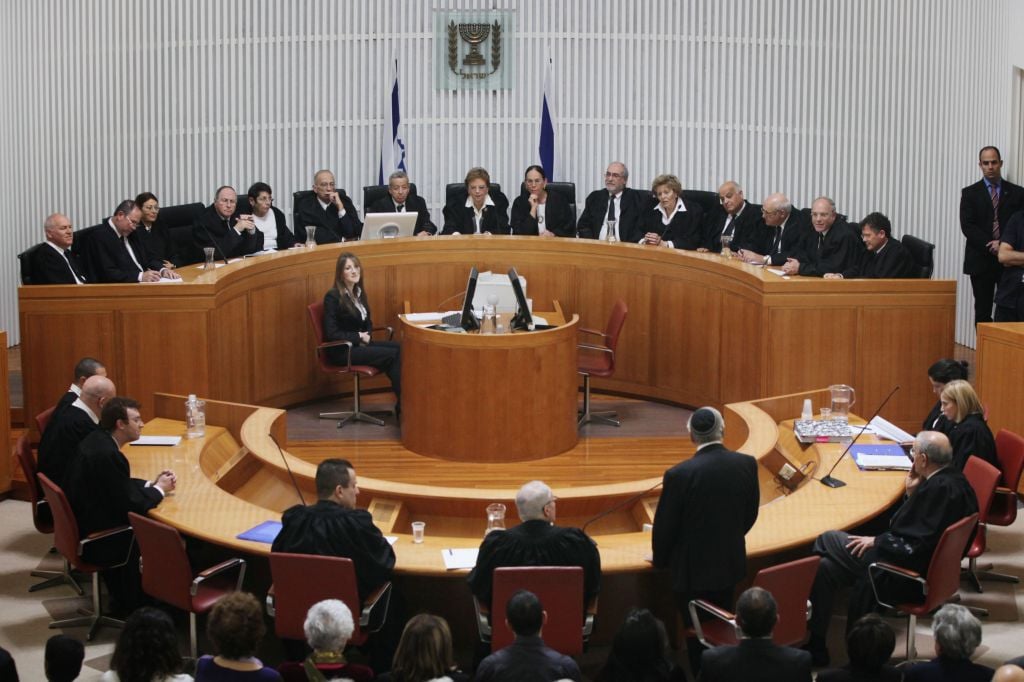
The High Court of Justice on Wednesday rejected a petition to annul the 2014 governance law, which raised the minimum threshold for a party to enter the Knesset to 3.25 percent of the popular vote, up from the previous 2%.
The law, which will come into effect for the first time in the coming general elections on March 17, effectively prevents a party from entering the Knesset with fewer than four seats. The move was seen by analysts as having a potentially devastating effect on the Arab parties — none of which would have cleared the 3.25% threshold on its own had it been applied to the results of the last elections — and has forced them to consider a merger in order to stay afloat.
The petitioners, among which were the Association for Civil Rights in Israel and the Arab rights group Adalah, claimed that the new law would disenfranchise Arabs by preventing them from expressing their myriad political viewpoints in the polls, forcing them all into one category and weakening them.
But the court justices rejected the appeal 8-1, citing the proximity of the election and adding that they would expound upon the decision at a later date.
However, the justices added that the appeal could be reviewed again following the March vote and in the run-up to a future election, after the effects of the law on the next Knesset are more clearly understood.
A meeting of the Arab parties on Saturday to discuss forming a joint list ended without agreement.
During the meeting, which was held in Israel’s largest Arab town, Nazareth, representatives of the countries’ Arab parties — Ra’am, Ta’al, Hadash and Balad — and the Islamic Movement met to try and agree on a joint list.
Despite over a month of negotiations leading up to the summit, according to an unnamed source, serious differences of opinion left the parties further apart than ever.
“The chances of making such a list were 50-50,” the source said. “After the meeting they are lower than before.”
Another meeting has been planned for the coming days.
Stuart Winer contributed to this report.








The Times of Israel Community.