

How Hannah Arendt faced down tyranny in the US, far from Eichmann’s Jerusalem trial
New documentary airing June 27 in the US on PBS explores how the Jewish writer and activist brought lessons from WWII Germany to McCarthy-era America — and draws a modern-day parallel
 Add ToI as a Preferred Source on Google
Reporter at The Times of Israel
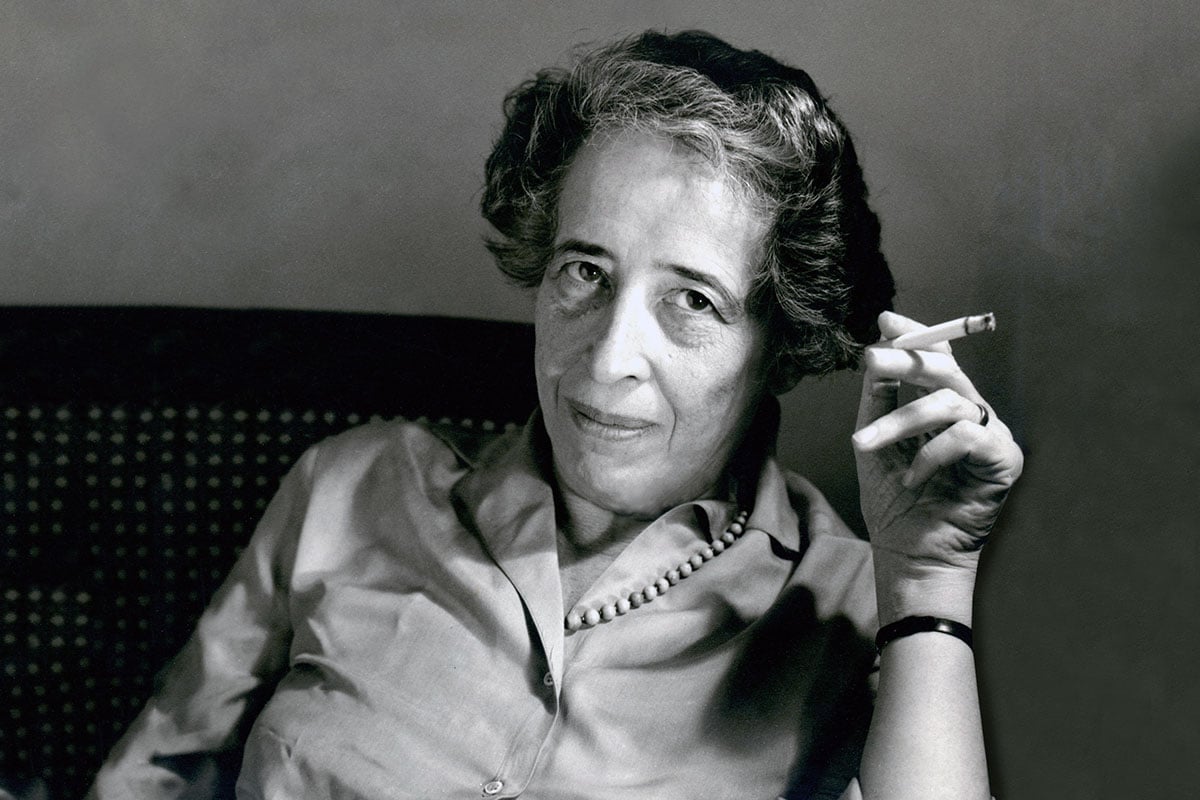
On-screen, a speaker discusses a menacing political figure in the United States targeting universities and naturalized citizens. No, it’s not the America of today, but rather from over 70 years ago, during the McCarthy era. And the voice of conscience protesting it all was Hannah Arendt — a Jewish-German philosopher who knew firsthand the dangers of governmental overreach.
By the 1950s, Arendt — today known widely for coining the much-quoted phrase, the banality of evil — had fled occupied Europe to the US during World War II, taken American citizenship, and penned the acclaimed book “The Origins of Totalitarianism” in 1951, its publication coinciding with the rise of McCarthyism.
Arendt’s reaction to the politics of her adopted homeland is explored in a new documentary, “Hannah Arendt: Facing Tyranny,” which premieres on PBS Friday, June 27, at 9:00 p.m. EST.
Filmmaker Jeff Bieber got the idea for the film as a reaction to a more recent American political event: The January 6, 2021, riots at the US Capitol, in which supporters of President Donald Trump disrupted Congressional certification of the 2020 election results.
“After January 6,” Bieber told The Times of Israel over Zoom, “I started to question what was going on in politics, civil society … I was reading a lot of different people, including Hannah Arendt. I was already curious to figure out what could be an interesting and unique documentary.”
This one would spotlight what he calls an overlooked aspect in Arendt’s life: Her years in the US, beginning with her arrival as a European refugee in 1941.
“All of her major works were written here, in New York,” Bieber pointed out, adding that she was influenced by “a lot of what happens in this country — the McCarthy issue, the student protest movement, the release of the Pentagon Papers, Watergate. After January 6, I said, ‘OK, there was an opportunity here.’”
Bieber is a veteran filmmaker with four Emmys to his credit. As an executive producer of the political news magazine program “Washington Week,” he covered some of the pivotal moments of the early 20th century, from 9/11 to the wars in Afghanistan and Iraq. His previous films include a history of the US Holocaust Memorial Museum. He is an American Jew whose father served in WWII as a medic and was present at Buchenwald mere days after its liberation.
The filmmaker calls his latest project “a team process,” in which he served as co-director with Chana Gazit and co-writer with Maia Harris, “working with both American Masters, which was really supportive of the film, and [Germany-based production company] LOOKS Film.” He also saluted the film’s editor, Sabine Krayenbuhl.
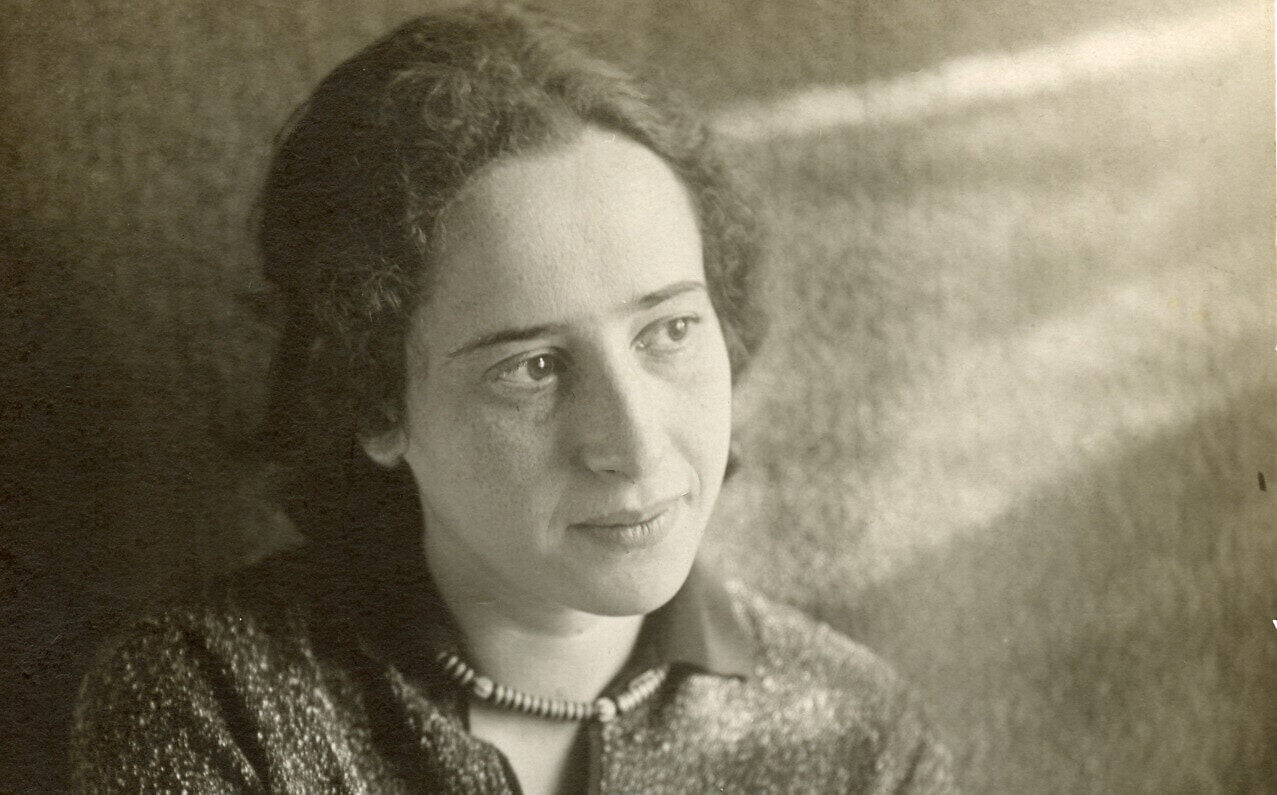
Heading into the release date, the parallels have arguably increased. There has been another election, won by Trump, whose second administration has prosecuted undocumented migrants while targeting universities such as Harvard and Columbia for alleged antisemitism on campus, with judges blocking some of his moves and protesters holding “No Kings” demonstrations.
Also, since then, the Israeli-Palestinian crisis has come to the fore, first through the deadly Hamas onslaught of October 7, 2023, and then via the devastating Israeli war against Hamas in Gaza.
A prescient voice

Arendt’s take on a Jewish homeland in the Middle East was nuanced: In 1935, for three months, she worked in British Mandate Palestine, helping with the Youth Aliyah, which brought Jewish European refugee children to safety in the Middle East. However, her vision for Palestine was a binational, federated state in which Jews and Arabs could coexist.
“She saw what happened with nation-states, the nation-state of Germany,” Bieber said. “You had to be white and Aryan. Everybody else was a second-class citizen… She was against the creation of a Jewish state that did not welcome Arabs, or did not have a form of government in which Arabs and Jews could work together. Her findings are pretty prescient.”
In Arendt’s native Germany, she was an often lonely voice against totalitarianism, which she observed firsthand until the 1930s — insights that she later incorporated into “The Origins of Totalitarianism.”
Shortly after Adolf Hitler rose to power, the Reichstag mysteriously burned, giving Hitler carte blanche to target German Jews under the antisemitic policies he had outlined years before in “Mein Kampf.” Hitler assumed dictatorial powers and ultimately led Germany into WWII, unleashing the Holocaust and its destruction of two-thirds of European Jewry.
As Arendt researched totalitarianism in the postwar years, she became interested in studying the ordinary citizens who enabled a dictator like Hitler to pursue his murderous policies — people like Adolf Eichmann, who presided over the transportation of Jews and other minority groups to the death camps.
When the State of Israel apprehended Eichmann in Argentina and brought him to Jerusalem for a trial, Arendt covered the proceedings for The New Yorker. Her journalistic verdict: He was not a larger-than-life monster but something even worse, an ordinary man who surrendered himself to the unholy cause of Nazism. This backboned her magazine article, which became the book “Eichmann in Jerusalem: A Report on the Banality of Evil.”
“She observes this guy, talking in cliches,” Bieber said. “He tells people, ‘I was not involved in killing, that was not my job.’ There were not just hundreds but thousands of people like him — your neighbor mowing the lawn, who was nice to grandma and grandpa, a Sunday school teacher, yet participated in a mass killing machine. She realizes human nature is very complex. Out of this came her book, ‘Eichmann in Jerusalem.’”
“Eichmann in Jerusalem” also examined the situation of Jews in occupied Europe who cooperated with the Nazis in the Jewish Councils or Judenraete. When the Nazis established ghettos to confine Jews, they established ostensible Jewish leadership councils, which helped provide essential services but also could be tasked with identifying fellow Jews to be deported. (The Holocaust Encyclopedia states that the Judenraete “faced impossible moral dilemmas.”)
Her decision to include the Judenraete in her work was criticized by some as insensitive. The documentary shows her response: In a well-known black-and-white 1964 interview on West German TV, she told host (and fellow intellectual) Günter Gaus: “If I had known this would happen, I probably would have done precisely what I did do.”
“Hannah Arendt: Facing Tyranny” excerpts the interview with Grass multiple times and gives voice to Arendt in another way through German actress Nina Hoss. It is Hoss who reads Arendt’s lines from books, magazines and letters, including poignant correspondence with another fellow intellectual, Mary McCarthy, who was for a time Arendt’s executor after the latter died of a heart attack in December 1975.
What we do for love
Meanwhile, numerous experts share perspectives on Arendt — scholars such as Lyndsey Stonebridge of the University of Birmingham and Roger Berkowitz of Bard College, and individuals who knew Arendt personally, including her former teaching assistant, Elizabeth Minnich, and Leon Botstein, who was a student of Arendt’s at the University of Chicago.
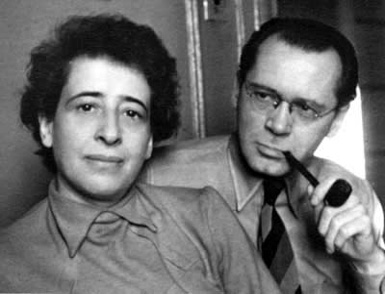
It is Botstein who cuts through the philosophical subtleties to explain a mysterious inconsistency in Arendt’s life. When she herself was an undergraduate at the University of Marburg, she had a two-year romance with her philosophy professor, the rising academic star (and married father of two) Martin Heidegger. Under the Nazis, Heidegger accepted the new antisemitic policies, helping the university expel Jewish students and faculty, including his own advisor. This led Arendt to break off ties with him. Twenty-five years later, returning to postwar Germany in a bid to help return stolen Jewish property, Arendt agreed to meet with a down-on-his-luck Heidegger at a Freiburg hotel. (She herself was married — happily — to her second husband, German-born Heinrich Blücher.)
How could Arendt, so opposed to totalitarianism, meet a former Nazi? For Botstein, it was all about that improbable but ever-so-human phenomenon known as true love.
“The answer is so simple,” he says on camera. “Martin Heidegger was the love of Hannah Arendt’s life. Friendship and intimacy triumphed over politics.”
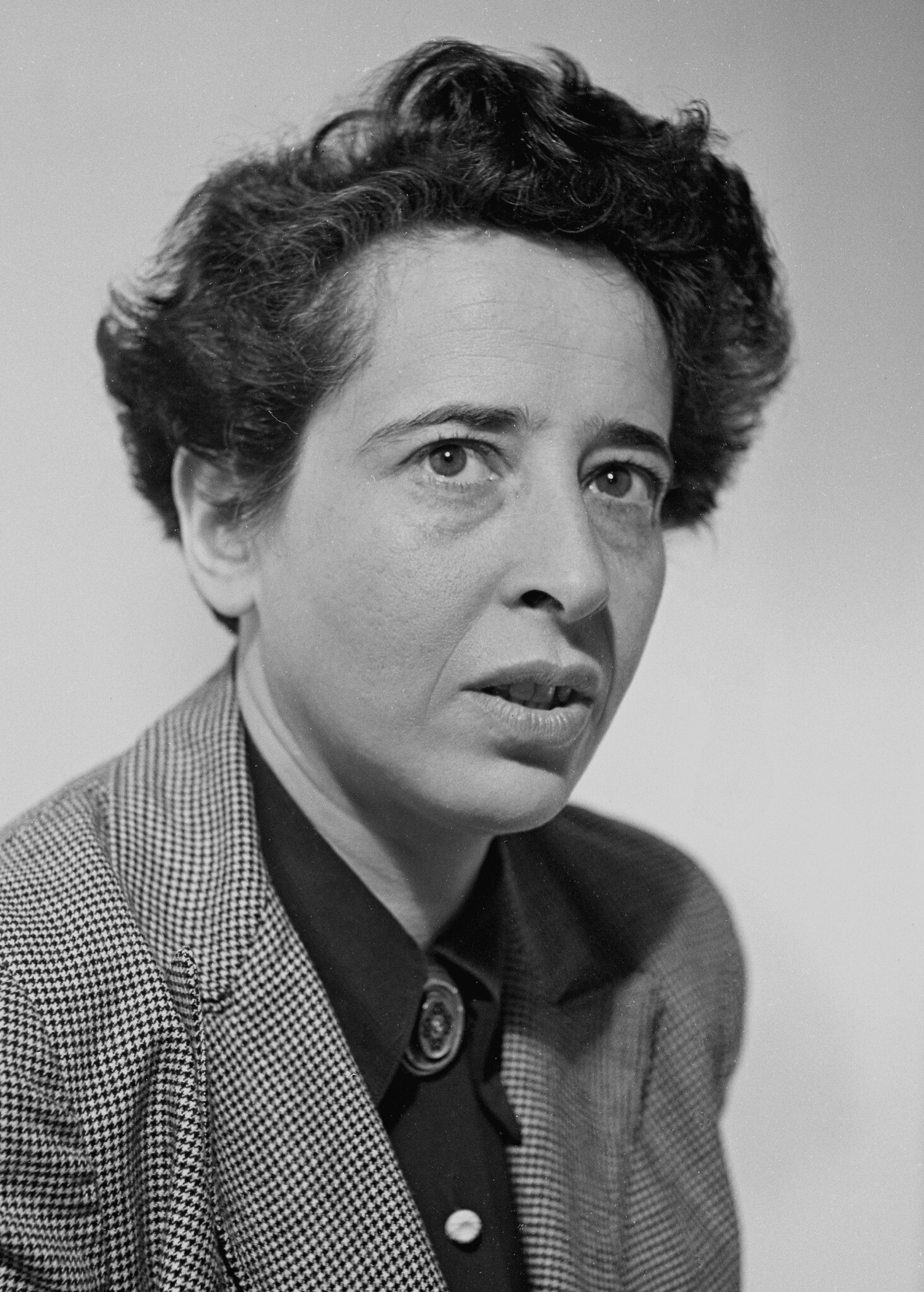
“It’s a complicated story,” Bieber said. “What it shows is that she was human to a fault. Human beings are not perfect. It’s what makes her such a fascinating subject.”
Her love for Blücher ended up being deep enough. When he fell sick in 1962, she left her faculty position at Wesleyan University and returned to be with her husband in New York. As she was heading back home in a taxi, it was struck by a truck in Central Park, and Arendt sustained devastating injuries. In a powerful scene, the film shows a montage of various moments of her life as she fights to stay alive.
“During a fleeting moment, I had the feeling that it was up to me to decide whether I wanted to live or die,” Arendt says in a voiceover. “Even though I did not think that death was terrible, I also thought that life was quite beautiful, and that I rather like it.”
She continued to be an influential public intellectual for 13 more years.







The Times of Israel Community.