

Hundreds gather to remember Hersh Goldberg-Polin on second anniversary of his murder in Gaza
Memorial event for hostage executed by his captors, held at Baka community center in Jerusalem, brings together Goldberg-Polin’s family, friends, neighbors as well as Hapoel Jerusalem fans
 Add ToI as a Preferred Source on Google
Jessica Steinberg, The Times of Israel's culture and lifestyles editor, covers the Sabra scene from south to north and back to the center
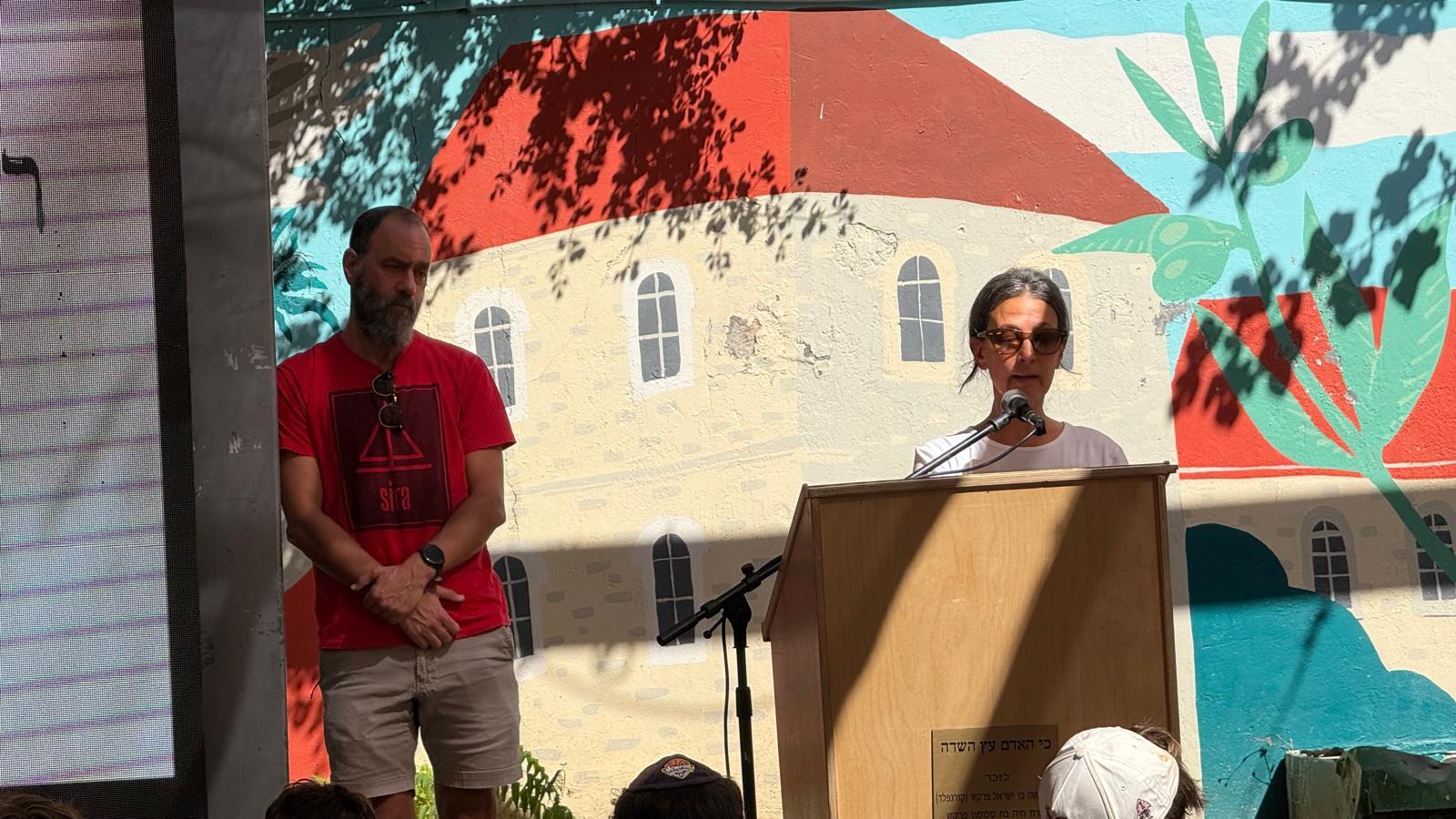
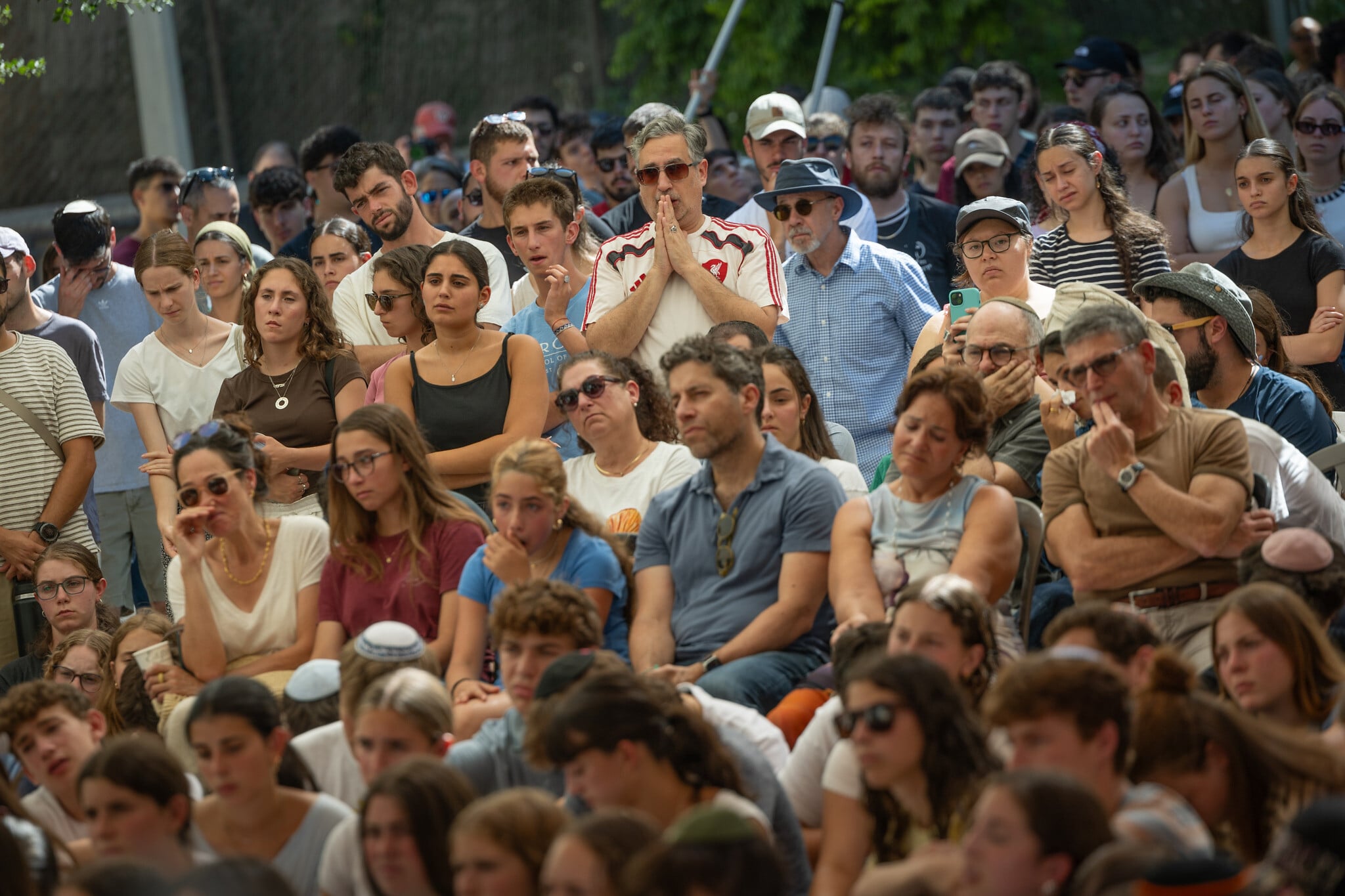
Hundreds gathered on Friday in Jerusalem to remember Hersh Goldberg-Polin, an Israeli-American citizen taken hostage by Hamas terrorists on October 7, 2023, and murdered in captivity in August 2024.
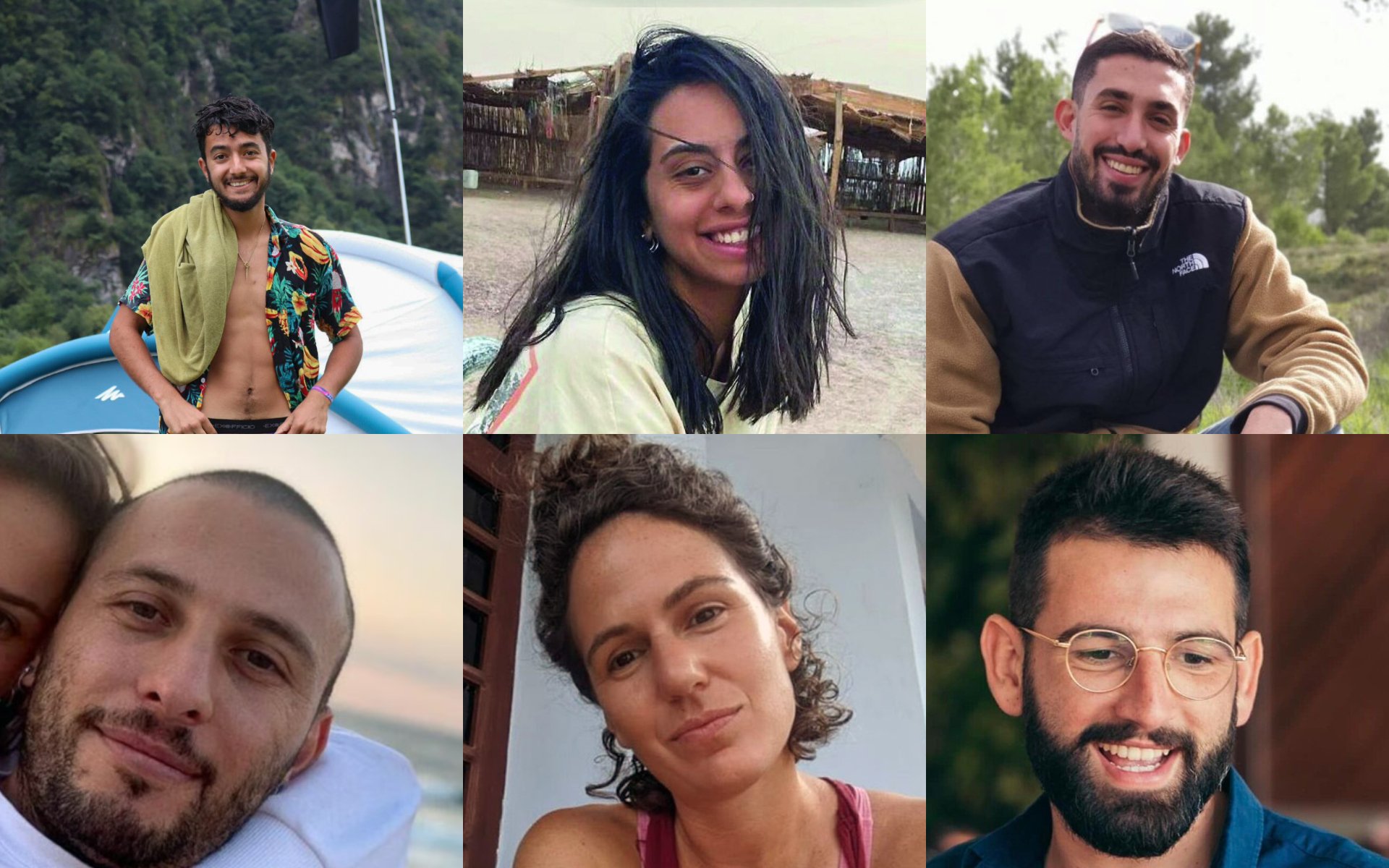
The ceremony, organized by family and friends, marked the official Hebrew calendar date of Goldberg-Polin’s death, when he and fellow captives Almog Sarusi, Carmel Gat, Eden Yerushalmi, Alex Lubanov and Ori Danino were executed by their Hamas captors at close range in an underground tunnel in Gaza, as IDF troops unknowingly approached their location.
Goldberg-Polin was one of the most well-known globally of the 251 people taken hostage in the October 7 attack. That was largely due to the relentless efforts of his parents, Jon Polin and Rachel Goldberg-Polin, who traveled the world advocating for their son’s release and spoke in a variety of high-profile forums.
Friday’s event was held in the courtyard of the Baka community center, where the Goldberg-Polins’ synagogue, Hakhel, is located.
Ayelet Haas, a family friend, opened the ceremony, noting that the space where everyone was gathered was where Hersh grew up playing games, praying with his community and dancing with his family and fellow synagogue members — doing so for the last time on October 6, 2023, Simchat Torah night, before he went to the Nova festival that was attacked on October 7 by Hamas terrorists.
“Hersh grew up in this place,” Haas said.
Speakers included Hersh’s parents, his sisters Leebie and Orly, and several of his friends, including two from the fan club of the Hapoel Jerusalem soccer team, of which he was an active member.
Rachel Goldberg-Polin, whose words in public and in her book, “When We See You Again,” have come to embody the grief and loss of October 7, spoke of being stuck in time.
“I live in a place where my clock has no arms,” she said. “The big and the little hands broke off, and the second hand is not there either. So it’s just a face with numbers that used to mark the time.”
She continued: “I’m trying to unpack the trying. You gave us the chance to try and maybe it is the trying that saved us, even though we couldn’t save you.”
Goldberg-Polin also addressed the crowd of friends and neighbors sitting outside the Baka community center in the warm Friday afternoon sun:
“All of us here, we ran, and begged and prayed and screamed and drowned and rose and boiled and baked and tore and kneeled and keeled and stood and pled and bat and cracked and kicked and crashed and thrashed and tried and cried and lied and grabbed and fell and waited and shrieked and died and lived and live and loved and loved and loved and love and love and failed,” she said.
She continued: “Oh dear God, we failed, but we tried. And we tried because you kept yourself alive for us to try. You were and are our why. So thank you, the most precious boy of my lifetime — thank you, my golden forever thirst for whom I will always be parched.”
Jon Polin spoke in Hebrew about hearing the repeated calls for unity, but noted that “we are getting ahead of ourselves” given that Israelis are “still shaken, still in turmoil.”
“To call for unity before we have truly tried to understand one another, before we are willing to show each other basic respect… is like demanding silence before the storm has passed. It simply does not work,” said Polin. “And unity proclaimed too soon may even make things worse, because it becomes a form of silencing: we stop hearing one another.”

His final message was to his son.
“Hersh, the revolution for the better is still the goal,” said Polin, referring to the refrain repeated after Hersh’s death, “May his memory be a revolution.” The family has spoken of the need for a societal “revolution for goodness.”
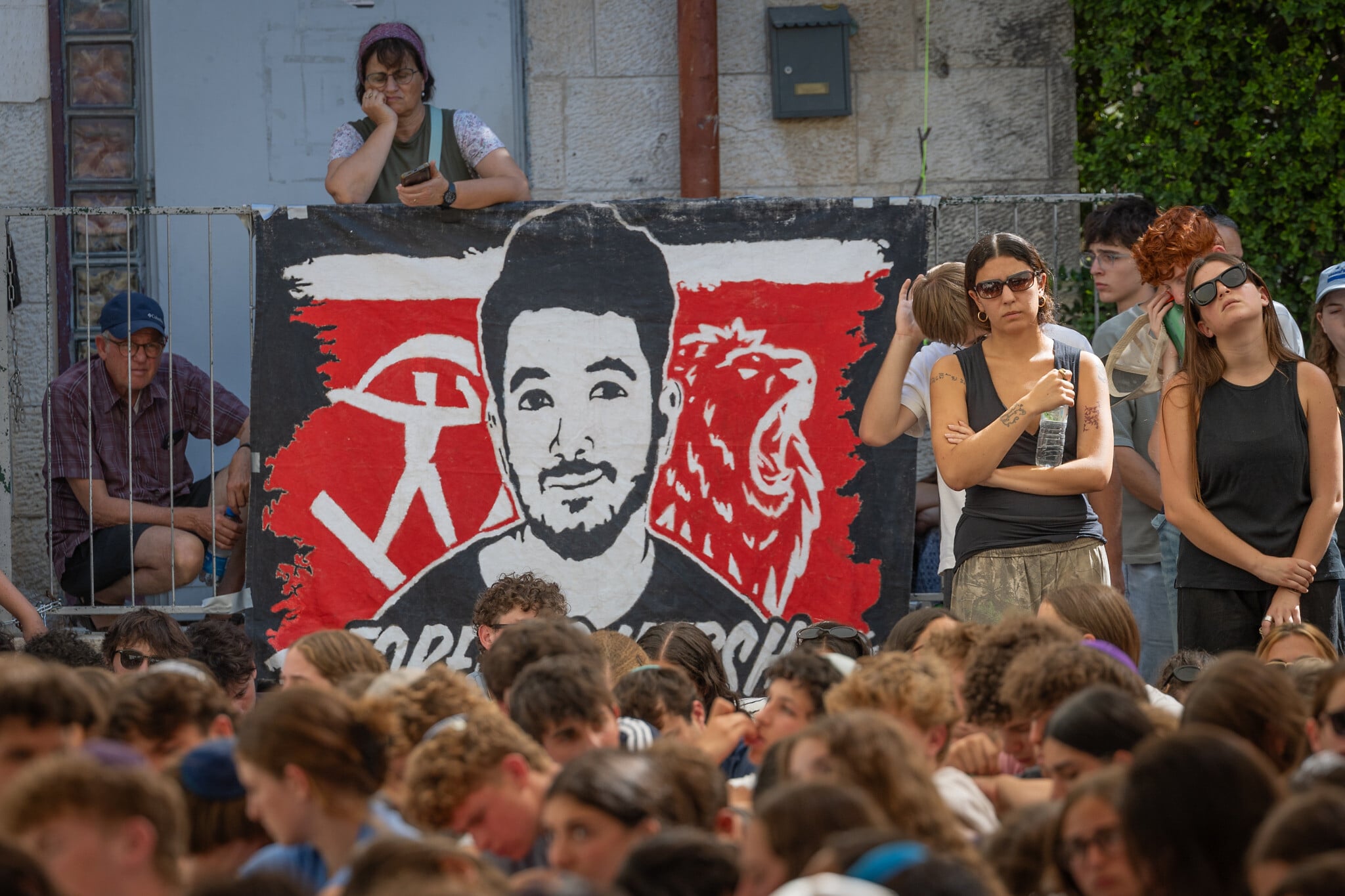
The memorial began with a song performed by a group of musicians, fellow fans of Hapoel and friends of Hersh, who explained that they had put the band together in Hersh’s name.
They played a haunting song based on a chant repeated at games, turning it into a plaintive ballad about the loss of Hersh in their lives.

Two friends from the Hapoel fan club spoke about how Hersh exemplified openness in his deep connection to Jerusalem, adding that they would continue decorating his grave with the latest scarves and symbols of the Hapoel team.
Hersh’s sisters each spoke briefly about Hersh, and of how his image had become as familiar and known as that of a celebrity, but to them, he was still simply their brother.







The Times of Israel Community.