Icing on the matzah: NY kosher food maker turns over for Passover
At Hanan Products, which makes whipped toppings, icings and dessert fillings for bakery industry, the cleaning and production begins long before weeklong springtime holiday
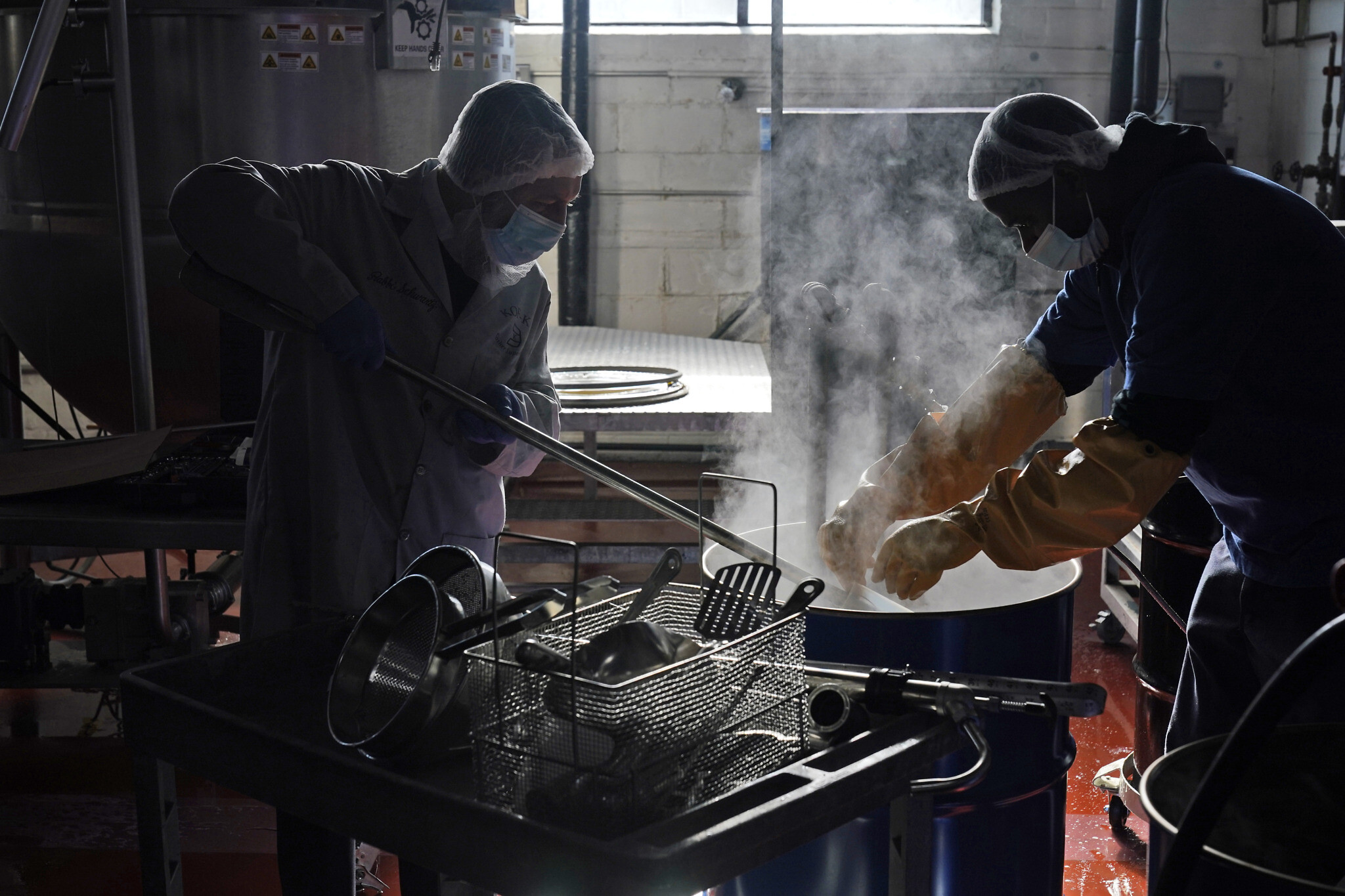
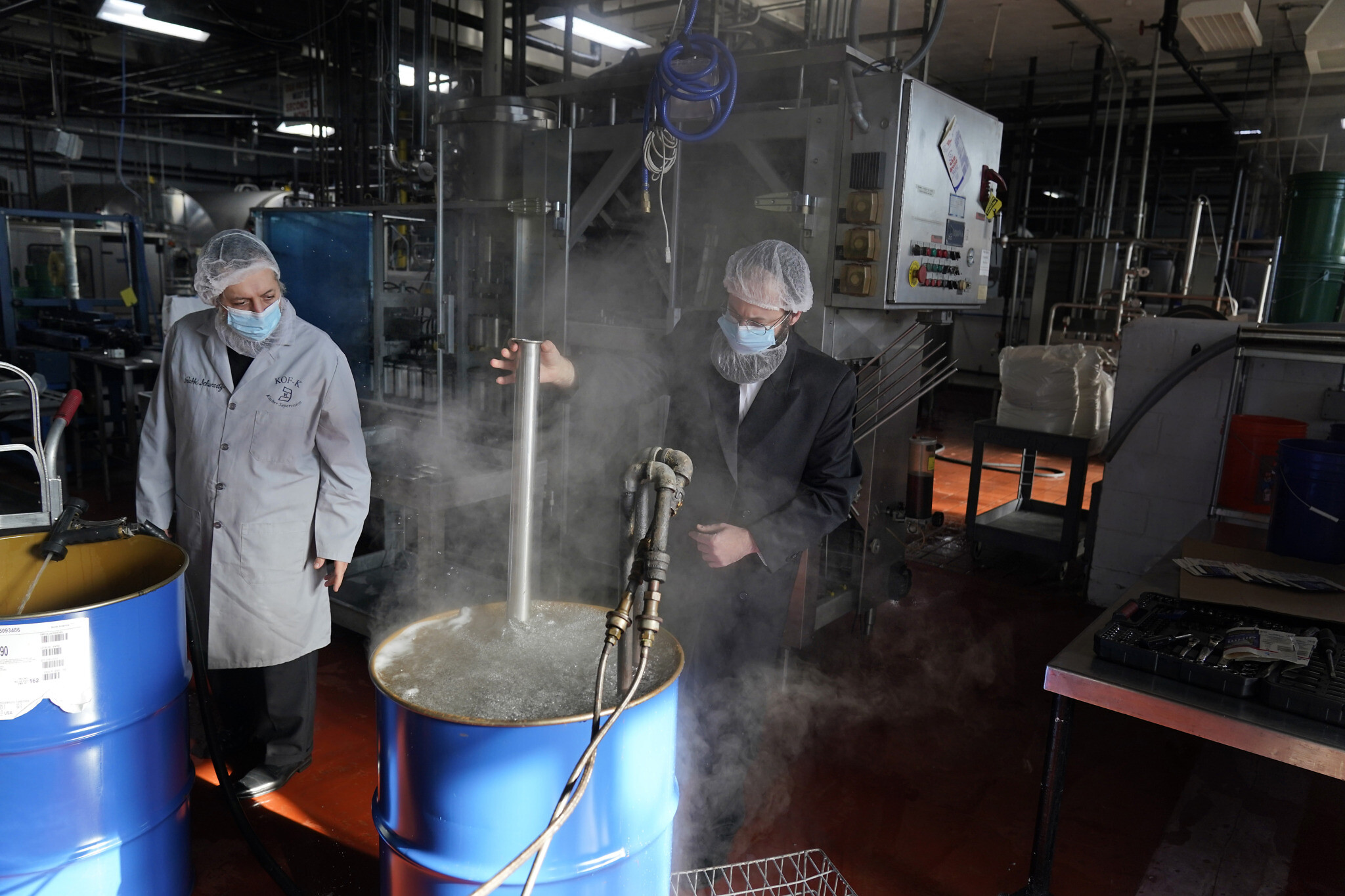
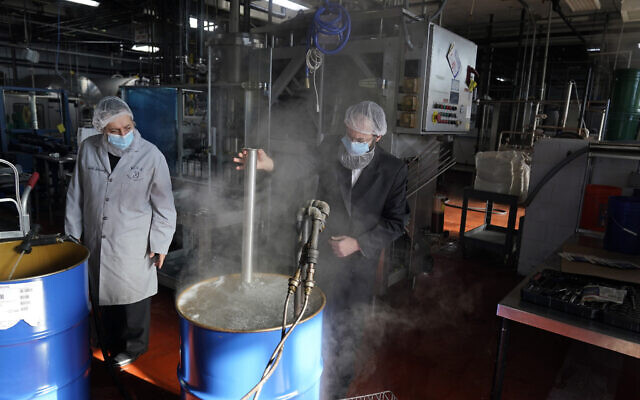
Rabbi Joseph Schwartz, left, and Ryan Eleazar use boiling water to kosherize equipment for the Hanan Products' kosher-for-Passover production run on Jan. 7, 2021. (AP/Seth Wenig)
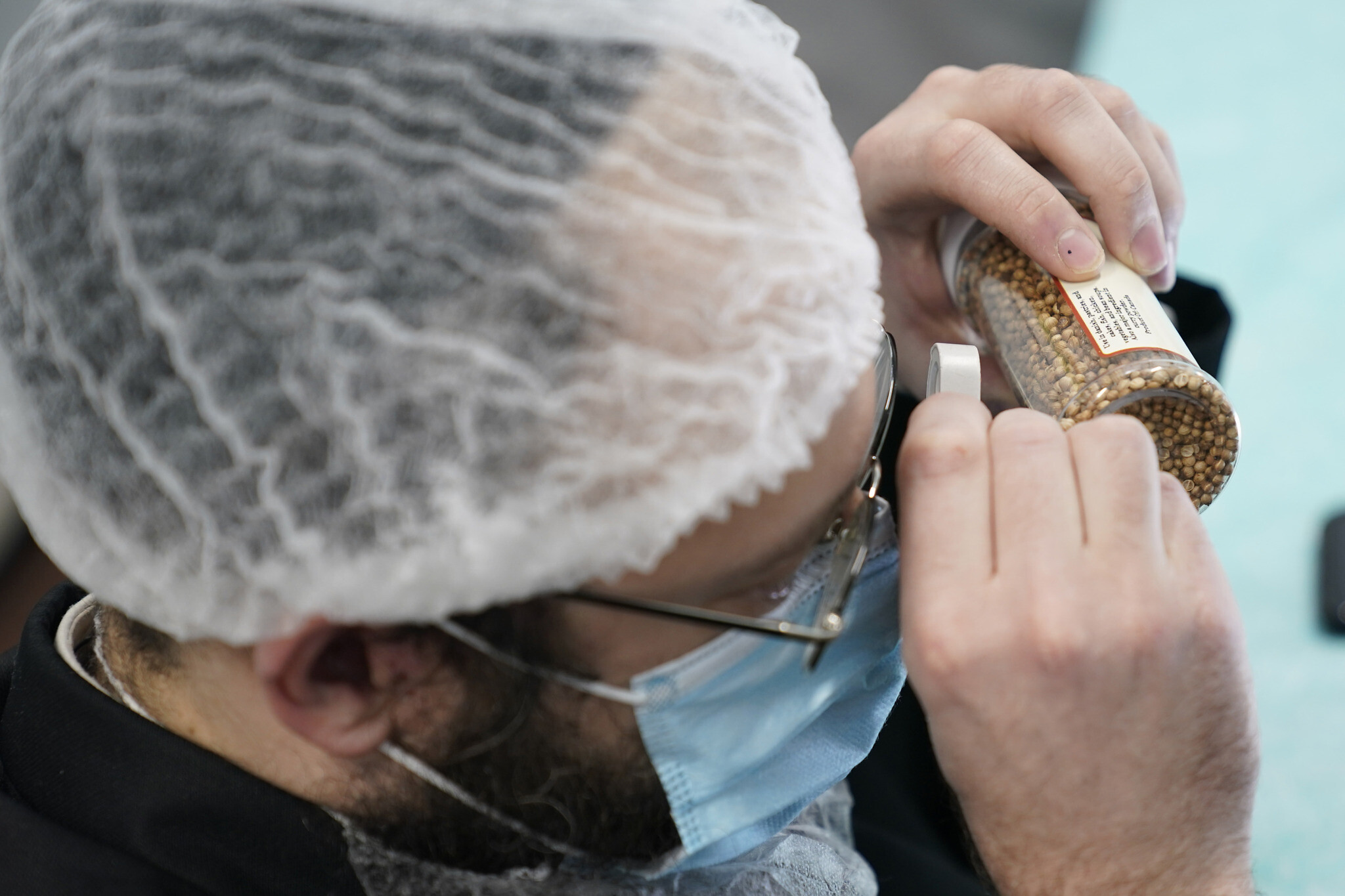
While waiting on a delivery at Hanan Products, Rabbi Mendel Einhorn catches up on some work from another job by looking for insects in samples of their products on Jan. 7, 2021, in Hicksville, N.Y. (AP Photo/Seth Wenig)
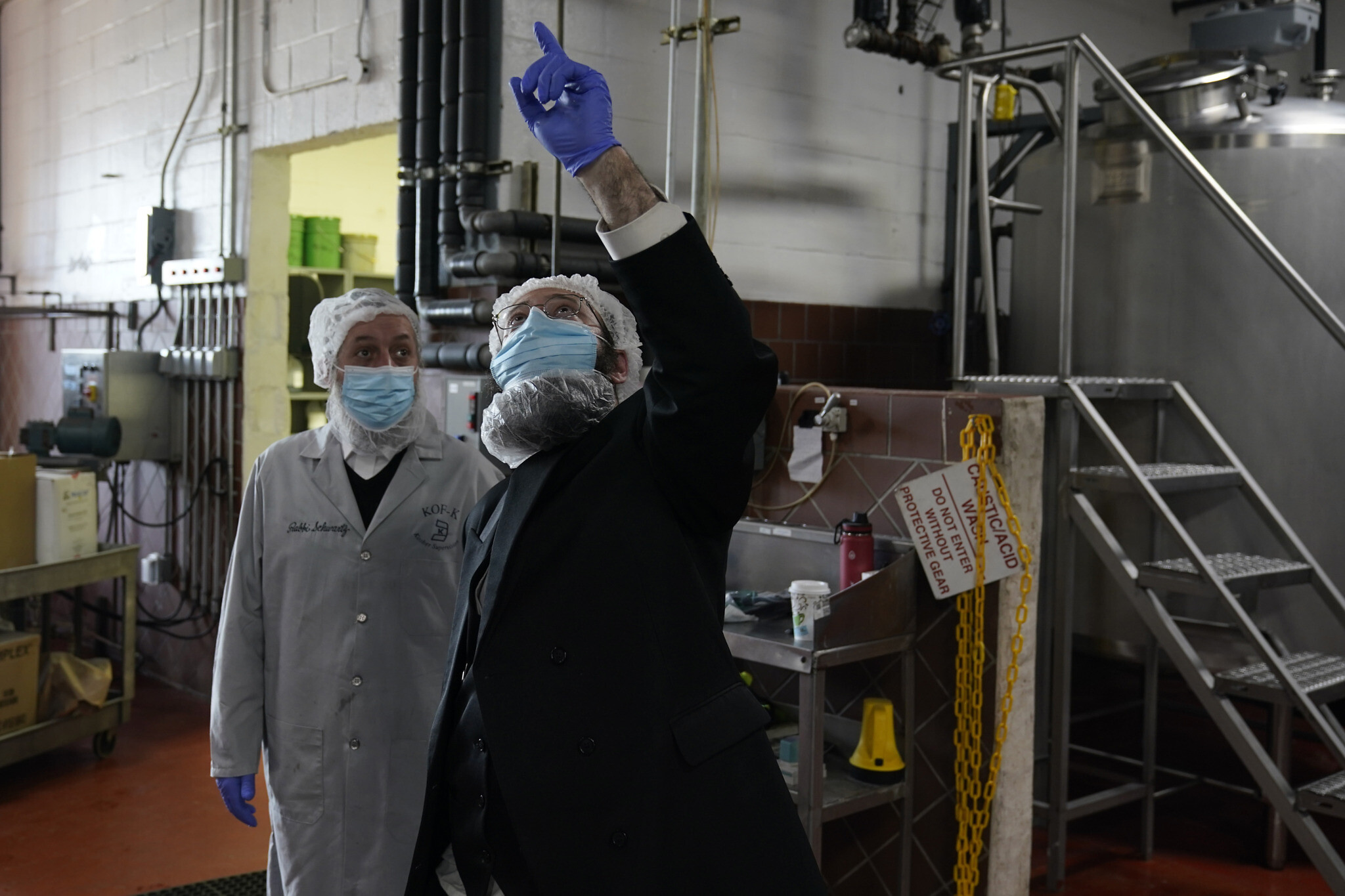
Rabbis Joseph Schwartz, left, and Mendel Einhorn confer as they supervise Hanan Products preparations for their kosher-for-Passover production run on Jan. 7, 2021, in Hicksville, N.Y. (AP Photo/Seth Wenig)
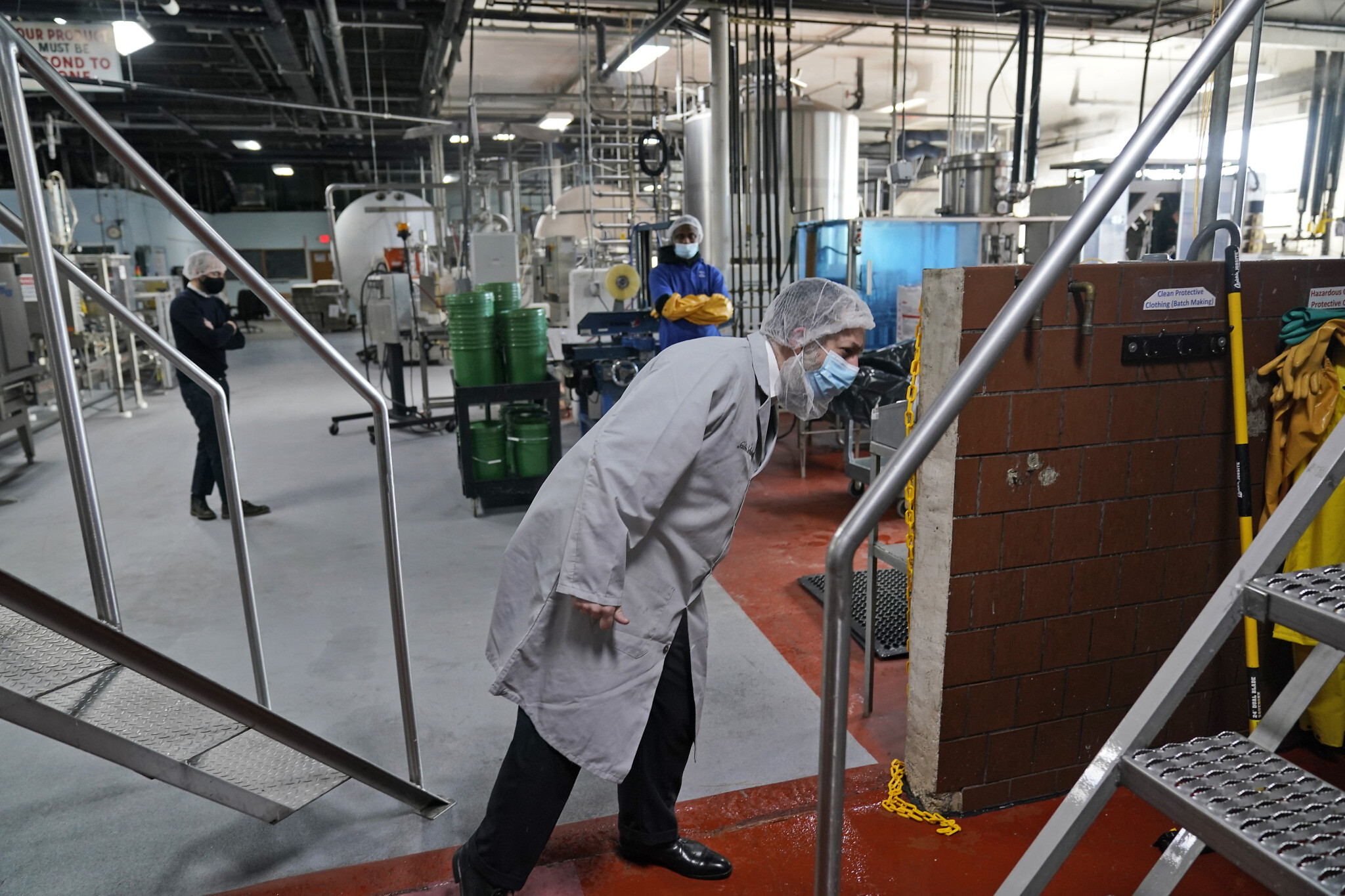
Rabbi Joseph Schwartz inspects some machinery as he supervises the koshering for Hanan Products' kosher-for-passover production run on Jan. 7, 2021, in Hicksville, N.Y. (AP/Seth Wenig)
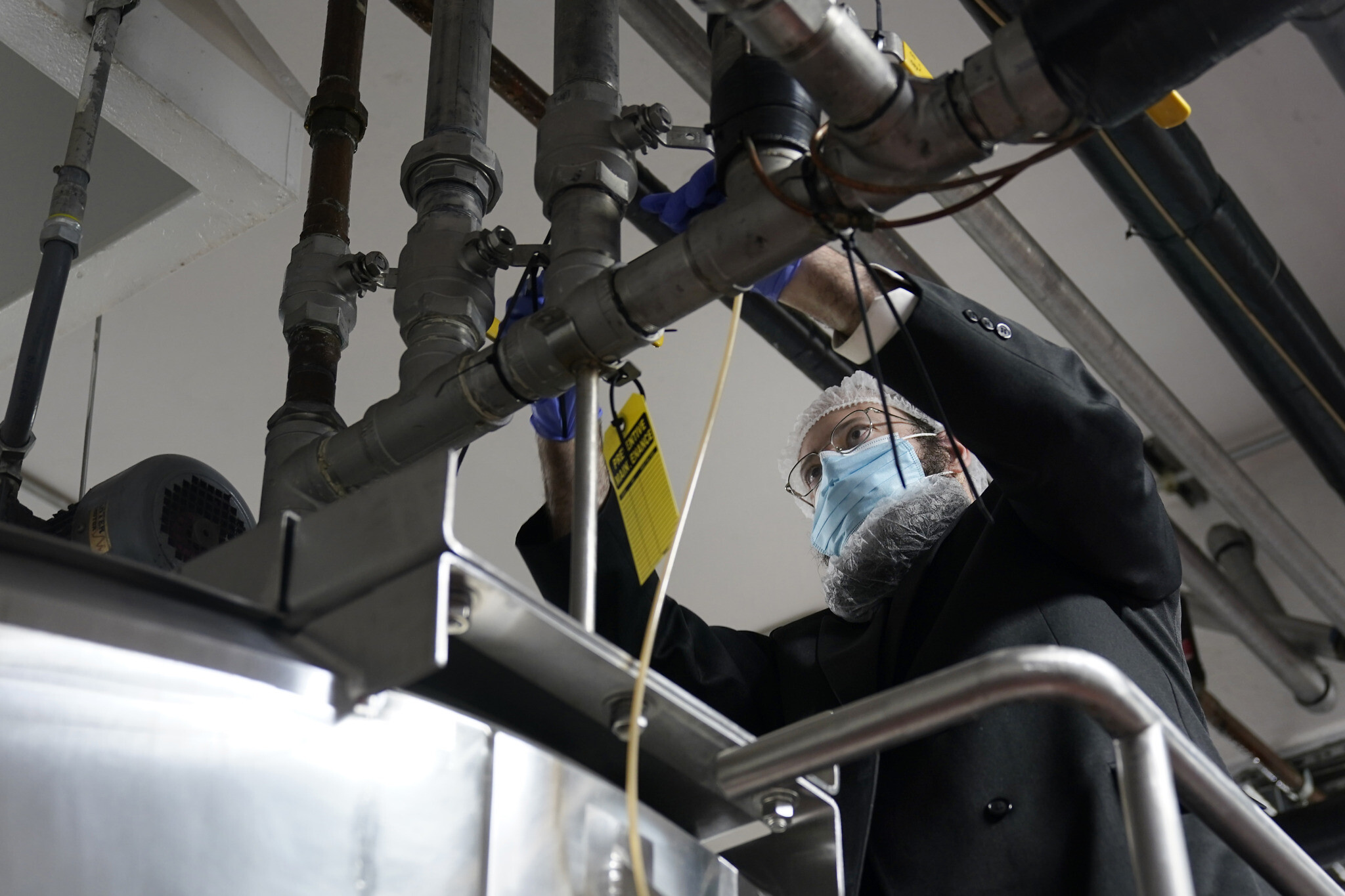
Rabbi Mendel Einhorn uses zip ties to prevent any contamination while helping Hanan Products prepare their factory for the kosher-for-Passover production run on Jan. 7, 2021, in Hicksville, N.Y. (AP/Seth Wenig)
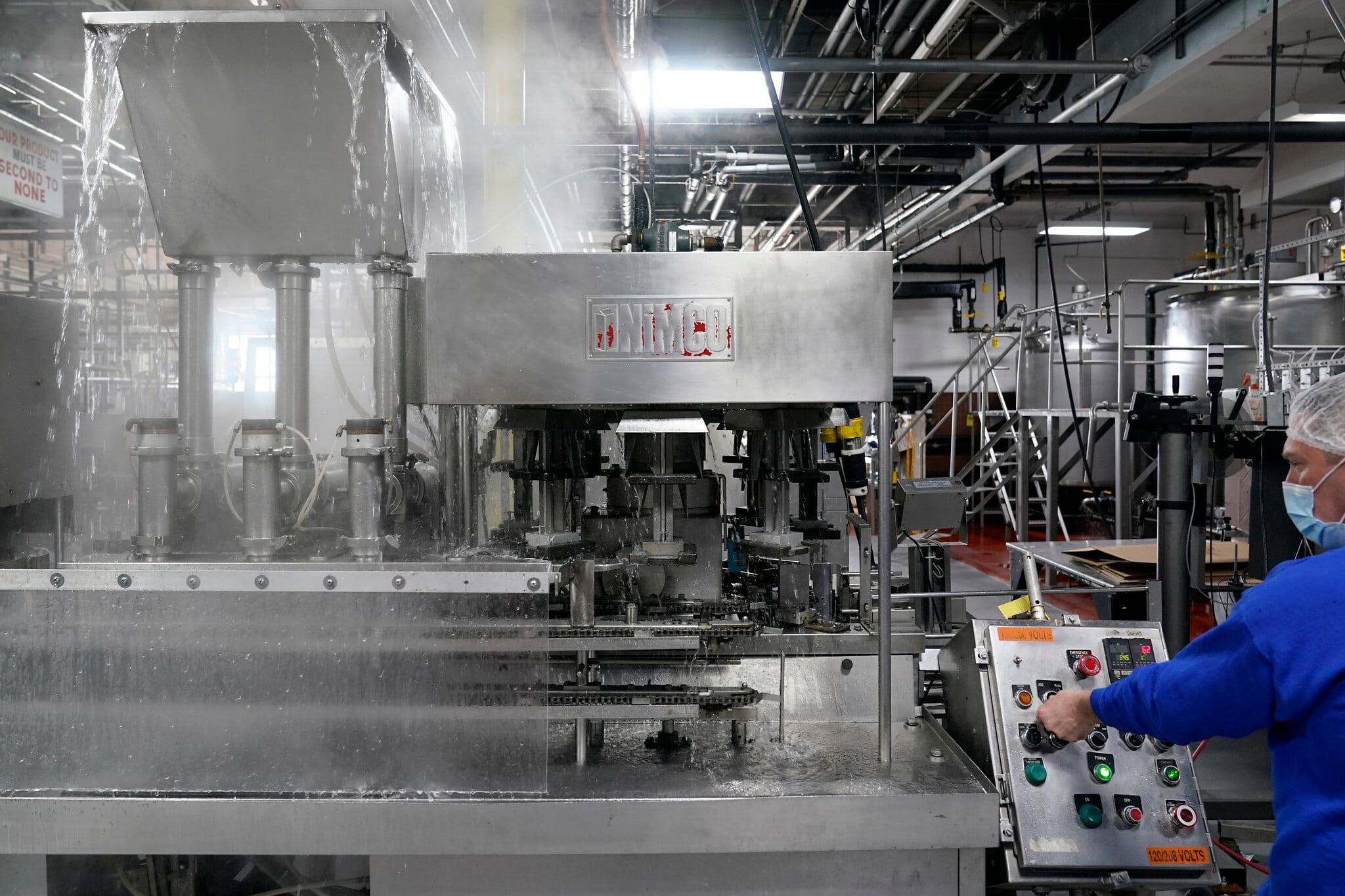
Foreman Dave Garthe runs boiling water through and over machinery in preparation for Hanan Products kosher-for-Passover production run, Thursday, Jan. 7, 2021, in Hicksville, N.Y. (AP/Seth Wenig)
Rabbis Joseph Schwartz, left, and Mendel Einhorn kosherize equipment in boiling water as they help Hanan Products prepare for their kosher-for-Passover production run on Jan. 7, 2021, in Hicksville, N.Y. (AP Photo/Seth Wenig)
HICKSVILLE, New York (AP) — On a food production floor on Long Island, steam rises from a blue metal barrel filled with scalding water for dipping cooking implements, and a worker runs boiling water through and over machinery. Zip ties are affixed to pipes and valves to avoid unwanted contaminants.
Overseeing and inspecting it all, clad in rubber gloves and blue surgical masks with netting covering their hair and beards, are two rabbis tasked with ensuring that the production line and foods made here meet the strict kosher requirements of Passover.
The springtime holiday celebrates the Jewish people’s liberation from slavery, when, as described in the Old Testament, they did not have time even to let bread leaven before rushing into the desert during their flight from Egypt.
Jews commemorate the hasty exodus by eating matzah, an unleavened flatbread, and the more observant go to great lengths to make sure they do not consume anything that could potentially be leavened or fermented. Many families thoroughly clean their homes to avoid consuming even a single forbidden morsel of leavened food, known as chametz.
At Hanan Products, which since 1946 has made primarily whipped toppings, icings and dessert fillings for the bakery industry, cleaning and production for kosher-for-Passover products begin long before the weeklong holiday that this year starts in late March.
The factory in Hicksville, east of New York City, spends months ordering ingredients, organizing deliveries and setting up buyers. Much of the factory shuts down for three weeks to accommodate production of a kosher-for-Passover whipped topping and non-dairy creamer.
Rabbi Joseph Schwartz, who has been helping the company comply with both Passover and non-Passover kosher rules for over two decades, explains that all surfaces the product could potentially touch must be washed with boiling water to cleanse them of any foreign material.
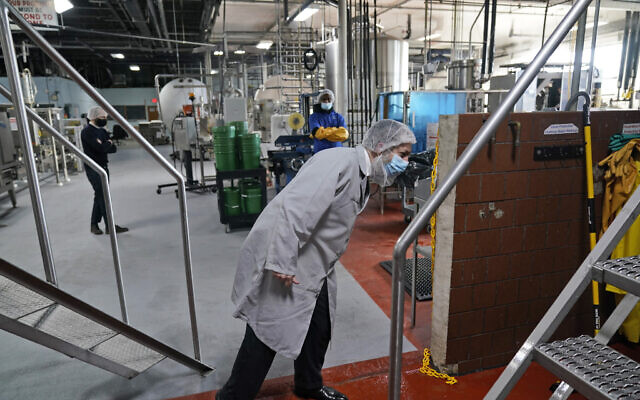
After that process, which usually takes a day at Hanan Products, production can begin with at least one rabbi on site to ensure nothing taints any of the food during the run.
The products are then shipped to distributors so that when the holiday arrives, people can celebrate with iced cakes and coffee creamers they know are certified kosher-for-Passover.

The war with Iran has been draining for all of us in Israel. But when I heard about a high casualty incident – ballistic missile impacts in Arad and Dimona that left nearly 200 people wounded – I drank a cup of coffee, packed a bag, and headed south.
There, I spoke with Shilgit, the head of an after-school program for underprivileged youth. Standing outside her destroyed center, Shilgit said it was a miracle that no children were hurt and spoke about the community coming together in the hours since.
As a Times of Israel reporter, I’m committed to telling stories of resilience like Shilgit’s. But my colleagues and I can't do this alone. If you value work like this, please consider joining our reader support group, The Times of Israel Community. Your financial support is essential to keep real human reporting like this going.
— Stav Levaton, military reporter
We’re really pleased that you’ve read X Times of Israel articles in the past month.
That’s why we started the Times of Israel - to provide discerning readers like you with must-read coverage of Israel and the Jewish world.
So now we have a request. Unlike other news outlets, we haven’t put up a paywall. But as the journalism we do is costly, we invite readers for whom The Times of Israel has become important to help support our work by joining The Times of Israel Community.
For as little as $6 a month you can help support our quality journalism while enjoying The Times of Israel AD-FREE, as well as accessing exclusive content available only to Times of Israel Community members.
Thank you,
David Horovitz, Founding Editor of The Times of Israel
The Times of Israel Community.