

In Jerusalem, Palestinian families play political soccer
Tournament in Old City between city’s largest Arab clans seen by participants as defying Trump’s recognition of city as Israel’s capital
 Add ToI as a Preferred Source on Google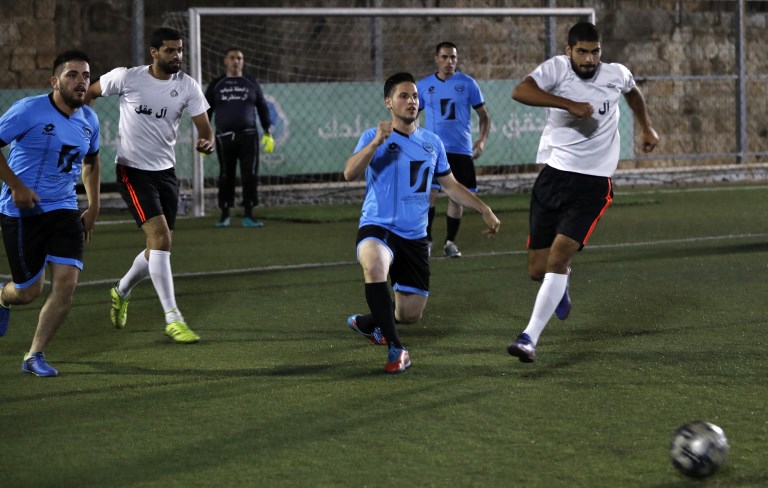
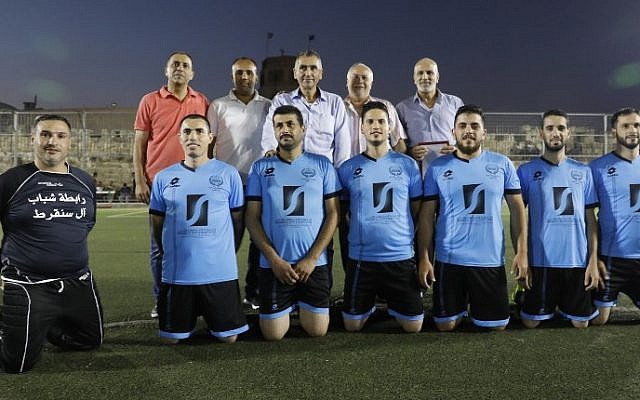
Aqal passes to Aqal, who finds Aqal in space out wide. He squares to Aqal, who smashes home a strike, sending the crowd of yet more family members into hysterics.
The match inside Jerusalem’s walled Old City was part of a month-long soccer tournament in which the largest Palestinian families play each other to be recognized as champions of the city.
Building on the inaugural tournament two years ago, participants say this year’s event holds particular symbolism after US President Donald Trump’s controversial recognition of Jerusalem as Israel’s capital.
Palestinians saw the December decision as an attempt to deny their claims to the disputed city. They view its eastern sector, including the Old City, as the capital of their future state.
For players and fans, the tournament is a defiant display of Palestinian pride — and soccer skill.
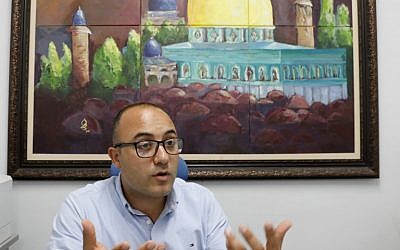
“We feel this is our land, so we want to stress we are the owners of the land by having a Palestinian tournament here,” organizer Muntaser Edkaidek told AFP.
It is also a display of family ties that informally govern East Jerusalem’s 300,000 Palestinians.
In Jerusalem, family history is often entwined with the city’s unique religious and political heritage.
The Khaldis claim to be descendants of one of the Prophet Mohammed’s closest companions.
The Joudehs and Nuseibehs, both Muslim families, have for centuries safeguarded the keys to the church in the Old City built where Christians believe Jesus Christ was crucified and then buried.
Israel captured East Jerusalem, along with the West Bank, from Jordan in the 1967 Six Day War and later declared the entire city its united capital.
More than 200,000 Israelis live in mostly modern neighborhoods beyond the 1949 armistice line — decried as illegal settlements by the international community, but thriving and growing under Israeli law which lists them as territory under the Jerusalem Municipality’s jurisdiction.
No Messis
The Old City is only one square kilometer, but hosts some of the holiest sites in Judaism, Christianity and Islam.
It is also a functioning neighborhood of more than 35,000 people, with homes, schools and shops tightly packed in.
Reaching the match involves winding through labyrinthine streets before the road opens onto a floodlit fake grass pitch flanked by the 16th-century walls of the Old City.
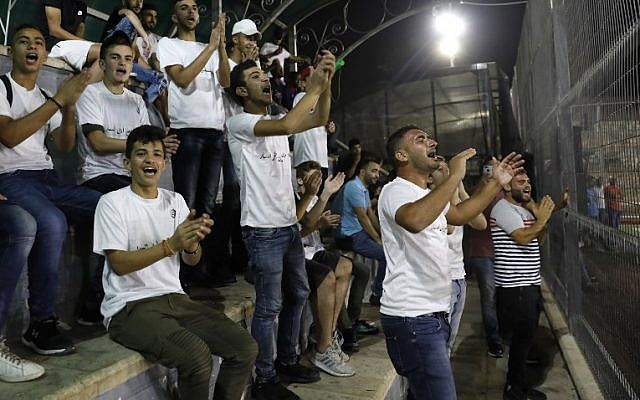
A single stand can host a hundred or so fans.
The Abu Sneihehs — reigning champions and possibly the largest of Jerusalem Palestinian clans, with thousands bearing the surname -– were knocked out in the first round, raising hopes for less renowned names.
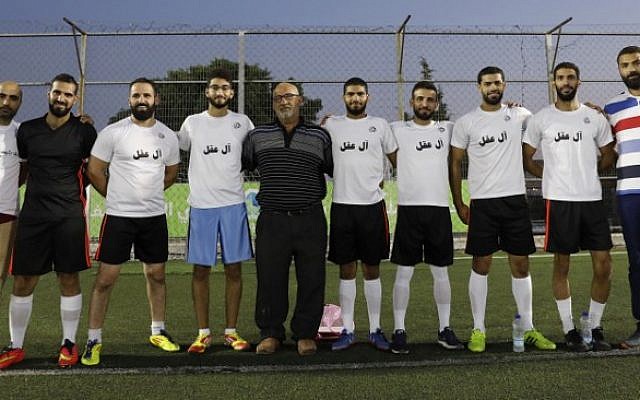
The Aqals, a relatively small family, are taking on the far larger Sanuqurats in the second round.
Before the match, the referee checks documents — without the right surname you can’t even enter the pitch.
One of the team’s two Mohammeds, a burly striker whose look is more mechanic than Messi, has forgotten his ID and is temporarily barred.
“Will a picture of it do?” he pleads, waving one on a mobile phone.
On the side of the pitch is a six-foot (1.8-meter) picture of one of the tournament’s founders.
He was arrested a year ago by Israel Police and jailed for involvement in an organization which claims to protect the Temple Mount, known to Muslims as the al-Aqsa Mosque compound, located not far away in the Old City, according to media reports.
Israeli security forces did not respond to a request regarding the case, but Israel says the al-Aqsa Youth group is linked to terror group Hamas. Members of the group are accused of harassing Jewish groups visiting the Temple Mount and of orchestrating violent clashes with police at the holy site.
The compound, which hosts the Dome of the Rock, is the third-holiest site for Muslims and a key rallying point for Palestinian identity.
For Jews, it is the Temple Mount, their holiest site.
Organizers said police showed up on October 2 and removed the picture. Israeli police did not respond to requests for information.
‘Children of Jerusalem’
On the pitch, the Aqals take an early lead but are quickly pegged back.
The standard is not much better than average pick-up games across the world, but the crowd loves it.
Hamzy Abedy is not even really watching — instead facing towards the 25 hardcore members of the extended Aqal family, orchestrating them in ever more vociferous chants.
“We are all children of Jerusalem, so I brought all the team with me,” he laughs, pointing at the frenzied teenagers.
Other participants said the tournament helped them meet members of their extended family.
Just as the city they battle over is contested, there are also concerns over their pitch.
An Israeli court could yet decide to build more than 20 Israeli settlement homes in the vicinity, although there have been no developments in the case for several years, Aviv Tatarsky from the Ir Amim anti-settlement NGO said.
Yet it still concerns Palestinian residents worried about being swallowed by Jewish expansion into East Jerusalem.
Abedy said Trump’s recognition of Jerusalem made Palestinians more determined to remain in the city.
“Trump is talking into the wind,” he said after the match.
“He is not able to cancel our existence. We are here.”
The Aqals run out 6-1 victors, with Mohammed scoring one and setting up another two.
“Sport is the best thing to unify the Arabs,” he said, carrying his toddler away from the pitch.
“All the families will meet together and know each other. The whole world loves soccer.”







The Times of Israel Community.