

In private, Trump has mused about Syria pullout for weeks
Top advisers are fretting about an overly hasty withdrawal the US president increasingly says he wants
 Add ToI as a Preferred Source on Google
WASHINGTON (AP) — US President Donald Trump’s unscripted remark this week about pulling out of Syria “very soon,” while at odds with his own policy, was not a one-off: For weeks, top advisers have been fretting about an overly hasty withdrawal as the president has increasingly told them privately he wants out, US officials said.
Only two months ago, Trump’s aides thought they’d persuaded him that the US needed to keep its presence in Syria open-ended — not only because the Islamic State group has yet to be entirely defeated, but also because the resulting power vacuum could be filled by other extremist groups or by Iran. Trump signed off on a major speech in January in which then Secretary of State Rex Tillerson laid out the new strategy and declared “it is vital for the United States to remain engaged in Syria.”
But by mid-February, Trump was telling his top aides in meetings that as soon as victory can be declared against IS, he wanted American troops out of Syria, said the officials. Alarm bells went off at the State Department and the Pentagon, where officials have been planning for a gradual, methodical shift from a military-led operation to a diplomatic mission to start rebuilding basic infrastructure like roads and sewers in the war-wracked country.
The officials weren’t authorized to comment publicly and demanded anonymity.
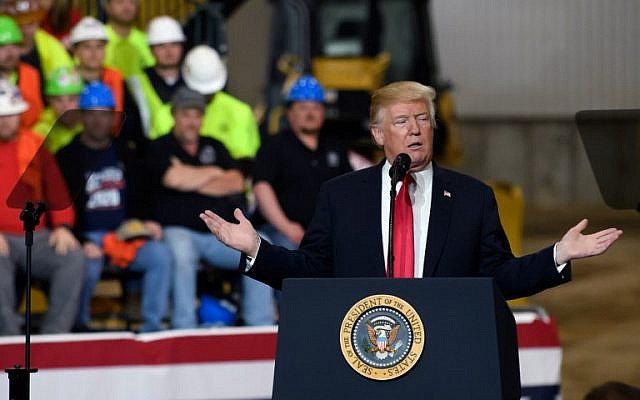
Trump’s first public suggestion he was itching to pull out came in a news conference with visiting Australian Prime Minister Alastair Campbell on February 23, when Trump said the US was in Syria to “get rid of ISIS and go home.” On Thursday, in a domestic policy speech in Ohio, Trump went further.
“We’ll be coming out of Syria, like, very soon. Let the other people take care of it now. Very soon — very soon, we’re coming out,” Trump said.
The public declaration caught US national security agencies off-guard and unsure whether Trump was formally announcing a new, unexpected change in policy. Inundated by inquiries from journalists and foreign officials, the Pentagon and State Department reached out to the White House’s National Security Council for clarification.
The White House’s ambiguous response, officials said: Trump’s words speak for themselves.
“The mission of the Department of Defense to defeat ISIS has not changed,” said Maj. Adrian Rankine-Galloway, a Pentagon spokesman.
Still, without a clear directive from the president, planning has not started for a withdrawal from Syria, officials said, and Trump has not advocated a specific timetable.
For Trump, who campaigned on an “America First” mantra, Syria is just the latest foreign arena where his impulse has been to limit the US role. Like with NATO and the United Nations, Trump has called for other governments to step up and share more of the burden so that Washington doesn’t foot the bill. His administration has been crisscrossing the globe seeking financial commitments from other countries to fund reconstruction in both Syria and Iraq, but with only limited success.
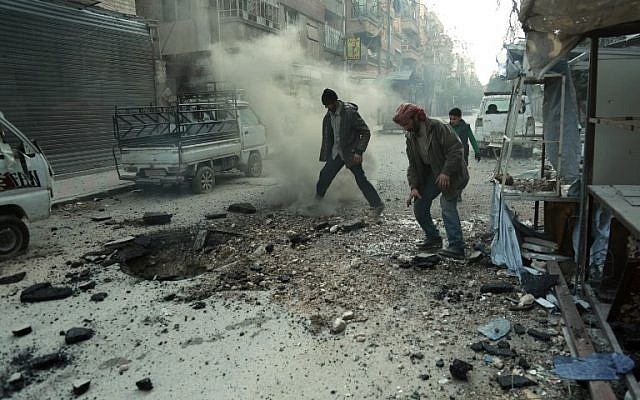
Yet it’s unclear how Trump’s impulse to pull out could be affected by recent staff shake-ups on his national security team. Tillerson and former national security adviser H.R. McMaster, both advocates for keeping a US presence in Syria, were recently fired, creating questions about the longevity of the plan Tillerson announced in his Stanford University speech in January. But Trump also replaced McMaster with John Bolton, a vocal advocate for US intervention and aggressive use of the military overseas.
The abrupt change in the president’s thinking has drawn concern both inside and outside the United States.
Other nations that make up the US-led coalition fighting IS fear that Trump’s impulse to pull out hastily would allow the notoriously resourceful IS militants to regroup, several European diplomats said. That concern has been heightened by the fact that US-backed ground operations against remaining IS militants in Syria were put on hold earlier this month.
The ground operations had to be paused because Kurdish fighters who had been spearheading the campaign against IS shifted to a separate fight with Turkish forces, who began combat operations in the town of Afrin against Kurds who are considered by Ankara to be terrorists that threaten Turkey’s security.
“This is a serious and growing concern,” State Department spokeswoman Heather Nauert said this month.
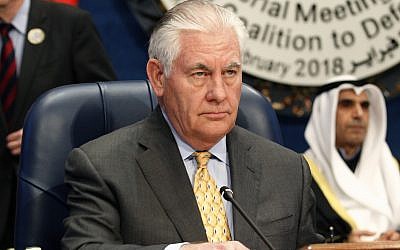
Beyond just defeating IS, there are other strategic US objectives that could be jeopardized by a hasty withdrawal, officials said, chiefly those related to Russia and Iran.
Israel, America’s closest Mideast ally, and other regional nations like Saudi Arabia and the United Arab Emirates are deeply concerned about the influence of Iran and its allies, including the Shiite militant group Hezbollah, inside Syria. The US military presence in Syria has been seen as a buffer against unchecked Iranian activity, and especially against Tehran’s desire to establish a contiguous land route from Iran to the Mediterranean coast in Lebanon.
An American withdrawal would also likely cede Syria to Russia, which along with Iran has been propping up Syrian President Bashar Assad’s forces and would surely fill the void left behind by the US That prospect has alarmed countries like France, which has historic ties to the Levant.
In calling for a withdrawal “very soon,” Trump may be overly optimistic in his assessment of how quickly the anti-IS campaign can be wrapped up, the officials said. Although the group has been driven from basically all of the territory it once controlled in Iraq and 95 percent of its former territory in Syria, the remaining five percent is becoming increasingly difficult to clear and could take many months, the officials said.


The Times of Israel Community.