

In this Sicilian town, manna is a heavenly delicacy with deep roots
For centuries, farmers in the Madonie region have harvested sap from ash trees, and called it after a biblical predecessor. Once used for its therapeutic properties, the white, sugary product is now a culinary hit
 Add ToI as a Preferred Source on Google
Rossella Tercatin is The Times of Israel's archaeology and religions reporter.
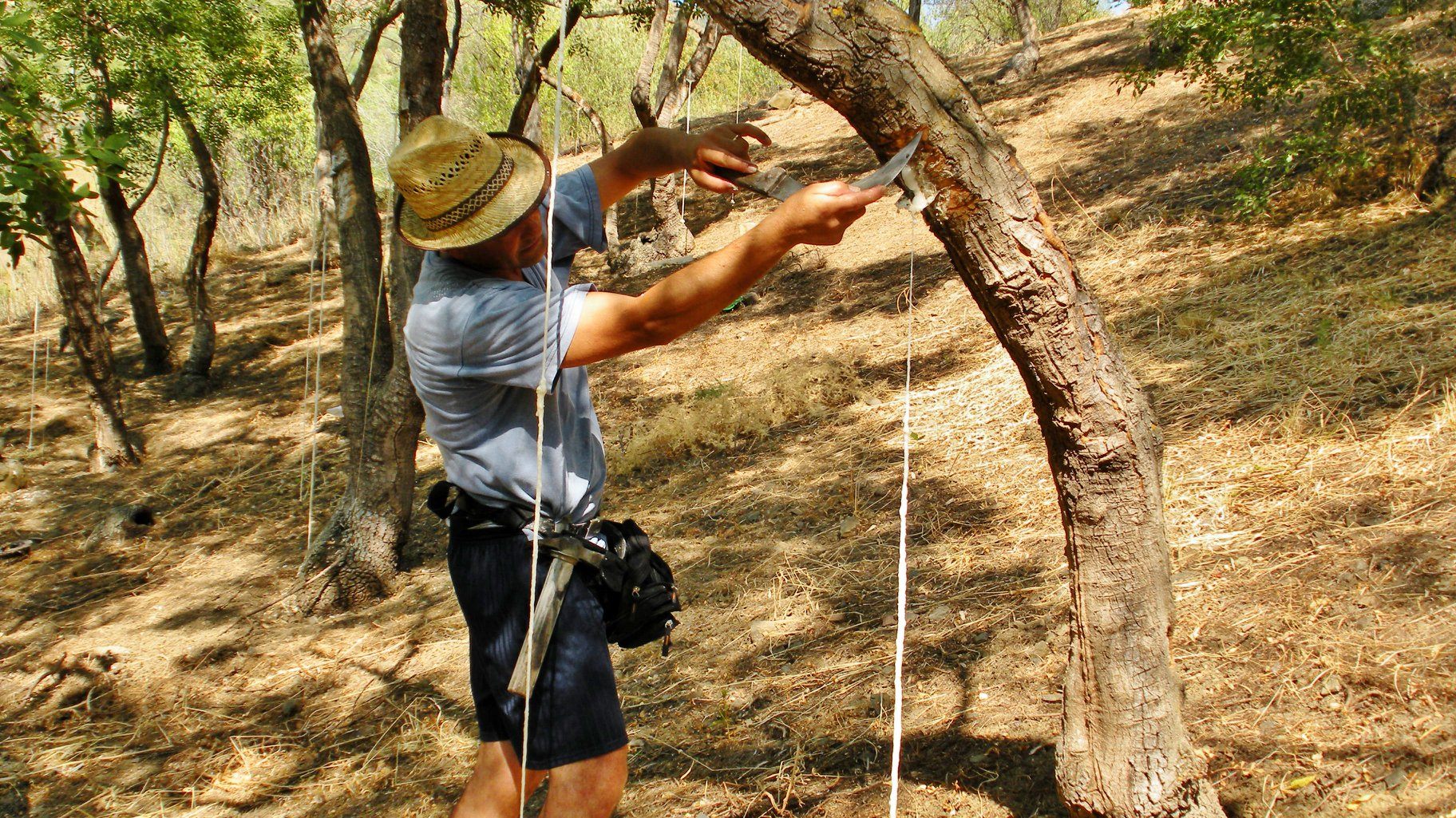
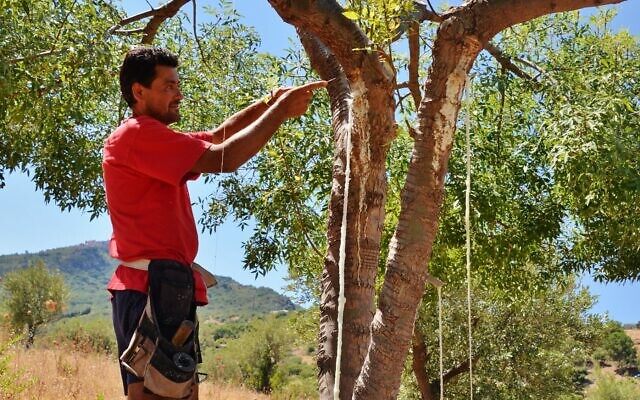
Every year, at the height of the long, dry Sicilian summer, Italian farmer Giulio Gelardi goes out to his 500 ash trees in the Madonie region to perform a centuries-old ritual. Gelardi, a resident of the village of Pollina, makes precise incisions in the bark to harvest a sweet, white sap that has been known as manna for at least 1,200 years in light of a striking resemblance to its biblical predecessor.
“When I cut it, the tree exudes a very sugary juice that soon becomes solid, which I collect and put to dry in the sun,” Gelardi, 75, told The Times of Israel over the phone on the eve of the holiday of Passover, when Jews across the world will commemorate the Exodus from Egypt.
As the book of Exodus narrates, the miracles performed by God to save the Israelites from slavery and bring them to the Promised Land include God sending them a unique substance — manna — with which they sustained themselves for 40 years in the desert.
“The house of Israel named it manna; it was like coriander seed, white, and it tasted like wafers in honey” (Exodus 31:16).
The manna extracted from ash trees is also edible and remarkably sweet.
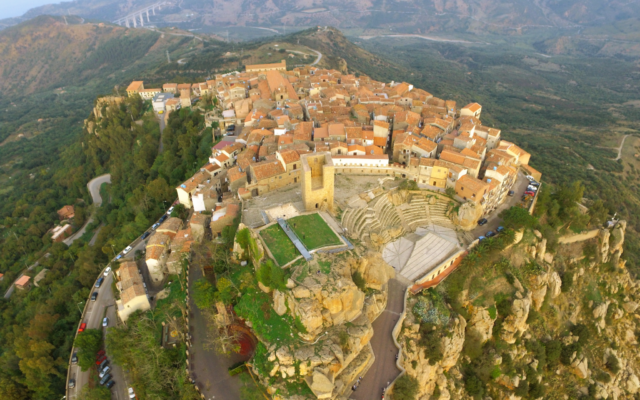
The tree species, also known as Fraxinus ornus in Latin, has always been part of the local vegetation. One of the hills near Pollina, which has some 3,000 residents, is known as Gibilmanna, combining the word “manna” with the Arabic term for mountain – a hint at the centuries-long Arab rule over Sicily, which ended in the 11th century. Pollina also boasts the Museum of Manna.
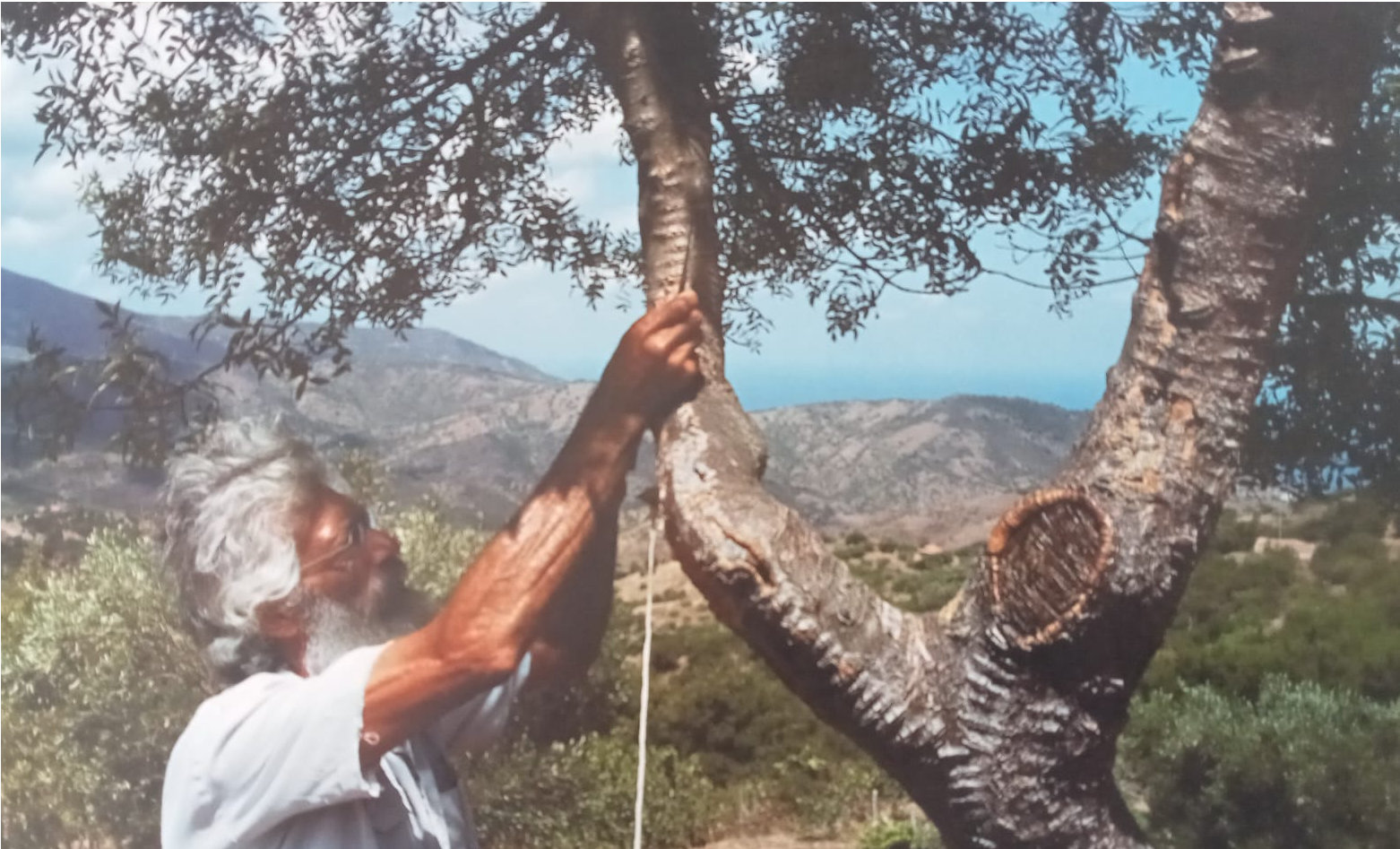
Until a few decades ago, according to Gelardi, ash manna was in high demand among pharmaceutical companies for its laxative properties and as a natural sweetener, especially suitable for diabetic patients.
“However, after they managed to synthesize its main chemical component mannitol [in the 1950s], the natural manna extracted from the trees was not so attractive anymore,” he said.
For decades, Gelardi has been working to revive the tradition and make manna relevant again.
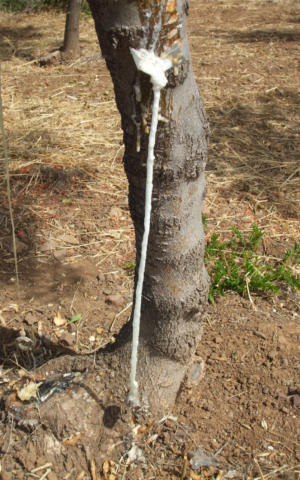
Today, it is used as a unique local ingredient.
“You have to think about it as the equivalent of a spice with a honey taste,” Gelardi said.
Local bakers use manna to season cookies and cakes. The restaurant Nangalarruni includes a manna, almonds, and pistachio-encrusted pork filet on its menu.
Gelardi and a partner in a nearby village produce manna chocolate with a high cocoa percentage.
“We take advantage of the manna’s ability to mitigate the bitterness of chocolate to make very dark chocolate with a special taste,” he said.
Gelardi also prepares creams and cosmetics with the manna, taking advantage of its moisturizing properties.
He also sells it in 40-gram bags for 10 euros.
The ash manna has been officially honored by the Slow Food Foundation for Biodiversity, an international organization aimed at protecting food biodiversity and promoting sustainable agriculture and means of production.
For Gelardi, the story of manna in the Bible already carries a powerful message about sustainability and the importance of not exploiting nature without restraint.
“The Israelites are instructed not to gather more manna than they need, and when they do, it spoils,” he said. “I believe the Bible is teaching us that we are only allowed to take from nature what we truly need — nothing more.”
The farmer emphasized he is always working on less invasive techniques to harvest the manna.
“When I’m in my field, I feel a part of the environment surrounding me, together with my ash trees, lizards, and ants,” Gelardi said.
An ash tree is ready to be harvested when it is about eight years old.
“After that, I continue to extract the sap for about 30 years,” Gelardi said. “Eventually, I cut down the main trunk but make sure to leave a lateral shoot; this way, the tree can grow again.”
Thanks to this technique, some of Gelardi’s trees are 200 or 300 years old.
“If left alone, they would not live for so long,” he said. “Therefore, on the one hand, I wound the trees with my cuts; on the other, I give them new life.”
Generation by generation
For Gelardi, harvesting manna is a family tradition. He learned how to do it from his father, who learned it from his father.
As a young man, Gelardi left Sicily for 15 years. It was the manna harvest that drew him back in 1985.
“When I came back, the tradition of harvesting manna was dying,” he said. “It felt that my parents’ heritage, all that our ancestors had built over the centuries, was also dying within one generation,” he said. “I could not believe that with such a unique product, nobody could figure out how to make it a financially sustainable business.”
At that point, Gelardi spent years shadowing his father as he cared for the trees.
“I wanted to absorb everything he could teach me,” he said.
When he was not busy with the trees, Gelardi could be found at the local section of the Italian National Library, gathering all the information he could about manna.
“I read what Jewish and Christian biblical commentators said, and I found dozens of historical sources,” he said. “In the end, I collected 400 references to manna across history.”
Besides biblical references, Gelardi said, he found an ancient Greek text that seems to describe harvesting ash sap.
“There, manna is called ‘stars’ sweat,’ as they could not believe that a plant would produce such a substance without some help from the heavens,” he said.
He said the earliest specific reference he identified was in a 9th-century Arab medical treaty.
“Manna also has an entry in ‘The Canon of Medicine’ by 11th-century Persian philosopher Avicenna,” Gelardi noted.
Multiple sources dating back to the 15th-17th centuries mentioned manna and its harvesting across southern Italy.
“A document by the Republic of Venice from 1770 testifies that Venice imported a huge quantity of manna as it employed it in its silk industry to preserve the fabric’s colors and sold it to other silk producers,” Gelardi said.
For the past 40 years, Gelardi has worked to produce and sell manna and promote public awareness and teach harvesting techniques to the younger generations. His efforts included authoring a book on the topic, “Vivere di manna” (Living of Manna).
Today, he said, there are maybe 10 manna producers left.
“I have taught dozens of kids,” he said. “Most of them do not work in the industry, but it is still important for me to convey the knowledge.”










The Times of Israel Community.