

Indonesia calls for international help as tsunami victims buried
Survivors desperately search for missing loved ones with death toll expected to rise; questions grow over why early warning system had long been inactive
 Add ToI as a Preferred Source on Google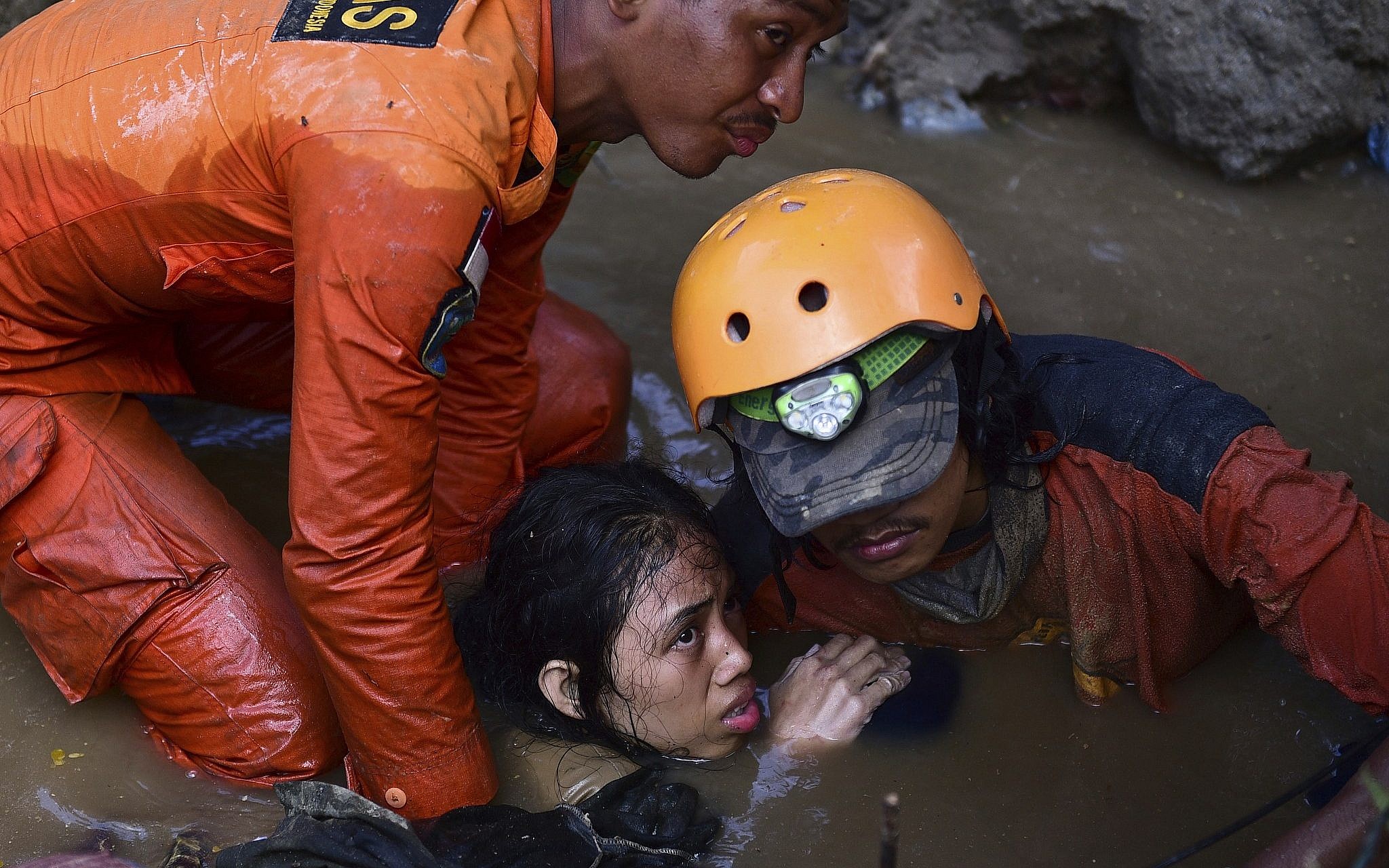
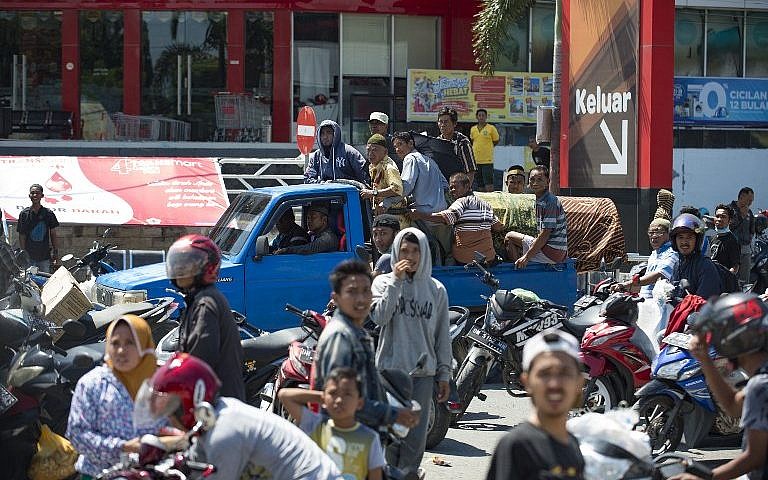
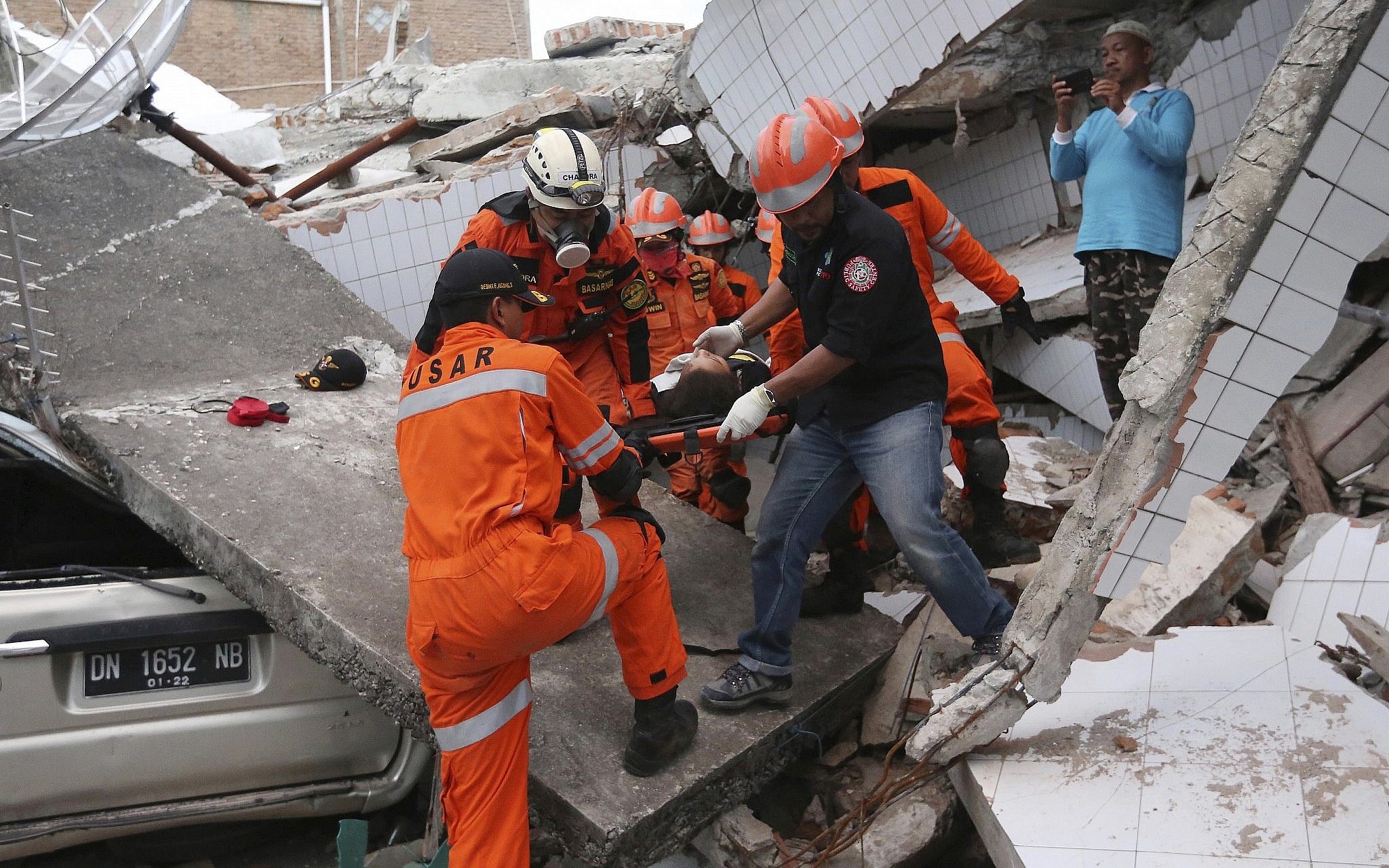
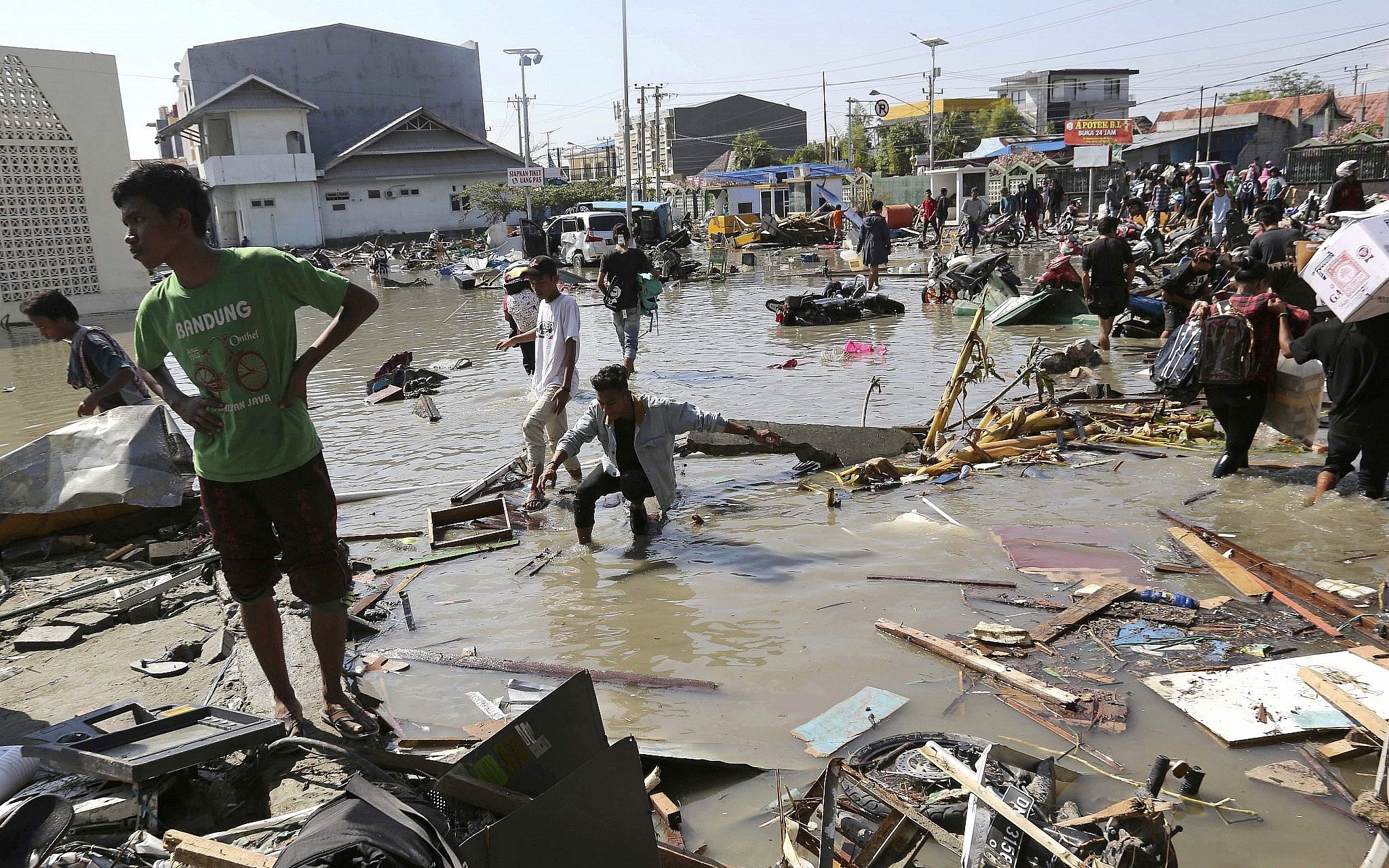
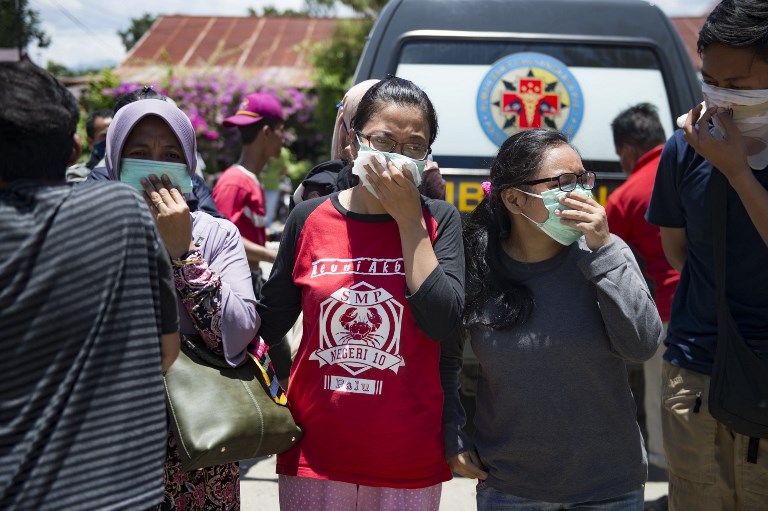
The Indonesian government on Monday called for international help to deal with the aftermath of a devastating series of earthquakes and a tsunami on the island of Sulawesi that killed at least 832 people.
President Joko Widodo “authorized us to accept international help for urgent disaster-response” the government’s head of investment Tom Lembong said, as dozens of aid agencies and NGOs lined up to provide live-saving assistance and the government struggled to come to terms with the sheer scale of the disaster.
Lembong’s announcement came as mass graves were being readied for the hundreds of victims and as authorities battled to stave off disease and reach desperate people still trapped under shattered buildings.
With the death toll expected to rise even further on the devastated island of Sulawesi, there were growing questions about why an early tsunami-warning system had not been working for years.
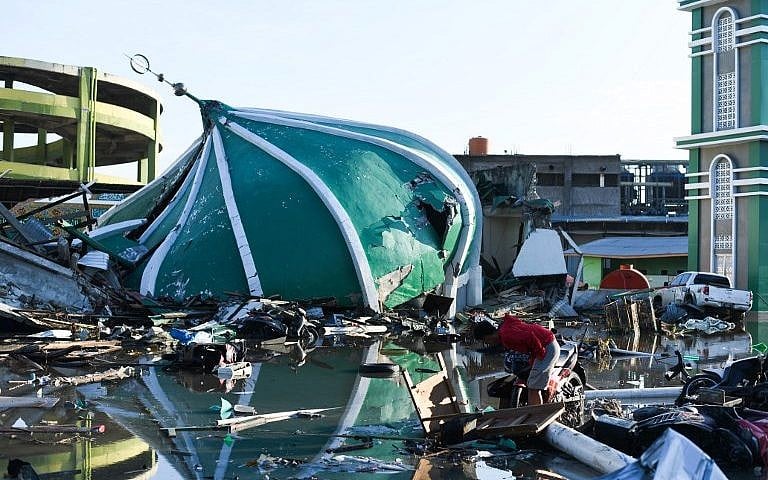
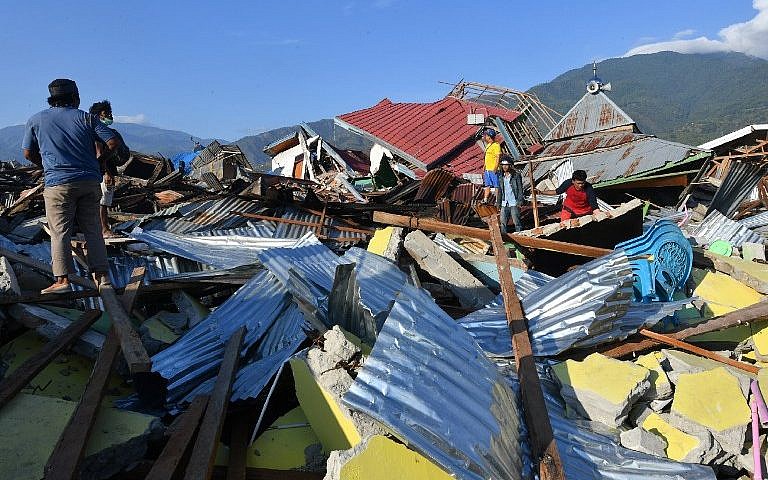
The strong 7.5-magnitude quake struck Friday, toppling buildings and sending walls of seawater crashing into Palu, a city of about 350,000.
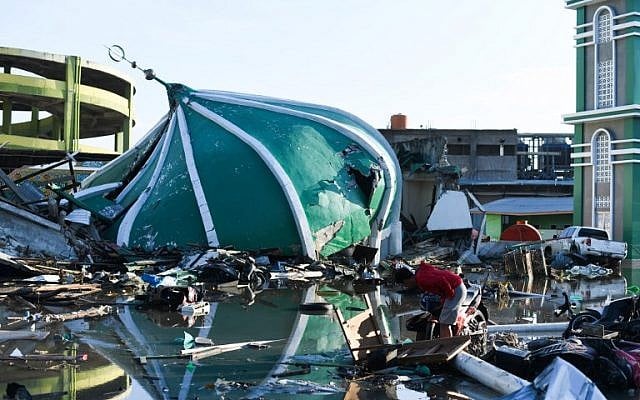
Exhausted survivors scoured make-shift morgues for loved ones, and authorities struggled to dig out the living or assess the scale of the devastation in more remote regions beyond Palu.
Grim warnings came that the eventual toll could reach thousands.
“The casualties will keep increasing,” said national disaster agency spokesman Sutopo Purwo Nugroho. “We will start the mass burial of victims, to avoid the spread of disease.”
Burials were expected to start later Monday.
Rescuers raced against the clock and a lack of equipment to save those still trapped in the rubble, with up to 60 people feared to be underneath one Palu hotel alone.
Two survivors have been plucked from the rubble of the 80-room Hotel Roa-Roa, the search and rescue agency said, and there could still be more alive.
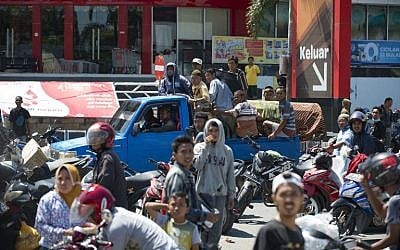
Desperate survivors turned to looting shops for basics like food, water and fuel as police looked on, unwilling or unable to intervene.
“There has been no aid, we need to eat. We don’t have any other choice, we must get food,” one man in Palu told AFP as he filled a basket with goods from a nearby store.
The disaster agency said a tsunami warning system, which might have saved lives, had not worked for six years due to a lack of money.
“Our funding has been going down every year,” the disaster agency’s Nugroho said.
‘When the wave came, I lost her’
Many have spent the last two days desperately searching for loved ones.
One survivor, Adi, was hugging his wife by the beach when the tsunami struck on Friday. He has no idea where she is now, or whether she is even alive.
“When the wave came, I lost her,” he said. “I was carried about 50 meters. I couldn’t hold anything. The water was spinning me around,” he said.
“This morning I went back to the beach, I found my motorbike and my wife’s wallet.”
Others have centered their search around open-air morgues, where the dead lay in the baking sun — waiting to be claimed.
Indonesian President Joko Widodo visited the region Sunday, urging a “day and night” effort to save all those who can be saved.
But Nugroho indicated sheer power of will may not be enough.
“Communication is limited, heavy machinery is limited… it’s not enough for the numbers of buildings that collapsed,” he said.
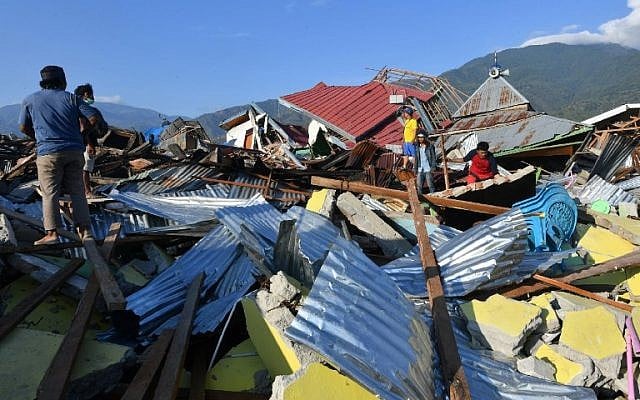
The situation in outlying areas was even less clear.
Indonesian Vice-President Jusuf Kalla said the final death toll in the more remote regions could be in the “thousands” since many places have still not been reached.
Indonesia’s Metro TV on Sunday broadcast aerial footage from a coastal community in Donggala, close to the epicenter of the quake. Some waterfront homes appeared crushed but a resident said most people fled to higher ground after the quake struck.
“When it shook really hard, we all ran up into the hills,” a man identified as Iswan said.
Ports, bridges, roads shattered
Save The Children program director Tom Howells said access was a “huge issue” hampering relief efforts.
“Aid agencies and local authorities are struggling to reach several communities around Donggala, where we are expecting there to be major damage and potential large-scale loss of life,” Howells said.
The national disaster agency said it believed about 71 foreigners were in Palu when the quake struck, with most safe.
Three French nationals and a South Korean, who may have been staying at a flattened hotel, had not yet been accounted for, it added.
Getting enough aid in may prove a problem.
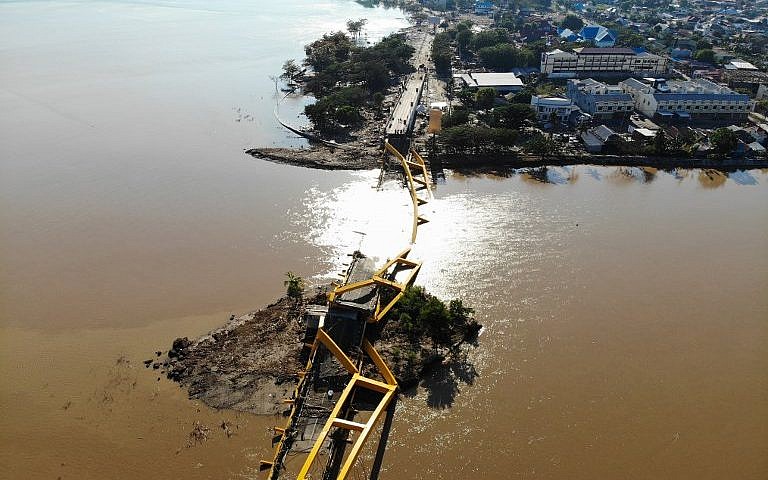
Satellite imagery provided by regional relief teams showed severe damage at some of the area’s major ports, with large ships tossed on land, quays and bridges trashed and shipping containers thrown around.
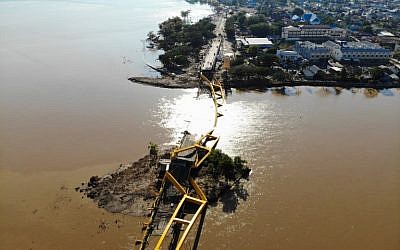
A double-arched yellow bridge had collapsed, its ribs twisted as cars bobbed in the water below.
A key access road had been badly damaged and was partially blocked by landslides.
The initial quake struck as evening prayers were about to begin in the world’s biggest Muslim majority country on the holiest day of the week.
Indonesia is one of the world’s most disaster-prone nations.
It lies on the Pacific “Ring of Fire,” where tectonic plates collide and many of the world’s volcanic eruptions and earthquakes occur.
A massive 2004 quake triggered a tsunami that killed 220,000 throughout the region, including 168,000 in Indonesia.








The Times of Israel Community.