

Iran blames Hariri resignation on Trump, Saudi prince
Tehran says Washington and Riyadh are trying to foment tension in region, rejects Lebanese PM’s denunciation of its grip on his country
 Add ToI as a Preferred Source on Google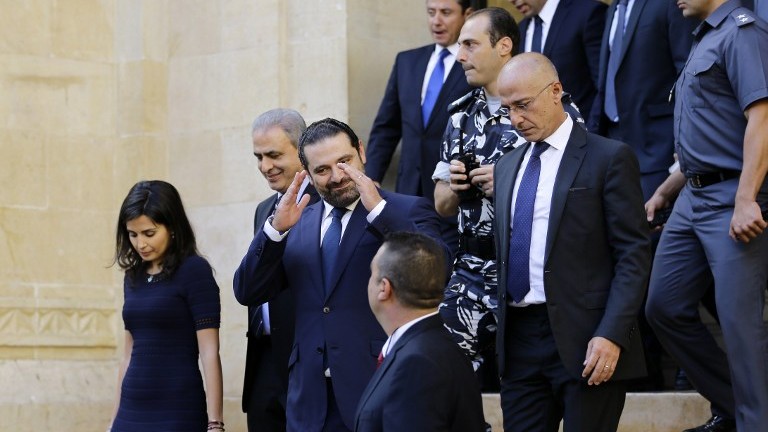
Iran rejected “unfounded accusations” by Saad Hariri, who resigned as Lebanon’s prime minister on Saturday citing Tehran’s “grip” on his country and threats to his life. Tehran blamed his departure on the United States and Saudi Arabia.
Hariri’s “repetition of unreal and baseless accusations… against Iran show that the resignation is designed to create tensions in Lebanon and in the region,” Iranian foreign ministry spokesman Bahram Ghassemi said.
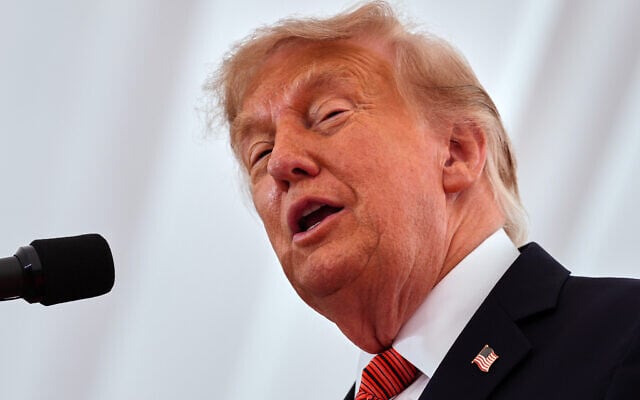
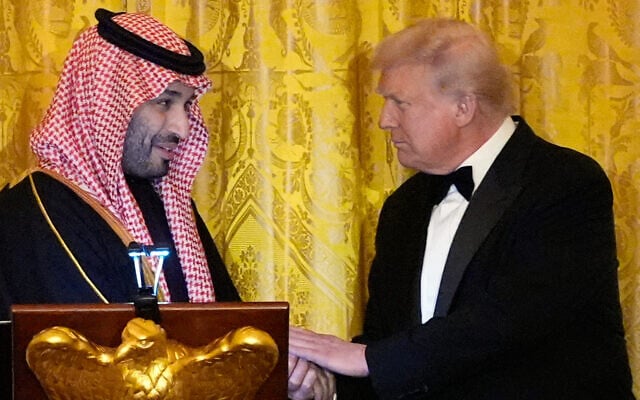
Echoing Ghassemi’s claim the resignation was meant to stoke regional tensions, an adviser to Iran’s Foreign Minister Mohammad Javad Zarif said Hariri’s resignation was pushed for by US President Donald Trump and the crown prince of Saudi Arabia.
“Hariri’s resignation was done in coordination with Trump and Mohammed bin Salman to foment tension in Lebanon and the region,” Hossein Sheikholeslam was quoted by the semi-official Fars News Agency as saying.
Sheikholeslam criticized Hariri for announcing his resignation in Saudi Arabia and not Lebanon.
He also claimed it was engineered by the US to compensate for the Islamic State terror group’s territorial losses. Iranian officials such as Supreme Leader Ayatollah Ali Khamenei have previously accused the US of creating IS.
Hariri announced his resignation during a trip to Saudi Arabia on Saturday.
In a televised address from Riyadh, Hariri said he feared for his life: “We are living in a climate similar to the atmosphere that prevailed before the assassination of martyr Rafik Hariri” — Saad’s father, a former prime minister who was assassinated in 2005, allegedly by Hezbollah. “I have sensed what is being plotted covertly to target my life,” he said.
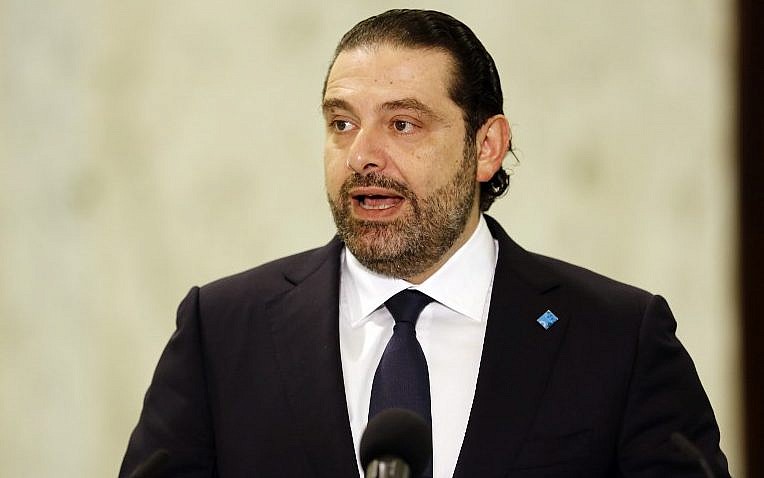
Hours after his resignation, Saudi Arabia’s Al-Arabiya news station reported an assassination attempt on Hariri in Beirut was thwarted earlier this week. It did not say who tried to kill him.
While announcing his resignation, Hariri fired a vicious tirade against Iran and Hezbollah for what he said was their meddling in Arab affairs and said “Iran’s arms in the region will be cut off.
“The evil that Iran spreads in the region will backfire on it,” Hariri said, accusing Tehran of spreading chaos, strife and destruction throughout the region.
“Iran has a grip on the fate of the region’s countries… Hezbollah is Iran’s arm not just in Lebanon but in other Arab countries too,” he said.
“In recent years, Hezbollah has used the power of its weapons to impose a fait accompli,” he said, reading a speech from behind a desk.
Hariri was appointed prime minister in late 2016 and headed a 30-member national unity cabinet that included the Shiite terror group Hezbollah. The government has largely succeeded in protecting the country from the effects of the civil war in neighboring Syria.
The country is sharply divided along a camp loyal to Saudi Arabia, headed by the Sunni Muslim Hariri, and a camp loyal to Iran represented by Hezbollah. President Michel Aoun, who was elected in October 2016 after more than two years of presidential vacuum, is a close ally of Hezbollah.
His election was made possible after Hariri endorsed him for president, based on an understanding that Aoun would then appoint him as prime minister.
In a statement, the presidential office said Aoun was informed by Hariri in a phone call of his resignation, adding that the president now awaits Hariri’s return to the country to clarify the circumstances of his resignation and proceed accordingly.
Hezbollah is a vital ally of Syrian President Bashar Assad in the war the Syrian regime is waging against the Islamic State group and armed opposition movements.
It enjoys broad support from Iran and is the only Lebanese party to have kept its weapons after the 1975-1990 civil war.
Its arsenal has since grown exponentially and now outstrips that of the nation’s own armed forces.
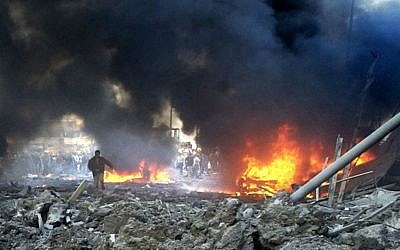
Hariri’s bombshell resignation Saturday was expected to raise tensions in the country and ushers in a stage of deep uncertainty and potential instability. It comes amid a sharp escalation in Saudi rhetoric against its regional archrival Iran.
Several Hezbollah members are being tried in absentia for the killing by a UN-backed tribunal in The Hague, Netherlands. Hezbollah denies any involvement.
Hariri said Hezbollah’s policies have put Lebanon “in the eye of the storm.” His attacks on Hezbollah come on the heels of new US sanctions on the group that many fear will impact negatively on the Lebanese economy.
“Hezbollah was able in past decades to impose a status quo in Lebanon through its weapons directed at the chests of Syrians and Lebanese,” he said.
“I declare my resignation from the premiership of the Lebanese government, with the certainty that the will of the Lebanese is strong,” Hariri said.
“When I took office, I promised you that I would seek to unite the Lebanese, end political division and establish the principle of self-sufficiency, but I have been unable to do so. Despite my efforts, Iran continues to abuse Lebanon,” he said.








The Times of Israel Community.