

Iran’s supreme leader says military should be boosted to ward off enemies
Comments to naval commanders come three days after Khamenei lashed out at ‘weak Zionist regime,’ claimed Israel had been repeatedly defeated in recent years
 Add ToI as a Preferred Source on Google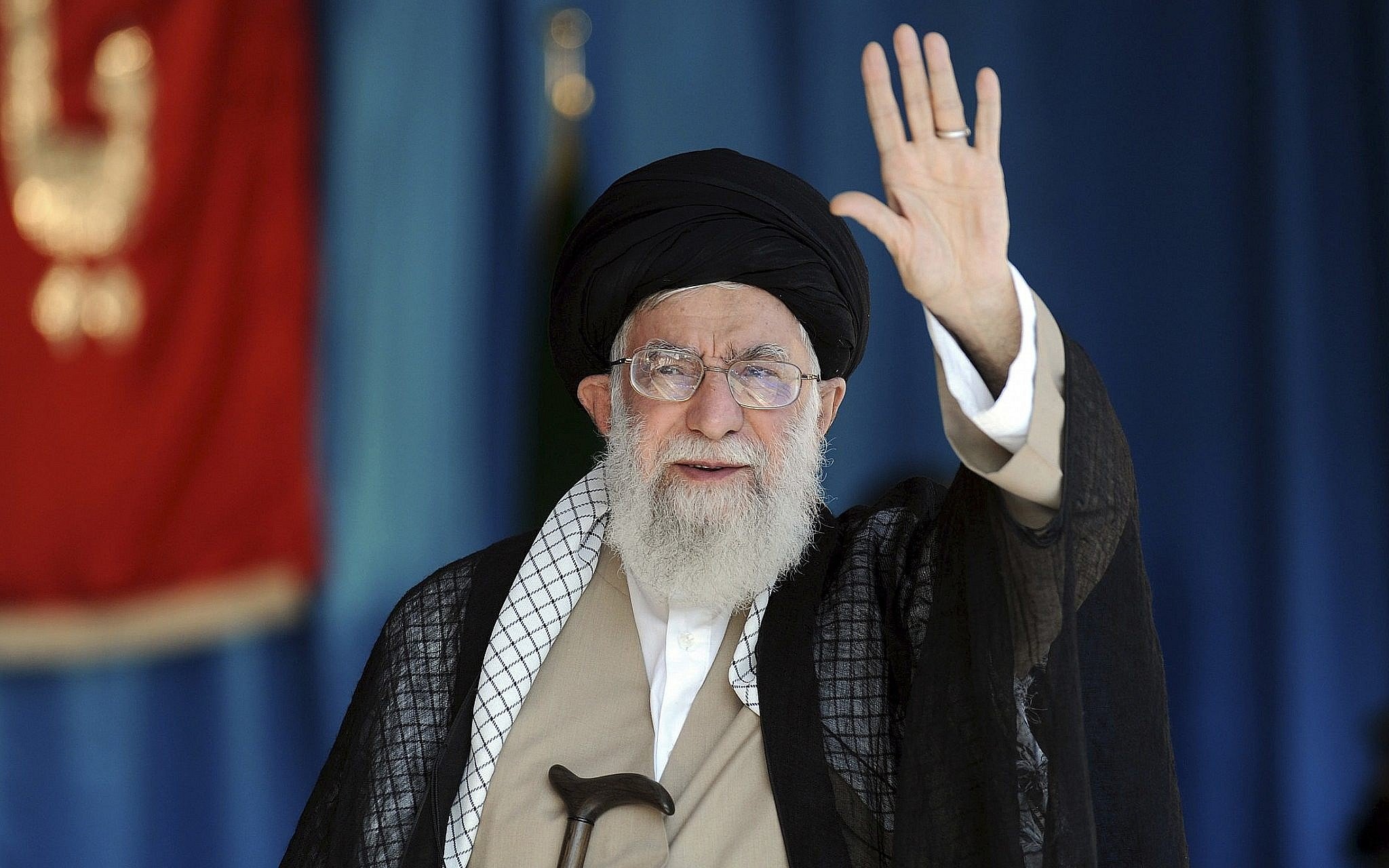
Iran’s top political and religious leader, Supreme Leader Ali Khamenei, told the country’s naval commanders on Wednesday that Tehran should boost its military capabilities in order to deter the country’s enemies.
“Increase your capability and readiness as much as you can so Iran’s enemies will not even dare threaten this great people,” Khamenei said, according to the Reuters news agency, citing Khamenei’s official website.
“The Islamic Republic does not intend to start war with anyone,” he added.
Khamenei’s comments come three days after he claimed that Israel was now “weaker” than it was 10 or 20 years ago, listing a number of military “defeats” he said the Jewish state had suffered over the years.
In a tweet, Khamenei claimed that Israel was defeated by Hezbollah in the 2006 Second Lebanon War, and that it had been beaten by Hamas in 2008’s Operation Cast Lead, 2012’s Operation Pillar of Defense, as well as the recent flareup in violence on the Gaza border.
All of those conflicts ended with both sides claiming victory.
Khamenei routinely calls Israel a “cancer” in the region that must be removed. He has previously branded Israel as “barbaric,” “infanticidal,” and the “sinister, unclean rabid dog of the region.” Recently, he blamed “Zionists” for the anti-government demonstrations held across Iran earlier this year.
The Zionist regime is clearly weaker than 10, 20 years ago. A few years ago they fought Hezbollah for 33 days and were defeated. They were defeated 2 years later in the 22-day war on Palestinian resistance; in 8-day war on oppressed people of Gaza and recently in the 2-day war.
— Khamenei.ir (@khamenei_ir) November 25, 2018
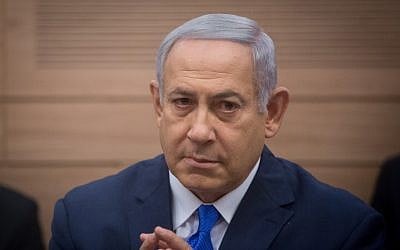
Prime Minister Benjamin Netanyahu on Saturday clashed with Iran’s President Hassan Rouhani after the latter called Israel a “cancerous tumor” established by Western countries to advance their interests in the Middle East.
“Israel knows very well how to defend itself from the murderous Iranian regime,” Netanyahu said in a statement.
“Rouhani’s slander, which calls for the destruction of Israel, proves yet again why the nations of the world need to join in the sanctions against the Iranian terrorist regime which threatens them,” charged the prime minister.
Iran’s leaders frequently condemn Israel and predict its demise, but Rouhani, a relative moderate, has rarely employed such rhetoric.

Addressing an annual Islamic Unity Conference on Saturday, Rouhani said, “One of the ominous results of World War II was the formation of a cancerous tumor in the region.”
He went on to refer to Israel as a “fake regime” set up by Western countries.
Iran supports terror groups like Lebanese Hezbollah and Palestinian Hamas that are pledged to Israel’s destruction.
Netanyahu has long identified Iran as Israel’s greatest threat, pointing to its nuclear program, its leaders’ calls for Israel’s destruction and its support of terrorist groups.
Rouhani on Saturday said the United States cultivates close ties with “regional Muslim nations” to protect Israel, an apparent reference to Iran’s regional rival Saudi Arabia and the kingdom’s Sunni Arab allies. He said bowing to American pressure amounts to “treason.”
He added, however, that Iran was prepared to defend Saudi Arabia from “terrorism and superpowers.”
“We do consider you a brother,” he said. “We do consider the people of Mecca and Medina our brothers,” he added, referring to Islam’s two holiest cities, in Saudi Arabia.
Saudi Arabia cut diplomatic ties with Iran nearly three years ago after Iranian protesters stormed its diplomatic posts in Iran in response to the kingdom’s execution of a prominent Shiite cleric. The two countries are regional arch-rivals, and support opposite sides in the wars in Syria and Yemen.









The Times of Israel Community.