

Iraq president threatens to quit as protests over pro-Iran PM pick rage
Citing wish to ensure country’s independence, Barham Saleh rejects selection of Assaad al-Aidani despite move appearing to violate constitution
 Add ToI as a Preferred Source on Google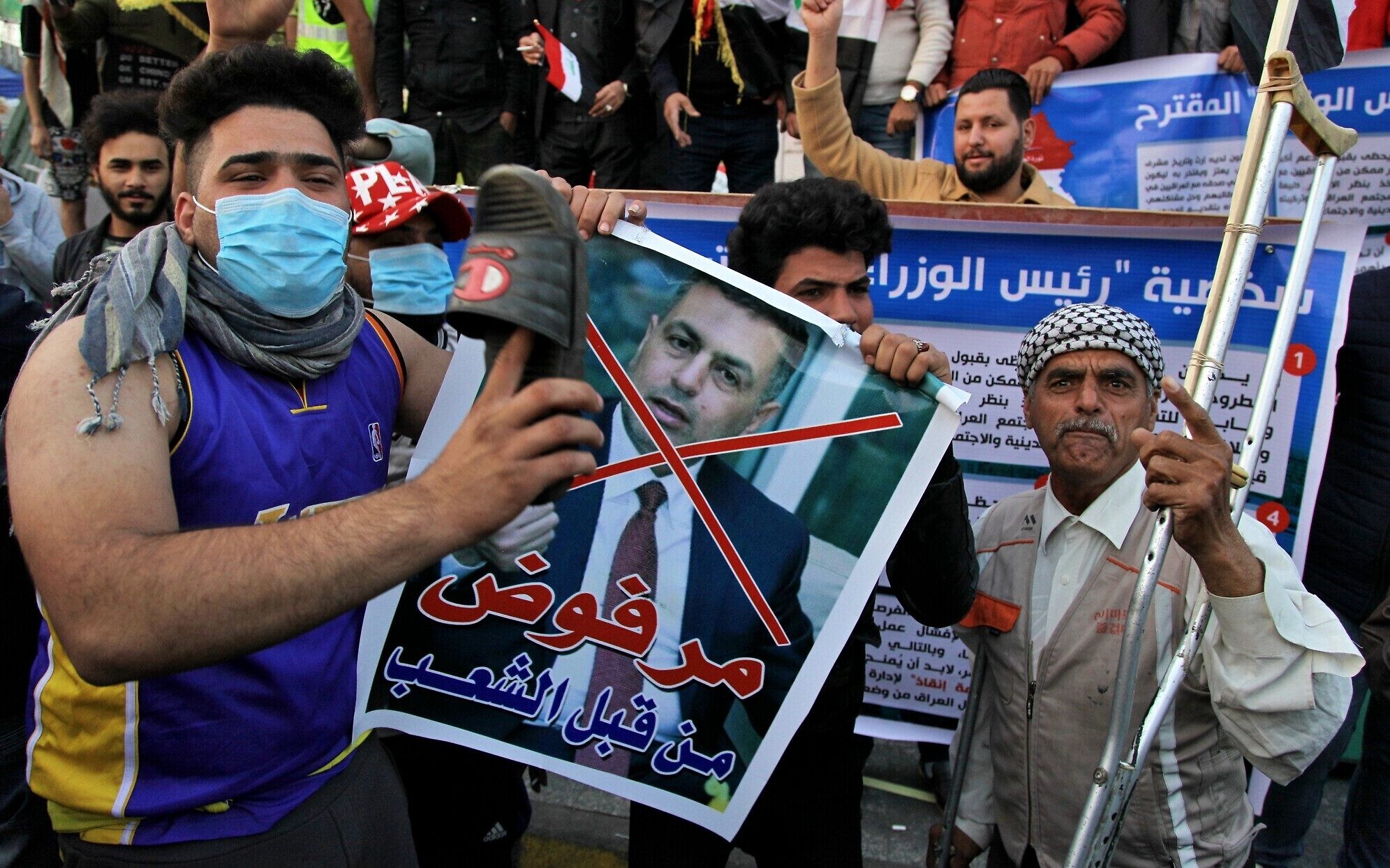
BAGHDAD, Iraq — Iraq’s president said Thursday he was “ready to resign” rather than put forward the candidate of a pro-Iranian coalition for the post of prime minister, deepening the country’s political crisis.
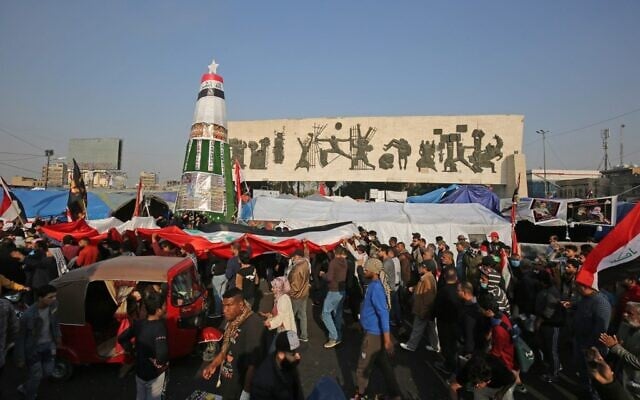
Barham Saleh’s announcement came as anti-government protesters blocked roads and bridges in Baghdad and the country’s south after torching several buildings overnight.
In a letter to parliament, Saleh said he wished to guarantee the “independence, sovereignty, unity and territorial integrity” of Iraq.
But he cited the constitution, which obliges the president to task the candidate put forward by parliament’s biggest bloc with forming a government.
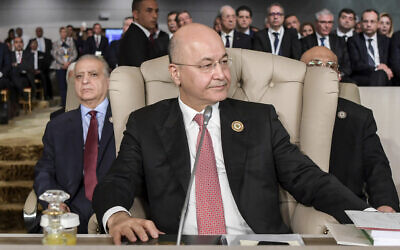
“With all my respect to [Basra province governor] Mr. Assaad al-Aidani, I decline to put him forward” for the post, Saleh wrote.
As that could be seen as violating the constitution, “I place before members of parliament my readiness to resign from the position of president,” Saleh added.
Shortly after issuing the statement, the president left Baghdad for his hometown in the northern city of Sulaimaniyah.
Under the constitution, parliament has seven days to accept or reject a president’s resignation before it automatically goes into effect. It was unclear how lawmakers would react, as Saleh did not officially resign.
In Baghdad’s Tahrir Square, which has emerged as a focal point of their demonstrations, protesters gathered to celebrate the president’s decision.
Aidani is considered as the candidate of Iran, which protesters accuse of meddling in Iraqi affairs.
Weeks into a protest movement that has rocked Baghdad and Iraq’s south, leaving hundreds dead, parliament remains deadlocked over the selection of a replacement for previous prime minister Adel Abdel Mahdi.
He resigned last month in the face of massive demonstrations over official corruption, economic woes and poor infrastructure despite the country’s large oil wealth.
The demonstrators oppose the entire political class and have vented their anger against leaders who are negotiating to nominate an establishment insider as the next prime minister.
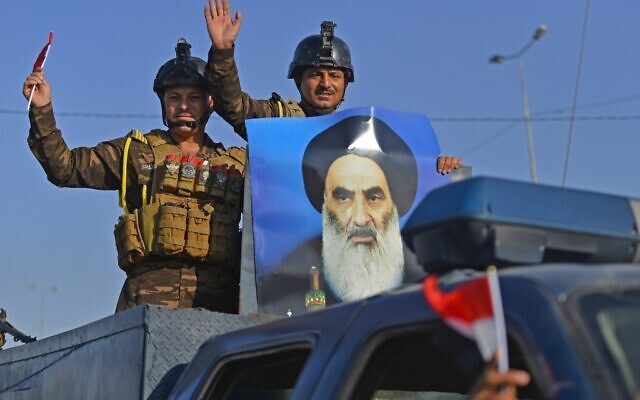
The political situation has been made more unpredictable by the notable absence of the influential voice of Grand Ayatollah Ali Sistani regarding the choice of prime minister.
The 89-year-old is Iraq’s top Shiite cleric and his opinion has long been decisive in the country’s politics — it was after one of his sermons that Abdel Mahdi stepped down.
Sistani, who has already distanced himself from politicians slated by the street, announced on Thursday that his sermon on Friday will not address the political situation.
‘Hostage to sectarian divisions’
The constitution gives the biggest parliamentary bloc the right to name a prime minister, but the legislature is divided over whether the “biggest bloc” refers to the biggest coalition or the winning list in 2018 elections.
Pro-Iranian factions have touted outgoing higher education minister Qusay al-Suhail for the post, later opting for Aidani after the president rejected Suhail’s nomination.
Both are unpopular choices with protesters, who also have slammed Aidani for crushing previous demonstrations in Basra province last year.
“We don’t want Assaad the Iranian!” shouted protesters in the southern city of Kut on Thursday.
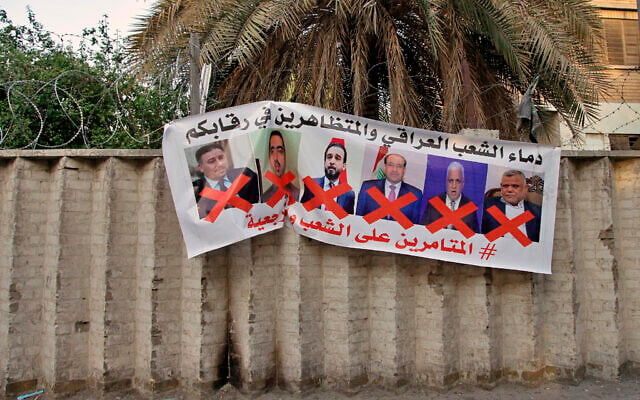
An opposing bloc, the Saeroon list of populist Shiite cleric Moqtada Sadr — opposed to Iranian influence — also claims the right to name the prime minister as it won the largest number of seats in 2018 parliamentary polls.
The protesters want a technocratic premier who has had no involvement in the political system set up after the US-led invasion that toppled dictator Saddam Hussein in 2003.
“The government is hostage to corrupt parties and sectarian divisions,” said one activist, Sattar Jabbar, 25, in the southern city of Nasiriyah.
Smoke and flames from burning tires in Nasiriyah, Basra and Diwaniyah blocked major roads and bridges across the Euphrates River all night, AFP correspondents said, before some of these roadblocks were lifted in the morning.
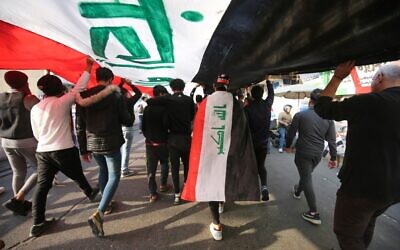
In Nasiriyah, demonstrators set the provincial government building ablaze overnight for a second time since the protests began, and protesters also torched the new headquarters of a pro-Iran militia in Diwaniyah.
Iraq has been rocked by protests since October 1.
After dwindling, the street campaign has gained new vigor in recent days to rally against widespread corruption and a political system seen as beholden to neighboring Iran.
Government offices and schools remain closed across almost all of Iraq’s south.
Around 460 people have been killed and 25,000 wounded in nearly three months of clashes between protesters and security forces.





The Times of Israel Community.