

Israel hits Hezbollah sites in two waves of major strikes across southern Lebanon
After evacuation warnings, Lebanese media says targets hit in several towns, most north of the Litani; separately, IDF says it hit Hezbollah operative in apparent strike on vehicle
 Add ToI as a Preferred Source on Google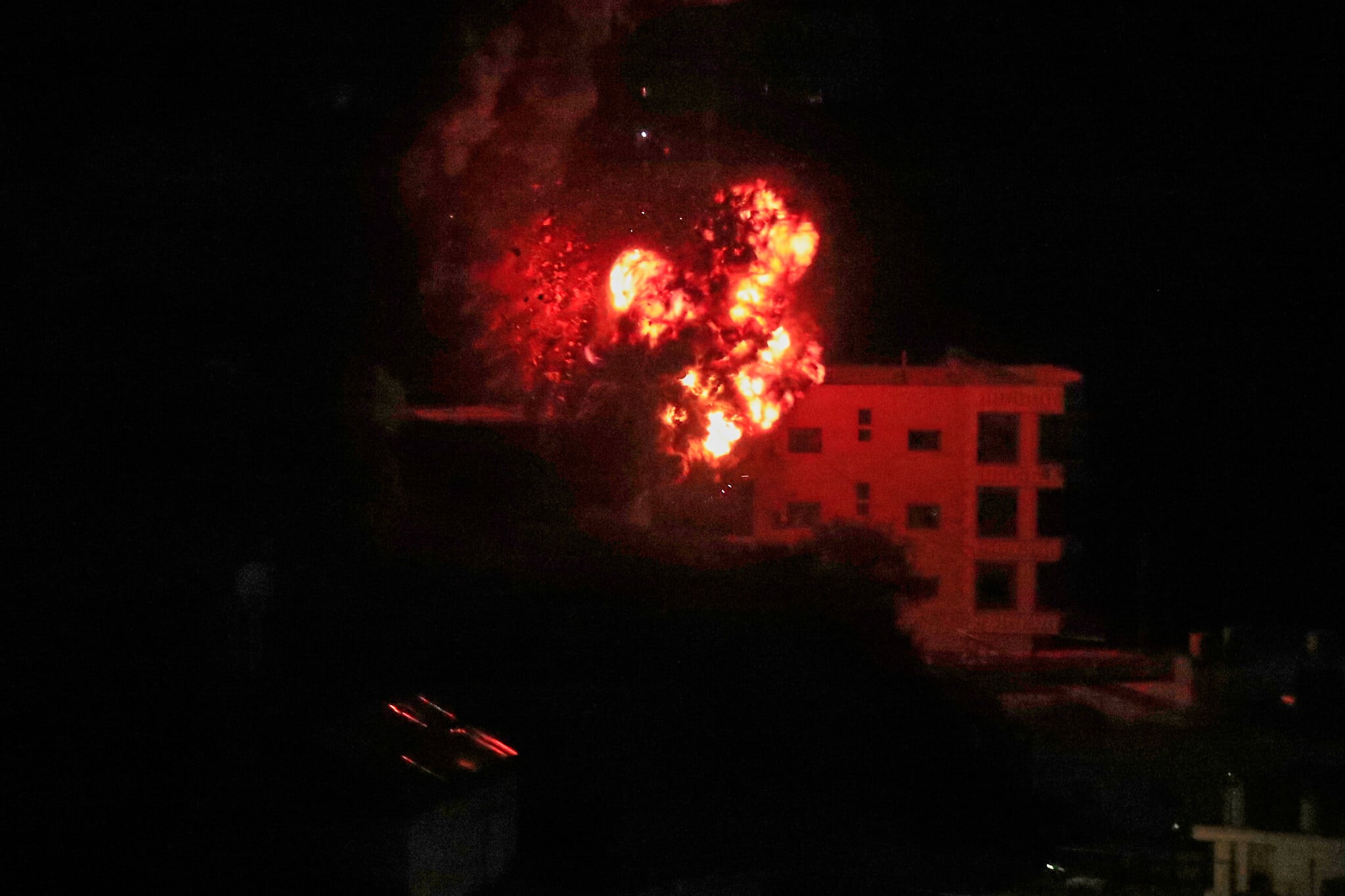
Israel on Sunday carried out major airstrikes against seven Hezbollah targets in southern Lebanon, using more than 30 munitions in two waves of strikes, the military said.
The strikes came after the IDF issued several evacuation warnings in the south Lebanon towns, saying the strikes were “in response to Hezbollah’s continuous violations of the ceasefire understandings.”
Under the current ceasefire, which was reached in November 2024 after over a year of daily Hezbollah rocket attacks and after a month of full-scale conflict, the Iran-backed group was to withdraw its forces north of the Litani River and have its military infrastructure dismantled in the evacuated areas.
The group has refused to surrender its weapons, however, and Israel has continued to carry out strikes on Hezbollah targets over the past year.
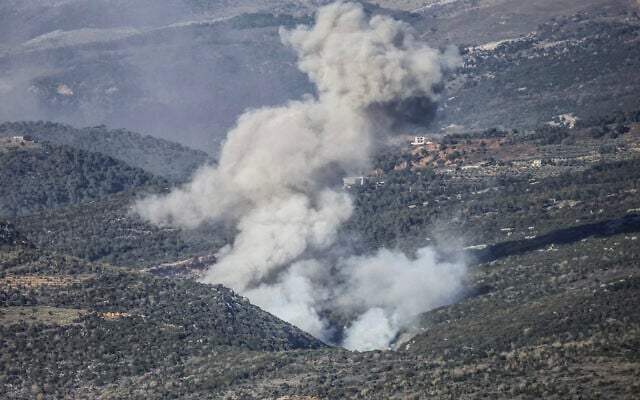
The first wave of strikes on Sunday took place in the early afternoon, targeting facilities that the army said were being used to store weapons.
Lebanon’s official National News Agency (NNA) reported “a series of violent Israeli strikes” on Jezzine, Mahmudiyeh and Al-Dimasqiyeh, as well as “more than 10 strikes” on Al-Bureij, all in southern Lebanon.
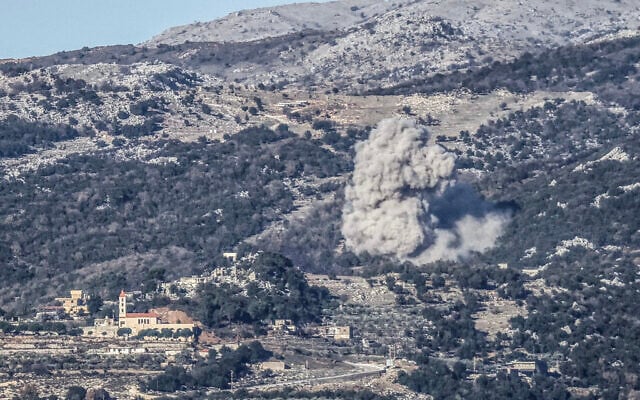
Later in the evening, the IDF struck an underground weapons storage facility in the Kfar Beit area, near Kfar Hatta in southern Lebanon — shortly after issuing an evacuation warning for the town.
Lebanese state media reported that “enemy warplanes launched more than 10 raids on the threatened location” in the town of Kafr Hatta, which lies north of the Litani, noting “significant damage” to buildings there.
After the strikes, the IDF said that one of the sites it targeted was also hit last week, and that it had warned the Lebanese army about Hezbollah activity at the location.
בתגובה להפרות של ארגון הטרור חיזבאללה: צה"ל תקף אתר תת-קרקעי ששימש לאחסון אמצעי לחימה של ארגון הטרור חיזבאללה בלבנון
בהמשך לתקיפות צה"ל מוקדם יותר היום, בהן הותקפו פירי אחסון אמצעי לחימה בדרום לבנון, צה"ל השלים תקיפה נוספת במהלך היום, במסגרתה הותקף אתר תת-קרקעי ששימש לאחסון… pic.twitter.com/yPeQ1Azmcv
— צבא ההגנה לישראל (@idfonline) January 11, 2026
According to the IDF, Lebanese soldiers visited the site but did not completely dismantle the infrastructure, leading Israel to strike the site again Sunday. The IDF said it issued an advance warning of the strike in order to reduce any harm to civilians.
Just after those strikes, the military said it struck a Hezbollah operative in the area of Bint Jbeil. It did not immediately provide further details on the target or the outcome of the strike.
Photos circulating on social media showed what appears to be a vehicle that was hit in the attack, with the car seen engulfed in flames.
مراسل "#صوت_كل_لبنان": مسيرة إسرائيلية استهدفت سيارة في مدينة #بنت_جبيلhttps://t.co/i9db4M2Blz #عاجل pic.twitter.com/nXP22CBQ8F
— صوت كل لبنان vdlnews 93.3 (@sawtkellebnen) January 11, 2026
The Lebanese government claimed last week to have disarmed Hezbollah south of the Litani River — around 30 kilometers (20 miles) from the Israeli border — in line with the deadline it had set for itself, saying it had “achieved the objectives of the first phase” of its plan in an “effective and tangible way.”
It said it has extended operational control over the south, except for the handful of areas still controlled by Israeli troops. Hezbollah, which has rejected efforts to disarm, did not immediately comment.
Israel sounded a cautious note on the announcement, saying the efforts from Beirut to disarm the terror group were “encouraging” but insufficient, and adding in a second statement that “Hezbollah is rearming faster than it is being disarmed.”
Since the ceasefire, the IDF has killed around 400 operatives and struck hundreds of additional Hezbollah-linked targets. The IDF has repeatedly asserted that the activity at the targeted sites constitutes a violation of the understandings between Israel and Lebanon.
Israel has withdrawn from all but five strategic posts along the border as the disarmament efforts have proceeded, and conducts frequent strikes on Hezbollah forces and posts that it accuses of violating the ceasefire.






The Times of Israel Community.