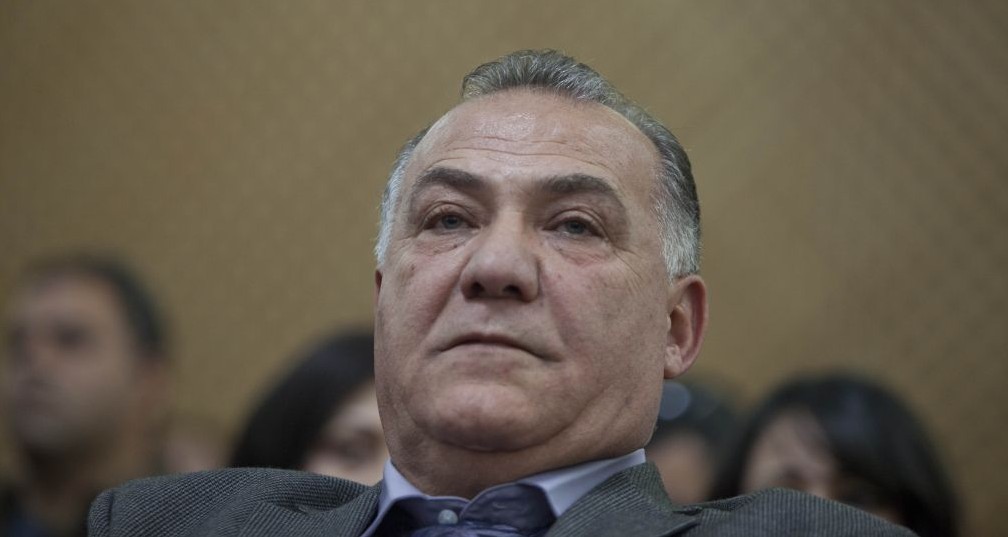
Nazareth mayor Ali Salam appears at the Supreme Court in Jerusalem, January 30, 2014. (Flash90)
An Israeli mayor said Thursday he had taught Donald Trump “everything” about how to win elections… despite never having met him.
“It is a fact that Trump learned from me, he learned everything from me,” Ali Salam, the Muslim mayor of the largely Arab-Israeli city of Nazareth in northern Israel, told local radio.
His claims seemed to be partly based on the fact that, after his victory, Trump told supporters “I love you, I love you, I love you,” a phrase Salam said he himself used when he won the Nazareth election.
“That’s what I did when I won,” he said.
Salam did not claim to have ever met Trump, nor did he provide evidence that the president-elect knows he exists, but said that the 2014 battle for the Nazareth municipality had been ferocious like the US election.
Get The Times of Israel's Daily Editionby email and never miss our top stories
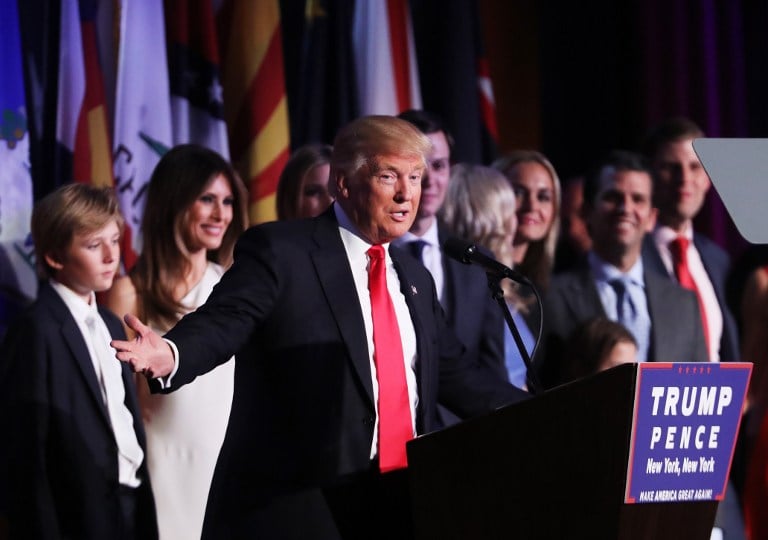
Republican president-elect Donald Trump delivers his acceptance speech during his election night event at the New York Hilton Midtown in the early morning hours of November 9, 2016, in New York City. (Spencer Platt/Getty Images/AFP)
And the two men share a lot of personality traits, Salam added. “Like me, he is a businessman who pursued his career and ignored anyone who stood in his way to get to the top.”
And also, “He does not take anyone into account when someone accused him of harassing women.”
Asked if Trump and Salam could perhaps have had similar ideas without coordination, the mayor was adamant, “This is no coincidence.”
Advertisement
The interview, conducted on Arabic-language radio, was widely shared between disbelieving locals.
If unknown to Trump, Salam, who has made headlines in Israel in recent years for bitterly criticizing Knesset members from the Arab sector, is known to Israel’s prime minister; he last met with Benjamin Netanyahu in January.
Help us report truthfully on social media
As a multimedia journalist, my job is to take the quality, fact-based journalism produced by The Times of Israel newsroom and make it accessible across every platform — from Instagram posts to podcasts to short-form videos.
This is how many, especially young people, consume news these days. But misinformation is rampant on social media. Our team at ToI produces accurate, responsible short-form reporting on Israel and the Jewish world.
If you believe in the importance of factual social media journalism, please consider joining our reader support group, The Times of Israel Community. Your financial support is essential to sustain responsible multimedia reporting.
We’re really pleased that you’ve read X Times of Israel articles in the past month.
That’s why we started the Times of Israel - to provide discerning readers like you with must-read coverage of Israel and the Jewish world.
So now we have a request. Unlike other news outlets, we haven’t put up a paywall. But as the journalism we do is costly, we invite readers for whom The Times of Israel has become important to help support our work by joining The Times of Israel Community.
For as little as $6 a month you can help support our quality journalism while enjoying The Times of Israel AD-FREE, as well as accessing exclusive content available only to Times of Israel Community members.
Thank you, David Horovitz, Founding Editor of The Times of Israel


 Add ToI as a Preferred Source on Google