

Israeli lab decodes the building talents of a tropical ant
Scientists at the Weizmann Institute use time-lapse tech and geometry to probe the collective cognitive unit of weaver ants
 Add ToI as a Preferred Source on Google
Sue Surkes is The Times of Israel's environment reporter
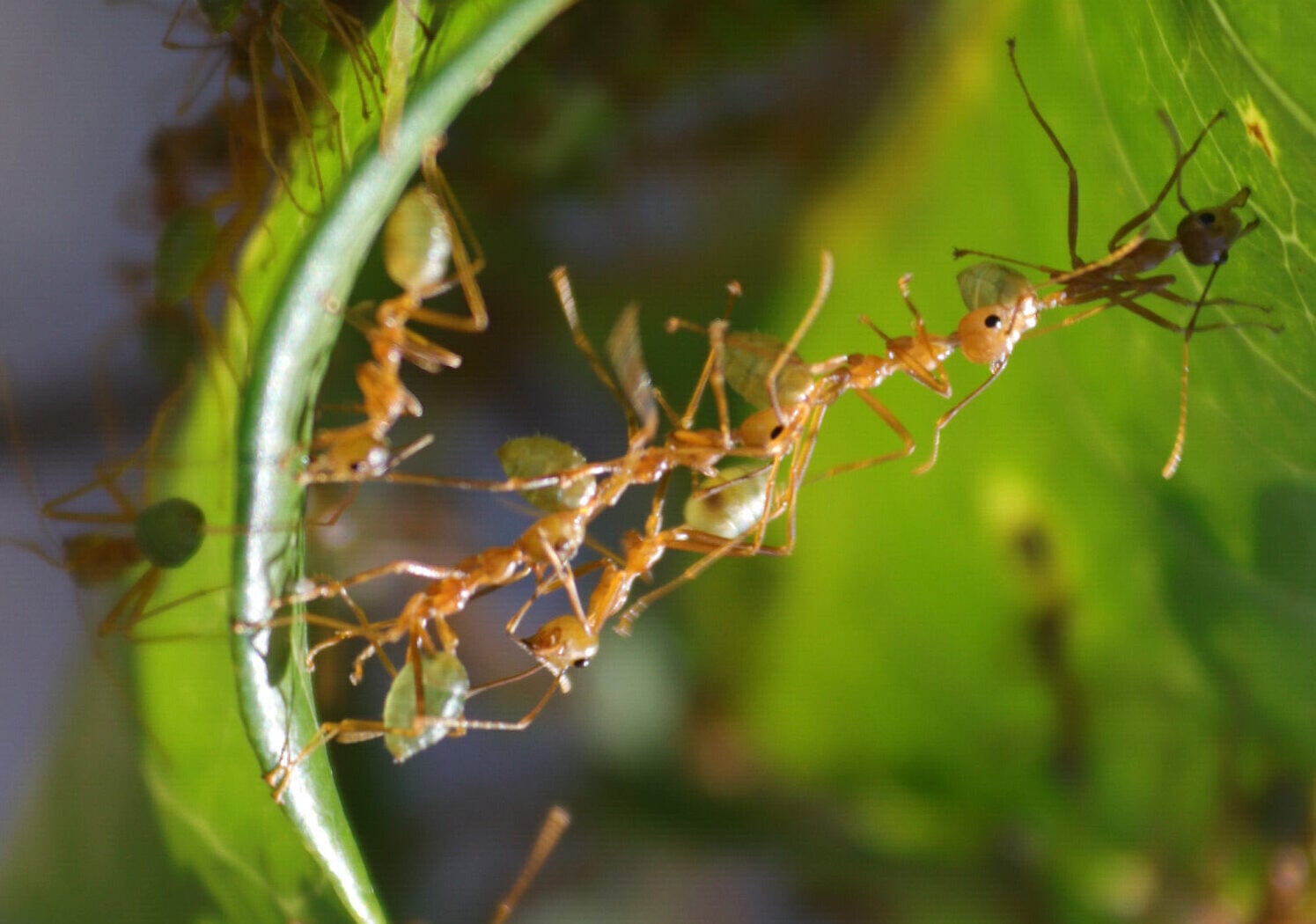
An Israeli lab is pioneering research into a little-studied species of ant that has extraordinary building abilities and is found in the tropics, from India to northern Australia.
Weaver ants work in groups. One set forms chains to connect and bend leaves together. Another harnesses silk-producing larva to ‘sew’ the leaves into a hollow, spherical nest.
That nest can accommodate 50,000 of the species.
It is this remarkable behavior that drew the attention of Prof. Ofer Feinerman, who heads a laboratory on collective ant behavior at the Weizmann Institute of Science in Rehovot, central Israel.
“It’s the most impressive ant that I know, and there are around 15,000 ant species,” he told The Times of Israel.
According to Feinerman, few people have studied this species because collecting the ants is challenging, as is analyzing ant activity across multiple leaves that are moving simultaneously.
Most studies to date have described the behavior. Feinerman said his lab was the first to undertake scientific analysis of it in laboratory conditions.
To collect ants, Feinerman and a colleague, Ehud Fonio, traveled to Queensland in northeastern Australia.
Back in Rehovot, a team led by PhD students Gadi Trocki and Michal Roitman designed an ant arena, with 50 cameras placed around an artificial branch bearing four transparent plastic leaves.
A time-lapse video, produced by the Feinerman Laboratory, shows the ants in action:
Apparently oblivious to the fact that they were in a laboratory with artificial leaves, the ants performed as they would in nature, bringing the four leaves together to form a ball.
The research team discovered that the angle of the leaves determined the direction in which the ball was constructed. For example, if the leaves pointed upward, the ants would construct the nest upward from the leaf stems.
If two leaves were placed pointing down and two of them up, the ants would still bend and seal all four leaves together in the direction of the first two leaves they colonized.
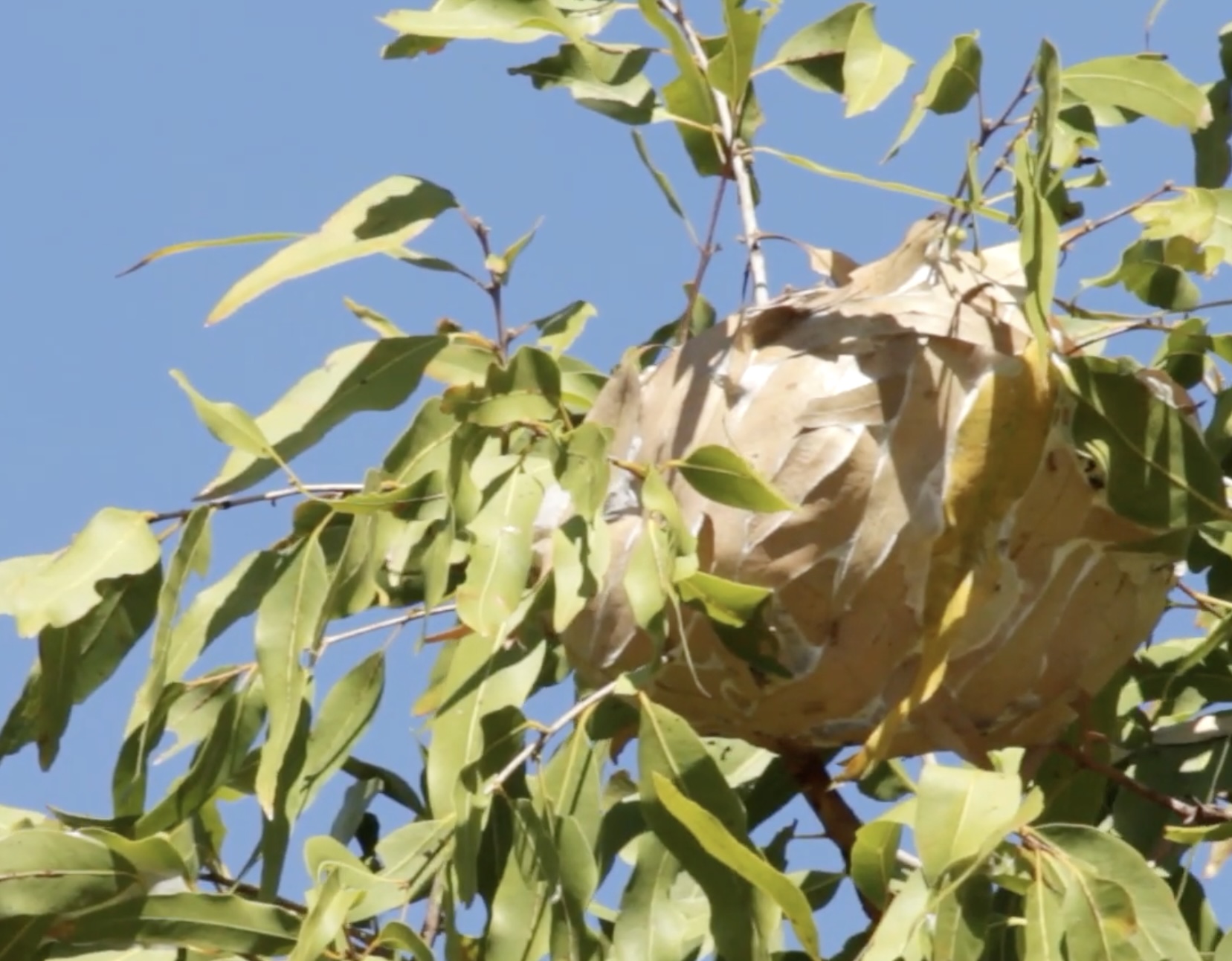
“The ants aren’t working independently on each leaf, but on the whole project together,” said Feinerman. “We’re not sure how.”
“The drive [to build the nest] is of the group, not the individual ant,” he continued. “Maybe individual ants understand [what they are meant to do], maybe not, but the group understands. I want to understand how it works, how they do it, how what they build is so strong.”
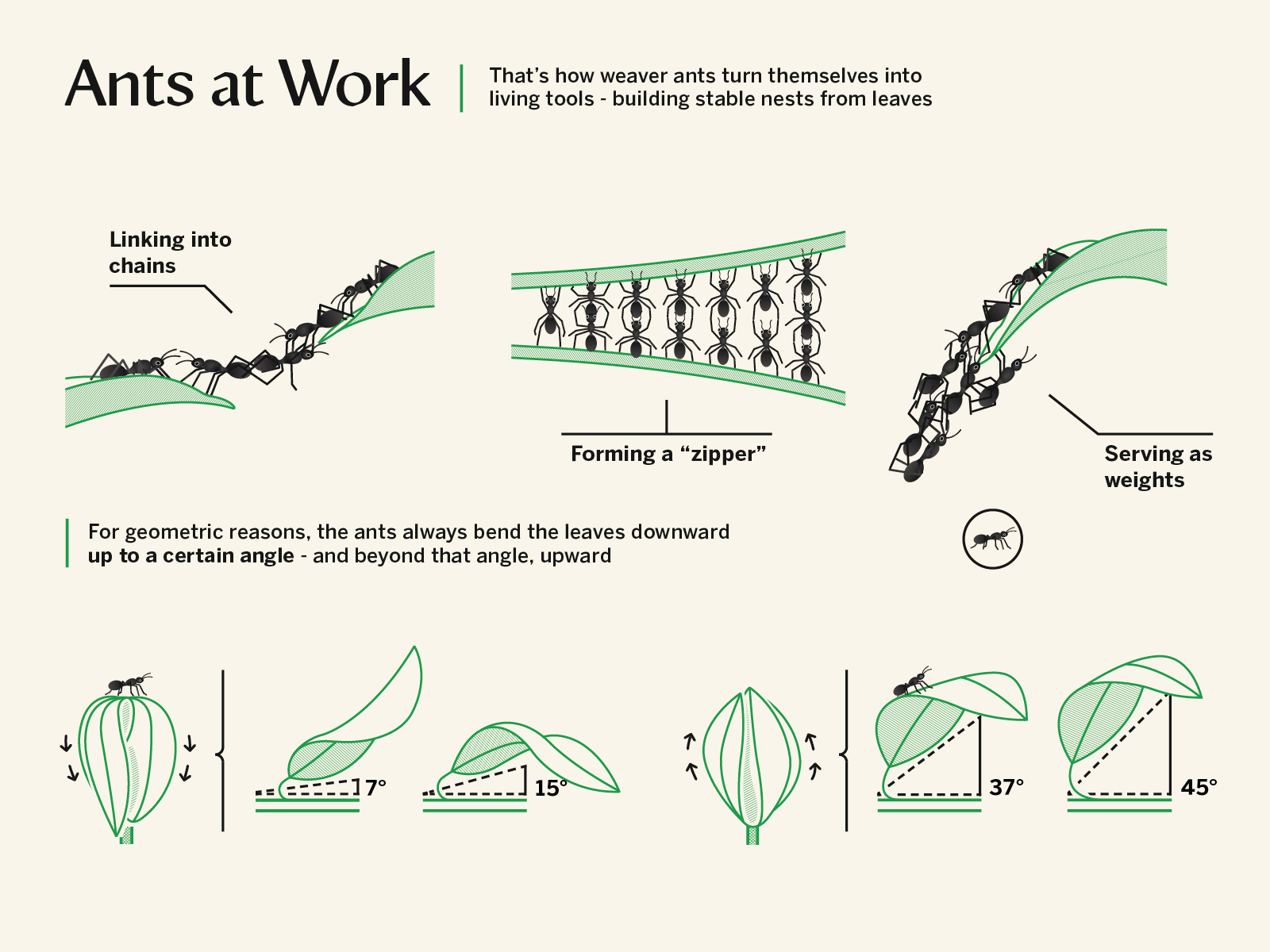
Another finding was that geometry accounts for the rigidity of nests made of flexible leaves. The principle is explained by the Gauss pizza slice theorem. Hold a single slice of pizza by the crust, and the slice will fall. Fold the piece into a U shape, and it will remain firm.
Further experiments would challenge the ants to build with different leaf shapes, Feinerman said.
“Just bringing the ants into a laboratory and undertaking an experiment where you can see from beginning to end how they build is new,” said.
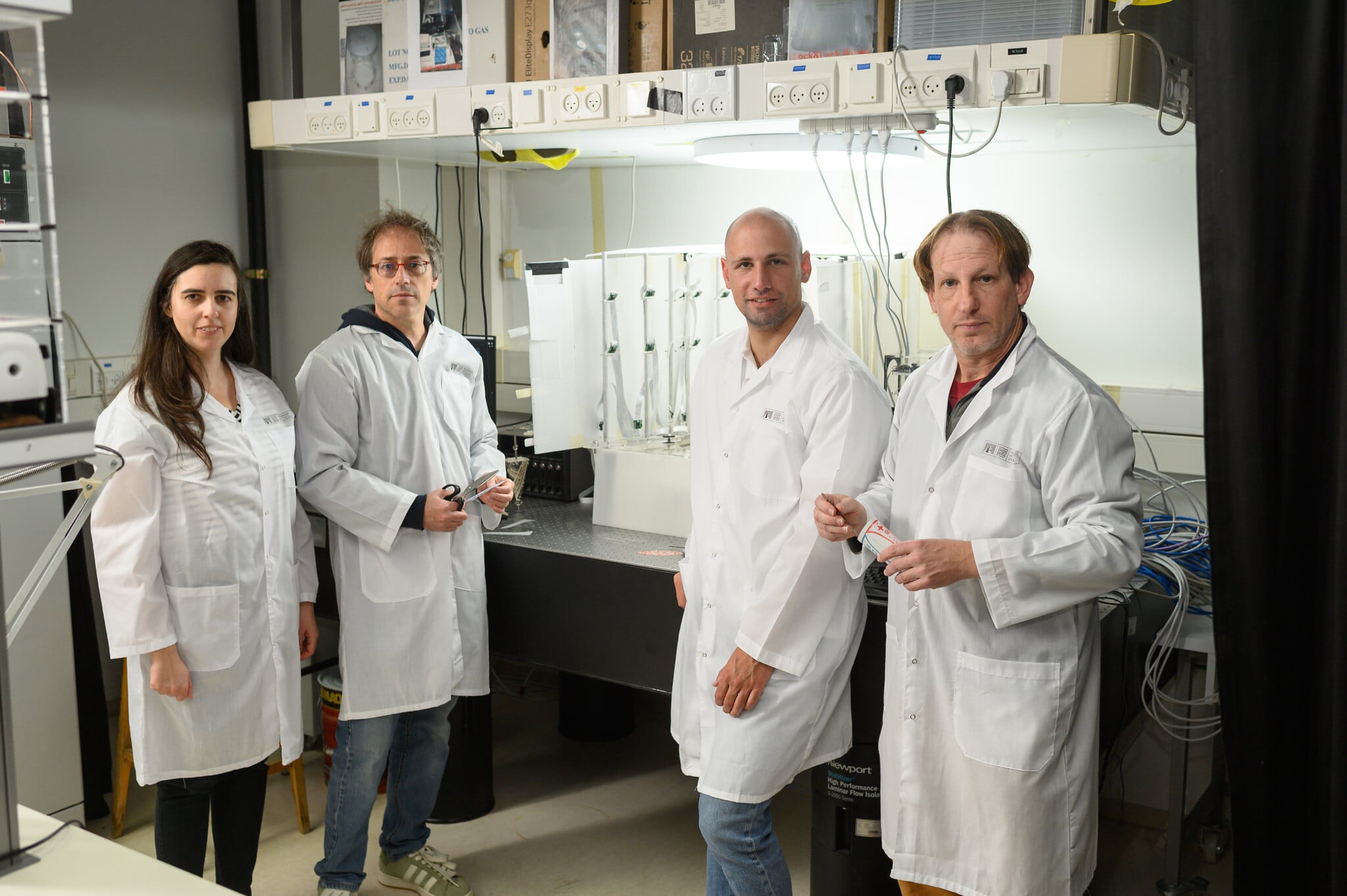
Asked about the broader relevance of the project, Feinerman said that understanding how single units could group together to form a new cognitive unit could be useful in other fields of biology as well as in robotics.
It has taken four years to prepare and conduct the research published earlier this year in Current Biology, and publicized by the Weizmann Institute on Monday.
Feinerman estimated that there were enough additional questions to keep the researchers busy for at least another decade.









The Times of Israel Community.