

Israel’s global warming emissions down in 2025 but still cost economy $11 billion, ministry finds
Environmental Protection Ministry’s pollution data shows positive trends in many areas thanks to continuing demise of coal, drop in wildfires after end of rocket fire from Lebanon
 Add ToI as a Preferred Source on Google
Sue Surkes is The Times of Israel's environment reporter
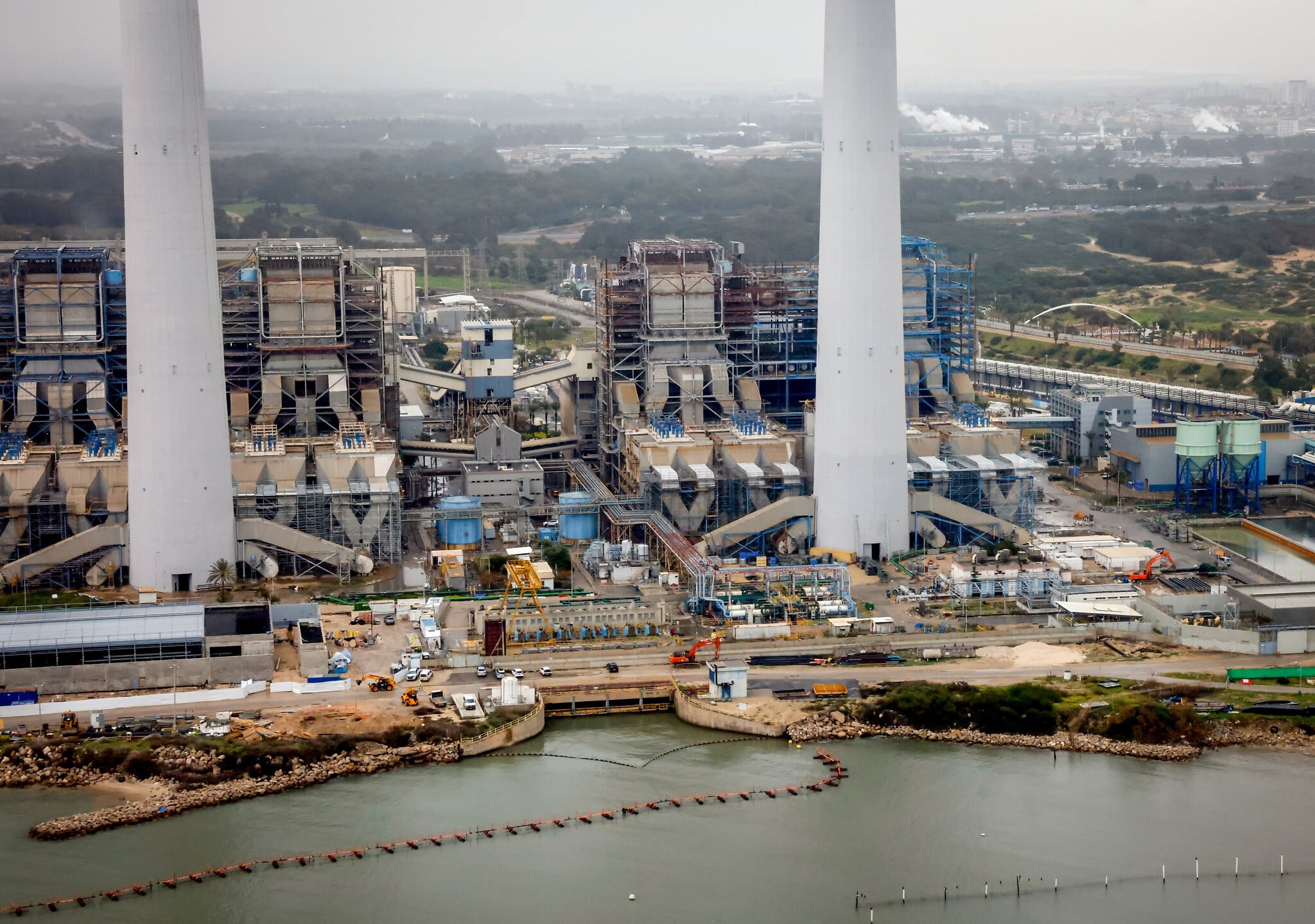
Global warming gases in the air cost the Israeli economy NIS 34 billion ($11.3 billion at today’s rates) in 2025 and are still thought to cause 5,500 premature deaths in Israel annually, the Environmental Protection Ministry found in a report published Tuesday.
Still, that sum was down NIS 4.2 billion ($1.4 billion) from the previous year, according to an annual report, also published in English.
Costs include lost workdays due to pollution-related sickness caused by transportation fumes, electricity generation, waste, industry, and large-scale livestock farming.
The data comes from two annual reports.
One includes information on emissions of 16 pollutants into the air, soil and water submitted by the 570 largest factories in fields such as energy, chemicals, waste and sewage, and livestock. The other, the National Air Emissions Inventory, focuses on air pollution. It combines the factories’ information with data from multiple other sources to create models.
Much of the good news from 2025 is explained by lower coal use, which has been on a downward trajectory for years. Coal has been replaced by natural gas, a fossil fuel that is less polluting than coal or diesel, but still releases methane, a powerful global warming gas. Another positive is the drop in wildfires during 2025, following the end of rocket fire from Lebanon.
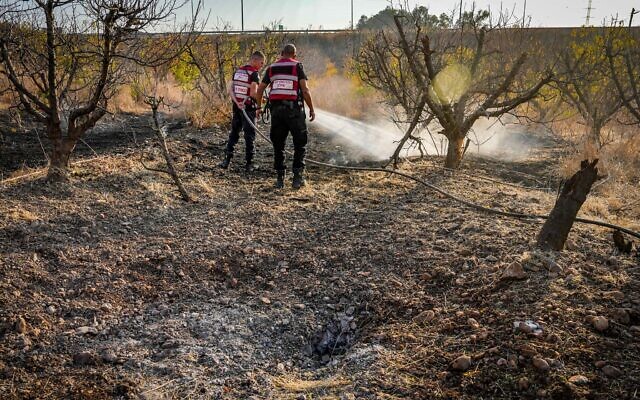
For these reasons, nitrogen oxides dipped by 28 percent between 2024 and 2025, and sulfur oxides by a massive 49%. Particulate matter, an invisible pollutant made of tiny particles of soot, dirt, carbon and minerals, also fell by over 20%.
Materials known or suspected to be carcinogenic to humans were down by 7% thanks to reduced burning of municipal waste. However, that followed a 16% rise between 2023 and 2024 and a 3% rise between 2022 and 2023.
For a longer-term view, the ministry also compared changes between 2012 and 2025. Again, thanks to a reduction in coal, nitrogen oxides decreased by 82%, sulfur oxides by 94%, particulate matter by 78%, and materials suspected or known to be carcinogenic by 36%.

The only reported rise in emissions last year was from Non-Methane Volatile Organic Compounds (NMVOC), which were up by two percent. That was after a 16% rise in 2024. The ministry said this was due to population growth, expansion in the poultry sector, and increased emissions from wastewater treatment plants.
A third of these NMVOC emissions came from households’ use of materials such as cleaning products, paints, adhesives, cosmetics and toiletries, with another quarter from poultry houses, cattle sheds and pig farms. Short exposure to these compounds can cause itchy eyes, nose and throat; headaches; dizziness; and respiratory distress. Long-term, chronic exposure to specific compounds, such as benzene and formaldehyde, can have more serious effects.
The demise of coal
At 83%, Israel’s rate of electricity generation from fossil fuels, including natural gas, is still the highest among the OECD. Last year, renewable energy accounted for 16.7% of electricity production.
Coal consumption for electricity generation fell by a third last year after four coal-fired units at the Orot Rabin power station in central Hadera were shut down.
Orot Rabin is transitioning from coal to natural gas in a process that should be completed by 2027 or 2028. That said, and despite fierce objections, the retired units will be allowed to burn coal for up to 500 hours annually for testing and maintenance through 2028. The aim is to ensure energy security.
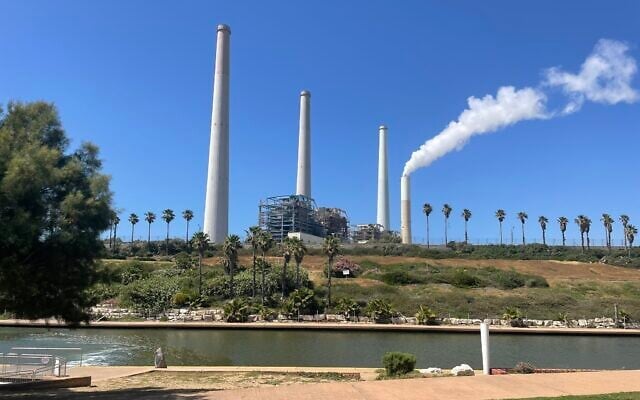
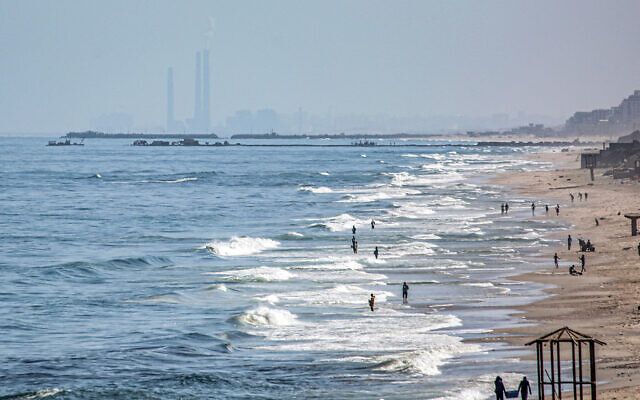
The only other power station still using coal — Rutenberg in Ashkelon on the southern coast — is undergoing a similar, multi-year conversion project to phase out coal in favor of natural gas. It will not retain any coal reserves.
Orot Rabin still came out on top, however, for global warming emissions in 2025, followed by the Nesher cement factory in central Ramla, the Rutenberg power station, the Gezer power station in central Israel, and the huge Efeh landfill site at the Mishor Rotem industrial and mining area in the Negev, in the south.
Two previous serial offenders, the Bazan oil refineries in northern Haifa and Rotem Amfert Negev, took 12th and 13th place, respectively, with Bazan reducing activity last year after being shelled by Iranian missiles twice. It was also shelled twice this year.
An uptick in methane
Buried organic waste generates large quantities of methane.
Elad Amichai, the Environmental Protection Ministry’s head of waste, told a press conference that he hoped adding new stations to separate organic waste from other waste before landfilling would reduce methane emissions.
He said the first waste-to-energy plant, at Neot Hovav in the Negev, would be operational by 2030, and that by 2027, the first two industrial plants for recycling organic waste would open at the Shafdan wastewater treatment plant just south of Tel Aviv and at Daya in the Negev. Construction of a third, at Ein Hashlosha, also in the Negev, will start this year, he added.
With last year’s opening of a new pre-landfill sorting facility in Evron in northern Israel, and increased activity at other sorting sites, the amount of municipal solid waste sent for recycling rose by five percent in 2025.
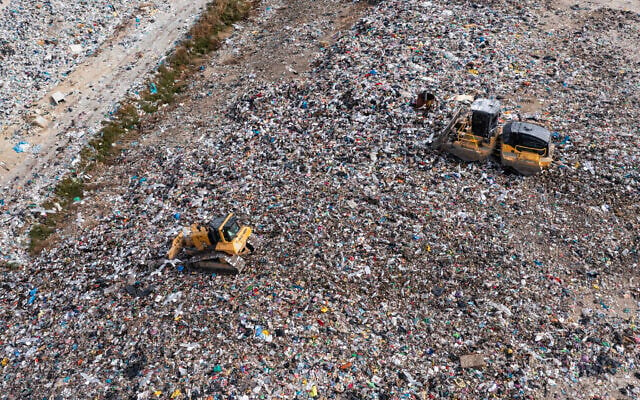
As the construction industry started to recover after the war, the transfer of building and demolition waste sent for recycling also improved.
Just before the Knesset dissolved last month prior to elections in October, it passed a bill to regulate building waste.
Waste fires
Within Israel, fire and rescue teams were called last year to nearly 11,000 incidents of illegal waste burning, down 13% compared with 2024 and 31% from the peak year of 2021, the ministry’s figures show. The ministry has no figures for pirate waste fires in the West Bank whose polluting smoke drifts over the Green Line into Israel; the Coordinator of Government Activities in the Territories (COGAT) liaison holds authority there.
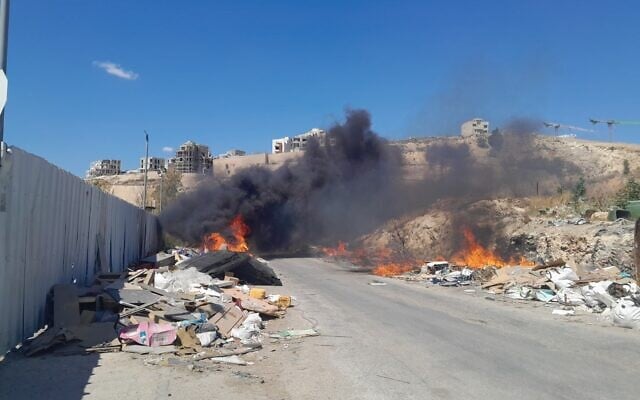
Iris Shalit, the ministry’s senior deputy director general for supervision and enforcement, told the press conference that expanded enforcement teams had gone into the West Bank at the end of last year to catch, fine and deter those burning waste. Teams continued to go out once or twice a month this year, according to intelligence reports, she added, with anecdotal evidence suggesting some success.
Environmental Protection Minister Idit Silman intervened, saying the ministry had transferred funds to COGAT to help them fight the phenomenon. She also said she had met with residents from the Lachish district in southern Israel over the past few days, where electronic waste burning has soared again.










The Times of Israel Community.