

It doesn’t take a crime to impeach a president
Democrats’ claim of foreign election interference doesn’t have to be criminal offense; US Constitution allows for a president to be removed over a broad spectrum of abuses of power
 Add ToI as a Preferred Source on Google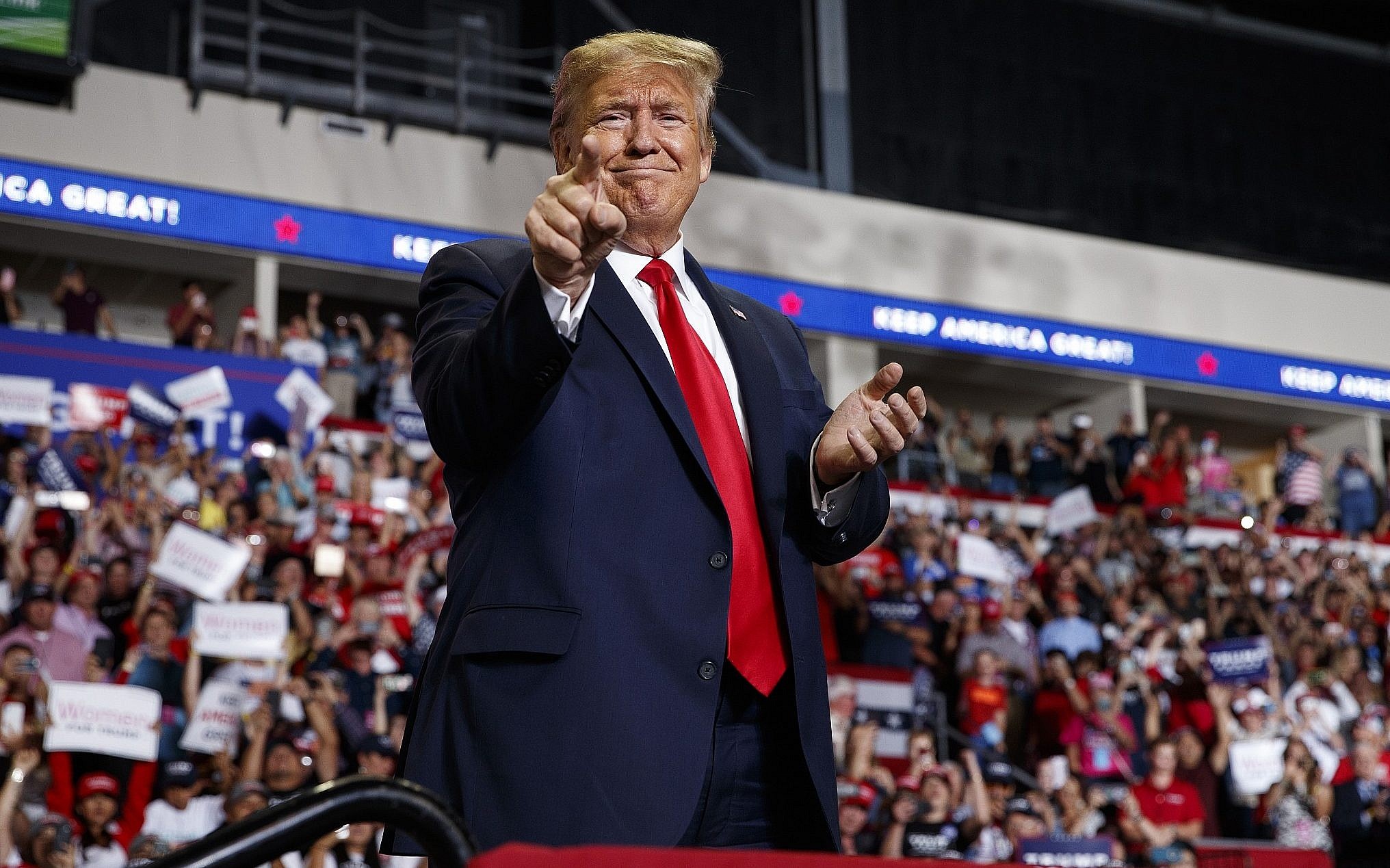
WASHINGTON (AP) — If House Democrats press ahead with impeachment proceedings against US President Donald Trump, their case will rest in large part on the claim that he sought a foreign government’s help, with hundreds of millions of dollars in aid in the balance, to dig up dirt on a political opponent to boost his reelection campaign.
But, if true, would that be a crime? The answer might not matter. It doesn’t take a criminal act to impeach a president.
The Constitution’s standard of “high crimes and misdemeanors” for impeachment is vague and open-ended to encompass abuses of power even if they aren’t, strictly speaking, illegal, legal scholars say.
The controversy centers on a summertime phone call in which Trump asked the president of Ukraine to help investigate Democratic political rival Joe Biden, according to a transcript the White House provided on Wednesday. A whistleblower’s complaint released Thursday alleged a concerted White House effort to suppress the transcript of the call and described a shadow campaign of diplomacy by Trump’s personal attorney Rudy Giuliani.
The Justice Department doesn’t think Trump violated any laws in his July 25 conversation with Ukrainian President Volodymyr Zelensky. Republican Sen. Rick Scott of Florida said, “I think we ought to go through the process. I mean, no one has shown me what law has been broken.”
But the House Intelligence Committee chairman, Rep. Adam Schiff, D-Calif., described several potential crimes that could have been committed if Trump withheld “authorized funding of Congress to use as leverage, if the president were involved in somehow extorting a foreign nation to dig up or manufacture dirt on his opponent, if there was an effort to cover up any of this conduct.”
Both Schiff and House Speaker Nancy Pelosi, D-Calif., called Trump’s actions a “shakedown.”

The Constitution provides for the impeachment and removal of the president, and other officers of the government, for “treason, bribery or other high crimes and misdemeanors.” The first two offenses are relatively easy to understand, but “high crimes and misdemeanors” is hard to define.
“It’s meant to convey the idea that the person has badly flouted the terms of office. Even if he didn’t commit a criminal offense, did he do something that constitutes an abuse of power?” said Corey Brettschneider, a political science professor at Brown University.
In 1970, then-House Republican leader Gerald Ford, defined an impeachable offense as “whatever a majority of the House of Representatives” would vote for.
Ford’s description may have been technically accurate — it takes a majority vote in the House to impeach — but many legal scholars find what Ford said too nakedly political and not in accord with US history.
On the other hand, the burden of proof in impeachment is, despite the term “high crimes,” lower than the standard in criminal cases, which is beyond a reasonable doubt.
Defenders of the president in past impeachments typically made the argument that the House shouldn’t impeach unless the president has committed a crime, said Frank Bowman III, a University of Missouri law professor and author of “A History of Impeachment for the Age of Trump.”

“The argument has a lot of resonance with people. It seems almost commonsensically right,” but it has not been the case in more than 600 years of English and American law, Bowman said.
Bowman said Trump’s actions illustrate his point. “You don’t impeach the guy because he violated a fairly technical election statute. You impeach him because he extorted a foreign country into giving him political help,” he said.
In the impeachment of President Bill Clinton, Republicans who controlled the House impeached Clinton on the charges of obstructing justice and lying to a grand jury in connection with his affair with White House intern Monica Lewinsky. But when the Senate held a trial on those charges, 10 Republicans joined Democrats to acquit Clinton on one count and five Republicans voted to acquit on the other.
Republicans never succeeded in convincing a majority of the country that their pursuit of Clinton was not partisan or that the misconduct he was accused of, essentially lying about an affair, was serious enough to warrant his removal from office.

By contrast, in 1974, President Richard Nixon resigned after the House Judiciary Committee voted for three articles of impeachment against him for obstruction of justice, abuse of power and contempt of Congress. Congressional Republicans, who had largely supported Nixon in the early days of the Watergate investigation, made clear they would not stand by him after the release of recordings revealed his role in trying to cover up the break-in at the Democratic Party’s headquarters that sparked the scandal.
At this point, it seems far-fetched to think that the impeachment of Trump in the Democratic-controlled House would lead to his removal by a two-thirds vote of the Republican-led Senate. That would require 20 Republican senators to vote to oust him — an unlikely prospect, crime or no crime.







The Times of Israel Community.