

Jerusalem fast train briefly reduces services due to faulty locomotive
Israel Railways cuts frequency to one train an hour instead of two, reportedly without explaining the reason for the change to waiting passengers
 Add ToI as a Preferred Source on Google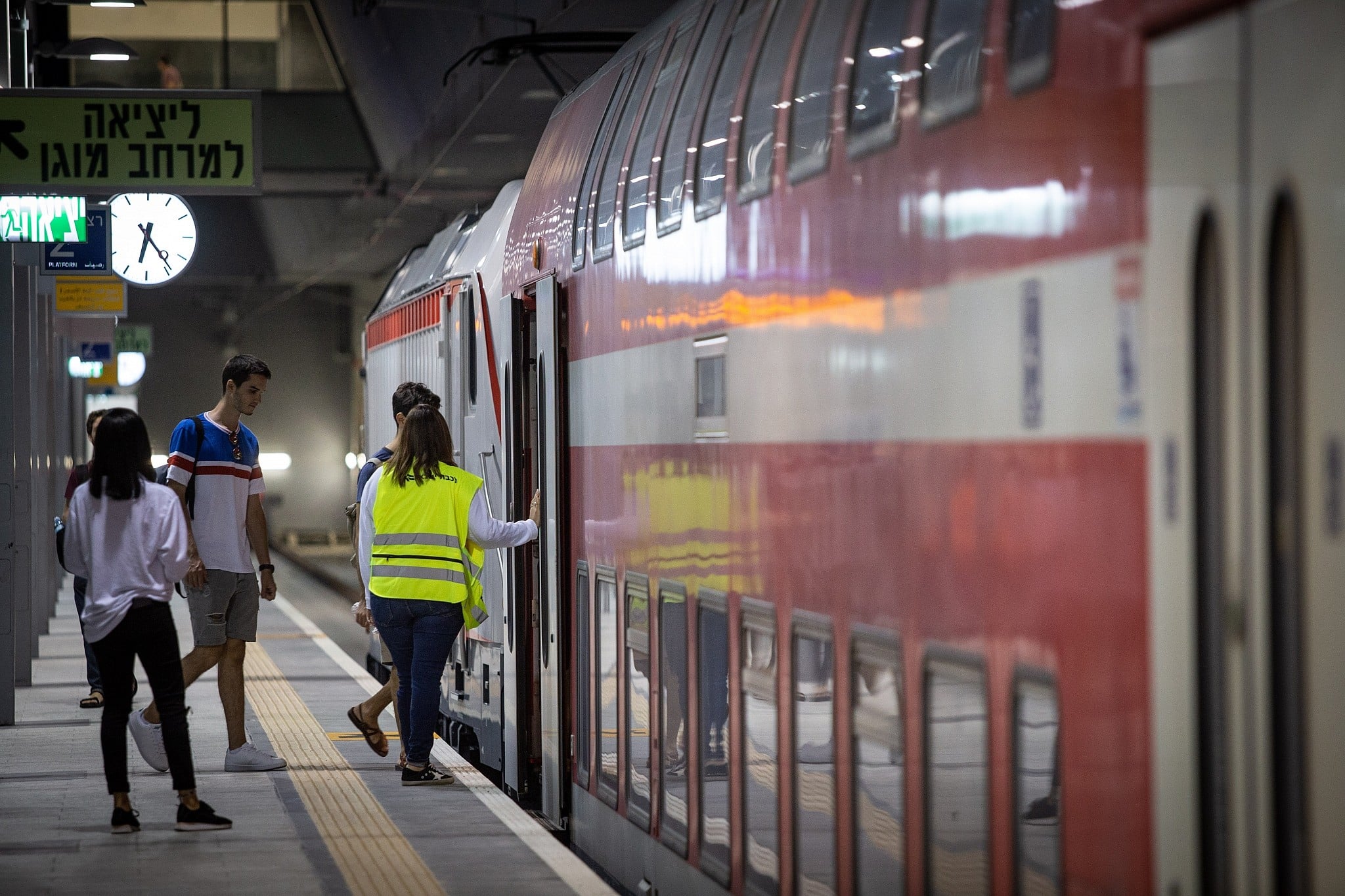
Passengers waiting to board the Jerusalem-Ben Gurion Airport fast train watched in dismay Sunday as services were reduced by half, to once an hour instead of twice, just as rush hour was about to start.
Israel Railways said that the change was due to a faulty electric locomotive.
Although the media was notified about the change in schedule, there was no explanation given to the passengers on the platform, reports said.
Regular service was restored after about two hours.
A Facebook group that keeps track of train services and reports problems tweeted a photo of an electronic timetable on one platform showing a canceled train.
הודעה לתקשורת 16.12 – בארכבת
*רכבת של 7:01 לירושלים מבוטלת. רכבת הבאה אמורה לצאת ב 7 וחצי והכרוז אמר שהתדירות ירדה לפעם בשעה
*רכבת של 06:53 מרחובות לבנימינה בוטלה בשל תקלה טכנית
במקביל אנחנו מקבלים דיווחים על ביטולי רכבות נוספים ועומסים חריגים pic.twitter.com/CJy45b7crP— בארכבת (@InTheRakevet) December 16, 2018
Passengers have suffered through numerous hiccups and delays since the new electric line opened in September, including last week, when all services were stopped for an hour due to technical issues.
In another incident, travelers reported being stuck in a tunnel for 25 minutes shortly after leaving the capital’s new Yitzhak Navon Station.
The original estimated completion date for the line passed years ago. Then the opening was delayed by five months.
Plans were for the trains to run directly from Jerusalem to Tel Aviv, but due to delays in electrifying the line from Ben Gurion Airport to Tel Aviv, passengers can only travel between Jerusalem and the airport at present.
The hilly section from Jerusalem to Latrun has five tunnels and several miles of bridges, which afford dramatic views of the Jerusalem hills.
In the coming months the line will be extended, first to Tel Aviv’s stations and eventually to Herzliya. Depending on the time of day, up to four trains will run each hour in both directions, traveling at up to 160 kilometers (100 miles) per hour.
The project was conceived in 2001, at an estimated cost of around NIS 3.5 billion ($978 million). Work began in 2005, only to be halted by environmentalist opposition until 2009. Tunneling recommenced in 2012. The final cost amounts to around NIS 6.5 billion ($1.8 billion).
The fast train to Tel Aviv has been long awaited by travelers who until now have had only a slow rail ride that meandered through the Jerusalem hills on an old Ottoman-era track and took over an hour.










The Times of Israel Community.