

Jewish extremist appeals conviction for church arson
Lawyer for Yinon Reuveni says court ignored ‘question marks’ in case, 4-year sentence ‘severe’ for crime
 Add ToI as a Preferred Source on Google
A far-right Jewish extremist filed an appeal with the Supreme Court on Thursday against his conviction for a July 2015 arson attack at the Church of the Multiplication of the Loaves and Fishes in northern Israel.
Yinon Reuveni, 22, was sentenced to four years in prison last month by the Nazareth Magistrate’s Court for the attack on the church.
Reuveni’s lawyer Itamar Ben Gvir said the decision to appeal the conviction and sentence was due to “question marks” in the case he said were ignored by the court.
Ben Gvir called the sentence “severe,” comparing it to a two-year sentence handed down to arsonists responsible for an April 2014 attack on a synagogue in the French Hill neighborhood of Jerusalem.

Reuveni was found guilty in July of setting fire to the chapel, in Tabgha along the Sea of Galilee, where Christians believe Jesus fed 5,000 people in the miracle of the five loaves and two fish.
He was charged with aggravated arson under, destruction of property with hostile intent, using a vehicle to carry out a criminal act and conspiracy to commit other crimes.
Two rooms in the church compound were vandalized and badly damaged in the blaze.
Hebrew graffiti was found on another building within the complex, reading, “Idols will be cast out or destroyed.”
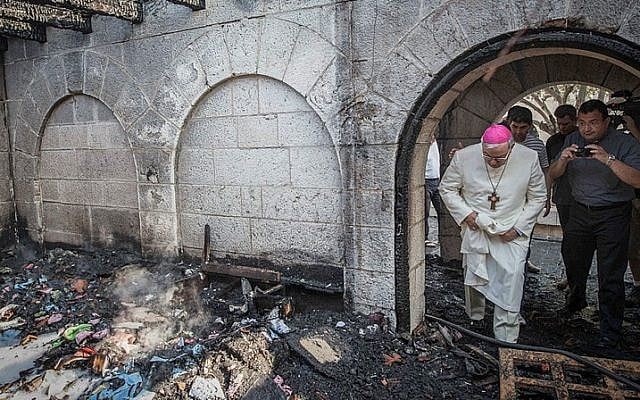
The complex reopened to pilgrims last February following eight months of renovation work at a cost of around $1 million, of which the State of Israel contributed almost $400,000.
Around the time of the attack, Reuveni was living in the Baladim outpost adjacent to the Kochav Hashahar settlement. Baladim was home to activists known as “hilltop youth,” young people who move to settlement outposts and have been known to resist soldiers’ attempts to evacuate them and to carry out attacks against Palestinians. Israeli security forces viewed the illegal outpost as a hotbed for extremism, and evacuated it last June.
Jacob Magid contributed to this report.










The Times of Israel Community.