

Katz, Smotrich declare West Bank waste fires a security issue, unveil emergency plan
Plan allows for seizure of Palestinian waste trucks, large-scale waste removal, the establishment of a new waste disposal site in the central West Bank; costs to be imposed on PA
 Add ToI as a Preferred Source on Google
Stav Levaton is a military reporter for The Times of Israel
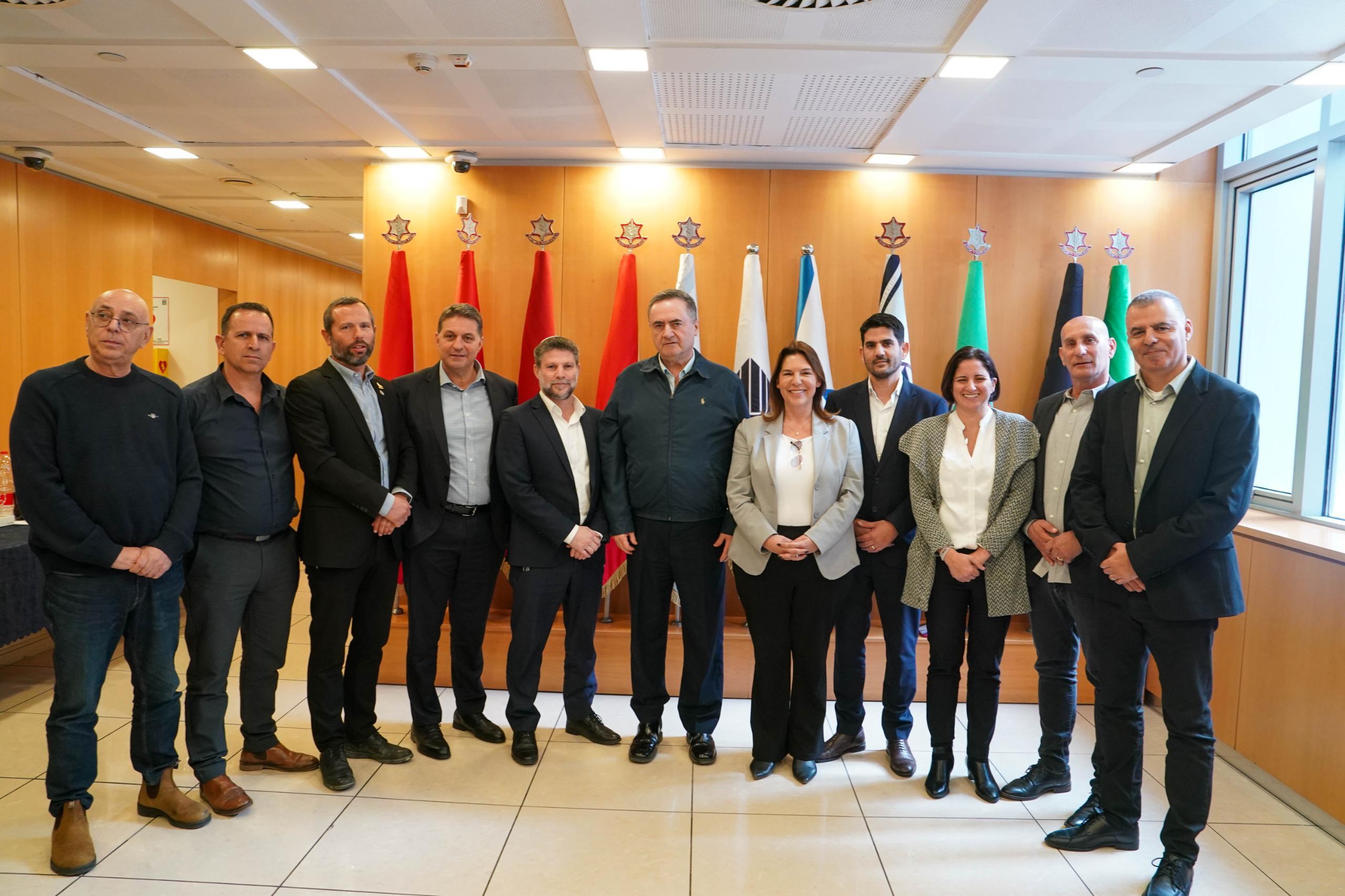
Defense Minister Israel Katz and Finance Minister Bezalel Smotrich declared on Thursday that illegal waste fires in the West Bank pose a threat to national security, and announced a new national emergency plan to address the phenomenon after a meeting with local authority heads.
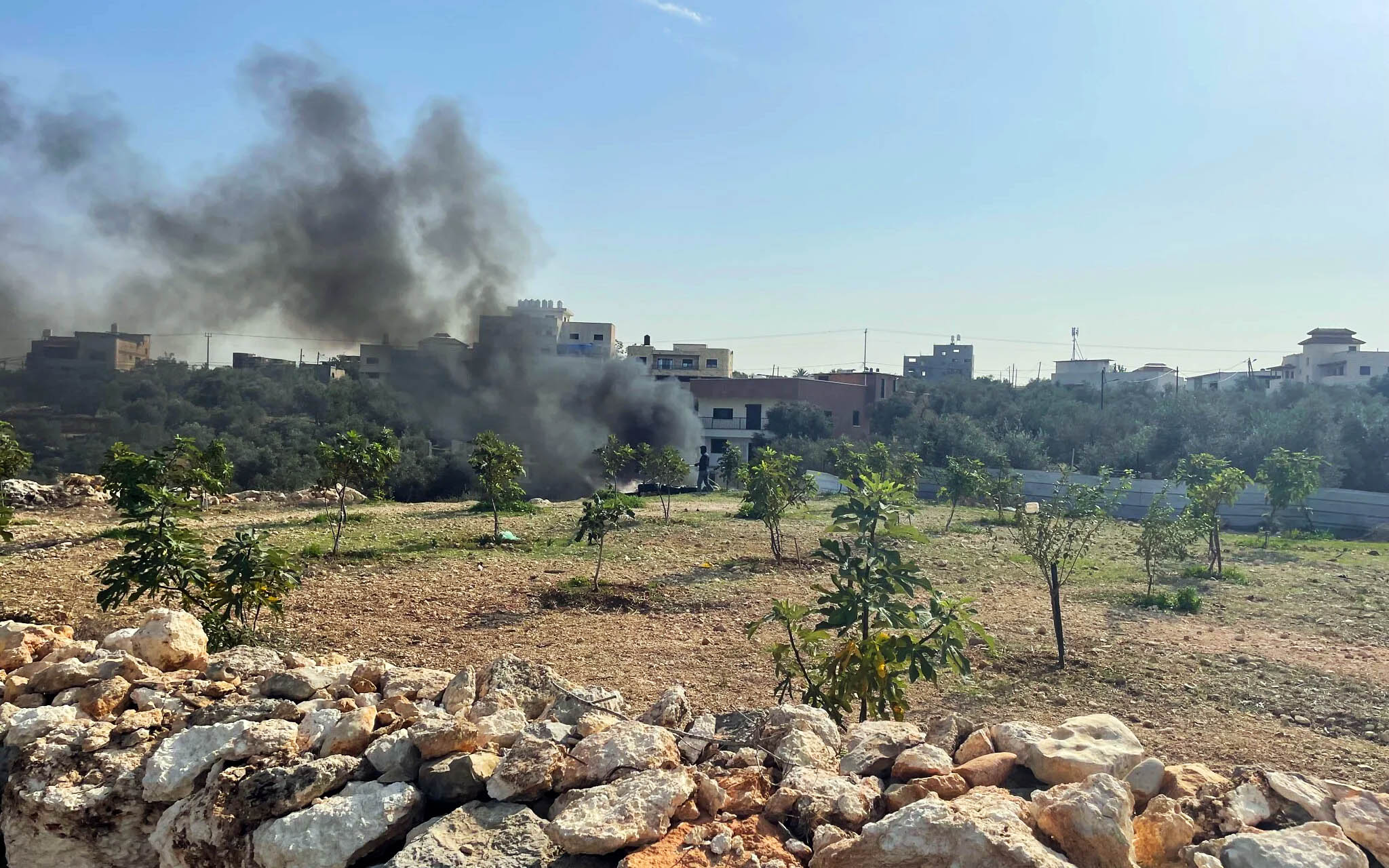
The plan, led jointly by the defense and finance ministries, along with security and enforcement agencies and the heads of the local authorities most affected by the waste fires, will include aggressive enforcement to counter the fires, administrative seizures of Palestinian waste trucks, large-scale waste removal, and the establishment of a new waste disposal site in the central West Bank, the Defense Ministry said in an announcement.
The costs associated with the plan will be transferred to the Palestinian Authority, according to Smotrich.
The decision to implement new measures to tackle the phenomenon came after the attendees at Thursday’s meeting were presented with a “worrying picture” indicating that the damaging impact of the waste fires was “much more widespread and serious” than previously believed, the Defense Ministry said.
The practice of burning waste is harmful to both the environment and the people in the vicinity due to the toxic fumes and pollutants released in the process.
Thursday’s announcement came days after the Health Ministry warned residents of eastern Shoham, in central Israel, to stay indoors and turn off air conditioners at certain hours due to severe air pollution caused by illegal waste burnings in the West Bank.
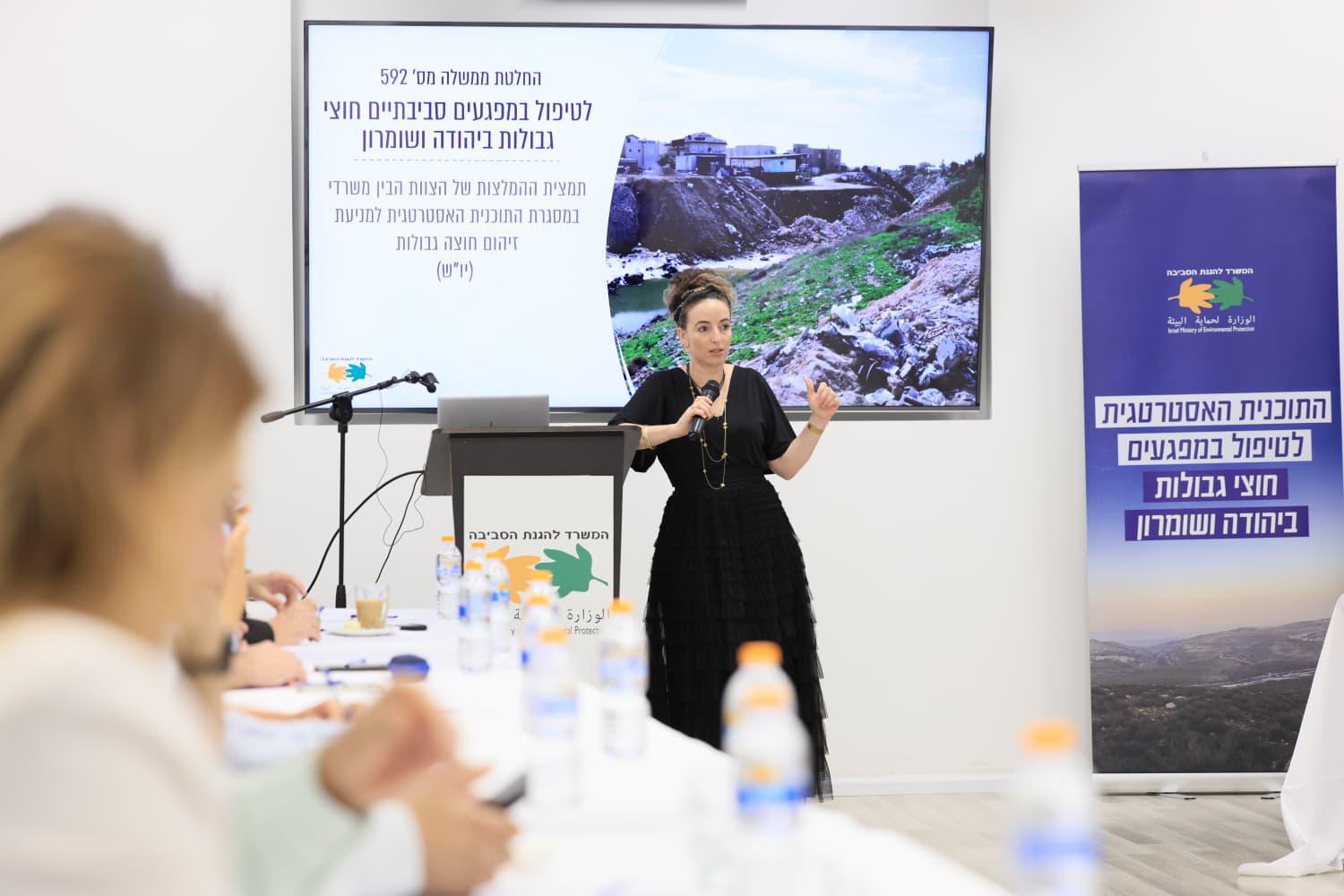
Authorities stated that a mobile air-quality monitor installed earlier this month by the Environmental Protection Ministry had detected levels of benzene and other pollutants, including PM2.5, that exceeded the limits set by the Clean Air Law.
Benzene is known to cause cancer. PM2.5 refers to small pollution particles, less than 2.5 micrometers in diameter, that penetrate the lungs and can cause or aggravate respiratory problems.
In an effort to tackle the issue, the Civil Administration — a division of COGAT, the Defense Ministry body that regulates daily life in the West Bank — reported sealing four garbage-burning sites spanning some 45 dunams (11 acres).
“We will not allow residents of communities near the seam line to breathe smoke that poisons and harms health,” Katz said in the Defense Ministry’s announcement, referring to the West Bank’s border with Israel proper.
“We declared this a national phenomenon at the highest level that must be addressed as a national problem,” he said, declaring that the “minimum for residents, for Israeli citizens, for children, for adults, is to breathe pure and clean air.
“We are going to address this with the utmost seriousness, with full force, to solve the problem once and for all,” he promised, adding that “all lawbreakers, Palestinian and otherwise,” would be dealt with.
Smotrich, who leads the far-right Religious Zionism party, branded the issue as “environmental terrorism” in his remarks on the matter.
“Environmental terrorism proves that the Green Line (the line that demarcates between Israel and areas captured in 1967) is virtual, and when Judea and Samaria are the backyard of the State of Israel, the entire people of Israel are harmed.
“We will eradicate this phenomenon through enforcement, waste removal, harsh and painful fines and of course by creating alternatives for waste disposal, while imposing the cost on the Palestinian Authority,” he added.
The issue of illegal waste-burning in the West Bank, which has gone on for 20 years, has become a hot-button issue over recent months, with rising complaints from the length of the Green Line, and even from as far away as Tel Aviv.
Electronic waste is illegally smuggled into the West Bank for burning by people who want to avoid landfill fees in Israel and profit from the sale of metals extracted by melting the plastic that surrounds them.
In a report last year, the state comptroller accused the Civil Administration of failing for years to establish a functioning waste infrastructure in the West Bank. Just two landfill sites serve the entire West Bank: one in the north near Jenin and the other in the south, near Bethlehem. The comptroller noted that many Palestinian municipalities face high costs to transport their waste great distances to the nearest landfill site, leading many to burn it instead.
Earlier this month, the Environmental Protection Ministry requested some $41 million to combat the fires, but Smotrich left it out of the state budget approved by the cabinet.
The expected cost of the national emergency plan was not made public, but it will likely be another blow to the PA’s already battered economy, which has suffered from Israel withholding millions of shekels over disputes with Ramallah, including its payment of stipends to Palestinian terrorists and their families.
In a separate step on Thursday aimed at tackling pollution in the West Bank, the head of the Civil Administration, Brig. Gen. Hisham Ibrahim, ordered sanctions and the revocation of permits for several Palestinian factory owners operating near Hebron.
According to the Civil Administration, factories south of Hebron illegally discharged sewage into the Hebron River and nearby open areas, causing significant air and environmental pollution affecting Beersheba and surrounding communities.
“Following several warning calls issued to the owners, a decision was made to revoke crossing permits from the factory owners and their employees, in accordance with the unit’s authority,” COGAT’s statement read. “In addition, the factories’ illegal sewage systems were disconnected and sealed.”
The Civil Administration said similar civil sanctions would be imposed elsewhere in the West Bank following assessments “in areas where it is determined that such sanctions will lead to the eradication of polluting factors.”
Sue Surkes and Times of Israel staff contributed to this report.




The Times of Israel Community.